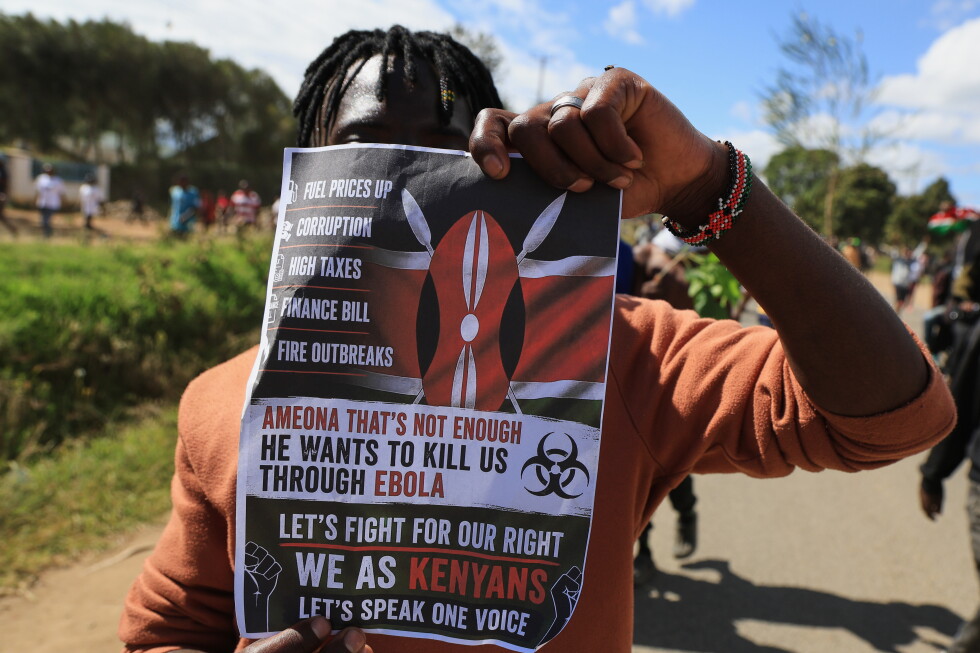
NAIROBI, Kenya – A heated public and legal debate has erupted over a planned U.S.-funded Ebola quarantine facility at Kenya’s Laikipia Air Base, drawing pushback from local activists and a court suspension even as President William Ruto has publicly defended the cross-border health partnership for the first time.
Ruto, speaking publicly on the issue for the first time on Monday evening, framed the project as a logical extension of decades of health-focused bilateral cooperation between Washington and Nairobi. He confirmed that the Laikipia site is only one of 24 Ebola preparedness facilities developed across the country under the partnership, which includes a $13 million U.S. investment in regional outbreak response. He noted that he approved the request — first made during the Trump administration — out of long-standing mutual trust between the two nations.
The project sparked widespread public anger among Kenyans last week after U.S. officials clarified that any American Ebola patients treated under the program would not be repatriated to the United States, and would instead be held and treated exclusively at the Kenyan facility. The Law Society of Kenya and constitutional advocacy group Katiba Institute quickly filed a legal challenge to the plan, arguing that Kenya’s already overstretched, fragile public health system lacks the capacity to safely manage foreign Ebola patients.
Kenya’s High Court acted swiftly on the challenge, first issuing an order suspending facility construction and the entry of foreign patients last Friday, before extending that blocking order this Tuesday. Despite the legal pause and widespread public protests against the project, Ruto struck a confident tone in his address, pushing back against critics by emphasizing that all 24 facilities, including the Laikipia site, would be available to treat Kenyan patients if a domestic Ebola outbreak occurs.
“We are a responsible government. We know what we are doing. People should relax,” Ruto said. “Politicians should avoid reckless, unnecessary talk that doesn’t mean anything.”
The debate over the quarantine facility comes as Kenya navigates a series of concurrent domestic crises, including recent deadly civil unrest linked to sky-high fuel prices, a tragic dormitory fire that killed 16 schoolgirls, and widespread public frustration over the cost of living. Ebola outbreaks across central Africa have raised regional preparedness concerns in recent years, turning this infrastructure project into a flashpoint over sovereignty, public health capacity, and bilateral cooperation.