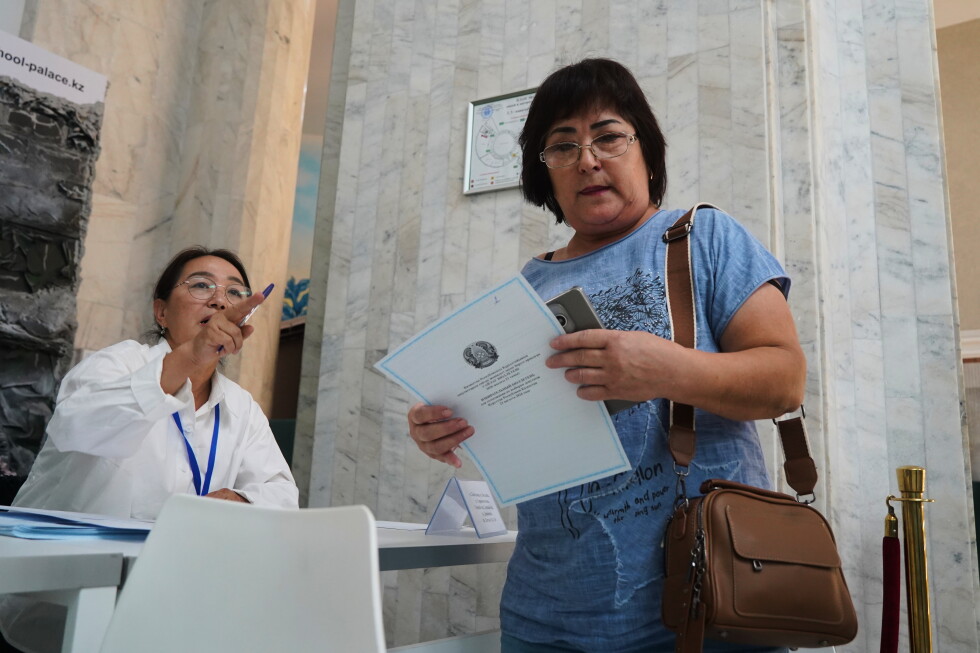
Polling stations opened across Kazakhstan on Sunday for the Central Asian nation’s first parliamentary election to a newly restructured single-chamber legislature, the Kurultai. The vote, widely expected to solidify the grip of 73-year-old President Kassym-Jomart Tokayev on power, comes as the culmination of a sweeping constitutional overhaul initiated by the incumbent leader earlier this year. Political analysts broadly predict that the ruling pro-presidential Adilet party will secure an overwhelming majority in the new legislative body, with a handful of smaller parties aligned with Tokayev also projected to win seats.
作者: admin
-
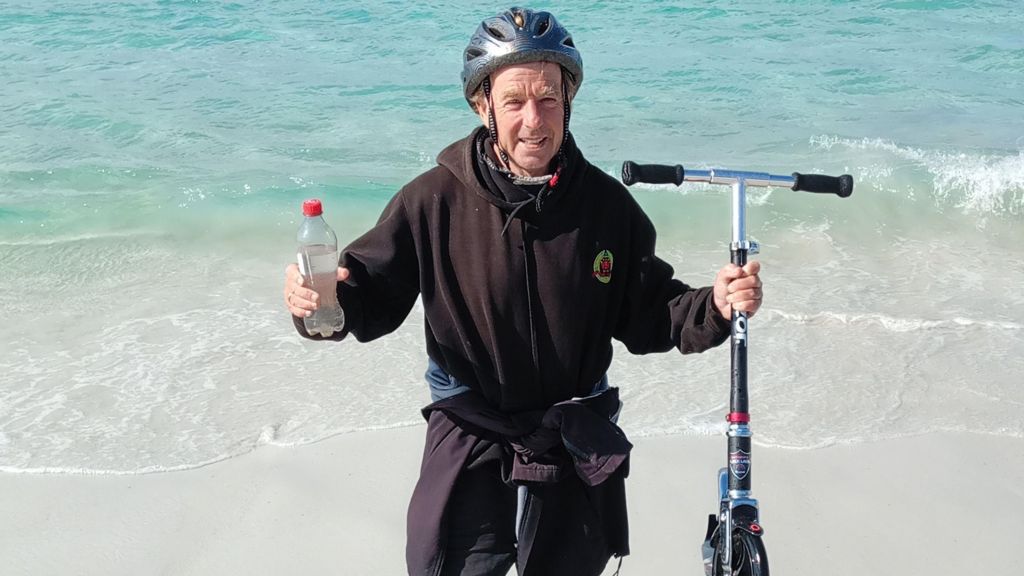
Man completes 2,800 mile scoot across Australia
At 57 years old, a seasoned British adventurer has checked one more epic expedition off his bucket list, wrapping up a grueling coast-to-coast crossing of Australia on a manual kick scooter that spanned more than 2,800 miles. Bob Brown, a long-time explorer hailing from Saltash, Cornwall, kicked off his ambitious journey back in July, trekking from the western Australian coastal city of Perth all the way to Sydney on the country’s eastern shoreline, crossing the finish line on Monday this week.
This is not Brown’s first time tackling the iconic Australian transcontinental route — the explorer has already etched his name in adventure history twice on this very path. Back in 2001, he became the first Briton to run across Australia, covering 3,000 miles in just 60 days. Two years later, in 2003, he returned to complete the same route by bicycle, making him the first person ever to complete the crossing both by running and cycling. This third attempt on a kick scooter was designed to cap off this unique three-part challenge, and if his records are approved, he will walk away with two Guinness World Records: the title of fastest person to cross Australia on a kick scooter, and the first person to complete the route via three entirely different human-powered methods: running, cycling, and scootering.
For Brown, the expedition was about far more than just breaking records. After a lifetime spent chasing adventures across the globe, the 57-year-old said he wanted to pull off one more monumental challenge before age made such feats unfeasible. More importantly, the journey was a fundraising effort for three worthy UK-based charities: MacMillan Cancer Support, St Luke’s Hospice, and Children’s Hospice South West. Brown set an initial fundraising target of £5,000, and also hoped his journey would inspire a new generation to step away from digital screens and seek out their own real-world outdoor adventures.
The cross-continental trip was not without its dangerous setbacks, as Brown encountered multiple incidents that threatened to cut his journey short. Just five days into the expedition, a passing vehicle clipped the wing mirror on his scooter, sending him skidding onto a highway hard shoulder. Though he escaped that incident with only minor harm, a second accident on the very last day of his trip proved far more serious. With just 20 kilometers remaining between him and the finish line in Sydney, Brown’s handlebars snapped while he was descending a steep hill, sending him crashing to the ground. Even with these unexpected complications, Brown pushed through to the end, crossing the finish line with a total official time of 31 days, four hours and 10 minutes.
Brown has now submitted all of his required documentation and evidence to Guinness World Records, and is waiting for the organization to formally verify his achievements. For updates on more regional stories from the UK’s South West, audiences can follow BBC Cornwall on social media platforms X, Facebook, and Instagram, or submit story ideas directly to spotlight@bbc.co.uk.
-
Crew honoured after 14 fishermen rescued from stricken boat
After nearly three decades of plucking stranded people from dangerous waters along Ireland’s rugged coastline via helicopter rescue, Jim O’Neill believed he had encountered nearly every possible crisis a rescuer could face. That perspective shifted dramatically, however, when a desperate emergency call came in just days before Christmas.
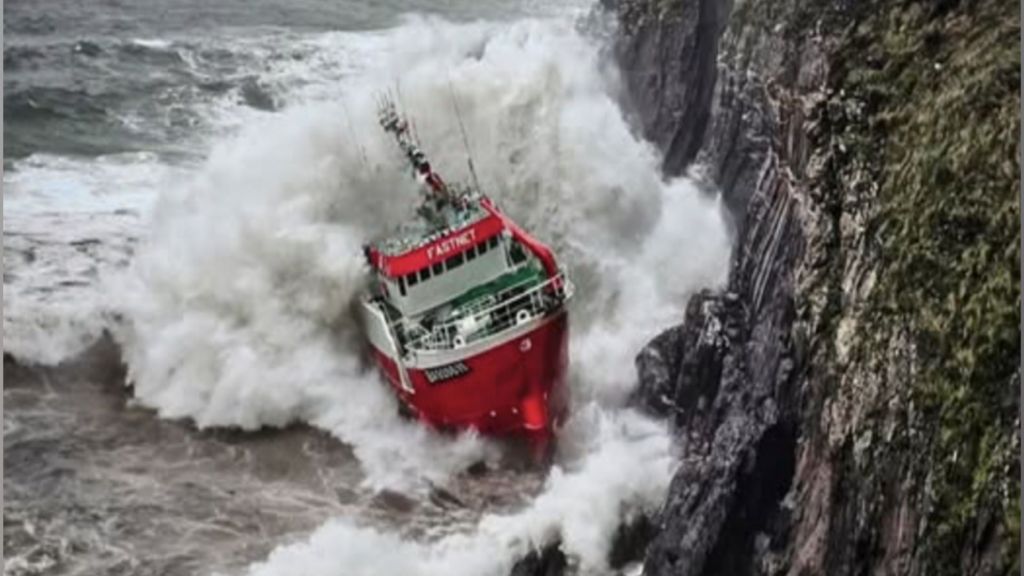
The call brought word of a French fishing vessel, the *Fastnet*, carrying a 14-member crew that had run aground on jagged rocks off County Kerry after suffering sudden engine failure while departing Dingle Harbour. Near gale-force Atlantic winds and towering, powerful waves had driven the vessel onto the rocks, leaving the boat at constant risk of capsizing or breaking apart completely, and the crew trapped at the mercy of the churning, unforgiving ocean.
The emergency mobilized a large multi-agency response, with O’Neill and the rest of the crew from Irish Coastguard Rescue Helicopter 115 at the center of the operation to pull the 14 fishermen to safety. For O’Neill, a native of Strabane, County Tyrone, the mission stood out as the most challenging rescue of his entire 30-year career – an incident that could easily have ended in one of Ireland’s worst modern maritime tragedies.
“Going into it, we had no way of knowing how it would turn out. By the nature of the situation, we knew it was extremely high risk,” O’Neill explained in a post-rescue interview. “Success was never guaranteed or certain from the start.”
When Rescue 115 arrived at the incident site, O’Neill quickly confirmed the full scope of the danger facing the stranded fishermen. The *Fastnet* was being pounded by massive waves on one side and bashed repeatedly against the sharp rocks on the other, with visible damage already starting to split the vessel’s hull. Compounding the hazard, leaking diesel from the boat’s damaged engine was already spreading toxic pollution across the surrounding water, adding another layer of risk for rescuers.
Multiple emergency partners joined the response: RNLI lifeboat crews, Irish Coastguard land teams, the Irish Navy, and local commercial fishing vessels all contributed to the operation. Because the *Fastnet* was stuck on rocks in shallow waters, the larger lifeboats and supporting vessels had to hold position in deeper, safer water offsite, leaving the helicopter crew to lead the extraction via winching.
With the helicopter hovering steadily above the battered fishing vessel, O’Neill was lowered down to the deck by his crew. Over the course of 50 grueling minutes, he navigated the slippery, unstable deck to locate all 14 crew members and prepare them for winch extraction, one by one. He deliberately stayed on the damaged vessel until every fisherman had been pulled to safety, leaving himself as the final person to be rescued.
“The biggest challenge for me on deck was making sure I didn’t slip and fall hard, or get swept overboard by the waves,” O’Neill recalled. “I knew if I ended up in that rough sea, I didn’t stand much chance of surviving. Once I got all 14 men up to the helicopter, it hit me that I was the only one left. It was a great feeling to have gotten them all out, but it was also incredibly scary – I knew I still had to get myself recovered.”
Months after the successful rescue, O’Neill was formally recognized for his extraordinary courage at a ceremony held at the UK House of Commons, where he received the prestigious Billy Deacon Memorial Award. The award honors winch operators and winch paramedics who demonstrate exceptional bravery and meritorious service during search and rescue operations, and it carries deep meaning as a tribute to a fallen rescuer.
The award’s namesake, Billy Deacon, was a HM Coastguard winchman who lost his life in November 1997 during a rescue off the Shetland Islands. Deacon had safely extracted all crew members from the stricken cargo vessel *Green Lily*, and was the final person waiting for extraction when he was swept overboard by a large wave. He was posthumously awarded the George Medal for his “outstanding courage and bravery”, and the annual award bearing his name preserves his legacy.
In its citation, the award committee praised O’Neill for completing the extraordinarily demanding rescue “with calm professionalism, despite considerable personal risk.” The committee also extended praise to O’Neill’s fellow Rescue 115 crew members: Captain Robert Goodbody, co-pilot Paraic Slattery, and winch operator Eamon O’Broin, noting their outstanding teamwork, communication, and steady leadership under extreme pressure.
The committee added that O’Neill displayed “magnificent leadership skills” in organizing the 14 fishermen for evacuation, prioritizing their safety above his own even as the risk of the vessel breaking apart grew. “His courage in the face of adversity had a direct bearing on the successful outcome,” the citation read.
Along with the trophy, O’Neill received an inscribed watch from RNLI chief executive Peter Sparkes, with all members of the Rescue 115 crew in attendance at the London ceremony to celebrate the honor. Speaking after the event, O’Neill said he felt deeply honored to receive an award that commemorates Deacon’s sacrifice, and he used the moment to share an important safety message for anyone working or recreating along Ireland’s coastlines.
“It’s important that people are vigilant and prioritize safety,” he said. “They can still go out and enjoy the coastal environment, but they just need to be careful about their choices, think through their actions, and remember what the outcome could be if they take unnecessary, foolish risks.”
-
Thousands expected at Sweden climate demo as election looms
As Sweden prepares for its critical September 13 general election, climate policy has emerged as one of the most contentious electoral issues, with a massive cross-sector demonstration set to bring thousands of protesters to the streets of Stockholm this Sunday. Organisers and law enforcement project that roughly 10,000 attendees will join the march, which boasts an unprecedented level of participation from more than 200 diverse non-governmental organisations and community groups.
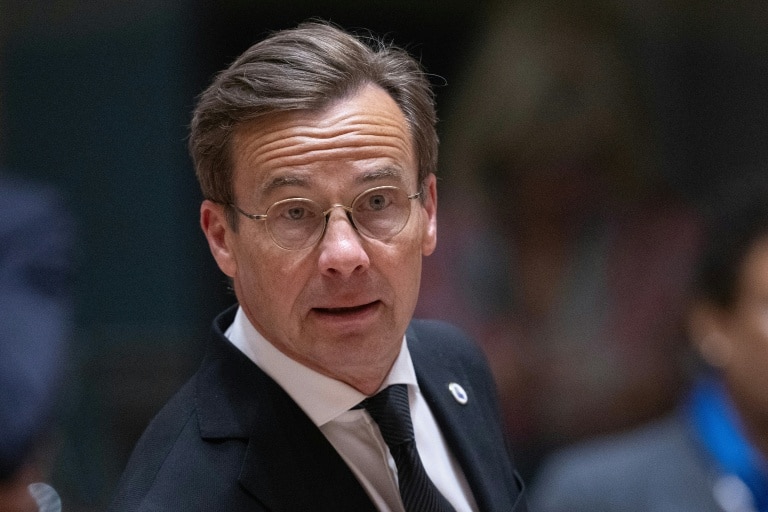
The protest is targeted at the right-wing government led by Prime Minister Ulf Kristersson, which has faced growing backlash over its rollback of climate regulations since taking office in 2022. Backed by the populist Sweden Democrats party, Kristersson’s administration has cut national petrol taxes and weakened mandatory blending requirements that force fuel suppliers to include low-carbon biofuels in their products. Most notably, the government rejected key recommendations from an independent, government-appointed climate commission that would have advanced Sweden’s decarbonisation goals, including a planned phase-out of fossil fuels through gradual tax increases on petrol and diesel.
Climate scientists and policy experts both within Sweden and across the globe have repeatedly sounded the alarm that these policy rollbacks put the country’s legally binding emissions reduction targets at serious risk. Sweden has committed to cutting transport sector carbon dioxide emissions by 70% from 2010 levels by 2030, and reaching economy-wide net-zero greenhouse gas emissions by 2045 — targets analysts warn are now out of reach under the current government’s framework.
Beatrice Rindevall, head of the Swedish Society for Nature Conservation, one of the lead co-organisers of the Sunday demonstration, framed the protest as a direct response to both government inaction and the growing climate impacts already visible across Europe. “The climate crisis is very real, and it is here,” Rindevall said in a pre-rally statement, pointing to the record-breaking, devastating heatwaves that swept across the continent this summer as urgent proof of the need for immediate action. “It is time to put in place a climate policy that reduces emissions right now.”
Rindevall noted that the scale of organisational backing for the rally is a historic milestone for Swedish climate activism. “Never before have so many organisations taken part in a Swedish climate demonstration,” she said. “The commitment is massive.” Participating groups span a wide range of Swedish society, including climate researchers, youth climate collectives, sports associations, national trade unions, outdoor recreation and rural advocacy groups, religious communities, and human rights organisations.
Recent polling confirms that climate action is a top priority for Swedish voters heading into the September election. A Verian survey published Thursday by public broadcaster SVT found that 37% of respondents ranked climate as their number one electoral issue, placing it fifth behind only healthcare, education, crime, and elder care. Currently, Kristersson’s right-wing governing bloc trails opposition parties in national opinion polls.
In defending its policy agenda, the Kristersson administration has argued that a faster phase-out of fossil fuels would damage Sweden’s economic competitiveness and harm the profitability of domestic companies. The government maintains that decarbonisation must proceed at a gradual pace to protect economic growth and employment.
-
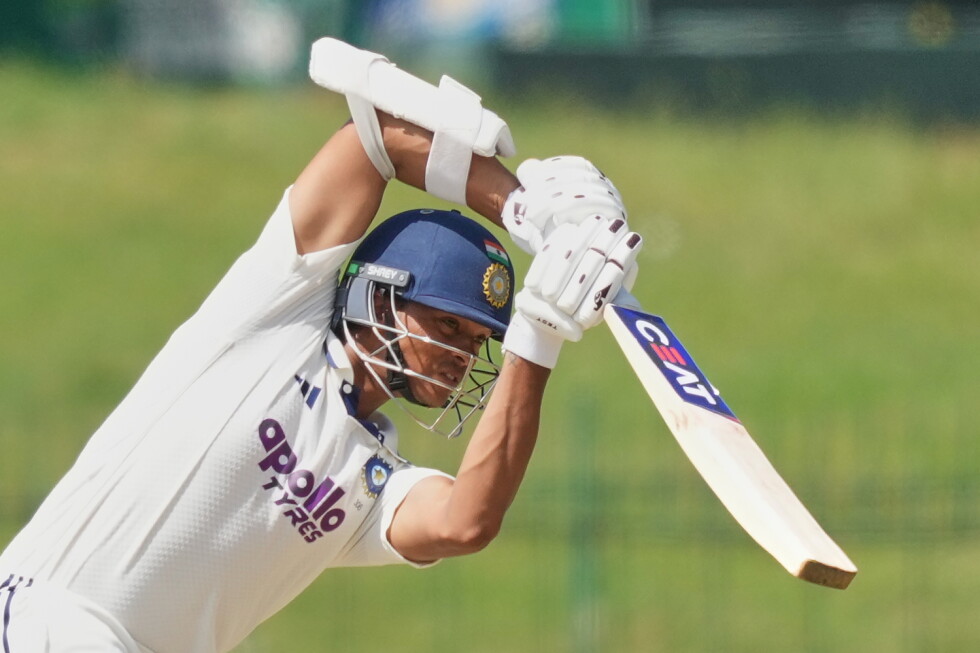
Gill wins toss as India bat first in second Test vs Sri Lanka, eyeing series win
COLOMBO, Sri Lanka — The second Test match of a two-match bilateral cricket series between India and Sri Lanka got underway Sunday at Colombo’s iconic Sinhalese Sports Club, with Indian captain Shubman Gill winning the pre-match coin toss and choosing to send his side in to bat first.
India enters this match holding a comfortable 1-0 series advantage, having secured a solid 165-run victory over Sri Lanka in the opening fixture of the series held in Galle earlier this week. That result leaves Sri Lanka facing a must-win scenario to level the series and avoid a series defeat on home soil.
Ahead of the second Test, both teams made notable changes to their starting lineups, mixing injury adjustments with fresh selection calls. For Sri Lanka, top-order batter Pasindu Sooriyabandara retains his spot in the XI after he stepped in as a concussion substitute for injured veteran batter Dinesh Chandimal in the first Test. With Chandimal still sidelined by his injury, Sunday’s match marks Sooriyabandara’s first full appearance at the Test level. An additional change for the hosts sees experienced opener Nishan Madushka dropped from the starting lineup, with 22-year-old Kamil Mishara stepping in to make his long-awaited Test debut.
India’s squad also has a first-time Test player in its ranks: left-arm spin bowling all-rounder Saransh Jain earned his call-up to the starting XI, replacing established left-arm wrist-spinner Kuldeep Yadav. Ahead of his debut, Jain has built an impressive first-class cricket record across domestic competitions, notching more than 2,200 runs and 188 wickets in his first-class career to date.
Full starting lineups for the second Test are as follows:
Sri Lanka: Dhananjaya de Silva (captain), Lahiru Udara, Kamil Mishara, Kamindu Mendis, Sonal Dinusha, Pasindu Sooriyabandara, Niroshan Dickwella, Keshara Nuwantha, Prabath Jayasuriya, Asitha Fernando, Lahiru Kumara
India: Shubman Gill (captain), KL Rahul, Yashasvi Jaiswal, Devdutt Padikkal, Rishabh Pant, Dhruv Jurel, Ravindra Jadeja, Manav Suthar, Saransh Jain, Mohammed Siraj, Prasidh Krishna -
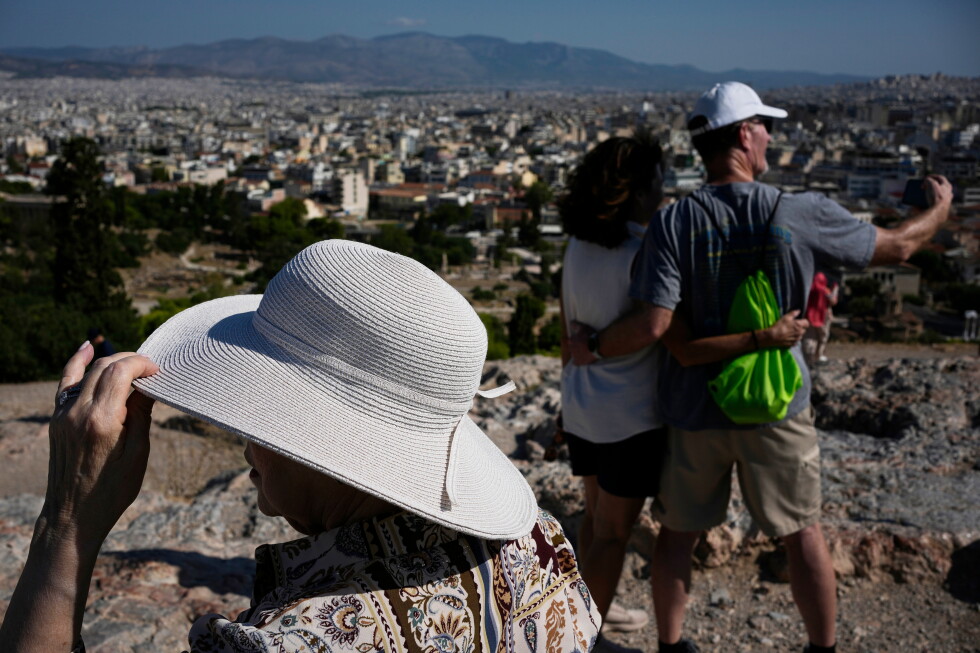
The sunhat is everywhere in Athens as crowds grow larger at ancient sites
Amid relentless summer heat and a historic surge in international tourism, sun protection has become a top priority for visitors exploring Greece’s iconic cultural sites, turning everyday headwear into one of the country’s most in-demand tourist commodities this season.
On the sloped paths leading up to Athens’ ancient Acropolis, a moving sea of hats — ranging from casual straw boaters and classic Panama styles to sporty baseball caps and trendy bucket hats — bobs up and down the hill as tourists seek any possible shield from the unforgiving midday sun. This summer, towering displays of piled-high hats have become impossible to miss across central Athens. Kiosks, souvenir shops and local boutiques have stacked outdoor stands full of options, catering to the flood of travelers looking for relief from temperatures that consistently hover in the mid-30s Celsius (mid-90s Fahrenheit), with very little natural shade available across the open ancient site.
Greek tourism hit unprecedented milestones in recent years. The Acropolis alone drew a record 4.6 million visitors in 2024, while the country as a whole welcomed a total of 38 million visitors that same year — the highest annual number on record. Even scorching heat has done little to deter tourists from flocking to the country’s most famous landmarks, though the combination of extreme temperatures and overwhelming visitor demand means many guests have no choice but to explore during the hottest midday hours, when UV radiation is at its peak. This mismatch has added new urgency to efforts to promote public sun safety among travelers.
Even local animals have gotten in on the trend: a carriage horse giving rides at the foot of the Acropolis now sports a custom brown bucket hat, with holes cut specially to fit its ears. Australian tourist Jack Yosif, who purchased a black baseball cap shortly after arriving in Athens, summed up the shifting mindset among visitors. “You need a hat. I’m already red as it is,” Yosif explained. “It’s a bit more of a common thing nowadays, and people are a bit more aware.”
Public health and safety advocates across Greece have welcomed this growing public awareness of the risks of extended ultraviolet exposure and heat stroke, both life-threatening conditions that can arise quickly during summer heat waves. Red Cross volunteers stationed at the Acropolis now distribute free emergency kits to passing tourists, stocked with sunscreen, bottled water, sun safety information leaflets and complimentary red baseball caps for visitors who do not have headwear.
Local vendors have reported a steady, ongoing rise in hat sales over the past several years, a trend that has accelerated amid more frequent extreme heat events and shifting tourist behavior. Konstantinos Mallios, a kiosk owner on central Athens’ busy Syntagma Square, says the business has boomed. His inventory ranges from budget basic hats priced at 6 euros ($24) to higher-end stylish and souvenir-focused options that sell for up to 20 euros. For budget-conscious travelers, many low-cost retailers also sell affordable semi-disposable paper pulp hats that cost just a few euros.
For travelers seeking handcrafted, high-quality options, local artisanal hatmakers have also seen a sharp jump in demand. In her basement workshop in central Athens, third-generation hatmaker Lisa Sarigiannidou — who learned the craft from her hatmaker father — crafts custom straw boaters using century-old hand presses and traditional molds, turning out finished hats in minutes. Her entry-level designs start at around 50 euros, with elaborate custom pieces costing more than 100 euros.
Sarigiannidou has observed a dramatic shift in public attitudes toward hat-wearing among both tourists and Greeks over the past decade. “In the past, when a young woman tried on a hat and looked at herself in the mirror, she usually laughed,” she said. “Now they try them on seriously … and they wear them straight out the door.”
-
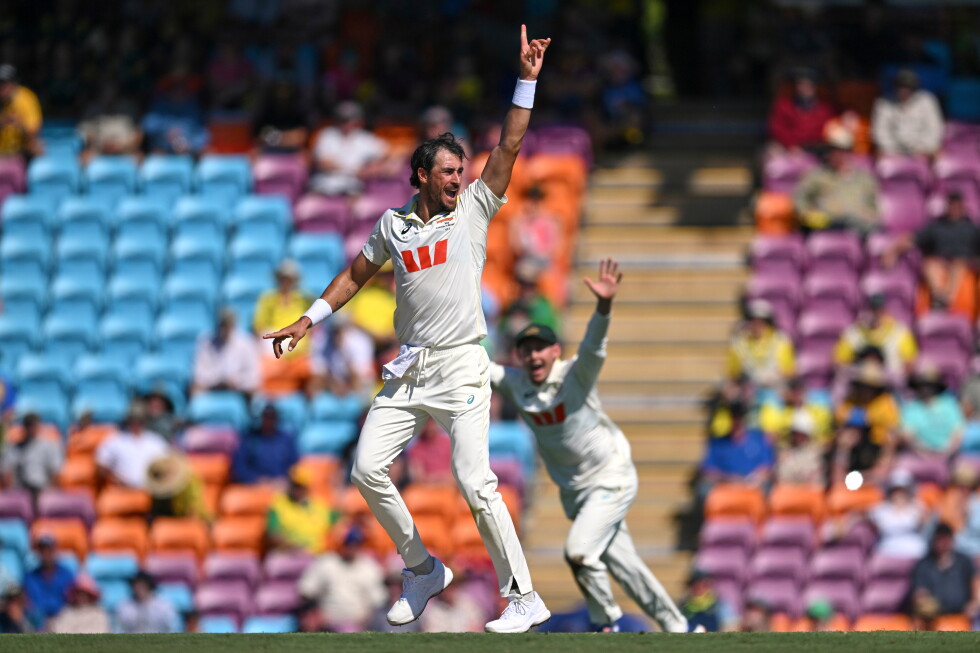
Starc’s double-strike helps Australia tighten grip in 2nd test against Bangladesh
MACKAY, Australia – After a career-defining six-wicket haul in the first innings of the second Test against Bangladesh, Australian left-arm pace spearhead Mitchell Starc extended his dominance over Bangladesh’s batting lineup on Day 2, leaving the touring side reeling at 39 for three wickets by the lunch break in their second innings.
The 33-year-old fast bowler, who turned in one of the most devastating opening day bowling performances in recent Test history to finish with staggering figures of 6 wickets for just 12 runs on Saturday, picked up right where he left off on Sunday morning. Starc claimed two wickets in back-to-back deliveries to break Bangladesh’s top order, cementing Australia’s overwhelming early advantage in the match hosted at Mackay, in tropical northern Queensland.
At the mid-session break, Bangladesh held an overall deficit of 107 runs behind Australia’s first innings total. Captain Najmul Hossain Shanto remained unbeaten on 23 runs, with veteran batsman Mushfiqur Rahim yet to find his rhythm at four not out when play paused for lunch.
Bangladesh managed to survive Starc’s first over of their second innings without loss, but luck quickly ran out in the paceman’s next frame of bowling. Shadman Islam, who had scored just one run, edged a slipping catch away to first slip where Marnus Labuschagne completed the straightforward take. On the very next delivery, former Bangladesh captain Mominul Haque, who had not added to the scoreboard, left a ball that zipped through to rattle his off stump, gifting Starc his second consecutive wicket.
Australian captain Pat Cummins joined in the wicket-taking spree shortly after, removing Tanzid Hasan for nine runs with a catch taken on the boundary by a fielder.
The day’s action opened with Australia resuming their first innings on 165 for eight wickets. Cameron Green and Nathan Lyon combined to add a valuable 28 runs for the ninth wicket before Bangladesh’s standout bowler Shoriful Islam claimed his seventh wicket of the innings. Shoriful, who had already taken six first-innings wickets on a chaotic opening day, delivered a blistering inswinging yorker that struck Green on the front foot. The on-field decision of out was upheld on review, ending Green’s innings.
Green’s knock of 67 runs from 105 deliveries, marked by 10 boundaries, stands as the highest individual score of the series to date. It comes on the heels of his breakthrough maiden home Test century in the opening match of the series in Darwin.
After Green’s dismissal, Lyon and Josh Hazlewood pushed Australia’s total past the 200-run mark before Hazlewood hit a mistimed sky-high catch off the bowling of Taijul Islam, who finished with figures of 1 wicket for 17 runs. That brought Australia’s first innings to a close at 210, handing the hosts a 146-run first innings lead.
Notably, Shoriful’s first-innings figures of 7 wickets for 48 runs mark the best bowling performance by any Bangladesh player in a Test match played on foreign soil.
Australia is aiming to level the two-match Test series after an upset nine-wicket defeat to Bangladesh in the opening Test last week. This two-test “Top End” series kicks off a packed 12-month Test schedule for Australia, which will see the national side play 20 Test matches, including away tours to South Africa, India and England over the coming year.
-
Swedish sword attack victim was 17-year-old girl, police say
A violent, fatal sword attack at a central Swedish high school has left one teen dead and three other people wounded, shocking the small community of Fagersta just days after students returned from summer vacation.
Swedish law enforcement has officially confirmed that the fatality in the Friday afternoon attack at Brinell School is a 17-year-old girl. Local authorities added that two boys, aged 12 and 17, are currently being treated for serious injuries, while a third victim suffered only minor harm from the assault.
Shortly after the incident unfolded, police took an 18-year-old man into custody; the suspect has not been publicly identified as of Saturday. Investigators are treating the case as official charges of murder and attempted murder, and have already completed two court-authorized house searches connected to the accused. While responding to the emergency call, officers discharged their weapons at the scene, but law enforcement has not yet released any information confirming whether the suspect was hit by gunfire before being detained.
Multiple local media reports indicate the suspect was wearing a helmet during the attack and is a former student of Brinell School. The campus, which enrolls just under 500 students, sits approximately 170 kilometers northwest of Sweden’s capital Stockholm.
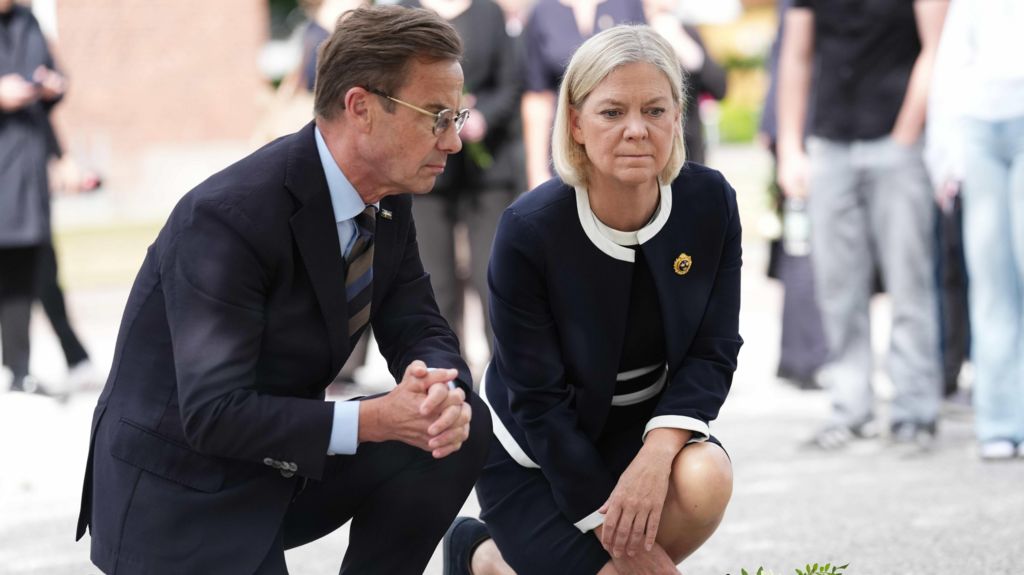
In the immediate aftermath of the violence, the Västmanland region declared a temporary state of emergency, which was lifted by Saturday morning. That same day, Sweden’s Prime Minister Ulf Kristersson and opposition Social Democratic Party leader Magdalena Andersson traveled to Fagersta to visit the school and pay their respects at a growing makeshift memorial where local residents have laid hundreds of flowers to honor the victims.
In a public statement posted to X shortly after the attack, Kristersson called the assault an extraordinarily serious incident. “We do not yet know what motivated this act, but we can confirm that law enforcement is working around the clock and with extreme intensity to uncover all details,” he wrote. Sweden’s monarch King Carl XVI Gustaf also released a statement, saying he received the news of the school violence with deep dismay and overwhelming sadness.
-
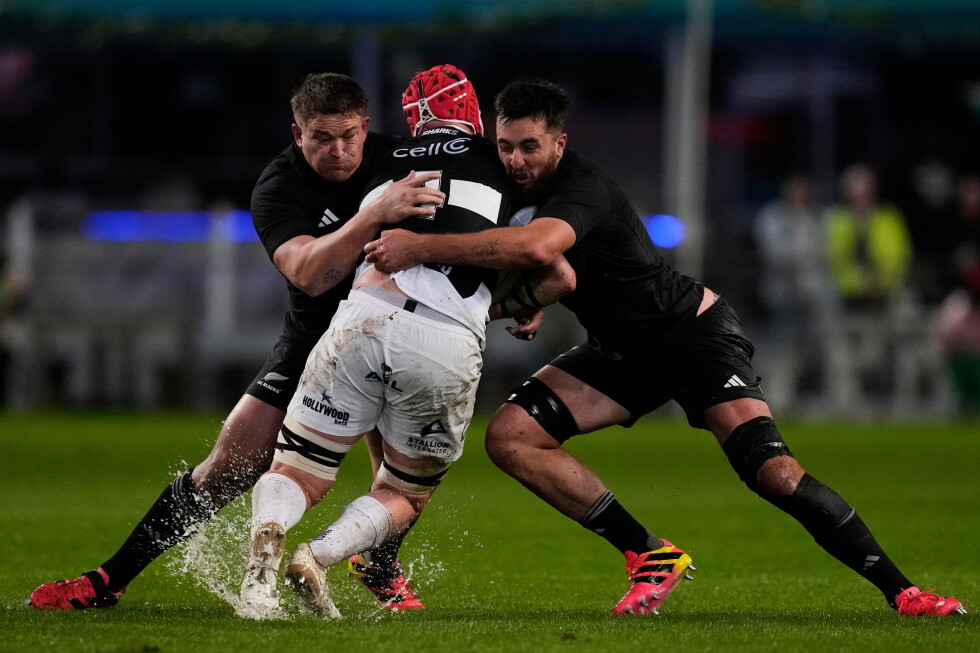
All Blacks call for injury cover after bruising 1st test against South Africa
Following a physically brutal opening test of a landmark four-test series against South Africa, New Zealand’s national rugby union team, the All Blacks, has been compelled to add two new players to their squad to cover for injured starters. The side claimed a hard-fought 33-16 victory over the Springboks in Saturday’s Johannesburg clash, but a first-half collision left two key starters sidelined and in doubt for the second test next week.
Loosehead prop Ethan de Groot and lock Josh Lord were both caught in an accidental head-on collision in the 38th minute of the match. Both players failed mandatory post-incident head injury assessments, and under current global concussion protocols for professional rugby, they are highly unlikely to be cleared to compete in the upcoming second test.
To fill the unexpected gaps in the touring squad, New Zealand Rugby has called on prop Ofa Tu’ungafasi, a seasoned international veteran, and lock Jamie Hannah, a young emerging talent. Tu’ungafasi, 34, brings 68 test caps of experience to the side, though he has not featured for the All Blacks in a test match for two years. Hannah, 23, earned his first international cap against France earlier this 2025 campaign, making him one of the newest members of the squad set to step up.
The two injury cover replacements are scheduled to join the full All Blacks touring party on Monday, ahead of the tour’s mid-series match against the Lions, the final fixture before the second test against South Africa. The unplanned injury blow adds a new layer of challenge to the All Blacks’ historic series against the world’s top-ranked rugby nation, forcing coaching staff to adjust their preparations at short notice.
-

Trump Mobile promoted a ‘Made in the USA’ phone – but the details kept changing
When Trump Mobile first burst onto the consumer tech scene with its debut smartphone, the T1, the brand’s biggest selling point was its bold promise of a truly ‘Made in the USA’ device – a marketing hook that tapped into growing domestic manufacturing enthusiasm and political branding tied to the former U.S. president. But independent fact-checking team BBC Verify has now documented a consistent pattern of shifting details across almost every core aspect of the upcoming handset, leaving consumers and industry observers confused about what the product actually is and when it will arrive.
Early marketing materials from Trump Mobile initially framed the T1 as a fully American-built device, from its internal components to its final assembly. That claim has been revised multiple times over the course of the product’s promotion, with the brand walking back specifics about what percentage of parts and labor actually originate in the United States. Beyond the manufacturing origin, the design of the T1 has also undergone repeated overhauls: initial concept images released to the public showed one distinct industrial style and feature set, only to be replaced by updated renderings with a completely different layout just weeks later. Product specifications, including processor type, battery capacity, camera system capabilities, and internal storage options, have also been changed on multiple occasions with no formal announcement or explanation from the company.
The scheduled release date for the T1 has likewise seen frequent adjustments. What was first billed as a 2024 launch with pre-orders opening on a specific date has been pushed back twice, with the company only offering vague statements about production delays when pressed for comment. Industry analysts note that unannounced changes to product details are not unheard of for new smartphone brands, but the pace and scope of revisions for the Trump Mobile T1 are unusual for a major branded device. BBC Verify’s ongoing investigation continues to track the evolving claims from the company to clarify discrepancies between marketing promises and the actual status of the device.