作者: admin

  • Trump to nominate Blanche for attorney general on permanent basis

    Trump to nominate Blanche for attorney general on permanent basis

    In a major announcement for the U.S. Department of Justice’s leadership, former president and current U.S. President Donald Trump has revealed plans to formally nominate Acting Attorney General Todd Blanche to hold the role permanently, capping a rapid climb for one of Trump’s closest and most trusted legal allies.

    If the U.S. Senate votes to confirm Blanche’s appointment, the president’s one-time personal lawyer will step into the nation’s top law enforcement position on a permanent basis, leading the entire DOJ as the administration’s chief federal prosecutor.

    Blanche first stepped into the acting attorney general role in early April, immediately after Trump removed former Attorney General Pam Bondi from the post. A long-time loyal ally of the president, Blanche has spent years defending Trump across multiple high-stakes legal cases. Most notably, he led Trump’s defense during his federal prosecution over allegations he improperly retained classified national security documents following the end of his first presidential term, and also represented Trump amid proceedings tied to allegations of attempts to overturn the 2020 presidential election results. Both of those cases were ultimately dismissed after Trump won the 2024 presidential election, in line with longstanding DOJ policy that prohibits prosecuting sitting sitting presidents.

    Details of the upcoming nomination were first shared publicly in a video posted late Wednesday by Dan Scavino, Deputy White House Chief of Staff. In the recording, Trump confirmed he would submit the nomination to the Senate “tomorrow” and predicted that the confirmation process would move “very quickly.” Just days earlier, Trump voiced public praise for Blanche during an appearance on the Pod Force One podcast, calling Blanche a skilled legal professional and noting that “Todd’s doing a very good job at DOJ.”

    In recent weeks, Blanche has found himself at the center of a major policy controversy at the DOJ, after the department pushed to create a new $1.8 billion (equivalent to £1.3 billion) “anti-weaponisation fund” designed to compensate individuals who claim they were harmed by overreach from federal government agencies. The proposal faced bipartisan pushback, with multiple Republican lawmakers joining opposition Democrats to oppose the plan. Blanche suffered a major setback when a federal judge ordered the plan paused to allow ongoing legal challenges to proceed. Appearing before Congress for a hearing Tuesday, Blanche confirmed the proposal had been abandoned entirely, stating clearly: “We’re not moving forward with the fund, period.”

    A 51-year-old Colorado native, Blanche earned his undergraduate degree from American University in Washington, D.C., before graduating with a law degree from Brooklyn Law School in 2003. He spent the majority of his early legal career as a federal prosecutor in the Southern District of New York, before moving into private practice at two prominent national law firms, Wilmer Cutler Pickering Hale and Dorr, and Cadwalader, Wickersham & Taft.

    Before taking over as acting attorney general, Blanche served as deputy attorney general, where he worked alongside Bondi on the DOJ’s release of previously sealed documents connected to late convicted sex offender Jeffrey Epstein. In July of this year, Blanche conducted a personal interview with Ghislaine Maxwell, Epstein’s long-time associate who is currently serving a 20-year federal prison sentence for her role in Epstein’s crimes. Beyond his law enforcement roles, Blanche has also previously served as acting Librarian of Congress.

    Following his appointment as acting attorney general, Blanche pushed back against media reports that claimed Bondi’s removal was tied to her handling of the Epstein document release. Since leaving the DOJ, Bondi has announced she will join the White House’s new AI advisory panel, the Presidential Council of Advisors on Science and Technology.

    The upcoming Senate confirmation process for Blanche is expected to draw intense scrutiny from lawmakers, given his long history of personal and political loyalty to Trump, as well as his recent handling of the controversial anti-weaponisation fund proposal.

  • Heavy gunfire in Somali capital as row over election delay escalates

    Heavy gunfire in Somali capital as row over election delay escalates

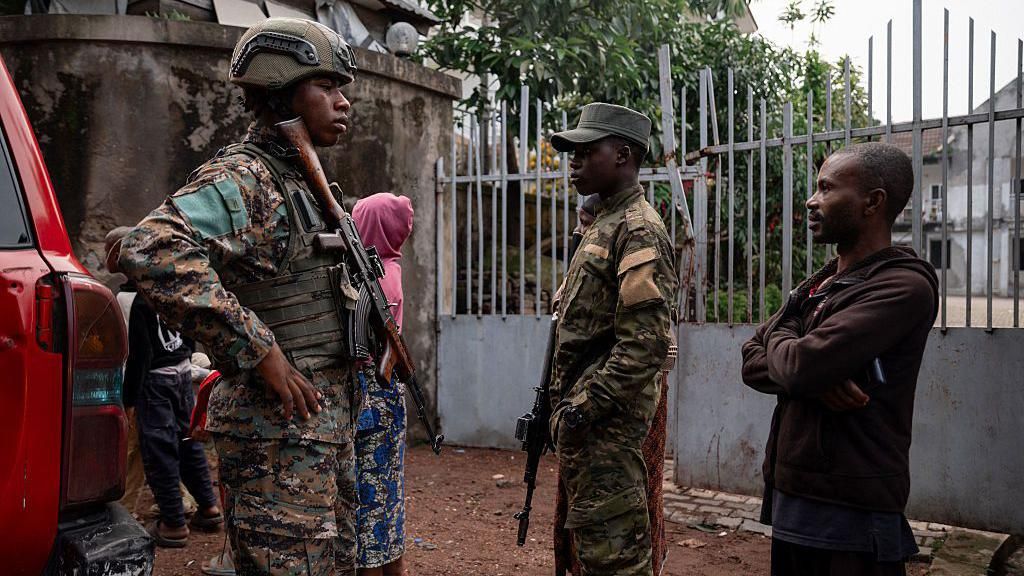
    A deepening political crisis over delayed presidential elections has plunged Somalia’s capital Mogadishu into open armed conflict, with heavy exchanges of gunfire between government forces and opposition fighters continuing through overnight hours after violence first broke out Wednesday evening.

    The root of the standoff dates back to May 15, when President Hassan Sheikh Mohamud’s constitutionally mandated term in office reached its scheduled end. Instead of stepping down to make way for a new administration, the federal government extended Mohamud’s tenure by an additional 12 months—a move the country’s opposition bloc has decried as a clear violation of Somalia’s constitution, prompting organizers to call for mass nationwide protests to be held Thursday.

    Residents across multiple residential neighborhoods in Mogadishu confirmed persistent gunfire echoed through the capital throughout the night, with no immediate ceasefire emerging by early Thursday. In an official statement, Somali police said the military and security deployment was framed as a large-scale security operation targeting heavily armed opposition militias that the government says launched coordinated mortar attacks on multiple populated areas.

    While negotiators from the federal government and opposition factions held talks after the expiration of Mohamud’s term, the two sides failed to bridge their core disagreements, setting the stage for the current escalation of tensions. Notably, Mohamud had positioned himself as a reformer working to transition Somalia to full democratic elections, moving away from the long-standing system where clan elders selected members of parliament, who in turn appointed the country’s president. Somalia has not held a direct one-person, one-vote national election since 1969, and the country has struggled with instability and armed conflict for more than three decades.

    The opposition has ramped up accusations against the government following the outbreak of violence. Former Prime Minister Hassan Ali Khaire claimed government forces targeted him and other opposition leaders as they prepared for Thursday’s planned peaceful demonstrations. Taking to the social platform X to share the allegation, Khaire placed full blame for any potential casualties or property damage on the outgoing president, calling the incident a severe violation of Somali citizens’ constitutional rights and a deliberate effort to outlaw peaceful public assembly.

    As of Thursday morning, official figures for casualties from the overnight fighting have not been released, and President Mohamud has not issued any public comment on the clashes. Former Somali President Sharif Sheikh Ahmed, a key opposition figure, reiterated in a statement on X that the violence would not derail the planned protest movement, saying that opposition leaders and supporters would not be intimidated into stepping back from their demands.

    The international community has already reacted to the escalating crisis, with the U.S. Embassy based in Mogadishu issuing a statement condemning the violence as reckless. The embassy emphasized that all political leaders across all factions hold a shared responsibility to protect Somalia’s hard-won stability and resolve their outstanding political disagreements through diplomatic, peaceful negotiations rather than armed conflict.

  • Four men fined for offensive behaviour after booing at Anzac Day Dawn Service in Melbourne

    Four men fined for offensive behaviour after booing at Anzac Day Dawn Service in Melbourne

    One year after a disruptive act of protest marred one of Australia’s most solemn national commemorations, a Melbourne court has delivered guilty verdicts and substantial fines to four men who interrupted an Indigenous Welcome to Country address during the 2023 Anzac Day Dawn Service.

    The disturbance unfolded shortly before 5:40 a.m. on April 25, as Indigenous Elder Mark Brown stepped forward to deliver his opening welcome to a crowd of thousands gathered at Melbourne’s Shrine of Remembrance. The group—three known members of the now-banned far-right white supremacist organization National Socialist Network, plus a fourth man affiliated with the movement—launched into coordinated booing that cut through the quiet of the dawn service. The heckling was picked up by live broadcast microphones, airing the disruption to television audiences across the nation.

    On Thursday, Magistrate James FitzGerald found all four men—Jacob Hersant, 27, Nathan Bull, 24, Michael Nelson, 22, and Ian Lomax, 35—guilty of offensive behaviour. In his ruling, FitzGerald emphasized that the Dawn Service, a ceremony dedicated to honoring Australian and New Zealand soldiers who died in conflict, is not a platform for political grandstanding. While he acknowledged that Welcome to Country ceremonies remain a topic of public debate in some circles, he rejected the group’s claim that their views justified ruining the solemn occasion for thousands of attendees.

    Three of the offenders—Hersant, Bull and Nelson—are prominent adherents of the neo-Nazi ideology propagated by the National Socialist Network, which was formally designated a prohibited hate group and disbanded earlier this year. All three are currently unemployed. The fourth man, Lomax, a dentist from Ballarat, has already had his medical practice license suspended by the Australian Health Practitioners Regulation Agency over his ties to the extremist group, and he now works as a farmhand.

    Court documents detail that the men split into pairs to spread their disruption across the crowd: Hersant and Bull stood in one section, while Nelson and Lomax positioned themselves elsewhere. After the initial interruption, crowd members removed Nelson and Lomax from the service, but Hersant and Bull continued their heckling through subsequent portions of the ceremony. Hersant was captured on camera shouting vitriolic slogans including, “What about the Anzacs?” and “We don’t need to be welcomed to our own country”. Nelson, meanwhile, was recorded arguing with other attendees and claiming “The Anzacs fought for white Australians” and “The first heads of the RSL were pro-White Australia”.

    In their defense, the three younger men did not deny booing during the address, instead framing their actions as protected political activism. Lomax’s legal team argued that prosecutors had failed to produce sufficient evidence to prove their client participated in the booing. FitzGerald ruled that even though Nelson was removed from the service quickly, his offense was aggravated by deliberate goading of other attendees, noting “In other words you set out to be offensive and you succeeded in being highly offensive.”

    In sentencing, the judge handed down a AU$1,500 fine to Lomax, an AU$1,800 fine to Bull, and AU$3,000 fines to both Hersant and Nelson, with formal convictions recorded against the latter two. Prosecutor Ryan Mallia had previously pushed for a jail sentence for Hersant, citing his extensive prior criminal history tied to far-right extremist activity. Mallia stressed the severity of the offense, noting “It was heard by many people, likely most if not all that were in attendance … On the most sacred day for the Australian public to commemorate fallen soldiers.”

    Outside the courtroom following the verdict, Hersant, Nelson and Bull engaged in a verbal altercation with a female member of the public before police stepped in to separate the parties and de-escalate the conflict.

  • ASX tumbles as Middle East fallout spooks Australian investors

    ASX tumbles as Middle East fallout spooks Australian investors

    Just 24 hours after Australia’s benchmark share index notched an all-time record high, a wave of volatility spurred by developments in the Middle East and a sector-wide pullback for mining stocks erased all recent gains, leaving the country’s major markets in negative territory on Thursday trading.

    The benchmark S&P/ASX 200 finished the session down 99.60 points, a 1.13% drop that closed the index at 8686.10. The broader All Ordinaries index followed a similar trajectory, falling 100.30 points or 1.11% to end at 8916.90. The Australian dollar also weakened slightly against its U.S. counterpart, slipping 0.12% to settle at 71.25 U.S. cents. Of the 11 market sectors tracked by the ASX, six closed in negative territory, with the steepest losses concentrated in mining, telecommunications and technology stocks.

    Among the hardest hit were Australia’s two largest mining giants, BHP and Rio Tinto, which fell more than 3% each to close at $62.80 and $188.08 respectively. The drop came just one day after the firms’ stocks hit record highs. Fortescue Metals extended recent losses to fall a further 4.11% to $21.02, while gold miners Northern Star Resources and Evolution Mining dropped 6.08% and 3.04% to close at $20.39 and $12.10 respectively.

    Cameron Curko, chief investment officer at wealth management firm Pitcher Partners, noted that shifting iron ore supply dynamics also weighed heavily on investor sentiment for the sector. Expanded production at the large Simandou iron ore deposit in the Republic of Guinea is accelerating, he explained, sparking fears of an oversupplied global iron ore market in the near term. “It also follows a period of extreme exuberance for the sector, so some pullback is not surprising,” Curko added.

    Outside of mining, major listed companies also posted steep losses: Telecommunications leader Telstra fell 2.93% to $4.97, while top technology firms including accounting software provider Xero dropped 4.19% to $80.40, logistics software firm WiseTech Global fell 2.93% to $40.14, and health technology firm Life360 tumbled 4.03% to $21.66.

    Much of the day’s market movement was driven by breaking news from the Middle East. Earlier in the day, an Iranian missile attack damaged Kuwait’s international airport, and U.S. military forces carried out targeted strikes near the Strait of Hormuz—one of the world’s busiest and most critical global oil chokepoints—raising fears of disrupted energy supplies that initially sent oil prices surging. That upward momentum faded quickly after Israel and Hezbollah announced a ceasefire along the Israel-Lebanon border, and Brent Crude Oil futures ultimately fell 1.1% to settle at $US96.78 per barrel by market close.

    Justin Lin, an investment strategist for Global X ETFs, explained that repeated false starts for peace negotiations in the Middle East have left markets cautious of reacting to headline news, prompting a broad flight to safe assets during Thursday’s session. “The distinct mood across markets today was a retreat to safety, with consumer staples and utilities leading the way while materials and information technology lagged,” Lin said. “This came despite oil prices moving lower on news of a ceasefire between Israel and Lebanon, a development that has historically supported the Australian market and more risk sensitive exposures.”

    Not all stocks closed in negative territory on Thursday. Treasury Wine Estates was a standout gainer, soaring 13.11% to close at $4.66 after the winemaker reaffirmed its full-year projected earnings guidance of between $480 million and $490 million alongside plans to cut up to a dozen low-performing wine brands from its portfolio. On the other hand, medical imaging technology firm Pro Medicus slipped just 0.25% to $159.23 after announcing a new five-year, $16 million contract with Ohio State University Wexner Medical Center.

  • Nepali climber alive after six days missing on Everest

    Nepali climber alive after six days missing on Everest

    In an extraordinary story of survival that has stunned the global mountaineering community, a Nepali climbing guide declared lost and presumed dead after six days stranded on Mount Everest has been rescued alive, having crawled nearly the entire distance to Base Camp unaided, officials confirmed to AFP Thursday.

    Fifty-something Dawa Sherpa, a veteran guide widely known by the nickname “Hillary” in honor of legendary Everest pioneer Edmund Hillary, disappeared from the upper slopes of the world’s highest peak amid brutal weather conditions in the early hours of May 30. He was located Thursday morning near Base Camp by personnel from the Sagarmatha Pollution Control Committee (SPCC), a Nepali organization tasked with maintaining climbing routes and removing discarded waste from the mountain.

    “He was found by an SPCC team this morning close to base camp — he was crawling down,” Pemba Sherpa, a representative from 8K Expeditions, the company that coordinated the search and rescue operation, told reporters. A rescue helicopter airlifted the climber directly to Kathmandu, where an AFP on-site team observed him being carried from the aircraft on a stretcher and transferred to HAMS Hospital for treatment.

    Pemba Sherpa added that after consulting with attending physicians, the guide is conscious and only suffering from minor frostbite, with no other life-threatening injuries. His wife, Damu Sherpa, spoke from the hospital Thursday, describing her family’s overwhelming shock and joy at the miracle outcome. “We had given up all hope, we even began traditional death puja prayers for his soul yesterday,” she shared. “Hearing he was alive was more happiness than we ever dared to imagine.”

    The events that led to Dawa Sherpa being stranded began on the evening of May 29, when he guided former British Royal Marine and climber Chris Thrall to a successful summit of the 8,849-meter peak by approximately 5:00 pm. Before Dawa Sherpa went missing, Thrall had posted an Instagram tribute Wednesday mourning what he believed was his guide’s passing, calling him an “absolute gentle giant of a man and a true ‘tiger of the mountains’”.

    Thrall recounted that the pair began their descent from Camp Four, which sits roughly 7,950 meters above sea level just below the oxygen-starved “death zone,” on May 30. As they climbed down, Dawa Sherpa paused to rest, telling Thrall to continue ahead without him — a common occurrence between guides and clients on large expeditions. As Thrall moved down, he encountered a Polish climber in critical condition: the mountaineer had exhausted his supplementary oxygen, already developed frostbite, and was at high risk of deadly hypothermia.

    This season’s summit conditions were unusually harsh, Thrall explained: what is typically a five-day round trip to the summit stretched to 11 days for his team. Faced with an impossible choice, Thrall opted to assist the imperiled Polish climber, sharing his own oxygen supply as the pair descended. The trip that normally takes just two hours to Camp Three took 11 hours due to severe conditions, leaving Thrall unable to return for Dawa Sherpa.

    Search teams launched efforts to locate the missing guide immediately, but harsh weather and the timing of the expedition — one of the final permitted climbs of the spring season, when few other climbers remain on the mountain — left no trace of him until Thursday’s unexpected discovery. Five other climbers, two Indian mountaineers and three Nepali guides, have already lost their lives on Everest during the 2026 spring climbing season. Initial counts from Nepali authorities show that more than 1,000 climbers have summited the peak this season, making it the busiest climbing season in Everest’s history.

  • Armed clashes erupt in Somalia’s capital ahead of a planned anti-government demonstration

    Armed clashes erupt in Somalia’s capital ahead of a planned anti-government demonstration

    Fresh armed violence has shaken Somalia’s capital Mogadishu, as clashes between supporters of opposition political figures and national state security forces broke out Wednesday evening, just one day ahead of a scheduled anti-government demonstration. No official casualty statistics have been released in the immediate aftermath of the fighting, which has drawn urgent calls for de-escalation from both the United Nations and the United States, as the two rival political factions trade blame for the unrest.

    Local residents across multiple affected neighborhoods reported sustained heavy gunfire and loud explosions throughout the confrontation. Abdullahi Mohamed, a resident of Mogadishu’s Howlwadaag district, described widespread panic forcing residents to flee their homes. “We heard heavy weapons fire, and people were fleeing their homes,” Mohamed said. “Many families left the area looking for safer places.”

    Opposition leaders say their planned Thursday rally was organized to protest what they claim are unconstitutional violations by President Hassan Sheikh Mohamud, including unilateral efforts to extend his time in office. The president’s administration has flatly denied all of these allegations.

    In an official statement, Mogadishu police framed the unrest as premeditated “organized attacks” carried out by armed militias connected to opposition political groups seeking to undermine state authority. “The incidents were not the organization of peaceful public demonstrations, but rather coordinated armed acts that directly threatened the security, order and stability of the capital,” the police statement read. Security forces successfully repelled attacks on their outposts, authorities confirmed, adding that investigations are already underway to identify all individuals involved in organizing, funding, and executing the violent actions.

    Opposition leaders have pushed back with a competing narrative, accusing security forces of launching unprovoked attacks on residential properties tied to two top opposition figures: former Prime Minister Hassan Ali Khaire and former President Sheikh Sharif Sheikh Ahmed. “We are under attack,” Khaire said in his own statement. “For the second time in less than 24 hours, Hassan Sheikh Mohamud has directed armed forces against our peaceful gatherings.” Khaire added that the attack took place while traditional elders, politicians, and community leaders were gathered at his residence for a meeting. The Somali government has rejected this version of events entirely.

    The United Nations quickly voiced alarm over the outbreak of violence. UN Secretary-General António Guterres confirmed the clashes have left civilians dead and injured, alongside widespread damage to critical public infrastructure. “The Secretary-General strongly condemns all acts of violence and incitement to violence undertaken for political advantage,” Guterres’ statement read. He also called on all parties to immediately exercise maximum restraint, prioritize the safety of civilian populations, and resolve long-running political disagreements through constructive dialogue.

    The United States echoed that concern, with the U.S. Embassy in Mogadishu labeling the violence “reckless” and urging all Somali political leaders to pursue a peaceful negotiated resolution. “Somali leaders on all sides have a responsibility to preserve stability and resolve differences through peaceful means,” the embassy said in a statement. “Actions taken in the coming hours and days may have lasting consequences for Somalia’s security, unity, and future.”

    Khaire further alleged that Mohamud has redirected military resources trained and equipped by international allies – originally intended to combat the al-Shabab extremist insurgency – to target political opposition figures.

    The latest clashes underscore a steady erosion of trust and deepening political rift between Mohamud’s administration and opposition leaders, driven by long-running disputes over the country’s electoral framework and constitutional future. This internal tension comes as Somalia continues its years-long campaign to defeat al-Shabab, while working to build durable democratic state institutions with extensive support from the international community.

  • Knicks lead NBA Finals after late run beats Spurs

    Knicks lead NBA Finals after late run beats Spurs

    The opening clash of the 2026 NBA Finals delivered a dramatic turnaround for the ages, as the New York Knicks erased a 14-point third-quarter deficit to secure a 105-95 road win over the San Antonio Spurs on Wednesday.

    Led by veteran floor general Jalen Brunson, who poured in 13 of his game-high 30 points in the final frame, the Knicks closed out the contest with an unanswered 11-point run over the closing two minutes to pull away from the hosts. The victory marked New York’s 12th consecutive postseason win, tying the record for the second-longest winning streak in NBA playoff history — a mark that was previously set by the 1999 Spurs, the last team to defeat the Knicks in an NBA Finals matchup.

    This comeback is far from an anomaly for the 2023-2024 Knicks: Game 1 marked the fourth time this postseason that the team has rallied from a double-digit halftime deficit to claim victory. In the Eastern Conference Finals opener against the Cleveland Cavaliers, New York even overcame an even larger 22-point hole to kickstart their run to the Finals.

    Karl-Anthony Towns, the 2015 first overall pick who notched a double-double of 18 points and 12 rebounds in Game 1, credited New York’s passionate fanbase and the iconic grit of the city for the team’s repeated ability to fight back from big deficits. “It’s something that’s in the city, you feel that energy in the city. The grit, the grind, the hard work you’ve got to put in to make it in the city. I think we reflect our fans and their lifestyles and what it takes to make it in New York City, when we step on that court with the Knicks jersey,” Towns told reporters postgame.

    For the Spurs, the night was marked by an uncharacteristically off performance from generational rookie star Victor Wembanyama. While Wembanyama led the team in scoring with 21 points, he connected on just 6 of his 21 field goal attempts, struggling to find his rhythm against New York’s aggressive interior defense. The 7-foot-4 phenom remained unshaken by the underwhelming outing, noting his confidence in bouncing back in the next game. “We’ve been down in a series before – never in the Finals – but I’m not kicking myself about anything. I was bad, it’s not more complicated than that. I’m not worried in the slightest,” Wembanyama said.

    The best-of-seven championship series will remain in San Antonio for Game 2 on Friday, before the teams travel to New York to face off at Madison Square Garden for Game 3 on Monday. The Knicks are currently vying for their first NBA championship title in more than five decades, with their last title win coming all the way back in 1973.

  • Indian film union drops boycott call against Bollywood star Ranveer Singh

    Indian film union drops boycott call against Bollywood star Ranveer Singh

    A high-profile drama unfolding in India’s iconic Bollywood film industry has taken a new turn, with the Federation of Western India Cine Employees (FWICE) reversing its earlier call for industry members to stop working with A-list actor Ranveer Singh, following his unexpected departure from the much-anticipated action sequel *Don 3* just weeks before a scheduled overseas production shoot.

    The union first rolled out the informal ban last month, after production team behind *Don 3* filed an official complaint alleging that Singh had walked away from the project unexpectedly. At the time of his exit, producers had already poured roughly 450 million Indian rupees (equivalent to $4.7 million USD) into pre-production work for the big-budget franchise installment.

    The reversal of the boycott came only after Singh reportedly submitted a formal legal notice to the film industry body, though the BBC has not independently obtained or verified a copy of this document. In public comments released this week, FWICE president BN Tiwari affirmed the union’s support for Singh, noting that the Indian film community stands behind the star and that the federation’s legal team will prepare an official response to the notice.

    FWICE chief adviser Ashoke Pandit clarified that the decision to lift the ban came after multiple leading industry organizations pushed for a de-escalation of the conflict. Pandit also extended an invitation to Singh for in-person talks to resolve the underlying dispute. “We celebrate his stardom… We don’t have any authority to ban anyone. We are hopeful that there will be a positive reaction from Ranveer,” Pandit told Indian broadcaster NDTV.

    To date, Singh has not issued any public statement addressing the *Don 3* conflict directly. His spokesperson previously released a brief comment noting that Singh holds the Indian film industry and the *Don* franchise in the “highest regard” and had chosen to refrain from public comment on the matter amid ongoing discussions.

    The *Don* franchise is one of Bollywood’s most valuable and long-running action intellectual properties. It first launched back in 1978, with Bollywood legend Amitabh Bachchan in the titular lead role. Filmmaker Farhan Akhtar, who is attached to direct *Don 3*, rebooted the franchise in the early 2000s with global superstar Shah Rukh Khan headlining the new installments. When *Don 3* was formally announced in 2023, Ranveer Singh was tapped as the new lead to carry the franchise forward into its next era.

    Singh is one of Bollywood’s biggest contemporary leading men, famous for his over-the-top public persona and a string of commercially successful critical hits including *Padmaavat* and *Gully Boy*. His most recent release, the two-part spy thriller *Dhurandhar*, ranks among the highest-grossing Indian films of recent years.

    This is not the first time FWICE has taken coordinated action against high-profile industry figures, though such moves remain rare. The organization has previously called for Indian artists to avoid working with Pakistani performers during periods of heightened cross-border tension, and in 2025 it issued a similar non-work directive against popular actor-singer Diljit Dosanjh after he appeared alongside Pakistani actor Hania Aamir in a Punj-language film.

    This current controversy is also not the first public pushback Singh has faced in his career. In 2025, he drew widespread criticism for mimicking a sacred cultural ritual sequence from the hit Kannada film *Kantara* during a public film festival appearance. Critics accused him of disrespecting the sequence’s cultural significance, and Singh ultimately issued a public apology to resolve the backlash.

  • Sherpa guide missing for a week on Mount Everest rescued while crawling to base camp

    Sherpa guide missing for a week on Mount Everest rescued while crawling to base camp

    KATMANDU, Nepal — In an extraordinary survival story that has shocked the mountaineering community, a veteran Sherpa mountain guide has been recovered alive from the slopes of Mount Everest seven days after he went missing during the closing days of this year’s record-breaking climbing season, rescue officials confirmed Thursday. A rescue helicopter was transporting the guide to a Kathmandu hospital for urgent evaluation and care Thursday afternoon.

    The guide, 52-year-old Dawa Sherpa, was last spotted on May 29 as he descended the world’s highest peak alongside his Polish climbing client. While the client successfully made it to Everest’s base camp to conclude the expedition, Dawa never arrived. The pair was among the final groups of climbers on the mountain as the 2024 climbing season wrapped up, and the fixed safety routes that support summit attempts were already being taken down, leaving the mountain largely unoccupied for the coming off-season.

    Pemba Sherpa, a representative of 8K Expeditions, the adventure company that was in charge of coordinating the search operation for Dawa, shared that the missing guide was discovered by a mountain cleaning team early Thursday morning. At the time of his discovery, he was slowly crawling down a snow-covered slope in the Khumbu Icefall region, located just above base camp, in one of the most dangerous sections of the entire Everest climbing route.

    Shortly after being spotted, rescuers carried Dawa down to a secure lower elevation at base camp, where he was immediately given food, water, and initial first aid to address his week of exposure to extreme high-altitude conditions. A dedicated rescue helicopter was deployed to the site within hours to airlift him to a specialized hospital in Kathmandu, the Nepalese capital.

    Despite Dawa going missing a full week before his discovery, search operations were delayed in launching, according to local expedition officials. An initial aerial search carried out by helicopter earlier this week had failed to locate the guide, leaving search teams holding out little hope of finding him alive.

    The team that made the life-saving discovery is part of the Sagarmatha Pollution Control Committee, a Nepalese organization that manages Everest climbing infrastructure each season. At the start of every climbing window, the committee installs fixed ladders and safety ropes across the mountain’s icy routes to support climbers; when the season ends, it removes all equipment to minimize environmental impact and cleans up tons of waste left by expeditions each year.

    Dawa hails from Okhaldhunga, a mountain town located south of Everest, and works for Himalayan Traverse, a small adventure outfitter based in Kathmandu. This year’s climbing season on Everest made history as the busiest on record, with more than 1,000 climbers and their guides successfully reaching the 8,849-meter (29,032-foot) summit throughout May.

    The 2024 season also got off to a late start: a massive unstable ice block formed on the route just above base camp, requiring two weeks of intensive work to clear before climbing could resume. The first successful recorded ascent of Everest was completed on the same date Dawa was last seen this year — May 29 — in 1953, by New Zealand mountaineer Edmund Hillary and Sherpa guide Tenzing Norgay.

  • US House approves measure to restrain Trump action in Iran

    US House approves measure to restrain Trump action in Iran

    WASHINGTON — In a landmark bipartisan rebuke of the Trump administration’s foreign policy, the U.S. House of Representatives passed a binding resolution on Wednesday that would compel President Donald Trump to pull all U.S. military forces out of the ongoing war with Iran and require explicit congressional authorization for any future military action against the country.

    The final vote tally stood at 215 in favor to 208 opposed, with four House Republicans breaking ranks to join every Democratic member in supporting the measure. This vote marks the most significant pushback against Trump’s management of the months-long conflict to date. The war has already resulted in the deaths of more than a dozen U.S. military service members, claimed the lives of thousands of Iranian civilians, and wreaked havoc on global commodity supply chains. Blockades of the Strait of Hormuz, a critical global shipping chokepoint, have disrupted international flows of both oil and fertilizer, driving up global market prices.

    This resolution, which leverages Congress’s constitutional War Powers authority to limit executive branch ability to initiate or escalate military engagements, narrowly failed to pass the House just one month prior, deadlocking at a 212-212 tie vote.

    While parallel measures in the U.S. Senate have previously failed to advance, the political landscape shifted recently after Louisiana Republican Senator Bill Cassidy lost his party’s primary election. Cassidy has since joined Senate Democrats and a small group of fellow Senate Republicans to advance the Iran War Powers resolution, though a final floor vote on full passage has not yet been scheduled.

    The House resolution was sponsored by Rep. Gregory Meeks of New York, the ranking Democratic member of the House Foreign Affairs Committee. In a separate legislative action, Michigan Democratic Rep. Rashida Tlaib has introduced an additional War Powers resolution that would force the withdrawal of U.S. troops from Lebanon, where Israel – backed by U.S. weapons and funding – has launched a large-scale military offensive.

    The passage of the Iran resolution, achieved even in a House controlled by the Republican Party, underscores the growing intraparty dissent against President Trump’s policies among congressional Republicans.

    In a separate development highlighting rifts within the party, Senate Republicans have rejected a Trump administration proposal to create a $1.8 billion compensation fund for individuals who claim they were wrongfully prosecuted by the U.S. Department of Justice. The fund would have covered individuals convicted for their role in the January 6, 2021 attack on the U.S. Capitol who were later pardoned by Trump. Following the opposition, the administration pulled back from the proposal, after disputes over the fund derailed progress on broader legislation to fund immigration and deportation operations for the remainder of Trump’s second term.