作者: admin

  • ‘Where’s it come from?’: Business owners smashed by RBA surcharge change

    ‘Where’s it come from?’: Business owners smashed by RBA surcharge change

    Starting October 1, 2026, one of Australia’s most widely resented hidden consumer fees will disappear entirely, as the Reserve Bank of Australia (RBA) enforces a full ban on card payment surcharges. But small business owners across the country are already sounding the alarm: the policy change will backfire dramatically, pushing up general prices for all Australian consumers and forcing many small operators to close their doors.

    The RBA’s long-awaited review of merchant payment costs and surcharging, released Tuesday, outlined three major reforms to Australia’s retail payment network. The core change is a total ban on separate card surcharges, requiring all businesses to include credit and debit card processing costs in their advertised sticker prices. To offset the burden of this shift, the central bank is lowering interchange fees – the charges paid by a merchant’s bank to a customer’s card-issuing bank – and has pledged to increase transparency around fees levied by major card networks. The RBA projects the reforms will save Australian consumers up to $1.6 billion annually, even as officials acknowledge not all savings will reach household budgets.

    But small business owners say the RBA’s math ignores the reality of operating on thin margins amid a prolonged cost of living crisis, and argue any lost revenue from eliminated surcharges will simply be passed to shoppers through higher base prices.

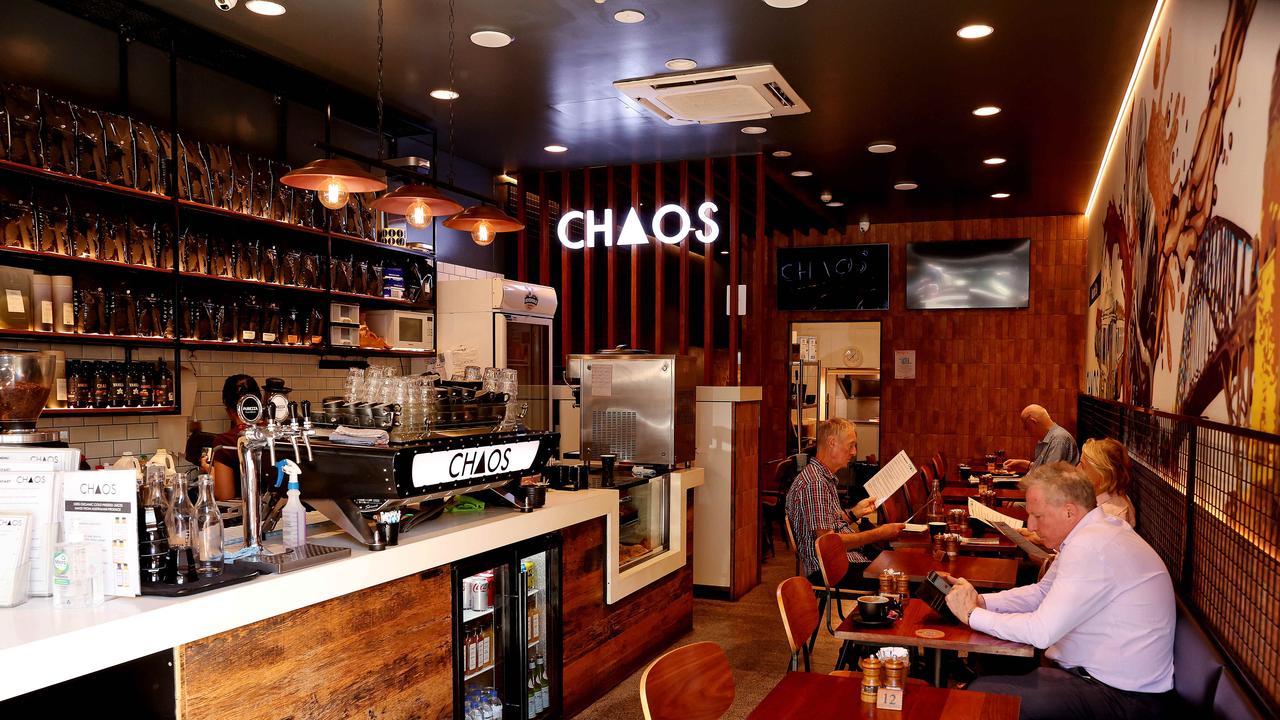
    Kodar Eid, owner of Chaos Cafe with locations in Neutral Bay and Mosman, warned the change will deliver a devastating financial hit. For his Neutral Bay store alone, Eid estimates annual costs will jump by $22,000 when the ban takes effect. “That $22,000 isn’t going to disappear – where do you think it’s going to come from? What margin do you think I’m working with?” Eid asked. “Cost of living affects small businesses too. Small businesses absorb as much as they can, but if I take a $22,000 hit, I’ll be one of the businesses that close.”

    Eid explained that for nearly 13 years, separate surcharges allowed his cafe to keep base menu prices lower, meaning customers paying with cash or debit cards did not bear the cost of credit card processing. The timing of the ban, he added, could not be worse: cafes already face soaring energy and supply chain costs, with many operators absorbing extra supplier fuel levies to keep prices low for struggling households. As discretionary spending drops amid cost of living pressures, cafes are already seeing fewer customers, and the new cost burden will only worsen the crisis. “The people in the room that made the decision, don’t they have a background in economics?” Eid said. “We are supposed to be happy they slugged the banks 0.3 per cent – seriously. Why not tell the bank to absorb the 1.2 per cent and the small business can cop the 0.3 per cent.”

    Industry leaders echo Eid’s concerns, arguing the ban shifts the entire cost of card processing onto small businesses and all consumers, rather than forcing card users to pay for the benefits they receive. John Arnott, director of AMP Bank Go, said that if bank processing fees remain high, small businesses have no choice but to pass the costs onto all consumers through higher sticker prices.

    “If surcharges are banned but bank fees stay high, small businesses are left carrying the cost. Australians will pay, just in less visible ways,” Arnott said. “You may not see a surcharge at the terminal, but you will start to see the surcharge flow through to the ticket. And small businesses are telling us they’ve got no choice. They’re already running on the smell of an oily rag.”

    Arnott added that while big banks and card networks continue to record billions in annual profits, small business conditions are worsening rapidly. “If banks don’t slash card fees, Australians will keep paying – full stop. At some point, enough is enough, and small businesses need to start voting with their feet. And the payments industry needs to walk the talk.”

    Critics also point out that cash and debit card users will be the biggest losers under the new rule. Currently, Australians pay roughly $1.6 billion in annual card surcharges, while businesses pay $200 million in fees to card providers. Jason Bryce, founder of Cash Welcome, argues that by banning surcharges for both debit and credit cards, the RBA has gone far beyond the original goal of cutting consumer costs – a move first flagged by the Prime Minister as a cost of living relief measure for debit card users.

    “I’m concerned cash users are going to end up paying for the frequent flyer points and the benefits that accrue to people using fancy premium credit cards,” Bryce said. “So who is losing? Ordinary bank account holders with a debit card, cash users, people on a budget – and I can’t see how small businesses are going to like this at all.”

    Bryce added that the ban does not eliminate processing fees, it simply hides them. “There’s no transparency, no little sign at the cash register that says if you pay this way it will cost you this much. Those signs, while very annoying, are very transparent.” He also noted that the RBA’s original 1990s surcharge framework made Australia a global leader in transparent card transaction pricing, a status the new reforms will end.

    Not all observers oppose the change, however. Sally Tindall, data insights director at comparison site Canstar, said the reforms will simplify checkout pricing and crack down on hidden price-gouging. Canstar survey data of 3,001 Australian adults found 33 percent of shoppers switch to cash when a surcharge is applied, indicating widespread frustration with separate checkout fees.

    “These changes will simplify the system, stop any price-gouging and help consumers compare apples with apples at the checkout,” Tindall said. “It’s a tiny fee in isolation, but plonked on top of the cost of a flat white every day, is enough to make people see red.”

    But for small business owners already teetering amid rising costs, the reform is just one more burden that will leave both operators and consumers worse off. Arnott summed up the widespread industry concern: “It’s tough for small business right now, and the way things are headed, there’s only going to be more pain. Supporting local businesses matters – they’re at the heart of our communities and local economies. It’s your mate, your cousin, your local barista.”
  • Iran announces new air defence used to down US fighter jet

    Iran announces new air defence used to down US fighter jet

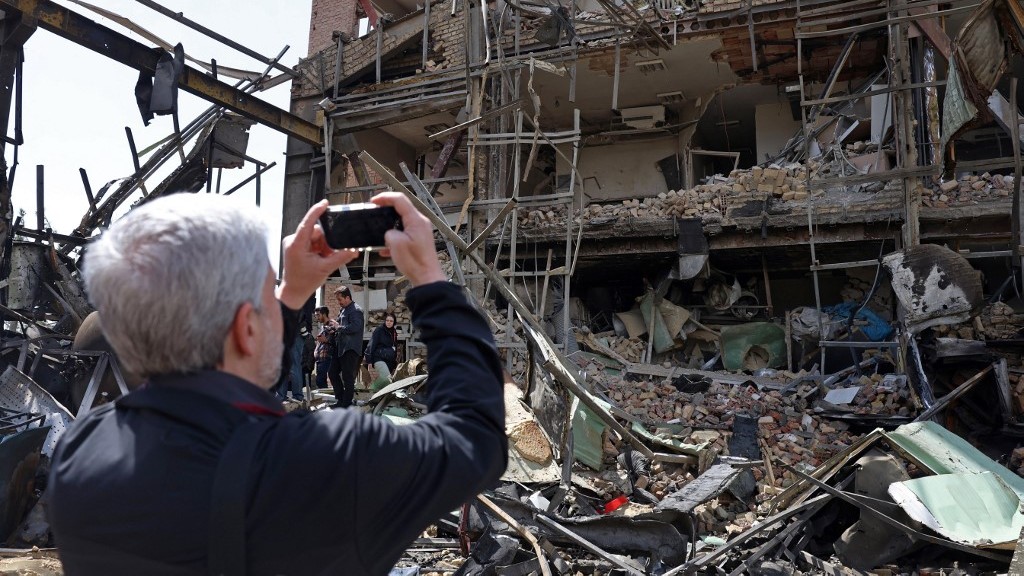
    Tensions between Iran and the United States have spiked dramatically in recent days following a confrontation near the strategically critical Strait of Hormuz, where Iran’s newly unveiled domestic air defense system engaged and downed at least one U.S. military aircraft. Iran’s state media has confirmed the engagement, marking a sharp escalation in the long-running standoff between the two nations over control of the key global oil shipping chokepoint.

    The announcement of the new air defense system was made by a spokesperson for Iran’s Khatam al-Anbiya Joint Military Command, who emphasized that the indigenous technology — developed by the country’s homegrown cohort of young scientists and engineers — has put Tehran on track to gain full, unchallenged control of its national airspace. In a strongly worded statement directed at foreign adversaries, the spokesperson warned that successive deployments of these advanced systems would continue to demonstrate the failure of hostile powers’ ambitions in the region, exposing their military weakness to the international community.

    According to initial Iranian reports, the strike targeted an enemy A-10 Thunderbolt II, a single-seat U.S. jet purpose-built for close air support of ground troops, operating in airspace near the Strait of Hormuz. Confirming details of the incident, *The New York Times* reported that the downed jet’s lone pilot survived the crash and was recovered by U.S. forces. Multiple U.S. outlets have also expanded on the incident: an anonymous senior U.S. official speaking to NBC News shared that two U.S. helicopters deployed to the rescue mission were also targeted by Iranian defensive fire, though all crew members on board the helicopters escaped without injury. In total, two U.S. combat aircraft were downed in Friday’s exchanges, according to Iranian military accounts.

    The confrontation comes amid a rapidly building U.S. military buildup in the Persian Gulf region. Over recent weeks, Washington has deployed thousands of additional troops to the area, a move that has fueled widespread speculation among global analysts that the U.S. is preparing for a potential ground operation to seize Iranian-controlled islands in the Strait of Hormuz — a suggestion that U.S. government officials have not formally denied.

    The escalating crisis has drawn comment from former U.S. President Donald Trump, who issued a stark ultimatum to Iran via his Truth Social platform on Saturday. Repeating a reference to his own previous threats against the Islamic Republic, Trump wrote, “Remember when I gave Iran ten days to MAKE A DEAL or OPEN UP THE HORMUZ STRAIT. Time is running out – 48 hours before all Hell will reign [sic] down on them.”

    The Strait of Hormuz remains one of the most geopolitically sensitive waterways on the planet, with roughly 20% of the world’s total oil shipments passing through the narrow channel annually. Any sustained disruption to shipping through the strait would trigger immediate, far-reaching consequences for global energy markets and international security, making the current standoff a point of intense concern for world powers.

  • Iraq closes southern border crossing with Iran following deadly strike

    Iraq closes southern border crossing with Iran following deadly strike

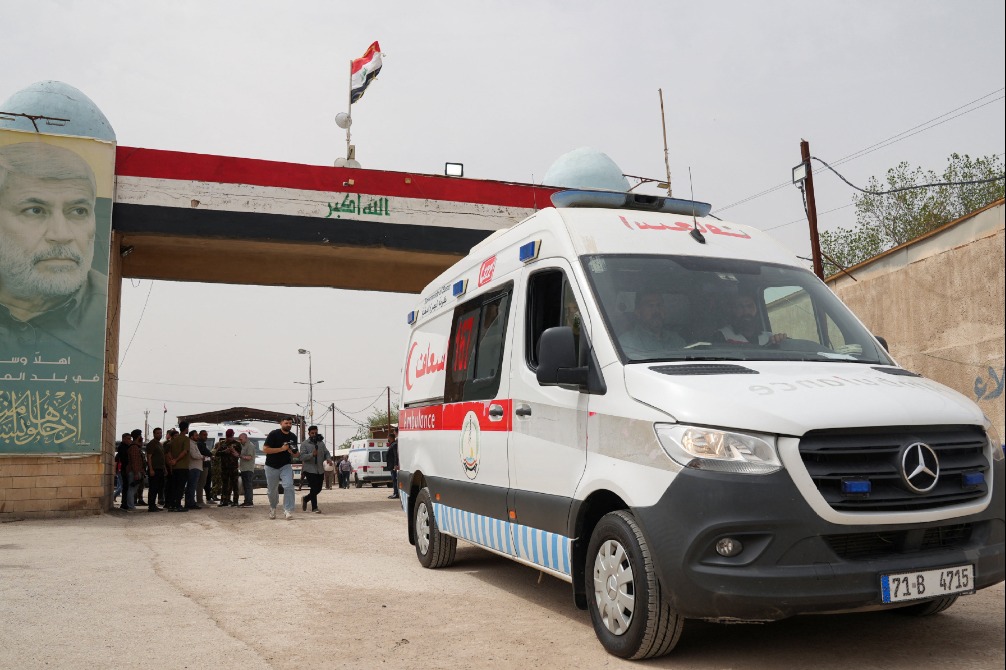
    BAGHDAD – In a move that underscores escalating regional instability across the Middle East, Iraqi officials ordered an immediate closure of the busy Shalamcheh border crossing with Iran on Saturday, April 4, 2026, after a deadly airstrike on the Iranian side of the checkpoint killed one Iraqi citizen and wounded five more.

    Omar al-Waeli, chairman of Iraq’s official Border Ports Commission, confirmed to the Iraqi News Agency that the airstrike targeted the crossing’s passenger terminal in the early hours of Saturday. The fatal blast claimed the life of an Iraqi passenger traveling through the facility, while the five injured victims were all transferred to medical centers inside Iranian territory for treatment, al-Waeli added.

    Local Iraqi media reports note the strike occurred at the same time that convoys carrying humanitarian donations and logistical support were entering Iran through the Shalamcheh crossing. Situated in Iraq’s southern Basra Province, the border post serves as one of the most critical commercial and travel arteries connecting the two neighboring countries, handling large volumes of bilateral trade and cross-border tourism on a regular basis.

    The closure of the key southern crossing comes as a separate deadly attack rocked another Iraqi border checkpoint just hours later. Iraq’s paramilitary Popular Mobilization Forces (PMF) announced Saturday that one of its fighters was killed and four additional members were wounded in a joint US-Israeli airstrike at the al-Qaim border crossing, located in Iraq’s western Anbar Province near the Syrian border. The PMF statement added that an employee of Iraq’s Ministry of Defense was also injured in the strike on the group’s 45th Brigade operating at the post.

    Both attacks unfolded against a backdrop of sharply heightened tensions across the Middle East, which began when joint US-Israeli airstrikes on targets inside Iran launched on February 28 triggered a wave of retaliatory strikes by Iran and its regional allied militias against US and Israeli interests across the region. The latest attacks on Iraqi border crossings have further stoked fears that the ongoing conflict spillover could disrupt critical trade routes and deepen instability in Iraq, which has long faced collateral damage from regional power clashes.

  • Meloni hails arrest of top crime family suspect after raid at an Italian resort

    Meloni hails arrest of top crime family suspect after raid at an Italian resort

    ROME, Italy — Italian law enforcement has scored a major victory against one of the country’s most infamous organized crime networks, with the capture of high-profile fugitive Roberto Mazzarella, an alleged Camorra crime boss who had evaded authorities for years. The 48-year-old suspect was taken into custody Friday during a targeted operation at a luxury villa on the Amalfi Coast, southern Italy, after investigators uncovered that he had been renting the property using forged identity documents, authorities confirmed over the weekend.

    In a public statement issued late Saturday, Prime Minister Giorgia Meloni, who is currently traveling on an official diplomatic tour of Gulf nations, offered public praise to Italian police for the successful operation. Meloni framed the arrest as a critical victory against the Camorra, the Naples-born criminal syndicate known for decades of violence, extortion, and organized criminal activity across Italy and beyond.

    “This sends a clear message that the state will not back down” in its fight against organized crime, the prime minister wrote in an online social media post confirming the arrest.

    Mazzarella has been a target of Italian manhunts for decades, facing charges linked to a deadly 2000 shooting that left one person dead at a delicatessen in central Naples. His capture marks one of the most significant law enforcement successes against the Camorra in recent years, ending a long period of evasion that had made him one of the country’s most wanted fugitives.

  • Colorful, creative kites fly over Adelaide

    Colorful, creative kites fly over Adelaide

    On a bright Saturday in early April 2026, the open skies above Adelaide, the coastal capital of South Australia, transformed into a sprawling, moving canvas of color as the 2026 Adelaide International Kite Festival kicked off its annual celebration of creativity, craft, and community. Hundreds of kites, ranging in size from palm-sized handheld designs to massive, elaborate structures spanning dozens of meters, lifted off from festival grounds to dance with the southern Australian breezes. Each piece brought one-of-a-kind artistry to the horizon: some featured bold, saturated geometric patterns that popped against blue sky, others were shaped like whimsical creatures, iconic pop culture figures, and abstract artistic installations, created by both local hobbyists and international kite makers who traveled to Adelaide for the event. The festival, which draws thousands of spectators and participants from across Australia and around the world each year, turns the city’s open coastal and parklands into a lively gathering space for people of all ages, welcoming families, photography enthusiasts, and craft lovers alike to watch the sky come alive with inventive flying designs. As of the opening day on April 4, 2026, the colorful displays have already drawn large crowds, with the event set to run through the weekend to showcase the skill and imagination of kite creators from around the globe. Photographs from the opening day captured the vivid contrast between the multi-hued kites and the clear Adelaide sky, highlighting the festive, joyful atmosphere that has become a trademark of the international gathering.

  • Search for missing airman presents serious test for US

    Search for missing airman presents serious test for US

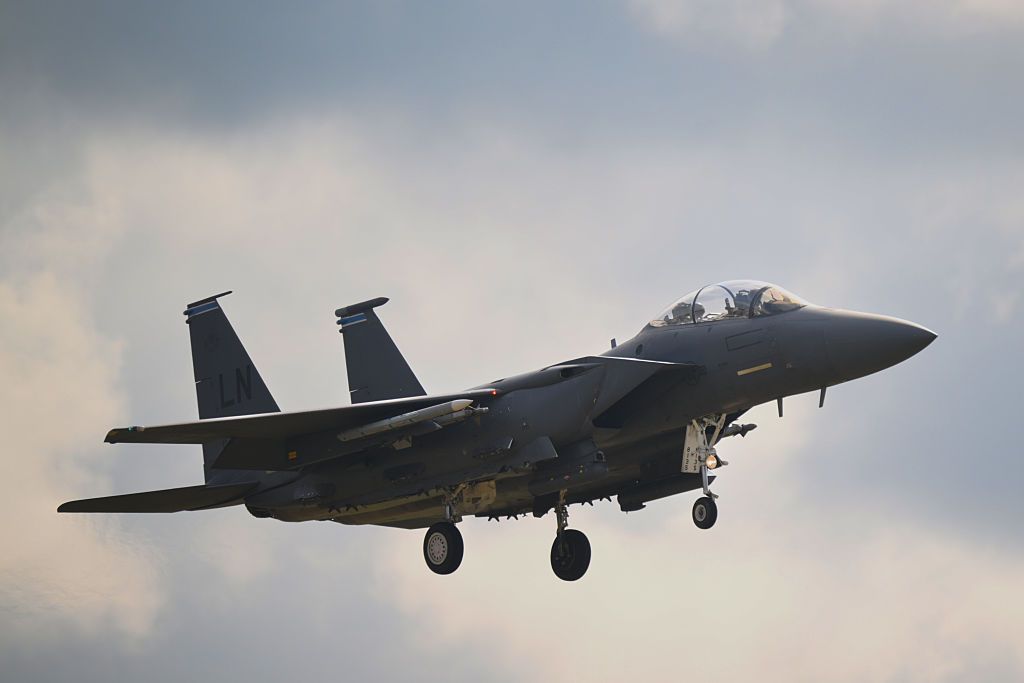
    The recent downing of a U.S. F-15 Eagle fighter jet over Iranian territory has upended weeks of bold claims from the Trump administration about American military dominance in the region, leaving one of the two crew members unaccounted for and throwing the already volatile conflict between Washington and Tehran into a dangerous new phase.

    Prior to the incident, President Donald Trump insisted Iran’s air defense capabilities had been so severely degraded that it could not effectively challenge American aircraft operating in its airspace. Defense Secretary Pete Hegseth doubled down on this assertion, declaring the U.S. had secured total air superiority over Iran. Friday’s shootdown, however, delivers a major setback to these claims, proving that Iran retains at least limited capacity to defend its sovereign airspace against incursions.

    The situation grew increasingly tense after it emerged that the U.S. national security team spent much of Thursday briefing the president in the White House West Wing on a search-and-rescue mission that itself came under fire from Iranian forces. While U.S. media reports indicate both crew members sustained injuries but managed to escape Iranian territorial airspace, one remains missing, and both U.S. and Iranian forces are now locked in a urgent race to locate him.

    According to BBC sourcing, Iran’s Islamic Revolutionary Guard Corps (IRGC) has launched a widespread search operation, deploying military troops and enlisting local communities with a $66,000 reward offered for capturing the missing weapons systems officer alive.

    Publicly, President Trump has sought to downplay the incident, arguing it will not derail ongoing negotiations with Tehran aimed at ending the conflict that began with joint U.S. and Israeli strikes on Iran on February 28. Privately, however, U.S. officials are said to view the missing airman’s fate as a major strategic and political risk.

    If Iranian forces capture the American service member, the implications for the conflict could be far-reaching. At a minimum, it would represent a significant political embarrassment for the Trump White House. Iran could also choose to parade the captured airman for propaganda purposes, echoing the traumatic 1979-1981 Iran hostage crisis that saw 52 American diplomats held captive for 444 days. That crisis left deep, lasting political scars on the United States, and was only resolved after Washington lifted key sanctions and unfroze nearly $8 billion in Iranian assets.

    Decades later, the legacy of past hostage crises continues to shape U.S. policy. Successive U.S. administrations have gone to extreme lengths to secure the release of detained Americans, sometimes through tactics that sparked fierce political backlash. In 2014, for example, the Obama administration exchanged five Taliban detainees held at Guantanamo Bay for U.S. Army Sergeant Bowe Bergdahl, who had been captured by the Taliban in Afghanistan five years earlier. Critics of the deal argued it created a dangerous incentive for future militant groups to take American hostages.

    The possible capture of the missing F-15 crew member presents the Trump administration with two starkly different paths forward. On one hand, political pressure would almost certainly mount on the president to order aggressive new military escalation in response to the capture. On the other hand, the situation could also create an opening to pause ongoing strikes and pursue quiet backchannel diplomacy to secure the airman’s release. Either way, if Iran gains custody of the American and uses him as a bargaining chip, it will amount to one of the most serious tests of the Trump administration’s handling of the conflict to date.

    On Capitol Hill, lawmakers have offered prayers for the missing airman and voiced support for U.S. forces, but new political divides have already emerged. Republican Congresswoman Nancy Mace reiterated her call for a full withdrawal of U.S. troops from the region, arguing “it is far past time we bring troops home.” Democratic Senator Tim Kaine, meanwhile, called on Iran to comply with international law in its treatment of any captured U.S. service member.

    Across the U.S. political spectrum, there is growing anxiety over the safety of American personnel deployed to the region, especially amid growing speculation about a potential full-scale ground invasion of Iran. Broad public and political opposition to another open-ended “forever war” and further American casualties has been a consistent undercurrent of the conflict, a dynamic that is only amplified by the current crisis.

    The incident comes as President Trump has repeated his ultimatum that Iran must agree to a new deal and reopen the Strait of Hormuz by Monday, April 6, or face devastating new strikes targeting Iranian energy infrastructure, which he has described as bringing “hell” to Tehran. The president’s deadlines have shifted repeatedly in recent weeks, even as he has claimed ongoing talks with Tehran are “very good” and “productive” — claims Iranian officials have flatly denied.

    With the U.S. continuing to build up its military presence in the Persian Gulf, Trump openly warning of more American casualties in coming weeks, and new strikes already being promised, all indicators point to a significant escalation of the conflict that is already well underway. The fate of the missing airman has only added a new, unpredictable variable to what is already one of the most dangerous confrontations in the Middle East in decades.

  • 5.8-magnitude quake kills 12, injures 4 in Afghanistan

    5.8-magnitude quake kills 12, injures 4 in Afghanistan

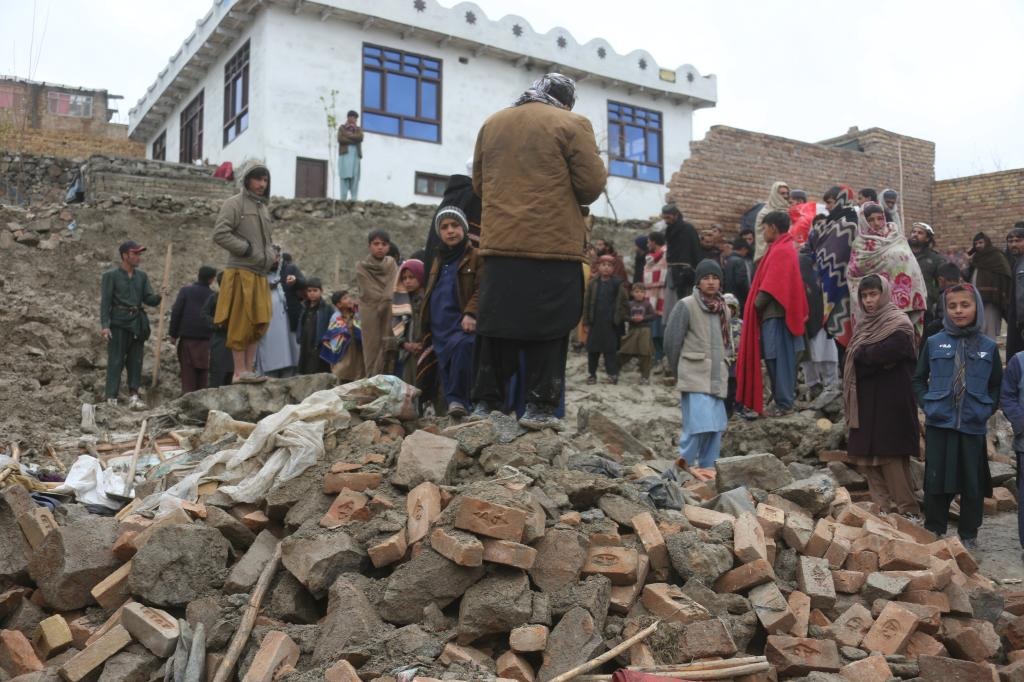
    On the night of Friday, April 3, 2026, a magnitude 5.8 earthquake jolted multiple regions across Afghanistan, leaving a confirmed death toll of 12 and four additional people injured, Afghan deputy government spokesperson Hamdullah Fitrat announced in a public statement on Saturday.

    The seismic event sent strong tremors rippling across a wide swathe of the country, impacting communities in the national capital Kabul as well as six eastern and northern provinces: Panjshir, Logar, Nangarhar, Laghman, Nuristan, and Badakhshan. Beyond the human cost of the disaster, Fitrat shared in a post to the social platform X that the quake also caused significant structural damage: 38 residential homes were damaged, and a total of 40 families have been displaced or otherwise affected by the disaster.

    Initial geological surveys placed the earthquake’s epicenter roughly 35 kilometers south of Jurm district in Afghanistan’s northern Badakhshan Province, at coordinates 36.55 degrees north latitude and 70.85 degrees east longitude. The temblor originated at a depth of 186.4 kilometers below the Earth’s surface, a depth that allowed shaking to be felt across far-flung regions of the country, from the capital Kabul to all adjoining border provinces.

    This latest seismic disaster is far from an isolated event for Afghanistan, a nation that sits atop geologically active fault lines and is frequently battered by destructive earthquakes, especially in and around the rugged Hindu Kush mountain range that stretches across the country’s northern and eastern regions. Just last November, a stronger 6.3-magnitude quake hit this same general region, killing more than two dozen people and injuring nearly 1,000 more across the northwestern provinces of Samangan and Balkh.

  • Iran’s FM says Tehran seeks ‘conclusive, lasting’ end to war

    Iran’s FM says Tehran seeks ‘conclusive, lasting’ end to war

    TEHRAN – In a recent public clarification posted to social media platform X, Iran’s top diplomat Seyed Abbas Araghchi has pushed back against misleading Western media reports, reaffirming that Tehran’s core priority in ongoing conflict negotiations is securing a “conclusive and lasting” end to the war launched by the United States and Israel against Iran.

    Araghchi’s statement came in direct response to claims published Friday by *The Wall Street Journal*, which alleged that Iran had formally informed mediators it would refuse to meet with U.S. officials for ceasefire negotiations hosted in Islamabad, Pakistan, and that Tehran deemed Washington’s negotiating terms unacceptable. Compounding earlier reporting, Iran’s semi-official Fars News Agency cited an unnamed informed source early Friday confirming that Iran had already rejected a U.S. proposal for a 48-hour temporary ceasefire, which had been shared via a third-party neutral friendly state the day prior.

    Addressing the distorted narrative spread by U.S. media, Araghchi emphasized that Iran has never rejected the invitation to hold talks in the Pakistani capital, and expressed sincere gratitude to Pakistan for its diplomatic efforts to de-escalate the crisis. “What we care about are the terms of a conclusive and lasting end to the illegal war that is imposed on us,” the foreign minister stressed, underscoring that Tehran’s refusal to accept superficial, temporary ceasefire terms does not equate to a rejection of dialogue altogether.

    The current open conflict traces back to late February, when the United States and Israel launched a coordinated joint airstrike campaign targeting Tehran and multiple other urban centers across Iran. That attack killed Iran’s then-Supreme Leader Ali Khamenei, alongside a number of senior Iranian military commanders and civilian bystanders. In the immediate aftermath of the strike, Iran retaliated with multiple waves of missile and drone attacks targeting both Israeli territory and U.S. military assets stationed across the Middle East, triggering a rapid escalation of regional tensions that has drawn international diplomatic intervention aimed at preventing a full-scale regional war.

  • Russian attack on Ukraine market kills five

    Russian attack on Ukraine market kills five

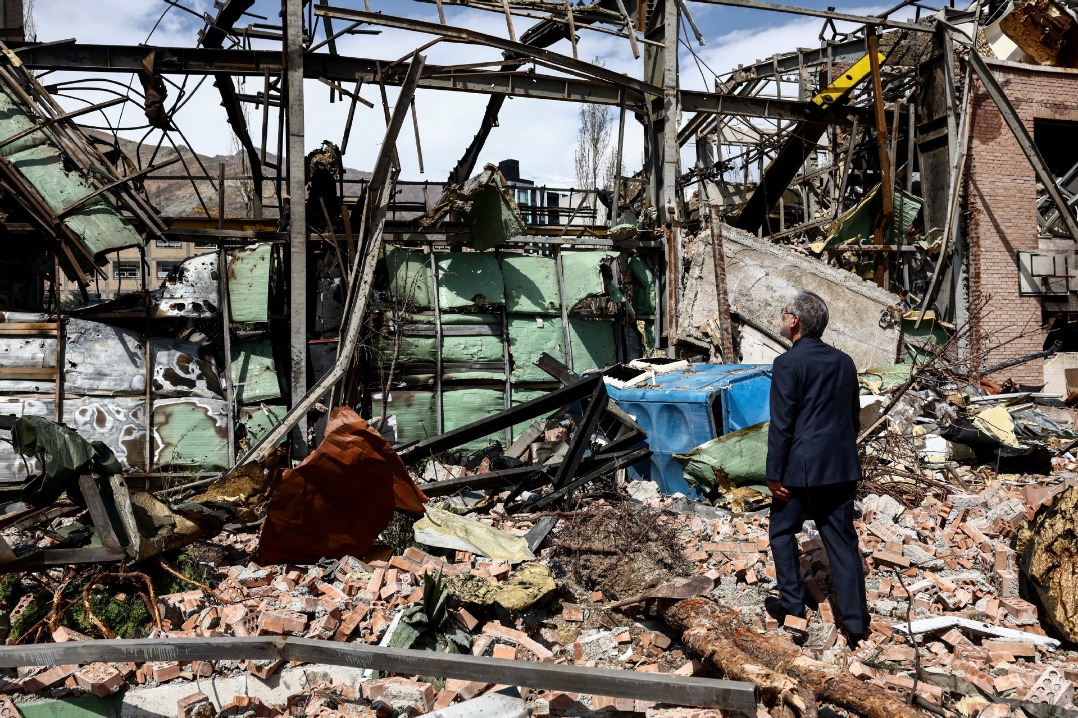
    A devastating Russian drone assault on a crowded civilian market in southern Ukraine has left five people dead and 21 wounded, including a 14-year-old girl, Ukraine’s prosecutor general’s office confirmed Saturday. The strike hit the riverside town of Nikopol at 9:50 a.m. local time, just across the Dnipro River from Russian-held territory seized following Moscow’s full-scale February 2022 invasion. Photographs released by regional prosecutors show the aftermath: shattered market kiosks scattered across the ground, covered in twisted metal and broken glass. A follow-up strike on the same site injured two more men, and Ukrainian authorities have launched a war crime investigation into the attacks. Nikopol has faced persistent artillery and drone fire since the start of the invasion, with nearly half of its original 100,000 residents fleeing for safety long before the weekend attack. The Saturday market strike marks the deadliest escalation in a wave of Russian attacks that killed at least 15 civilians across Ukraine in strikes on Friday alone. Overnight preceding the Nikopol attack, the Ukrainian Air Force reported that Russia launched nearly 300 drones across Ukrainian territory, with additional casualties recorded in the northeastern city of Kharkiv and the northern Sumy region. In a tit-for-tat escalation that has become common in the conflict, Russia reported a Ukrainian overnight drone and missile strike on the southern Russian city of Taganrog that killed one person and left four others with severe injuries. Rostov regional governor Yuri Slyusar confirmed the strike sparked a large fire at a local logistics company’s facility. A Ukrainian defense ministry spokesperson pushed back on casualty claims, attributing civilian deaths to flawed Russian air defense operations. Ukrainian officials also confirmed two targeted strikes on facilities they say were tied directly to Russia’s military industrial complex. One attack hit a synthetic rubber and petrochemical plant in the Russian city of Togliatti, while a second drone strike halted all production at the Alchevsk metallurgical plant in Russian-occupied Luhansk Oblast. Ukraine’s Security Service reported that blast furnaces, production workshops and critical infrastructure at the plant were damaged in the strike, the second to hit the facility in just one month. This latest round of deadly cross-border attacks comes as diplomatic efforts to end the 2-year-long conflict remain stalled. Last week, Ukrainian President Volodymyr Zelensky proposed a bilateral truce between the two warring nations to mark the Orthodox Easter holiday, but Moscow has yet to respond to the offer. Recent weeks have also seen a sharp uptick in large-scale Russian daytime attacks, a tactic that was rare earlier in the conflict. Despite the rising civilian death toll from these strikes, British intelligence assessments note that the frontline situation in eastern Ukraine is the most favorable it has been for Kyiv in 10 months, as Russian offensive advances have slowed to a near halt. Diplomatic progress, however, has ground to a halt, with U.S.-led peace negotiations shifting focus to the ongoing conflict in the Middle East, leaving little momentum for new talks to end the war in Ukraine. Zelensky completed a diplomatic tour of four Gulf nations last week – Saudi Arabia, the United Arab Emirates, Qatar and Jordan – all of which have recently faced Iranian aerial attacks. During the tour, the Ukrainian president offered to share Kyiv’s advanced drone technology and operational expertise in exchange for support countering Russian missile strikes and new, stable sources of fuel imports. The urgency for alternative fuel supplies has grown amid surging global oil prices, compounded by persistent Russian strikes on Ukraine’s domestic energy infrastructure that have left the country almost entirely reliant on imported fuel to sustain its military and civilian operations.

  • World’s oldest leader to get a deputy for first time in 43-year rule

    World’s oldest leader to get a deputy for first time in 43-year rule

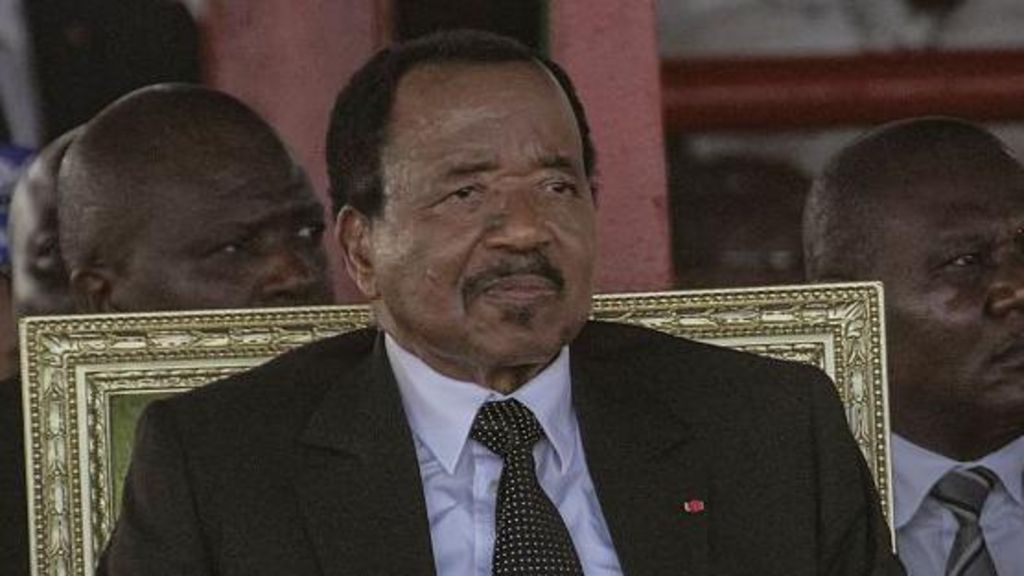
    After 41 years of uninterrupted rule by 91-year-old President Paul Biya — the world’s oldest serving head of state — Cameroon’s parliament has passed a landmark constitutional amendment to reinstate the office of vice-president, a post abolished nearly 50 years ago, triggering fierce backlash from the country’s opposition and raising new questions about the nation’s political future.

    The reform, approved Saturday during a joint sitting of Cameroon’s upper and lower legislative chambers, passed by a wide margin: 200 lawmakers supported the bill, 18 voted against it, and four abstained. It will take effect once signed by President Biya, who has led the central African nation since November 1982. Under the new rules, if Biya is incapacitated or passes away while in office, the appointed vice-president will automatically assume the presidency and complete the remaining seven-year term, rather than triggering an immediate snap election. Prior to this change, the constitution designated the Senate president to serve as interim president only until a new election could be organized.

    The vice-presidency has not existed in Cameroon since 1972, when a national referendum replaced the country’s original federal system — which granted autonomy to its French-speaking and English-speaking regions — with a unitary state. The abolition of the post came alongside the end of a longstanding convention that split the presidency and vice-presidency between the two linguistic communities. For years, persistent private speculation has swirled around Biya’s health, though public discussion of the topic remains a taboo in Cameroon. The president has repeatedly refuted rumors of his death by appearing in public following extended periods out of the public eye.

    Government supporters frame the reform as a practical adjustment to streamline governance and succession planning. Proponents argue the change boosts administrative efficiency by creating a clear, permanent line of succession when a stand-in for the president is required, while also removing succession-related burdens from the Senate to allow the body to focus on its core legislative work. The new framework specifies that the vice-president will be directly appointed by the sitting president, rather than elected via popular vote alongside the head of state.

    Opposition groups have decried the amendment as a power grab rushed through parliament without inclusive national consultation. The Social Democratic Front (SDF), Cameroon’s main opposition party which holds six parliamentary seats, boycotted the vote entirely. The party had pushed for two key changes that were not adopted: it called for the vice-president to be jointly elected on a ticket with the president, and for a return to the pre-1972 convention that splits the country’s top two offices between the anglophone and francophone communities, to reflect Cameroon’s linguistic divide. SDF chairman Joshua Osih called the reform a “missed historic opportunity,” noting that what could have been a moment of transformative political courage ended as a wasted chance to address longstanding national divides.

    Other senior opposition figures have gone even further in their criticism. Maurice Kamto, leader of the Cameroon Renaissance Movement, labeled the amendment a “constitutional and institutional coup” carried out by Biya’s ruling party. Kamto accused the incumbent administration of working to establish a “republican monarchy” and announced plans to launch a nationwide online campaign to oppose the change. Even one senator from Biya’s own ruling party has publicly described the legislative process behind the amendment as “suspicious.”

    Biya’s extended tenure has already been marked by controversy: he won an eighth term in office last October with 53.7% of the vote, a result the opposition rejected as fraudulent. Now that the constitutional change has been approved, public and political discourse across Cameroon is dominated by one pressing question: who will Biya appoint as the country’s first vice-president in more than half a century? Even with the new succession framework in place, the long-term political trajectory of Cameroon beyond Biya’s rule remains deeply uncertain.