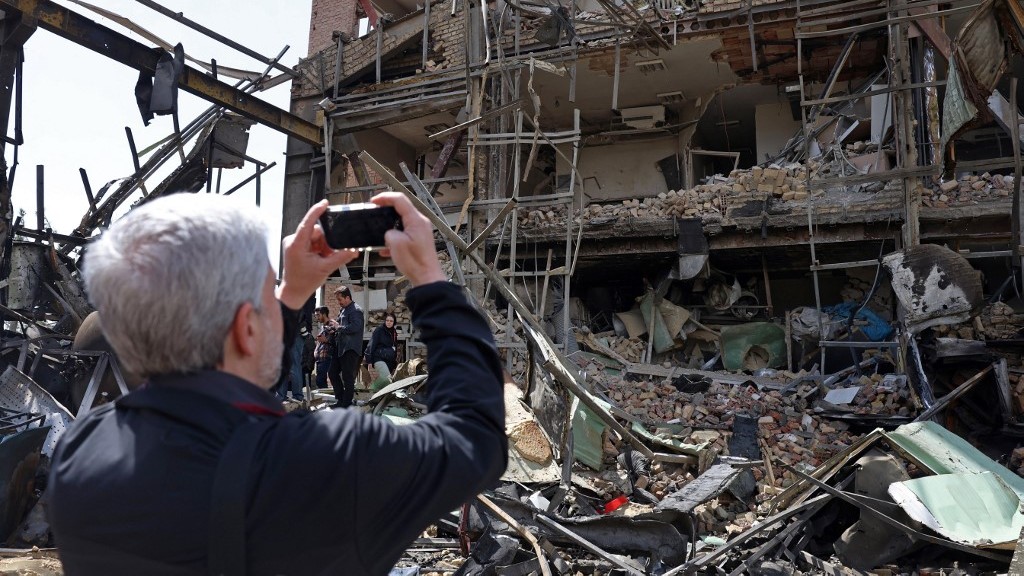
Tensions between Iran and the United States have spiked dramatically in recent days following a confrontation near the strategically critical Strait of Hormuz, where Iran’s newly unveiled domestic air defense system engaged and downed at least one U.S. military aircraft. Iran’s state media has confirmed the engagement, marking a sharp escalation in the long-running standoff between the two nations over control of the key global oil shipping chokepoint.
The announcement of the new air defense system was made by a spokesperson for Iran’s Khatam al-Anbiya Joint Military Command, who emphasized that the indigenous technology — developed by the country’s homegrown cohort of young scientists and engineers — has put Tehran on track to gain full, unchallenged control of its national airspace. In a strongly worded statement directed at foreign adversaries, the spokesperson warned that successive deployments of these advanced systems would continue to demonstrate the failure of hostile powers’ ambitions in the region, exposing their military weakness to the international community.
According to initial Iranian reports, the strike targeted an enemy A-10 Thunderbolt II, a single-seat U.S. jet purpose-built for close air support of ground troops, operating in airspace near the Strait of Hormuz. Confirming details of the incident, *The New York Times* reported that the downed jet’s lone pilot survived the crash and was recovered by U.S. forces. Multiple U.S. outlets have also expanded on the incident: an anonymous senior U.S. official speaking to NBC News shared that two U.S. helicopters deployed to the rescue mission were also targeted by Iranian defensive fire, though all crew members on board the helicopters escaped without injury. In total, two U.S. combat aircraft were downed in Friday’s exchanges, according to Iranian military accounts.
The confrontation comes amid a rapidly building U.S. military buildup in the Persian Gulf region. Over recent weeks, Washington has deployed thousands of additional troops to the area, a move that has fueled widespread speculation among global analysts that the U.S. is preparing for a potential ground operation to seize Iranian-controlled islands in the Strait of Hormuz — a suggestion that U.S. government officials have not formally denied.
The escalating crisis has drawn comment from former U.S. President Donald Trump, who issued a stark ultimatum to Iran via his Truth Social platform on Saturday. Repeating a reference to his own previous threats against the Islamic Republic, Trump wrote, “Remember when I gave Iran ten days to MAKE A DEAL or OPEN UP THE HORMUZ STRAIT. Time is running out – 48 hours before all Hell will reign [sic] down on them.”
The Strait of Hormuz remains one of the most geopolitically sensitive waterways on the planet, with roughly 20% of the world’s total oil shipments passing through the narrow channel annually. Any sustained disruption to shipping through the strait would trigger immediate, far-reaching consequences for global energy markets and international security, making the current standoff a point of intense concern for world powers.