
A recently released video has brought the overwhelming destructive scale of a flash flood disaster into sharp public focus, with the catastrophic event impacting border regions spanning Nepal and Tibet. The visual footage, which documents the disaster’s aftermath and ongoing impacts, offers viewers a raw, unfiltered look at how rapidly rising floodwaters have reshaped landscapes and threatened communities across the shared mountainous border zone. Flash floods are a recurring hazard in this high-altitude, geologically active region, where sudden monsoon downpours or glacial melt can trigger fast-moving water surges that catch local populations off guard. As of the latest reporting, the video has circulated widely to highlight the severity of the disaster, prompting calls for closer cross-border coordination on disaster monitoring and early warning systems to mitigate future flood risks for at-risk communities on both sides of the border. Additional reporting on the human and economic impacts of this flood event is expected to be released in coming days as assessment teams complete on-the-ground surveys.
作者: admin
-

Invasive green crabs are bad for the environment so New Englanders are starting to eat more of them
YORK, Maine — On a June morning in 2026, when the thin coastal fog finally lifted from Maine’s York River, former marine science teacher Mike Masi and two interns leaned over a wooden dock, sorting through a teeming mound of one of the Northeast’s most destructive invasive species: the European green crab. Their goal? Separate out the crabs on the cusp of molting their hard outer shells to sell as a premium menu item to high-end restaurants across New England.
Green crabs (Carcinus maenas) first arrived on North America’s East Coast hundreds of years ago, hitching a ride in the ballast water of transatlantic trade ships from their native European waters. Today, their population along the New England coast numbers in the tens of millions, and climate change-fueled ocean warming has supercharged their spread: warmer winters allow more crabs to survive the cold season, and their extreme adaptability lets them thrive in nearly every coastal habitat. A single female green crab can release up to 185,000 eggs once or twice annually, helping the species outcompete native Atlantic rock crabs and juvenile lobsters, destroy critical eelgrass beds, erode salt marsh banks, and decimate native shellfish populations. The invasion costs the region’s commercial shellfish industry tens of millions of dollars every year, as green crabs prey on commercially valuable mussels, oysters, and soft-shell clams. Maine state data shows soft-shell clam landings have plummeted from more than 7.8 million pounds of meat in 1978 to just 1.3 million pounds in 2025, a decline veteran clam fisherman Chad Coffin attributes directly to the green crab takeover.
Now classified as one of the world’s most successful invasive species, green crabs have spread far beyond the East Coast: they have established populations along the U.S. West Coast, reached Alaska, and invaded coastal ecosystems across South Africa, Japan, Argentina, and Australia. “They’re really pretty resilient little guys,” explained Carolyn Tepolt, an evolutionary biologist at the Woods Hole Oceanographic Institution who has studied green crabs for 20 years. “Their adaptability is why we use them to research what allows some species to thrive in new, changing environments.”
To combat the invasion, a growing grassroots movement across New England is taking an unconventional approach: turning the invasive pest into a profitable commercial product, encouraging targeted harvesting to reduce population numbers while creating new revenue streams for local fisheries. Masi, whose company shell+claw is the only commercial enterprise focused on cultivating soft-shell green crabs, says the model turns a universally hated pest into an asset. The economics already make sense for soft-shell pre-molt crabs: Masi can sell each for $3 at market, compared to just 8 cents for a hard-shell green crab. Beyond profit, harvesting the crabs directly helps restore balance to damaged coastal ecosystems.
Masi is far from alone in this effort. Other producers across the region have developed green crab-based products including pet treats, fish sauce, and even a specialty green crab whiskey released in New Hampshire. Consumer interest is also growing: the number of New England restaurants offering green crab dishes has increased more than 10-fold since 2021, with many establishments hosting special “green crab weeks” during the two-month soft-shell molting season. Chefs praise the species’ richer, deeper flavor compared to more common commercial crabs. “King, stone, and Jonah crabs all have that mild, sweet light crab flavor,” said Tracy Chang, owner and chef of Cambridge, Massachusetts tapas restaurant PAGU, which serves green crab laksa and tempura soft-shell green crab bao. “Green crab has this really rich, deep, luscious crab flavor that’s far more potent.” Many diners have embraced the product too: physician and author William Li called his first green crab bao “spectacular, filled with flavor, easy to eat, and very tasty.”
Despite this growing momentum, large-scale commercial green crab harvesting remains out of reach for most New England fishermen. The current grassroots campaign has had only minimal impact on overall green crab populations, held back by a lack of processing infrastructure, distribution networks, and government support. There is not even sufficient research to confirm what a sustainable commercial harvest level would be, though experts agree the current catch is a tiny fraction of what the region’s massive green crab population could support. A major barrier is distribution: fishermen in northern Maine near the Canadian border report they can catch unlimited numbers of green crabs, but lack affordable transportation to move the catch to major consumer markets in Boston, New Bedford, and New York City.
A handful of states have taken small regulatory steps to lower barriers for green crab fisheries: Rhode Island offers green crab fishing licenses for just $10, Connecticut removed extra permitting requirements for selling green crabs to restaurants, and Maine has streamlined market access. Only Massachusetts offers direct financial incentives, paying fishermen 40 cents per pound in addition to market revenue, totaling just over $100,000 per year. That level of support stands in stark contrast to Washington state, which declared a state of emergency over green crab invasions in 2022 and plans to spend more than $38 million in state and federal funds through 2027 to eradicate the species. To date in 2026, nearly 2 million green crabs have been caught in Washington, most processed into organic fertilizer. Coastal tribal nations there also use caught crabs for compost, as they work to protect native treaty-protected fisheries from the same devastating impacts seen on the East Coast. “We’ve got treaty-protected fisheries at risk and critical habitats that are used by all sorts of native species,” said Raquel Crosier, deputy director of Washington state’s Fish Program. “We’re really worried that we’ll start to see those types of effects that they saw on the East Coast if we let the population get established.”
Back on the York River, Masi’s operation remains small and labor-intensive. His crew sorts through thousands of wild-caught crabs by hand to identify pre-molt individuals, which are then held in submerged floating cages until they shed their shells. Since launching his business five years ago, Masi has grown annual revenue to as much as $20,000, still roughly the size of a part-time hobby. He draws inspiration from Venice, where green crabs are a native delicacy caught and sold by generations of family fishermen, and remains cautiously optimistic about the future of the New England green crab market. “I am cautiously optimistic about the potential for green crabs,” he said. “We are one breakthrough from making this a profitable business.”
This coverage of climate and invasive species issues is supported by private foundation funding, with The Associated Press maintaining full editorial control over all content.
-

Prince Harry and family arrive back in Britain: UK media
Six years after stepping away from senior royal roles and relocating across the Atlantic, Prince Harry, the Duke of Sussex, his wife Meghan, the Duchess of Sussex, and their two young children have touched down on British soil, multiple UK media outlets have confirmed. The unexpected return, first teased to the public last week when news of their planned cross-Atlantic move broke, marks a major shift in the couple’s life after years based in California.
According to reports from The Daily Telegraph and other leading British publications, the family arrived at Birmingham Airport on Wednesday aboard a private jet. Unlike previous short visits back to the UK since their 2018 departure, this trip is set to be an extended stay: the couple has enrolled their children Archie, 7, and Lilibet, 5, in an upcoming academic year at a local private school, and plans to reside in a property in the scenic Cotswolds region of central England.
Notably, the pair has no plans to abandon their existing properties overseas: they will retain their homes in both California, their primary base for the past six years, and Portugal, multiple sources confirmed. This arrangement leaves the door open for continued transatlantic travel and ties to their life in North America.
The couple’s departure from the UK six years ago followed a highly public rift with the House of Windsor, a rift that deepened dramatically after Harry’s 2023 bombshell memoir *Spare* and a revealing 2021 interview with US talk show icon Oprah Winfrey, where the pair levied widespread criticisms of the royal family, including claims of racism and neglect. While Harry has made brief, low-profile visits to the UK in recent months – including a meeting with his father King Charles III, who is currently undergoing treatment for cancer – that encounter has been reported to have thawed relations between father and son. Harry remains estranged from his older brother William, the Prince of Wales and heir to the British throne, and William’s wife Catherine, the Princess of Wales, according to insiders.
A string of key questions surrounding the return remain unresolved, most notably the future of the couple’s security arrangements. Harry has waged a years-long public and legal battle over government-funded police protection during his visits to the UK, after losing his automatic entitlement to publicly funded security when he stepped down from royal duties. In a 2023 court ruling, Harry lost his challenge to the decision that stripped him of the perk, and he has repeatedly stated he cannot feel safe bringing his family to the UK without formal, taxpayer-funded protection. It remains unclear whether any new arrangement has been reached ahead of the extended stay.
-
The Kremlin says the CIA director held talks in Moscow with his intelligence counterparts
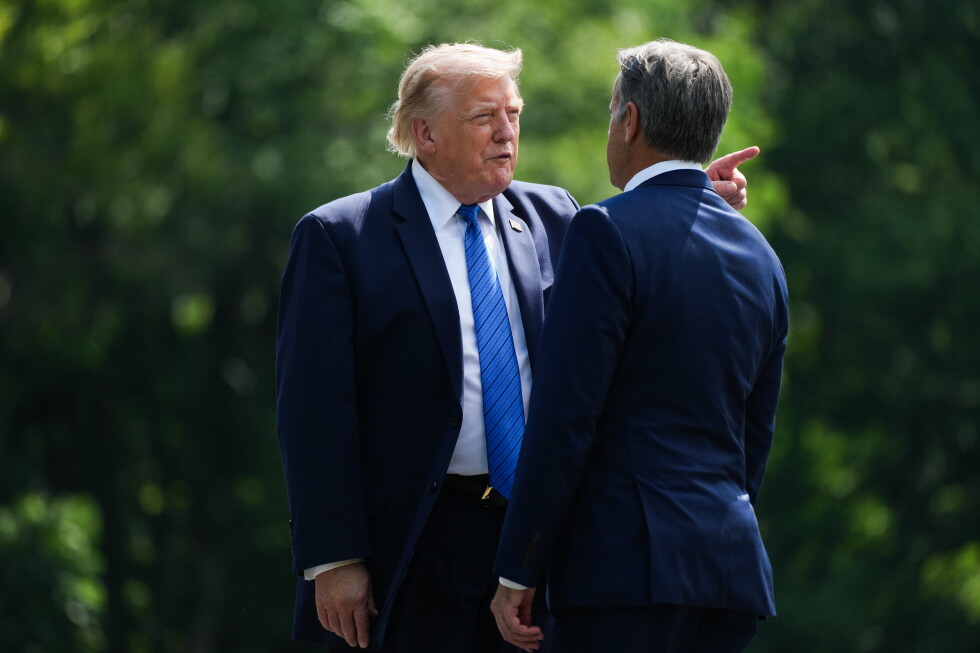
In a rare and closely guarded development that has drawn international attention, the Kremlin confirmed Wednesday that CIA Director John Ratcliffe traveled to Moscow for closed-door talks with senior Russian intelligence officials — a meeting that comes at a moment of unprecedented tension between Washington and Moscow over Russia’s ongoing full-scale invasion of Ukraine.
Kremlin spokesperson Dmitry Peskov told reporters that Ratcliffe did not hold a meeting with Russian President Vladimir Putin, though the country’s leader was promptly briefed on the intelligence-level discussions. “Of course, President Putin is immediately informed of everything,” Peskov added, declining to disclose any details about the topics covered in the closed talks. Both the CIA and the White House have declined to issue any formal comment on the visit to date.
Independent confirmation of the trip emerged earlier, when Russian state news outlets reported that a U.S. military aircraft touched down at Moscow’s Vnukovo Airport on Tuesday, departing the same day after a short stay. A senior Ukrainian official, speaking to The Associated Press on condition of anonymity due to restrictions on speaking publicly about diplomatic matters, confirmed that Washington notified Kyiv ahead of the U.S. delegation’s trip to the Russian capital and requested a temporary suspension of Ukrainian long-range strikes on specific regions until the delegation departed. The request exclusively applied to Moscow, St. Petersburg and parts of northern Russia, the official added, noting that strikes on other areas of Russian territory continued as planned during the visit.
The visit was first reported by CBS News, and experts note that such high-level, in-person intelligence meetings between the two nuclear powers are extremely uncommon. Peskov acknowledged that even amid sharply deteriorated relations, low-key contacts between the two countries’ intelligence communities carry some inherent value. “Contacts between intelligence agencies are, in and of themselves, a positive phenomenon, a positive process,” he said, but quickly stressed that the broader bilateral relationship between Russia and the United States remains mired in a “profound crisis.” When asked what long-term impact Ratcliffe’s visit could have on bilateral ties, Peskov noted it is still “too early to say.”
Andrei Soldatov, an independent analyst specializing in Russian security services, told the AP that high-level visits of this kind do not “happen every year.” He explained that formal communication channels between Moscow and Washington have remained intact since the 1980s, designed explicitly to facilitate dialogue when critical threats to American or Russian citizens emerge, or other urgent national security matters require direct discussion. This is not the first high-level intelligence meeting between the two powers in recent years: in 2021, months before Russia launched its full-scale invasion of Ukraine, then-CIA Director William Burns met Nikolai Patrushev, secretary of Putin’s Security Council, in Moscow. Burns later held talks with Sergei Naryshkin, head of Russia’s foreign intelligence service, in Turkey in November 2022, where he delivered a formal U.S. warning against any deployment of nuclear weapons in Ukraine.
Soldatov explained that, given the lack of public details about Tuesday’s discussion, such meetings are only convened when a pressing national security matter aligned with “American national interests” is on the table. Current geopolitical context suggests the talks likely touched on evolving tensions in the Middle East, where Russia maintains complex diplomatic relationships with both Iran and Israel. Since the outbreak of the U.S.-Israel war with Iran, Moscow has positioned itself as a potential mediator between the warring parties, even as it deepens its own strategic partnership with Tehran.
Relations between Russia and the U.S. plunged to Cold War-era lows immediately after Moscow launched its full-scale invasion of Ukraine in 2022. Tensions briefly softened following the return of Donald Trump to the U.S. presidency, as Trump made a campaign promise to end the Ukraine war quickly, held multiple phone calls with Putin, and even hosted the Russian leader for talks in Alaska one year ago. Those early peace negotiation efforts have since stalled, however, as U.S. foreign policy focus has shifted to its conflict with Iran, and both Moscow and Kyiv have ramped up long-range strikes on each other’s territory. Putin has repeatedly rejected Ukrainian President Volodymyr Zelenskyy’s call for an immediate temporary ceasefire, arguing that Russia will only accept a long-term comprehensive settlement to end the conflict.
Moscow and Tehran formalized their deepening alignment in January 2025, when the two countries signed a landmark comprehensive strategic partnership treaty. The agreement followed years of growing military cooperation: after Russia launched its Ukraine invasion, Iran provided Moscow with Shahed combat drones, and later permitted domestic production of the systems in Russia. Despite its close ties to Tehran, Russia has maintained long-standing friendly relations with Israel, leaving Moscow to navigate a complex and often challenging balancing act in the region.
In March, the AP reported that U.S. intelligence assessments found Russia had shared intelligence with Iran that could be used to target American warships, aircraft and other military assets in the Middle East, according to two unnamed U.S. officials. The officials cautioned that U.S. intelligence has not found evidence that Russian officials are directing Iranian actions or telling Tehran how to use the shared information. When asked at the time whether Russia would expand beyond political support for Iran to provide direct military assistance, Peskov said Moscow had not received any such request from Tehran, and declined to comment on whether any military or intelligence sharing had already taken place.
Soldatov said the most likely agenda for Ratcliffe’s secret Moscow meeting includes discussions of protecting U.S. military personnel, bases and facilities in the Middle East that have been targeted by Iranian forces. It is also possible that the U.S. delegation traveled to Moscow to push Russian leaders to reconsider their growing intelligence and military cooperation with Tehran, he added.
-

Video shows scale of flash flood hitting Nepal-Tibet border
Newly released video footage, curated and edited by the British Broadcasting Corporation (BBC), has laid bare the catastrophic destructive power of a sudden flash flood that struck the remote Nepal-Tibet border region. Ahead of public distribution, BBC editors added prominent white flash overlays to the raw footage, a modification implemented to mitigate distress for audiences, given the harrowing nature of the content captured.
The cross-border region, known for its rugged, mountainous terrain and proximity to rapidly melting glacial systems, has long been classified as high-risk for sudden water-related disasters. Climate researchers have warned in recent years that rising global temperatures are increasing the frequency of glacial lake outburst events and unexpected flash floods in the Himalayan border zone, putting local communities and infrastructure in extreme danger.
The released footage offers audiences a rare, unflinching look at the speed and force with which flash floods can overwhelm remote landscapes. The edited overlay warnings ensure that viewers are prepared for the disturbing imagery without being fully shielded from the reality of the disaster’s impact, enabling greater public awareness of the growing climate-linked risks facing Himalayan communities.
-

Door was locked at Pakistan hospital where fire killed 14 babies, witnesses say
Just moments after dawn broke over Islamabad on a Wednesday morning, a catastrophic fire tore through the maternity ward of one of Pakistan’s largest state-run medical facilities, leaving 14 newborn infants dead and igniting widespread public anger over systemic safety failures. The blaze originated in a faulty air conditioning unit on the third floor of the mother and child wing at the Pakistan Institute of Medical Sciences (PIMS), a flagship public hospital in the Pakistani capital. Of the 15 babies present in the ward when the fire started, only one survived.
Eyewitness accounts paint a chaotic, terrifying picture of delayed response, inadequate safety infrastructure, and locked exits that trapped vulnerable patients as smoke and flames spread rapidly. Hivsa Walid, who was at the hospital visiting her sister-in-law — who had given birth just days earlier — was nearby when the fire began. She initially mistook panicked shouts for news of a natural patient death, before spotting thick smoke billowing through the hallway. The pair managed to escape with their unnamed newborn, fleeing bare of any belongings.
“We didn’t even think about our things. We just grabbed the baby and ran down the stairs,” Walid told reporters. “Some women had given birth just hours before. Everything happened so fast, it was all a blur.”
Grieving relatives have decried a hours-long wait for emergency responders and a lack of emergency preparedness at the hospital. Khurram Mehmood, a 40-year-old father who lost his three-day-old daughter in the fire, told reporters that rescue teams took far too long to arrive. Jaweria, another grieving mother, said the maternity ward door was locked from the outside, leaving her waiting outside in agony for help. “I cried and screamed for two hours,” she said. “Police showed up after four hours just to start an investigation. Why did the doctors leave those babies locked inside? To hell with all of you — rescue teams, police — babies burned to death and no one came to save them.”
Hospital administration has pushed back against claims that the door was locked. Rana Imran Sikander, PIMS’s executive director, told the BBC that the door was staffed, not locked, and that the controlled access policy was in place to prevent infant abductions — a known issue at public hospitals across Pakistan.
Multiple witnesses, however, confirm that emergency safety measures were virtually non-existent at the facility. Walid noted that even as a leading government hospital, PIMS lacked functioning fire safety equipment and clear emergency evacuation protocols. “There should have been fire extinguishers, there should have been procedures, but no one did anything — everyone just ran,” she said. One bereaved father, who had been visiting the ward for eight days prior to the fire, told Reuters the building had no functional fire security systems and no accessible emergency exits. “Most doors were kept locked. They only left one door open for visitors, because they worried we would come to see our babies too often,” he said.
Witnesses also reported that on-duty medical and security staff were absent when the fire broke out. Trapped relatives had to break down interior doors to escape, while rescue teams had to smash exterior windows to reach the blaze and evacuate patients, one anonymous witness told AFP. Abdul Ghafoor, another witness, said he tried to enter the building to rescue trapped patients but was turned back by dense toxic smoke. “Patients were trapped inside with all that black smoke, and rescue teams didn’t get here for almost two hours,” he said.
Islamabad’s Chief Commissioner Sohail Ashraf has disputed claims of delayed response, telling AFP that emergency teams arrived on scene “immediately” after the first emergency call was placed.
The tragedy is the latest in a string of deadly fire incidents across Pakistan in recent years, where lax enforcement of building codes, weak safety regulations, and chronic underinvestment in public infrastructure have repeatedly led to high death tolls. Earlier this year in January, a fire at a shopping mall in Karachi killed dozens of people, with survivors reporting that locked emergency exits dramatically increased the number of fatalities.
In response to the PIMS fire, Prime Minister Shehbaz Sharif issued a statement expressing “deep sorrow and heartfelt regret” over the loss of the newborns. He ordered federal authorities to launch an immediate full investigation into the cause of the blaze and the response failures, and has already suspended Federal Health Secretary Aslam Ghauri, the top-ranking official in Pakistan’s national health department. “The loss of these children is an irreparable tragedy,” the prime minister’s statement read.
-
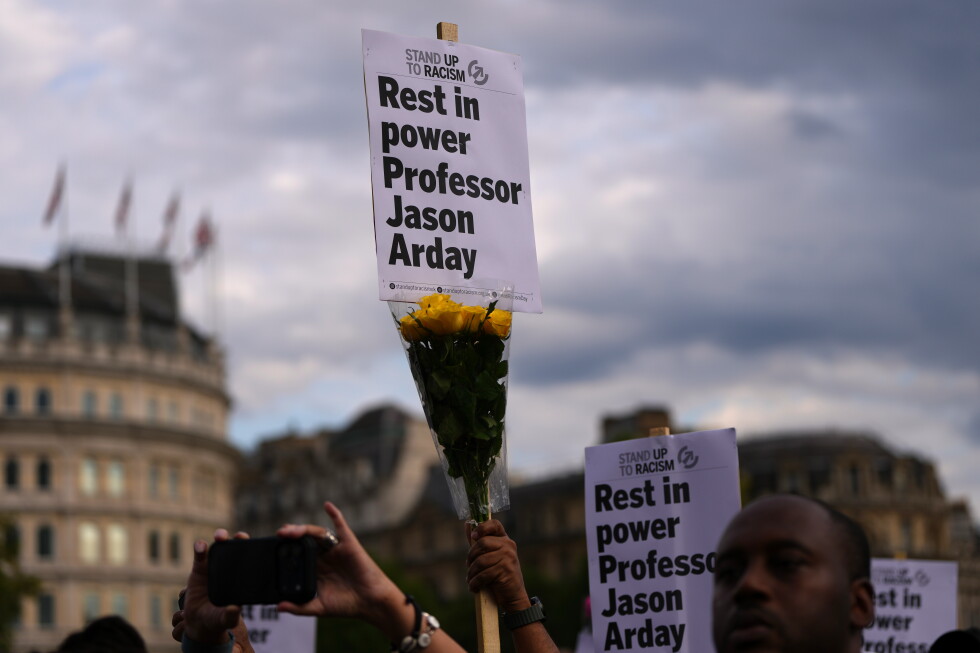
Inquest opens into death of ex-Cambridge University professor Jason Arday
LONDON — A formal coroner’s inquest has launched into the sudden passing of 41-year-old Jason Arday, a trailblazing Cambridge University professor who resigned his post last month amid intense public scrutiny over alleged academic misconduct and inflated personal achievement claims.
Arday, who made history in 2023 as Cambridge University’s youngest Black professor, was found dead at a residential address in south London on August 13, just eight days after stepping down from his role as Professor of Sociology of Education. The first short preliminary hearing for the inquest was held this Wednesday at London Inner South Coroner’s Court, a standard procedure for any death in the United Kingdom marked by unclear circumstances.
Senior Corer Dr. Julian Morris told the court that available documentation leads him to classify Arday’s death as unnatural, 12 days after it occurred. “It therefore follows that I must open an investigation,” Morris confirmed. While law enforcement have labeled the death unexpected, they have stressed there are no suspicious circumstances surrounding the passing.
The controversy that preceded Arday’s resignation and death began when Nathan Cofnas, a former Cambridge philosophy researcher, first raised public questions about Arday’s academic credentials last month. Cofnas, who left Cambridge after his sharp criticism of diversity, equity and inclusion programs triggered widespread campus protests, has previously claimed that in a purely merit-based system, Black people would be almost entirely excluded from high-profile positions outside of sports and entertainment. Last week, Cofnas was suspended from his current academic post at Ghent University in Belgium, though the suspension has not been officially linked to the Arday controversy.
Following Cofnas’ initial accusations, UK news outlets published reports claiming that more than 100 passages from Arday’s 2015 doctoral dissertation matched verbatim or nearly verbatim content from an earlier academic paper written by another researcher. Beyond the plagiarism claims, public scrutiny extended to a series of personal claims Arday had made throughout his career. These included assertions that he had raised £5.5 million ($7.5 million) for charity through extreme endurance feats, such as running 30 marathons in 35 days and 600 miles in six days. Arday later amended these fundraising and achievement claims. Critics also questioned his widely shared personal narrative of overcoming severe developmental delays that left him non-verbal until age 11; Arday stated he received an autism diagnosis in childhood and remained unable to read or write until he turned 18.
Before his resignation on August 5, Arday publicly denied all allegations of intentional plagiarism, though he acknowledged that he had made minor errors in citation and sourcing when completing his doctorate.
News of Arday’s death sparked an immediate wave of mourning across academic and social circles. A community fundraiser launched in his memory has already raised close to £225,000 ($305,000) from more than 7,900 individual donors. All funds raised are designated to support Arday’s family with living and financial costs, as well as cover funeral and memorial service expenses.
The formal opening of the inquest comes just one day before the UK publication of Arday’s memoir, *Great and Unfortunate Things*, by publisher Simon & Schuster. The book, which was released in the United States earlier this August, chronicles Arday’s personal life story: from growing up as an autistic, non-verbal child who remained illiterate until his late teens, to breaking barriers as the youngest Black professor in Cambridge’s centuries-long history.
-
Sanctioned international court president says she asked Japan to help de-escalate tensions with US
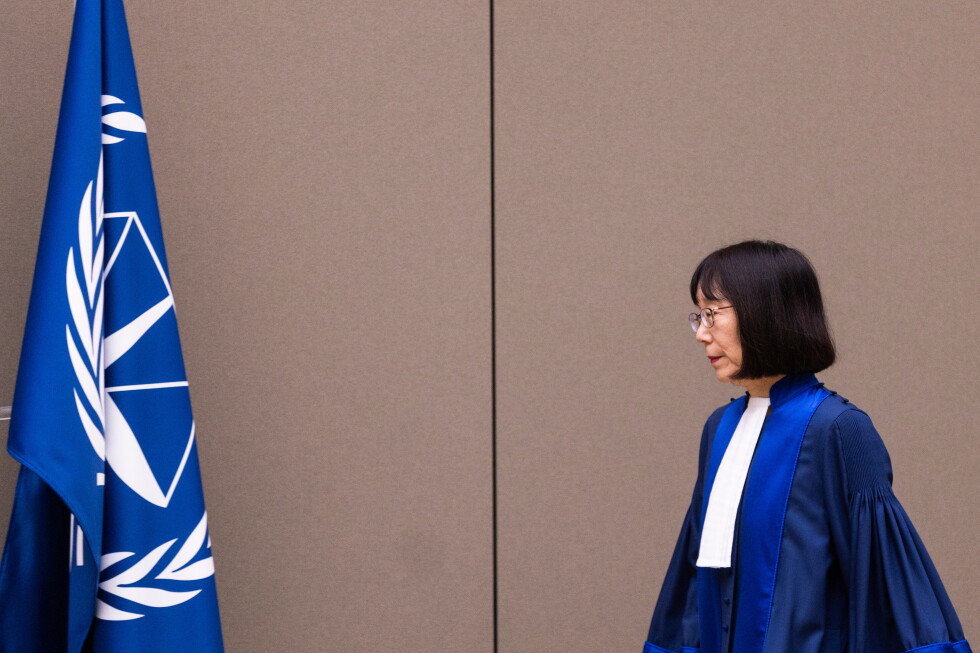
THE HAGUE (Rebuilt Report) — In a video press briefing from the court’s headquarters in The Hague on Wednesday, International Criminal Court (ICC) President Tomoko Akane pushed back firmly against recent U.S. sanctions targeting her, stating there is no legitimate justification for the punitive measures and urging Japan’s government to broker diplomatic action with Washington to prevent further tensions between the U.S. and the global judicial body.
Last week, Akane, a veteran Japanese jurist, became the newest ICC official added to a growing list of court personnel targeted by U.S. sanctions. The measures freeze any assets Akane holds within U.S. legal jurisdictions, bar her and her immediate family from entering the United States, and cut off her access to basic global financial services.
The U.S. has defended its punitive campaign against the ICC, claiming the court has overstepped its official mandate. The sanctions were imposed as retaliation for ICC investigations into alleged war crimes committed by Israeli officials in Gaza and U.S. military personnel in Afghanistan. To date, the Trump administration has applied sanctions to nine of the ICC’s 18 sitting judges, both of the court’s deputy prosecutors, its former chief prosecutor, and one additional member of the prosecution’s office staff.
“I insist that there is no reason I have to be sanctioned,” Akane told reporters, confirming the sanctions, which she had anticipated ahead of their announcement, have not shaken her commitment to judicial work nor hindered the court’s operations. “ICC will never be defeated. Justice will and should prevail.”
Despite acknowledging the sanctions have imposed “unreasonable inconvenience and threat” on her personal life — including the suspension of her personal credit cards — Akane said she remains fully committed to protecting the court, its judicial body and staff, and upholding the ICC’s core mandate.
As a longstanding U.S. ally that has consistently enshrined the rule of law as a central pillar of its diplomatic agenda, Japan has a critical role to play in convincing Washington to step back from further escalation, Akane argued. She also called on the Japanese government to encourage other ICC member states to resist U.S. pressure to withdraw from the court.
“The ICC is a last hope for the victims of serious international crimes,” Akane said. “I would like Japan to do everything it can to defend the ICC and the rule of law in the global society.”
The standoff has placed Japanese Prime Minister Sanae Takaichi in a delicate position, forcing her to balance Japan’s formal commitment to international rule of law with its critical security and political alliance with the U.S. under Donald Trump.
On Tuesday, Takaichi publicly acknowledged the rift, telling reporters that the U.S. sanctions against Akane are “not compatible” with Japan’s official position, and that the government “take this very seriously.” “I share the sense of crisis and concern that President Akane has faced, and we will continue to provide necessary support,” Takaichi said.
She pushed back against criticism from both opposition and ruling party lawmakers that her government has avoided tough confrontation with the Trump administration, noting that Japan has repeatedly called on Washington to reverse the sanctions against Akane.
The pressure on Takaichi’s government ramped up this week, when a cross-party bloc of ruling and opposition lawmakers adopted a formal statement denouncing the Trump administration’s sanctions against the ICC president. The group called for the U.S. to retract the measure and urged the Japanese government to take stronger action to support Akane and the court.
Japanese Foreign Minister Toshimitsu Motegi confirmed Tuesday that the foreign ministry has dispatched a senior official to The Hague to meet directly with Akane to coordinate support options. Motegi also warned that the U.S. stance against the ICC remains “extremely severe,” and that Washington has signaled it could impose additional sanctions in the coming period.
Japan joined the International Criminal Court as its 105th member state in 2007, during the first administration of former Japanese Prime Minister Shinzo Abe.
-

China advises its citizens to leave Taiwan ally Eswatini over ‘security risks’
In a fresh development that intertwines security concerns and long-running diplomatic friction over Taiwan, China’s foreign ministry has issued an urgent advisory calling on all its citizens to depart the southern African kingdom of Eswatini, citing elevated and pervasive security threats within the country.
The announcement names rampant cyber fraud and gambling-linked criminal activity as the core security concerns driving the evacuation order, though no specific granular details about recent incidents were provided in the official statement. To mitigate risk, Chinese authorities are urging their nationals to relocate to neighboring South Africa, which the ministry describes as a relatively safer alternative destination.
Eswatini holds unique diplomatic significance for cross-strait relations: it is the only African country among 13 nations worldwide that maintains formal diplomatic ties with Taiwan, the self-governing island that Beijing formally claims as an inalienable part of its sovereign territory. China has waged sustained diplomatic pressure over decades to push countries to cut official ties with Taipei and recognize Beijing’s one-China principle instead.
Local private media outlet the Times of Eswatini reported this week that 40 Chinese nationals have been held in detention since last month, after being re-arrested while attempting to exit the country. The group was first apprehended in March alongside dozens of other foreign citizens during law enforcement raids targeting suspected illegal online gambling operations in Mbabane, Eswatini’s capital, and surrounding suburban areas. According to the outlet’s reporting, legal representatives for the detained Chinese nationals confirm that their clients pleaded guilty to minor immigration violations, paid all court-ordered fines, and were subsequently ordered released by the Eswatini High Court. The lawyers argue that the second arrest of the 40 citizens violates the country’s own legal framework and is entirely unlawful. As of press time, the Eswatini government has not issued any public comment responding to these claims or to China’s evacuation advisory.
China’s advisory further warns that any Chinese citizens who choose to disregard the order and remain in or travel to Eswatini will expose themselves to extremely high security risks, and that the Chinese government’s ability to provide timely consular assistance to those in trouble will be severely compromised. No official data has been released on the total number of Chinese citizens currently residing or working in Eswatini.
This latest exchange comes after a series of escalating diplomatic tensions between Beijing, Mbabane and Taipei earlier this year. In April, Taiwan accused Beijing of coercing neighboring countries to revoke overflight permission for a planned trip by Taiwanese President Lai Ching-te to Eswatini, an attempt that Taipei said was intended to derail the visit entirely. The trip, originally scheduled to mark the 40th anniversary of King Mswati III’s ascension to the throne, was initially postponed due to the overflight dispute, and Lai ultimately made a low-key, unannounced visit to the kingdom in May. After the visit concluded, Beijing’s foreign ministry issued a scathing statement dismissing Lai as an “international laughing stock”.
In another visible sign of diplomatic friction earlier this year, China eliminated tariffs on imports from all African countries — with the explicit exception of Eswatini.
-

How Dolly Parton helped the world – from children’s books to supporting Covid vaccine
Dolly Parton, the globally beloved country music icon whose name is synonymous with chart-topping hits and warm Southern charisma, leaves behind far more than a legendary entertainment career: a decades-long legacy of grassroots philanthropy that has transformed millions of lives across the United States and beyond. Though Parton passed away recently, her team’s request that fans honor her memory by donating to her signature initiative, the Imagination Library, ensures her work will continue lifting up communities for generations to come.
Born the fourth of 12 children in a cramped one-bedroom cabin in Tennessee’s Smoky Mountains, Parton grew up immersed in working-class poverty. Her father, Robert Lee Parton, a hardworking tobacco farmer, was unable to read or write—a barrier that the young Dolly watched prevent him from achieving all his dreams. That experience would shape the core of her charitable work for the rest of her life. “He was the smartest man I have ever known but I know in my heart his inability to read probably kept him from fulfilling all of his dreams,” Parton once wrote. In 1988, she turned that motivation into action, founding the Dollywood Foundation to expand access to life-changing educational opportunities for children.
Seven years later, in 1995, the foundation launched the Imagination Library, Parton’s most far-reaching philanthropic project. Designed to foster early literacy, the program mails a free, personalized book every month to every child under the age of five, starting from birth. What began as a small local initiative limited to Sevier County, Parton’s hometown, quickly expanded across the U.S., then crossed borders to reach Canada, the United Kingdom, Ireland, and Australia. To date, the program has distributed more than 332.4 million free books, putting a personalized, owned book into the hands of children who have never had a book of their own before. “They get this little book with their little name on it in the mail, and they feel special… they know that somebody out there is thinking of them,” Parton explained of the program’s quiet power.
The Imagination Library has earned widespread praise from educators, authors, and community leaders around the world. Scottish councillor Lee Mills, a lifelong Parton fan who brought the program to Dundee after his election, noted: “Dolly’s legacy will last with every page turned of a children’s book. I will do my utmost best to ensure that this is delivered to every child in Scotland.” For British author Selina Brown, whose children’s book *My Rice is Best* was selected for distribution, the program does more than boost literacy—it advances critical representation in children’s publishing. “For my book in particular, the protagonist is black. It helps with representation, it helps with real life situations and having a book that speaks directly to you and speaks to a different world is important,” Brown told the BBC.
Early literacy was far from Parton’s only educational focus. In the early 1990s, she launched an innovative high school graduation incentive program in Sevier County: every 12- to 14-year-old student who stayed in school to graduate would receive $500, with a peer buddy system to keep students accountable. Though Parton joked the initiative was a “bribe,” it delivered transformative results: the county’s high school dropout rate plummeted from 35% to just 6%, according to foundation data. More recently, in 2022, Parton extended educational support to adult learners, announcing that all Dollywood employees—seasonal, part-time, and full-time alike—would have 100% of their college tuition and textbook costs covered if they chose to pursue further education. The foundation also runs an annual scholarship program that awards $15,000 to five graduating high school seniors pursuing personal and professional dreams.
Beyond education, Parton’s giving extended to medical research, disaster relief, and wildlife conservation. When the COVID-19 pandemic shut down the world in 2020, Parton donated $1 million to Vanderbilt University Medical Center in Nashville, funding early-stage research that was critical to the development of the Moderna COVID-19 vaccine, which ultimately reached 95% efficacy against severe disease. To encourage vaccine uptake, she even reworked the lyrics to her iconic hit *Jolene*, famously singing, “vaccine, vaccine, vaccine, vaccine, I’m begging of you, please don’t hesitate,” before sharing a video of herself receiving the injection. This contribution was just one of many major gifts to medical causes: a 2007 benefit concert raised $1 million for a new Sevier County hospital and cancer center that includes the Dolly Parton Center for Women’s Services; in 2017, after her niece received leukemia treatment at Nashville’s Monroe Carell Jr. Children’s Hospital, she donated $1 million to the facility, followed by a second $1 million gift years later to fund pediatric infectious disease research. Earlier this year, East Tennessee Children’s Hospital announced it would be renamed the Dolly Parton Children’s Hospital in recognition of her decades-long partnership and support.
When disaster struck her home state, Parton was always one of the first to step up. After a devastating 2016 wildfire destroyed hundreds of homes in Sevier County, she organized a star-studded telethon that raised more than $13 million, then pledged $1,000 a month for six months to nearly 900 displaced families. When Middle Tennessee suffered catastrophic flooding in 2021, she helped raise $700,000 to support affected residents. She has also partnered with the American Eagle Foundation to host the world’s largest sanctuary for non-releasable bald eagles at her Dollywood amusement park. The sanctuary’s breeding and rehabilitation work contributed to the recovery of the species, which was removed from the U.S. endangered species list in 2007.
Throughout her life, Parton earned widespread recognition for her generosity, including the 2022 Carnegie Medal of Philanthropy, which honored her as “one of the entertainment world’s most generous philanthropists.” For Parton, giving was not just a public gesture—it was a core part of who she was. “I’m kind of addicted to the feeling of giving,” she once said. “Knowing that I’m doing something good for someone else.” She often spoke of her hope that her work would outlive her, writing that her father, who inspired the Imagination Library, was prouder of that initiative than he ever was of her entertainment career. When announcing her death, her team echoed that vision, asking fans to forgo sending flowers and instead donate to the Imagination Library to carry her work forward. “When I’m done, I can rest in peace knowing I’ve done my best,” Parton once said. “I hope that when my time comes, I’ll leave something behind that others can use to lift themselves up.” That vision, it seems, is already secured.