作者: admin

  • Paris engineer wins Picasso painting at charity auction

    Paris engineer wins Picasso painting at charity auction

    On a livestreamed ceremony hosted by iconic auction house Christie’s in Paris Tuesday, a 58-year-old Paris-based engineer walked away with a priceless original Pablo Picasso artwork as the grand prize of a high-profile charity fundraiser dedicated to Alzheimer’s disease research.

    Ari Hodara, a self-described art enthusiast, only purchased his raffle ticket a few days before the draw over the weekend, beating out more than 119,999 other participants from 52 countries around the globe. The piece up for grabs, titled *Tête de femme* (translated to Woman’s Head), is a 1941 gouache portrait in moody shades of ink gray and blue, depicting Dora Maar — one of Picasso’s most famous muses and creative partners. The work is valued at over one million euros, and was acquired specifically for the raffle from private art dealer Opera Gallery.

    When auction house representatives called to notify Hodara of his win, the shocked engineer initially questioned if the announcement was an elaborate prank. This is the third such charity raffle organized since 2013, led by French journalist Peri Cochin with official backing from the Picasso family and the Picasso Foundation. The first two events, held in 2013 and 2020, awarded the iconic artist’s work to a 25-year-old from Pennsylvania, United States, and an Italian accountant from Ventimiglia who received her ticket as a Christmas gift from her son, respectively.

    Each of the 120,000 sold tickets was priced at 100 euros (equivalent to roughly $118), generating a total of 12 million euros in proceeds. All funds will be donated to the Alzheimer’s Research Foundation to accelerate critical research into the neurodegenerative condition.

    Olivier de Ladoucette, head of the Alzheimer’s Research Foundation, emphasized the urgent need for broader investment in Alzheimer’s work during Tuesday’s ceremony. He noted that current funding for research into the disease remains severely inadequate, even in wealthy developed nations, arguing that the public has yet to recognize Alzheimer’s as a pressing public health crisis that demands collective action. “This Picasso initiative is one more building block so that one day Alzheimer’s will be nothing more than a bad memory,” he added.

  • CAS Space launches 12th Kinetica 1 rocket

    CAS Space launches 12th Kinetica 1 rocket

    China’s leading commercial aerospace manufacturer CAS Space has marked another key milestone in its domestic commercial launch program, successfully conducting the 12th flight mission of its Kinetica 1 solid-fuel rocket series on April 14, 2026.

    Liftoff of the mission was timed for 12:03 p.m. Beijing Time, lifting off from the Jiuquan Satellite Launch Center located in the vast Gobi Desert of northwestern China. After a smooth ascent sequence, the rocket accurately inserted eight remote-sensing satellites into their pre-planned target orbits, completing all planned mission objectives. This launch also stands as China’s 24th orbital space launch mission carried out in 2026, underscoring the country’s steady, high-frequency pace of space activity this year.

    Since the Kinetica 1 program entered operational service, CAS Space has accumulated an impressive track record across its 12 missions. To date, the rocket model has enabled the company to deploy a total of 92 satellites for a wide range of commercial and institutional clients, with the aggregate mass of all deployed payloads exceeding 12 metric tons.

    As a workhorse solid-fuel launch vehicle designed for small-to-medium satellite deployment missions, the Kinetica 1 has well-defined specifications tailored to commercial market demands. The rocket measures 30 meters in total length, with a core diameter of 2.65 meters and a liftoff mass of 135 tons. It is capable of transporting a combined payload mass of up to 1.5 tons into a standard 500-kilometer sun-synchronous orbit, a common orbital plane used for most remote-sensing and Earth observation satellites.

    Beyond its technical capabilities, CAS Space has scaled up production and response capacity to meet growing commercial demand for launch services. Meng Xiangfu, deputy project manager for the Kinetica 1 program, noted that the company’s existing production lines support an annual output of more than 10 Kinetica 1 rockets. From the point a client submits a launch order to full mission preparation, the company can complete all pre-launch preparations in as little as six months, offering flexible, fast-turnaround services that align with the rapid growth of the global small satellite market.

  • Irish government wins confidence vote over fuel protests

    Irish government wins confidence vote over fuel protests

    DUBLIN — Ireland’s sitting government has emerged with a narrow win in a critical confidence vote, but the political fallout from last week’s widespread fuel price protests has left the administration significantly weakened, with two ruling coalition lawmakers abandoning the government mid-vote. The crisis unfolded after widespread public demonstrations over soaring fuel costs led to disruptive blockades at national fuel depots, critical motorway routes, and key infrastructure across Ireland, grinding cross-country travel to a halt and sparking intense public anger at the ruling coalition’s response.

    The largest opposition party, Sinn Féin, tabled a no-confidence motion on Tuesday targeting the government over its handling of the protests. In a procedural move common in Irish parliamentary politics, the government introduced its own pro-confidence motion to override the opposition’s challenge, setting the stage for hours of fiery debate inside the Dáil, Ireland’s national parliament.

    When the final vote was counted, the government secured a 92-78 majority. The victory was overshadowed, however, by a high-profile rebellion from the Healy-Rae brothers, two TDs (Irish members of parliament) who had previously backed the coalition as part of a post-election confidence and supply agreement. The breakaway cost the government one junior cabinet minister: Kerry TD Michael Healy-Rae resigned his post in the Department of Agriculture immediately after voting against the administration.

    Speaking to reporters outside the Dáil following his resignation, Healy-Rae condemned Taoiseach Micheál Martin’s debate speech as condescending, arguing the ruling government had fundamentally lost touch with Irish voters. “I could not be true to the people of Kerry and stand behind this government,” he said, raising his fist in solidarity with protesters gathered outside the parliamentary chamber during the vote.

    The debate itself was marked by bitter partisan clashes, with government and opposition lawmakers trading sharp criticism over the government’s response to the fuel crisis. Addressing the chamber, Taoiseach Martin defended his administration’s track record, noting that since 2022, targeted government measures have shielded Irish consumers from the worst impacts of global fuel price hikes. He pushed back hard against Sinn Féin’s claim that the Irish state is the “biggest profiteer” from elevated fuel costs, calling the assertion “flat out untrue.”

    “Right now, the government is spending far more on support for household fuel costs than it is collecting in additional fuel taxes,” Martin said. He also condemned last week’s blockades as inherently destructive, rejecting protesters’ claims to speak for the Irish public. “Nobody has the right to appoint themselves as the voice of the people,” he stated, adding that he condemned threats against gardaí, lorry drivers, and elected officials, warning that “we should all be concerned with the attempts to import extreme ideologies here.”

    Deputy Prime Minister Tánaiste Simon Harris doubled down on the government’s defense, noting that Ireland’s response to global economic shocks has outpaced action from other regional administrations, including the devolved government in Northern Ireland. “We entered 2026 with strong relative economic fundamentals, and while growth will be slower than previously projected, the Irish economy is still on track to expand this year,” Harris said, echoing Martin’s rejection of blockades as an illegitimate protest tactic. “Nobody in this Republic gets the right to restrict the movement of anybody else,” he added, as Sinn Féin lawmakers heckled from the opposition benches.

    For the opposition, Sinn Féin leader Mary Lou McDonald used the debate to call for an immediate general election, arguing the current government had lost all mandate to rule. “It is your time to go,” McDonald told the coalition. “This crisis did not start last week. The seeds were sown in your Budget last October.” She criticized the government for allowing the Dáil to adjourn for a 20-day Easter recess as fuel prices climbed, arguing Martin was “completely out of touch” with the struggles of ordinary households. “People everywhere are calling for real action and real leadership, and this government has failed to deliver,” she said.

    Sinn Féin’s finance spokesperson Pearse Doherty further expanded on the opposition’s criticism, arguing the government had shown “no real leadership” on the growing cost of fuel. “When struggling people took to the streets to protest last week, this government’s instinct was not to listen — it was to threaten them,” Doherty said. Even with the confidence vote win, the rebellion of two sitting coalition lawmakers and the sustained public anger over fuel costs leave Martin’s administration facing a deeply uncertain political future heading into the next general election cycle.

  • From chants on trams to a parliament rave, young Hungarians provided a soundtrack for Orbán’s defeat

    From chants on trams to a parliament rave, young Hungarians provided a soundtrack for Orbán’s defeat

    BUDAPEST, Hungary — For an entire generation of young Hungarians, growing up meant never experiencing a national government led by anyone other than Viktor Orbán, who held the office of prime minister for 16 consecutive years. But when Hungarians headed to the polls for a historic national election on Sunday, it was this very generation that stood at the forefront of a dramatic political shift that ended Orbán’s long tenure in office.

    In the hours after pro-European opposition candidate Péter Magyar secured his victory, hundreds of thousands of jubilant supporters flooded Budapest’s streets to celebrate the landmark result. The sounds of songs from Hungary’s most popular, openly Orbán-critical musicians drifted through the crowds, as teenagers climbed the city’s iconic Chain Bridge to blast revolutionary anthems that had long encapsulated young Hungarians’ simmering frustration with the ruling regime. On public transit across the capital, young revelers led chants and shared AI-generated fan tracks created in honor of Magyar, while outside the country’s grand neo-Gothic parliament building, a collective calling itself “More Techno to Parliament!” marked Orbán’s defeat with a high-energy rave.

    These widespread, youth-led celebrations are far more than just spontaneous outpourings of joy: they highlight the outsized, decisive role young voters played in ending what critics have long described as Orbán’s autocratic rule. Pre-election polling from the independent 21 Research Center underscored this generational shift, revealing that 65% of all Hungarian voters under the age of 30 threw their support behind Magyar’s Tisza Party, compared to just 14% who backed the incumbent Orbán.

    The story of 26-year-old Budapest architect Marcell Szabó-Temple mirrors the political journey of many young Hungarians who catalyzed this change. Raised on the capital’s outskirts in a household where adults avoided discussing politics in front of children, Szabó-Temple cast his first vote in the 2018 election — a race that Orbán won by a wide margin — and left the experience feeling disconnected and ambivalent toward the entire political process.

    That apathy shifted when he enrolled in university, where he experienced a sudden political awakening. Even as a student at one of Hungary’s top engineering institutions, he was shocked by the deteriorating state of the country’s higher education system. Studying from an outdated curriculum in a crumbling campus building left him questioning the outcomes of 12 years of Orbán-led governance, he said, and convinced him the country needed new leadership.

    More disillusionment followed in 2022, when the Orbán administration pushed through a controversial overhaul that placed control of more than 20 Hungarian universities under public foundations led by government-appointed loyalists. As a result of the restructuring, those institutions lost eligibility for the European Union’s Erasmus+ student exchange program. Critics widely condemned the move as a deliberate power grab designed to tighten state control over academia and suppress independent critical thought, and widespread student and faculty protests failed to block the policy change.

    Barred from the opportunity to study abroad and demoralized by Orbán’s another lopsided election victory that same year, Szabó-Temple withdrew from political engagement for years. “It felt like the world went silent after that,” he recalled. “I stopped caring about politics again, just like when I was in high school. I didn’t even want to hear the news.”

    That all changed when Péter Magyar — a former insider within Orbán’s own Fidesz Party — emerged on the Hungarian political scene in 2024. For Szabó-Temple and countless other young Hungarians, Magyar’s candidacy ignited a sense of hope for meaningful change that had been missing for years.

    Magyar centered his campaign on two key priorities: repairing Hungary’s strained relationship with the European Union, and restoring the country’s traditional Western alignment, which had shifted steadily closer to Russia under Orbán’s tenure. Over the course of the campaign, he prioritized connecting with young voters, holding hundreds of rallies across the country where he repeatedly urged young people to take ownership of Hungary’s future.

    Alongside Magyar’s political rise, a new wave of young musical artists — most of whom built their fanbases through social media and digital platforms — began producing openly political content that challenged the Orbán regime. As economic stagnation and deepening social divisions eroded young Hungarians’ quality of life and future prospects, this music became a rallying point for discontent. Anti-government chants regularly broke out during festival performances, drawing scoldings from government officials who condemned the displays of disrespect.

    This youth-driven cultural movement reached its peak just two days before the election, when more than 100,000 people packed a large central Budapest square for a “system-breaking” concert featuring more than 50 artists, all of whom urged attendees to vote for political change.

    In the wake of Orbán’s historic defeat, Szabó-Temple — who is currently completing a work exchange in Portugal — says he plans to move back to his home country. He explained that for years, young Hungarians have grown increasingly convinced that if they could not unseat Orbán’s regime this election cycle, many would have no choice but to leave Hungary for good. “I certainly felt that way,” he said.

    Like most of the young voters who delivered Tisza Party its victory, Szabó-Temple holds high expectations for the new administration. “We put our faith in them, and we expect them to deliver on their promises,” he said. “If they do, I’ll put down roots here and build a life and a family in Hungary.”

  • Partner of US influencer who died in Zanzibar speaking to police as witness

    Partner of US influencer who died in Zanzibar speaking to police as witness

    A 31-year-old American social media influencer, Ashly Robinson (known online by her handle Ashlee Jenae), has died while on a celebratory engagement trip to Tanzania’s Zanzibar Archipelago, triggering an ongoing official investigation that has left her family searching for clarity. Local law enforcement confirmed last week that Robinson’s travel partner and fiancé, 45-year-old Joe McCann, has had his passport temporarily withheld as investigators continue to piece together the details of her death. To date, no arrests have been made, and officials have stated publicly that McCann is not considered a suspect in any wrongdoing, only cooperating with authorities as a key witness.

    Zanzibar North Unguja Police Chief Benedict Mapujira told the BBC that initial local assessments indicate Robinson died following an attempted suicide. McCann has not released any public comment on the case since Robinson’s death was announced.

    The tragedy unfolded in early April, after what police described as a verbal misunderstanding between the couple that led the Zuri Zanzibar resort management to move the pair into separate guest accommodations, a detail the resort has declined to publicly confirm. Resort staff alerted local police late Wednesday, April 8, after raising concerns that Robinson may be at risk of self-harm. She was found unconscious in her private villa and rushed to a local medical facility, where she was pronounced dead on Thursday, April 9, according to official records. Her family confirmed this timeline in an official statement released Sunday.

    For Robinson’s family, the sudden death comes as a devastating and unexplainable shock. Robinson had just turned 31, and the trip to Tanzania was meant to be a celebratory dream vacation that ended with her accepting McCann’s marriage proposal. In an interview with CBS News, the BBC’s US partner, Robinson’s mother Yolanda Endres described her daughter as a warm, luminous presence who had every reason to be happy on the trip. “She had just celebrated her birthday and had got engaged during the trip, and then she is just gone,” Endres said. “We are confused about how that could change so drastically.”

    Robinson’s parents say they only received word of the incident from McCann 11 hours after it began, with few details about what had occurred. They only learned of their daughter’s death after being contacted directly by the Zuri Zanz resort management. The family has publicly stated that Robinson’s death “doesn’t make any sense” and they are pushing for full transparency as the investigation moves forward, confirming they are cooperating fully with Tanzanian authorities to get clear answers.

    In a statement provided to the BBC, a spokesperson for Zuri Zanzibar said the resort was deeply saddened by the tragic death of its guest. The resort confirmed it is fully cooperating with local law enforcement and the US diplomatic mission in Tanzania, but declined to share additional details, citing guest privacy protections and a commitment to preserving the integrity of the ongoing investigation.

    Authorities have not yet released a final cause of death, noting that they are still awaiting the results of an official medical autopsy to confirm how Robinson died. “Investigations into the case are ongoing, including awaiting the official medical examination report from doctors,” local police said in an official update.

    The US Department of State has confirmed the death of an American citizen in Zanzibar and extended official condolences to Robinson’s family. “We can confirm the death of a US citizen in Zanzibar, Tanzania. We extend our deepest condolences to the family. We have no higher priority than the safety and security of Americans overseas,” a department spokesperson said.

    In the days leading up to her death, Robinson kept her Instagram followers updated on her trip, sharing photos and videos from her travels across Tanzania, including a stop at a wildlife park near Mount Kilimanjaro. Following news of her death, hundreds of followers have left condolence messages on her social media pages, honoring her memory.

  • Husband of US woman missing in Bahamas released, says he will keep looking

    Husband of US woman missing in Bahamas released, says he will keep looking

    A months-long missing person case that has captured transatlantic attention has taken a new turn, as Brian Hooker, the Michigan man detained by Bahamian law enforcement after his wife Lynette disappeared during a sailing trip, has been released from custody — and he remains firm in his commitment to finding her, insisting he believes she is still alive.

    The incident unfolded on the evening of April 4, when the Hookers, both experienced sailors who regularly shared their nautical adventures on social media, were out exploring Bahamian waters on an 8-foot hard-bottom dinghy, separate from their larger main sailing vessel. According to Brian Hooker’s account, Lynette fell overboard alongside the dinghy’s keys, and strong ocean currents quickly swept her away before he could reach her. The 59-year-old has repeatedly denied any involvement in his wife’s disappearance, calling all suggestions of foul play unfounded.

    Four days after Lynette went missing, on April 8, Brian Hooker was taken into Bahamian police custody for questioning. During that detention period, he even joined search efforts while handcuffed, and ended up needing rescue himself after falling overboard in rough, choppy sea conditions, according to local reports. Last week, Bahamian authorities announced that their initial search and rescue operation had been reclassified as a recovery mission, a shift that signaled growing pessimism about finding Lynette alive.

    But following his release on the evening of Monday, Brian Hooker told CBS News — the U.S. partner of the BBC — that he has no intention of abandoning his search. “I won’t be able to stop looking,” he said. When asked if he believed Lynette could still be alive more than a week after her disappearance, Hooker responded: “I want to.” He went on to note that there are documented cases of people surviving for days or even weeks after going overboard in Bahamian waters, pointing to the region’s hundreds of small islands, sandbars, and isolated atolls that could offer shelter to a stranded person. “There are so many islands, there are so many sandbars, little atolls and spits of land. Of course you think about alternatives to that, but I’m not really capable of just turning away from this,” he added.

    Hooker’s attorney, Terrel Butler, told NBC News that her client needs time to decompress after what she described as an incredibly traumatic experience. During his detention, Butler noted, Hooker was completely devastated by the disappearance and distraught at being kept from continuing his own search for Lynette. The BBC has reached out to Butler for additional comment following Hooker’s release, and has not yet received a response.

    The case is already marked by significant family division: Lynette’s daughter, Karli Aylesworth, who is Brian Hooker’s stepdaughter, has publicly said she does not accept his account of the incident. Aylesworth emphasized that her mother is an experienced sailor and strong swimmer, casting doubt on the version of events Brian has presented.

    A formal criminal investigation into Lynette’s disappearance remains open, led jointly by U.S. and Bahamian authorities. A U.S. Coast Guard representative confirmed the investigation’s existence to the BBC but declined to share any further details, including information about potential persons of interest in the case.

  • New footage shows moment Orion capsule hatch is opened at sea

    New footage shows moment Orion capsule hatch is opened at sea

    Freshly unveiled video footage has pulled back the curtain on a long-awaited milestone in NASA’s Artemis program, capturing the exact second that the hatch of the Orion capsule, designed to carry the Artemis II crew, swings open following a successful ocean splashdown. The short but emotionally charged clip shows the immediate aftermath of the capsule’s return, where the four mission astronauts are greeted by recovery teams, breaking into smiles and warm celebration as the barrier between their deep-space test flight vessel and the outside world is finally removed.

    This footage offers the public an unprecedented, up-close look at one of the most critical steps of any crewed space mission: the safe recovery of astronauts after their journey. As the Artemis program continues to push toward humanity’s return to the lunar surface, tests of crew recovery procedures like the one documented in this video are key to validating the safety protocols that will support the first crewed lunar mission in more than 50 years. The joyful energy captured in the clip underscores the collaborative spirit of the thousands of engineers, technicians, and recovery personnel who have worked for years to make the Artemis program a reality, building on the legacy of the original Apollo missions while integrating cutting-edge new technology to expand human exploration deeper into the solar system.

  • Celebrating International Day at Wuxi school

    Celebrating International Day at Wuxi school

    On April 12, a vibrant cross-cultural celebration unfolded at Boston International School located in Xinwu District, Wuxi, Jiangsu Province, turning the campus’s central open plaza into a bustling, immersive miniature “global village” for the school’s yearly International Day gathering.

    Organized by the school’s community of students and faculty, the one-day event brought global diversity right to the school grounds, with more than 50 interactive booths curated to showcase cultural heritage from over 20 countries and regions across the world. Attendees wandered through the plaza, exploring traditional handcrafts unique to different cultures, joining lighthearted cultural games, and sampling a wide spread of authentic international cuisines. Every booth was filled with one-of-a-kind cultural artifacts and interactive experiences that highlighted the distinct traditions of the nations on display, wrapping the entire campus in an atmosphere of joyful cross-cultural exchange.

    The annual International Day has become a signature tradition at Boston International School, designed to foster global awareness, cultural empathy, and inclusive community among students from diverse backgrounds. By giving participants a hands-on opportunity to engage with global cultures outside of textbooks, the event creates a dynamic learning space that celebrates difference while building connections between students of all nationalities. This year’s gathering drew enthusiastic participation from both students and teaching staff, with many attendees noting that the immersive experience deepened their understanding of global cultural diversity and strengthened the school’s inclusive, interconnected community.

  • Grey-haired volunteers warm China’s countryside

    Grey-haired volunteers warm China’s countryside

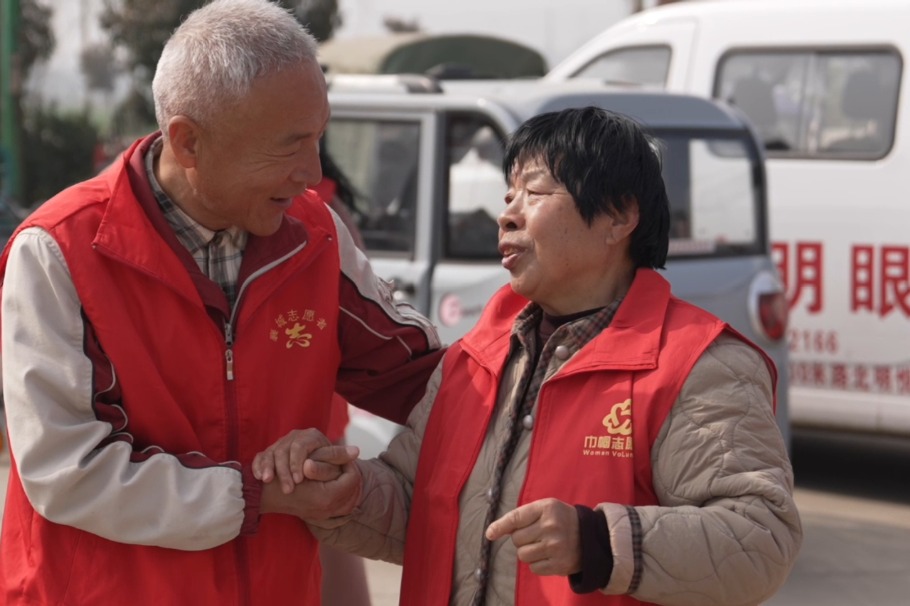
    As pale pink dawn creeps over the rolling wheat fields of central Henan province on a mild spring morning, 79-year-old Meng Laifa wheels his well-worn tricycle out of his courtyard gate. Tucked in the rear cargo box are three trusted companions: a thick sharpening stone, a small hammer, and a plastic bottle of water. Eight kilometers down a winding country road lies Shanqian Xuzhuang village, the 271st stop for the senior volunteer association Meng has served with for years.

    This weekly trip is no casual errand to sell wares or visit relatives. It is a quiet promise Meng and his fellow volunteers have kept for more than a decade. Founded 12 years ago in Xiangcheng county by local resident Song Hongchang, the association began with just 15 members reaching out to isolated, homebound elders. Today, it has grown into a movement of more than 5,000 participants, over 80 percent of whom are seniors over 60 years old—former teachers, retired small business owners, and lifelong farmers who have turned their retirement years into a period of purposeful service.

    Calling themselves the “silver-haired corps”, the group operates on a simple yet innovative “old helping old” model that meets the most pressing unmet needs of rural China’s aging population. Healthy, more mobile seniors travel from village to village, delivering hot meals to doorsteps, trimming hair for homebound elders, sharpening tools, distributing free reading glasses, and most importantly, offering companionship to seniors who often live alone while their adult children work in distant cities.

    “We don’t think of this as one-sided help,” said one volunteer chopping vegetables for the group’s free communal lunch, a warm chuckle escaping her as she worked. “We gain just as much energy and joy from spending time with them as they gain from our help.” This reciprocal bond offers a vivid, grassroots example of how rural China is adapting to the challenges of an aging population, one small, caring act at a time.

    China is now home to more than 300 million people aged 60 and above, marking the country’s entry into a stage of moderate population aging. The strain of this shift is felt most acutely in rural areas, where formal elderly care services remain relatively scarce, and many working-age adults have migrated to urban centers for jobs. The old-helping-old model unlocks an underutilized community resource: active, healthy younger seniors who have abundant time, life experience, and a desire to contribute to their communities. As both current service providers and future beneficiaries of the network, they build a sustainable system of mutual support that fits the unique fabric of rural life.

    The road to building this network was not always smooth, Song recalled. In the early days, local residents were suspicious of the unsalaried group, with some accusing the volunteers of running a pyramid scheme. The organization also faced criticism when it failed to publish its financial accounts promptly, eroding initial trust. But with targeted support from local authorities, the association established a Party branch, brought transparent governance to its operations, and gradually won over community confidence.

    Today, the 15th of every month is designated a special “practice day”, where the senior volunteers are joined by young members of the Communist Youth League, lecturers from the local retired cadres bureau, and anti-fraud investigators from local police stations. This collaboration has created a powerful synergy between grassroots voluntary action and government support, expanding the scope and impact of the group’s work. All financial transactions—every donation received and every expense paid—are published daily for full public scrutiny, and every volunteer’s service hours are officially recorded to keep operations accountable. “What keeps us moving forward is consistent government backing and clear, solid rules,” Song explained.

    One of the association’s most meaningful initiatives grew from a simple, heartfelt encounter back in 2019. During a village visit, Song and his team met an elderly man whose bad teeth left him unable to chew solid food, who said his greatest wish was just to bite into a fresh apple. Sheng Hailiang, a volunteer dentist traveling with the group, stepped forward immediately: “Let me see what I can do.” Within days, Sheng connected with a dental supplier that agreed to craft a set of custom dentures for the man for free. The “Apple Project” was born—named for the elder’s simple wish, the initiative also carries a symbolic meaning of good health and blessing for every participant. To date, the program has provided free dentures for more than 60 low-income rural seniors.

    The association’s impact extends far beyond dental care. Its “Love Lunch Mobile Canteen” has traveled nearly 8,000 kilometers across scattered rural villages, serving more than 170,000 hot, nutritious meals to seniors who struggle to cook for themselves. Its reading glasses program has given hundreds of elderly rural residents their first ever pair of prescription glasses, allowing them to read books, newspapers, and handwritten letters from their children again.

    This grassroots old-helping-old model is not an isolated case. Across China, thousands of similar silver-haired volunteer groups are emerging across sectors: tens of thousands of retired teachers have returned to classrooms to support underserved rural education, while other senior volunteer teams take on community work from neighborhood dispute mediation to waste sorting and local mutual aid networks. The World Health Organization’s vision of “active aging”—which frames older adults not as a societal burden, but as a valuable social resource—is taking deep root across China’s countryside.

    By late afternoon, as the sun dips low and paints the village rooftops gold, the villagers head home after a day of connection and support. The volunteers pack up their tools, wash the last of the lunch dishes, and roll up the event banner. Tomorrow, they will prepare for their next stop: the 272nd village on their ongoing route of care. Meng lifts his sharpening stone back onto his tricycle, turns the crank, and sets off for home, golden sunlight stretching his shadow long across the quiet country road. Across the vast expanse of rural China, thousands of silver-haired volunteers just like Meng are bringing warmth, connection, and strength to the country’s aging society, one small act of service at a time.


  • Shanghai to transform into a city of flowers

    Shanghai to transform into a city of flowers

    Starting April 18 and running through May 10, 2026, Shanghai will undergo a dramatic citywide transformation for the 2026 Shanghai International Flower Show, turning the entire metropolis from its bustling downtown core to its outlying five new towns into an immersive open-air floral exhibition.

    Moving beyond the conventional format of confining flower shows to a single dedicated park space, event organizers have broken traditional geographic and conceptual boundaries to craft a holistic floral experience that integrates botanical displays into the daily urban fabric of Shanghai. Zhu Xinjun, deputy director of Shanghai’s Landscaping and City Appearance Administrative Bureau, outlined the ambitious multi-site layout, which centers on two primary core venues, 10 supporting secondary venues, and pop-up installations across dozens of major commercial districts throughout the city.

    One of the two flagship venues, the Shanghai Botanical Garden, will host a sprawling 40-hectare professional exhibition split into four specialized thematic zones. The venue will feature 41 distinct floral attractions showcasing more than 400 unique plant varieties, ranging from rare native Chinese species to exotic cultivars sourced from horticultural communities around the world.

    The second core venue, located in downtown Huangpu District, will complement the botanical garden’s collection with more than 40 custom-designed themed gardens and over 60 curated floral window displays that line the district’s busy commercial streets. International garden pavilions highlighting horticultural styles from across the globe and dedicated floral art galleries will also be installed throughout Huangpu’s shopping and business districts, bringing world-class floral design directly to pedestrians and shoppers.