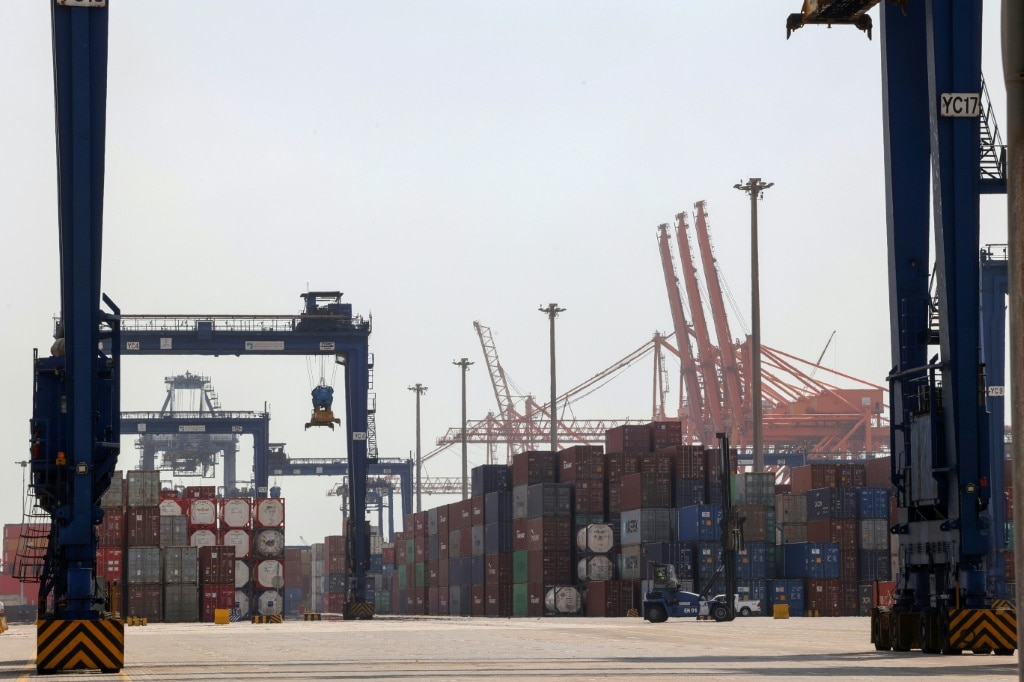
Geopolitical instability centered on conflict in Iran has triggered a sweeping restructuring of global maritime trade networks, pushing Africa into an unexpected central role as container shipping giants reroute major cargo flows away from historically critical chokepoints, logistics and maritime industry sources confirm. The dual pressures of Strait of Hormuz disruptions and escalating tensions in the Red Sea have forced shipping companies to overhaul decades-old supply chains, leaving land transport alternatives as the only reliable option for delivering goods to Gulf Cooperation Council nations.Over the past two months, widespread blockades of key sea lanes have cut off direct maritime access to most coastal Gulf states, prompting shipowners to develop overland trucking corridors to move food, consumer goods and industrial products from new regional entry points to end markets. The Saudi Red Sea port of Jeddah has emerged as the primary temporary hub for this reconfigured trade, with the world’s largest container lines—including Mediterranean Shipping Company, CMA CGM, Maersk and Cosco—diverting all Gulf-bound cargo through the port via the Suez Canal. Once unloaded, cargo is transported overland along desert highways to final destinations across the UAE, Bahrain and Kuwait, markets that have been cut off from direct sea service for two months.Despite its new role as a critical trade gateway, Jeddah was never designed to handle the sudden surge in cargo volumes, and port congestion is now worsening by the week. Arthur Barillas de The, co-founder of global freight forwarder Ovrsea, shared these observations with Agence France-Presse, noting that infrastructure constraints have created significant bottlenecks. Data from maritime analytics firm Kpler Marine Traffic underscores the growing strain: as of last Thursday, 11 container vessels were docked at Jeddah, nine more were anchored waiting for berth access, and the average waiting time for unloading climbed to 36 hours, up from 17 hours just one week prior.Beyond regional reconfiguration for Gulf-bound cargo, shipping lines have also established alternative port bases outside the Strait of Hormuz. Three key terminals—Oman’s Sohar Port and the UAE’s Khorfakkan and Fujairah ports—now serve as entry points for cargo that is moved overland across the Emirates to inland Gulf markets. Jordan’s Port of Aqaba has become the primary hub for cargo bound for Baghdad and Basra in Iraq, while a cross-border corridor through Turkey also supports deliveries to northern Iraq. The most dramatic shift, however, is playing out on long-haul Asia-Europe trade routes, where systematic diversion around the African continent has become the new norm.Shipping lines began diverting away from the Red Sea and Suez Canal long before the current outbreak of conflict in Iran, but the crisis has accelerated the trend dramatically. According to CyclOpe, a leading French commodities industry publication, the shift started on November 19, 2023, when Iran-backed Houthi militias based on Yemen’s Red Sea coast launched the first attack on a commercial container transiting the route. Since that time, rerouting has become standard practice for most major carriers, says Ronan Boudet, head of container intelligence at Kpler.Instead of transiting the Bab al-Mandeb Strait into the Red Sea and on to the Suez Canal, container ships now sail south along Africa’s entire east coast, round the Cape of Good Hope at the southern tip of South Africa, and then turn north to reach European and Mediterranean ports. Edouard Louis-Dreyfus, chairman of French shipping giant Louis Dreyfus Armateurs, told AFP that the latest escalation of tensions in the Gulf has only worsen supply chain disruptions, with no near-term improvement in sight. Yves Guillo, a supply chain expert at Paris-based management consultancy Efeso, estimates that 70 percent of all freight traffic that previously transited the Red Sea in 2023 is now rerouted via the Cape of Good Hope.Data from the International Monetary Fund’s PortWatch platform, which tracks vessel movements via GPS signals, confirms the scale of this shift. Commercial vessel traffic through the Cape of Good Hope has more than tripled in three years, while traffic through the Bab al-Mandeb Strait has plummeted by more than 50 percent. Between March 1 and April 24 this year, an average of 20 commercial vessels rounded the Cape of Good Hope every day, compared to just six vessels per day in the same period in 2023. By contrast, average daily transits through the Bab al-Mandeb Strait fell from 18 in March-April 2023 to just five this year.The restructuring of global shipping lanes has created a mix of winners and losers across the global economy, with tangible impacts on shipping costs and delivery times. Guillo explains that longer routes have stretched Asia-Europe transit times by an average of two weeks, while costs have spiked dramatically: the longer journey requires 30 to 50 percent more fuel, and carriers need 10 to 20 percent additional vessels to maintain the same service frequency. Citing data from the Drewry World Container Index, Guillo adds that the average cost to ship a standard 40-foot container on major trade routes rose 14 percent in April compared to the same period last year.Some African ports have seen unexpected gains from the new routing structure. The Tanger Med Port Authority in Morocco reported it handled 11 million standard containers in 2025, an 8.4 percent increase year-over-year, driven by increased traffic from rerouted vessels. But other economies have suffered severe losses: Egypt, which relies heavily on Suez Canal toll revenues for a large share of its national income, lost an estimated $7 billion in toll revenues in 2024, a drop of more than 60 percent compared to 2023, according to CyclOpe. As long as geopolitical tensions persist in the Middle East, industry analysts expect this reshaped trade landscape to remain in place, with Africa continuing to anchor the new core of global container shipping.
作者: admin
-

Aldi claims Roy Morgan’s ‘supermarket of the year’ award for sixth time in a row
In a historic showing for Australia’s grocery sector, German-founded retail giant Aldi has claimed the 2025 Supermarket of the Year crown in Roy Morgan’s annual Customer Satisfaction Awards – marking its sixth straight win and its ninth overall victory, a record no other domestic supermarket has matched.
The discount chain secured an average customer satisfaction score of 87.6% to top the rankings, extending an unbroken winning streak that dates back to 2021, now hitting 55 consecutive months of leading customer satisfaction, according to independent consumer researcher Roy Morgan.
As Australia’s third-largest grocery chain by market value and the nation’s second-most trusted brand, Aldi has built its reputation on low pricing at a time when Australian households are grappling with persistent cost-of-living pressures. Simon Padovani-Ginies, group director of Aldi Australia, said the company was deeply proud to retain the top honor.
“With cost of living pressures continuing to stretch household budgets, Australians are prioritizing value more than ever before,” Padovani-Ginies said. “Nearly 70% of our high-quality, award-winning product range is priced under $5, and we’re proud our commitment to the lowest possible prices is consistently verified by independent research. That gives our customers full confidence that every time they shop with us, they’re getting premium goods at unbeatable Aldi prices.”
Independent analysis estimates the average Australian household saves more than $3,000 per year on grocery costs by choosing to shop at Aldi compared to competing major supermarket chains.
Michele Levine, CEO of Roy Morgan, congratulated Aldi on its record-breaking run of awards, noting the retailer has carved out a distinct, compelling position in the highly competitive Australian grocery market. “This ‘Good Different’ supermarket offers a compelling alternative to its larger domestic rivals, and its consistent performance through shifting economic and political conditions speaks to its strong connection with customers,” Levine said. “Aldi has ranked among Australia’s top five most trusted brands for more than six years running, a milestone that has held steady through all kinds of market and economic upheaval, and millions of Australian shoppers consistently rank it as their top choice for satisfaction.”
The award win cements Aldi’s ongoing position as a major disruptor in Australia’s $100 billion-plus annual grocery market, where it continues to gain market share from long-established incumbents by focusing on low pricing and curated private-label ranges.
-

A citizen campaign returns iconic kiwi birds to New Zealand’s capital after a century-long absence
WELLINGTON, New Zealand — More than 100 years after New Zealand’s flightless, culturally sacred national bird the kiwi disappeared from the rolling hills surrounding the nation’s capital, a grassroots community movement is working to reverse that historic loss, turning a once-improbable dream of urban coexistence with the endangered species into a growing conservation success story.
-
Former Chick-fil-A employee charged in $80,000 mac-and-cheese scheme
A shocking fraud case has unfolded in Grapevine, Texas, where a former employee of the popular fast-food chain Chick-fil-A stands accused of orchestrating an $80,000 theft scheme centered on unauthorized refunds for bulk catering orders of the restaurant’s signature mac and cheese. Local law enforcement has detailed how the ex-worker, identified by U.S. media as 23-year-old Keyshun Jones, returned to the Chick-fil-A location one month after his termination to carry out the scheme. According to official statements from the Grapevine Police Department, Jones made his way behind the restaurant’s service counter and processed orders for 800 large, catering-sized trays of Chick-fil-A’s famous three-cheese baked mac and cheese. Instead of fulfilling the actual orders, he then issued full refunds totaling $80,000 to his own personal credit cards. At a market rate of roughly $100 per large tray of the menu item, the total stolen amount matches the value of 800 full-sized servings of the popular side dish. Surveillance footage released by the store appears to confirm the sequence of events, showing Jones — dressed in a brown puffer vest, blue jeans and a backwards white cap, not the chain’s signature employee uniform — accessing the point-of-sale system at the counter to complete the unauthorized transactions. After the alleged scheme was uncovered, law enforcement attempted to take Jones into custody multiple times before a successful arrest on April 17. The capture was carried out through a joint operation between the Texas Attorney General’s Fugitive Task Force and the Fort Worth Police Department. Jones faces three formal charges: property theft, money laundering, and evading arrest. Court records indicate he is currently being held at the Green Bay correctional facility in Fort Worth. The New York Times reports that Jones’s legal representation has declined to comment on the charges against him. It remains unclear what led to Jones’s initial termination from the Chick-fil-A location one month prior to the alleged incident, and details about the timeline of the fraud investigation have not been fully released by authorities. The BBC has confirmed it has reached out to Chick-fil-A’s corporate media office to request a statement on the case, with no official response released as of yet. For context, Chick-fil-A’s large catering trays of mac and cheese clock in at nearly 10,000 calories per serving, making the 800 trays implicated in the scam a staggering total of 8 million calories — a detail that has drawn viral attention to the unusual case on social media.
-

Oscar goes missing after Academy Award winner is blocked from taking it on flight
A bizarre and worrying incident has unfolded in international aviation and entertainment, after Oscar-winning Russian dissident filmmaker Pavel Talankin lost his coveted Academy Award shortly after New York security officials barred him from bringing the statuette onto his flight as carry-on luggage.
Talankin, who took home the 2026 Oscar for Best Feature Documentary for his work *Mr Nobody Against Putin* — a hard-hitting exposé of growing war propaganda in Russian state schools following the 2022 full-scale invasion of Ukraine — often travels with his award to bring it to public screenings and outreach events. Just before his fateful flight, he brought the golden statuette to a New York university event, where he let students view the award up close during a post-screening question-and-answer session.
The filmmaker, who currently lives in exile in Europe for his safety after Russia banned his documentary and labeled it extremist propaganda, was traveling through John F. Kennedy International Airport on Wednesday for a Lufthansa flight to Germany. He kept his Oscar stored in his carry-on bag, as he had done on multiple previous domestic and international trips with both his Oscar and his recently won BAFTA award without incident. This time, however, Transportation Security Administration (TSA) officers stopped him, arguing that the solid 8.5-pound, 13.5-inch statuette could be repurposed as a dangerous weapon.
Because Talankin did not bring any checked luggage for his trip, Lufthansa staff stepped in to pack the award securely in a box, using bubble wrap and packing tape, to be loaded into the aircraft’s cargo hold as checked baggage. But when Talankin touched down in Germany, the box holding his Oscar was nowhere to be found.
In an official statement released after the incident, Lufthansa confirmed that its team is prioritizing the search for the missing statuette. “We deeply regret this situation,” the airline said. “Our team is treating this matter with the utmost care and urgency, and we are conducting a comprehensive internal search to ensure the Oscar is found and returned as quickly as possible.”
Robin Hessman, executive producer of the BBC-backed documentary, told reporters that she assisted Talankin during the airport standoff over a speakerphone, as the filmmaker does not speak fluent English. She also pushed back on the TSA’s decision to bar the statuette from the cabin, saying in a pointed critique: “This wouldn’t have happened to Leonardo DiCaprio.”
As of Thursday, neither the Academy of Motion Picture Arts and Sciences nor the TSA has issued an official comment on the incident. While each Oscar statuette only costs between $400 and $1,000 to manufacture, the award carries irreplaceable personal and professional significance for Talankin, whose work has already been censored and banned in his home country for its criticism of the Russian government’s war efforts.
-

Eurovision: 70 years of geopolitics, patriotism, music and glitter
For seven decades, the Eurovision Song Contest has stood as one of Europe’s most unpredictable and culturally resonant institutions, launching the careers of global superstars from ABBA to Celine Dion, embodying the dream of pan-European unity, and becoming an unlikely lightning rod for global geopolitical friction. Organized through public broadcasters across the continent and beyond, the annual competition has spent 70 years alternately captivating and confounding audiences around the world.
As the contest prepares to host its 70th anniversary final in 2026 in Vienna, it faces ongoing tensions that threaten to overshadow the event’s signature flashy performances and celebration of national pride: multiple countries have already announced withdrawals in protest of Israel’s inclusion in the competition amid its ongoing military campaign in Gaza, continuing a pattern of geopolitical disruption that has shaped the event for decades.
Geopolitical division has been woven into Eurovision’s identity from its earliest years. During the Cold War, the absence of Eastern Bloc nations mirrored the iron curtain that split the continent. In the 1960s, widespread protests erupted over the participation of fascist-ruled Spain under Francisco Franco and authoritarian Portugal under Antonio de Oliveira Salazar. The 1974 Turkish invasion of Cyprus led Greece to withdraw from the contest entirely, while modern tensions between Georgia and Russia, and the decades-long Nagorno-Karabakh conflict between Armenia and Azerbaijan, have repeatedly spilled over onto the Eurovision stage. Most recently, Russia was fully expelled from the competition in 2022 following its full-scale invasion of Ukraine — a year that ended with Ukrainian artist Kalush Orchestra taking home the grand prize.
Beyond friction, the contest has also long served as a powerful force for European integration, particularly after it expanded to include former Eastern Bloc nations in the 2000s, according to Paul Jordan, a Eurovision expert at the University of Glasgow. Jordan notes that for former Soviet republics such as Estonia and Ukraine, participating in Eurovision has been a deliberate strategy to cement their national identities as part of modern Europe. ‘Certainly for Ukraine, it was all about showing themselves as an independent Western, European country’ while pushing back against Russian influence, Jordan explained in an interview with AFP.
Galina Miazhevich, a researcher at Cardiff University, added that while countries often lean into distinct cultural, ethnic and linguistic markers to assert their national identity on the Eurovision stage, the competition has also fostered a unique blending of creative influences, seen in the rise of bilingual tracks and cross-cultural stylistic fusion.
Eurovision has also emerged as a groundbreaking platform for progressive social change, decades before many mainstream cultural institutions embraced marginalized groups. In 1961, Jean-Claude Pascal took home the top prize with *Nous les amoureux*, a track widely interpreted as a coded ode to same-sex love at a time when homosexuality was criminalized across much of Europe. The contest continued to break barriers in 1998, when transgender Israeli artist Dana International won the whole competition, making history as one of the first trans artists to claim a major global cultural stage. In the years since, it has centered disabled artists, anti-colonial activism, and women’s rights advocacy through its performance lineup, even when those messages sparked controversy in participating countries.
Beyond politics and social change, Eurovision has functioned as a one-of-a-kind launchpad for global music stardom. Ever since Swedish pop icons ABBA catapulted to international fame after their 1974 Eurovision win, the competition has kickstarted the careers of household names from Celine Dion to Italian rock band Måneskin. In the age of social media, artists do not even need to win to break through: Armenian singer Rosa Linn finished 20th in the 2022 contest, but her track *Snap* went viral on TikTok and Instagram, eventually climbing charts around the world.
Today, Eurovision is firmly entrenched as a global cultural touchstone, with decades of performance archives racking up hundreds of millions of views on YouTube, and its reach extending even to the United States via the 2020 Netflix comedy *Eurovision Song Contest: The Story of Fire Saga*, led by Will Ferrell. This mainstream acceptance is a relatively new shift, however: Jordan noted that the contest was widely dismissed as uncool kitsch in Western Europe through the 1980s and 1990s, particularly after eastern European nations joined the competition. The turning point came in 2014, when Austrian bearded drag queen Conchita Wurst’s viral victory catapulted the contest back into global mainstream consciousness.
While some performances still divide audiences — drawing criticism for being overly niche, vulgar, or baffling to casual viewers — the competition’s broad programming, which spans everything from pop and opera to rock, rap, folk and chanson, caters to a vast range of tastes. Even for viewers who do not enjoy the show, Eurovision remains an unavoidable shared cultural reference point, Jordan argues. ‘It’s a kind of cultural reference point that everyone has,’ he said. ‘We’re growing up with this television show. And I think there’s maybe this nostalgia in a way that there isn’t for other things.’
-

Mortgage holders warned to brace for more pain as interest rate rise looms
Ahead of the Reserve Bank of Australia’s (RBA) upcoming May policy meeting, three-quarters of leading Australian economists and financial industry experts are sounding the alarm: mortgage-holding households across the country are set to face another round of interest rate increases that will stretch household budgets even further.
A recent nationwide poll conducted by comparison platform Finder, which surveyed 36 financial experts and economists, found 27 respondents are convinced RBA Governor Michele Bullock will have no alternative but to greenlight another cash rate hike when the board meets next Tuesday. If this prediction holds, the increase will mark the RBA’s third consecutive rate rise following hikes in February and March, undoing the temporary cash rate relief Australian borrowers enjoyed in 2025.
The RBA already lifted the cash rate by a combined 50 basis points across its first two meetings of 2026, pushing the benchmark rate up to 4.10%. Should policymakers opt for a further 25 basis point increase in May, Australians holding the country’s average $736,259 home loan will see their annual mortgage repayments jump by an extra $2,657, according to Finder’s calculations.
The calls for another rate hike come after hotter-than-expected March quarter inflation data released this week gave policymakers more justification to tighten monetary policy. New figures from the Australian Bureau of Statistics (ABS) show headline inflation climbed 1.1% over the three months to March, driven largely by skyrocketing global oil prices that have hit Australian motorists hard for months. Annual inflation hit 4.6% in the 12 months ending March 2026, marking the highest annual inflation rate Australia has seen since September 2023, when the national economy was in its post-COVID-19 rebound phase.
Petrol costs alone surged 32.8% in March, pushing the broader transportation category up 9.2% month-on-month. Even the RBA’s preferred core inflation measure, the trimmed mean — which strips out volatile price swings to give a clearer view of underlying inflation pressures — came in at 3.3% over the 12 months to March, holding steady at the same level recorded in previous readings.
Wealth Within Group chief investment analyst Dale Gillham, one of the experts predicting a hike, said stubbornly rising inflation leaves the RBA with little room to hold rates steady. “I don’t think they have much choice, given inflation is still rising,” he noted, though he added he does not support the move, arguing that government overspending is the root cause of Australia’s persistent inflation.
AMP chief economist Shane Oliver echoed that view, pointing out that core inflation already sits well above the RBA’s 2-3% target range, even before the full flow-on effects of higher oil prices filter through to other sectors of the economy, including airfares, fertiliser, plastics and broader retail transport costs. “And there is a rising risk that inflation expectations are rising again impacting wage claims,” Oliver said. “So the RBA is likely to hike again to improve its confidence that inflation will fall back to target on a reasonable timeframe.”
Not all experts are convinced a hike is on the cards, however. Queensland University of Technology adjunct professor and personal finance specialist Noel Whittaker argues the RBA will choose to hold rates steady, pointing to the extreme financial pressure already crushing Australian households. “To me, it would be economic madness to raise rates in this time of uncertainty,” Whittaker said, noting that while a recession has been forecast for months, it has not yet materialized, meaning the central bank also has no reason to cut rates in the near term.
-

‘Kick it now!’: How Jesse Southwell overcame a blocked shot to ice the biggest moment of her career
In a storybook ending to her four-season tenure with the Newcastle Knights, 21-year-old NRLW star Jesse Southwell delivered a moment that will go down in State of Origin folklore on Thursday night: a match-winning, career-first field goal that carried the NSW Blues to an 11-6 win over Queensland Maroons in the series opener. The fairytale victory came just two days before Southwell relocates to Brisbane to join the back-to-back defending champion Broncos on a two-year contract, turning the critical late-game score into the ideal send-off for the Newcastle faithful that has supported her since she turned pro.
Southwell has already built an impressive resume in her young career, claiming two NRLW premiership titles with the Knights and earning representative honors at both the state and national level. But heading into Thursday’s clash at Newcastle’s Hunter Stadium, one milestone had eluded her: she had never attempted a field goal in 40 career top-flight games, let alone nailed one under playoff pressure.
The stage was set in the final 10 minutes of the clash, with neither side able to break through for a decisive score, locking the game at 6-all. After her first attempt at a one-pointer was charged down by Maroons forward Destiny Brill, Southwell got a second chance, thanks in large part to teammate Olivia Kernick. The pair had discussed a potential field goal setup earlier in a break in play, and after the first blocked attempt, Kernick again encouraged Southwell to step up for the second opportunity. This time, Southwell split the posts, putting the Blues ahead for good.
“ I’ve never kicked a field goal in a game before, in a real game I mean. But that was cool,” Southwell told reporters after the match. “It was actually Kernick at that point. We had a discussion earlier when there was a break in play about setting up for a field goal. I went to the first one, she actually told me to do that one as well which was so good, and then I missed that one. And then the second one came around and she was like, ‘Jesse, kick it now’. I was like, ‘Sweet’.”
NSW head coach John Strange said he never doubted Southwell’s ability to step up to the pressure moment, even after the first failed attempt, pointing to the young halfback’s signature mental toughness as the key to the historic play.
“The fact that she did that after the first time is just a testament to who she is. She’s got a really strong positive mindset as a young half, which you obviously need,” Strange said. “She backs herself. For me as a coach, I want all these players to back themselves, that’s why they’re in this team. All 17 players that played tonight are exceptional athletes and very good footy players. For me, it’s about them backing their ability. Jesse is obviously guiding the team around, but icing a moment like that when it turns up is exactly what you want.”
Playing the match on the home ground she called home for four seasons with the Knights added an extra layer of meaning to the play, and Southwell showed a maturity far beyond her 21 years when asked about her emotions in the aftermath of the kick. Rather than celebrating immediately, she shifted her focus to closing out the win, well aware of Queensland’s history of late match-winning plays against NSW in both men’s and women’s Origin contests.
“I was just thinking about my next job because there were still a few minutes left, and I just knew the game wasn’t over yet,” she explained. “Queensland have done it to NSW in the men’s game and the women’s game time and time again (when they win it late), so I was honestly just thinking about the next job and not losing the game from there.”
The fairytale send-off lines up with the next chapter of Southwell’s career: she confirmed she will pack her bags and relocate to Brisbane this Sunday, and will begin orientation and pre-season commitments with the Broncos in the coming week. She has already been commuting between Newcastle and Brisbane in recent weeks to ease the transition.
With the first game of the three-match series secured, Southwell and the NSW Blues will now head to Suncorp Stadium for the second Origin clash on May 14, where they will look to lock in the series win and claim the 2025 State of Origin title.
-
‘Uncharted’: US court ruling shakes up battle for Congress
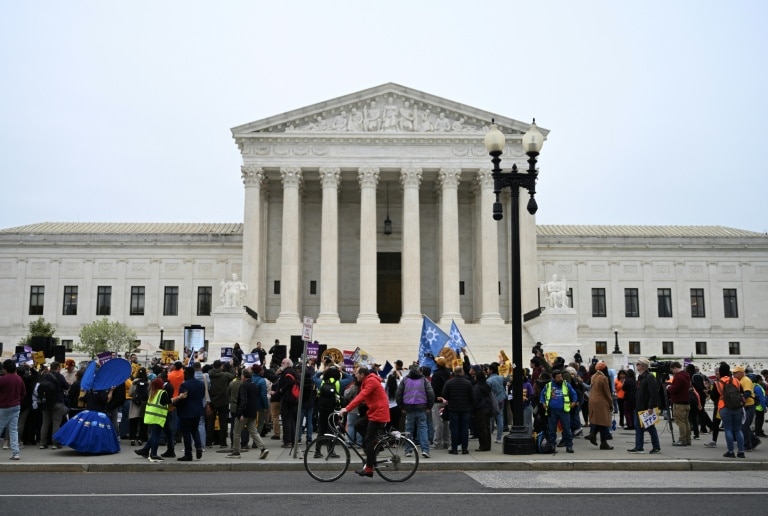
A recent landmark decision by the U.S. Supreme Court has dramatically reshaped the national fight over congressional redistricting, rolling back key protections for minority voters and setting off a frantic partisan scramble to redraw electoral boundaries that will determine partisan control of Capitol Hill for the next decade. The high court’s ruling, released Wednesday, significantly raises the legal bar for challenging partisan maps that dilute the voting power of racial minority groups — a move that weakens a core provision of the 1965 Voting Rights Act, the landmark civil rights legislation designed to dismantle the enduring legacy of systemic anti-Black disenfranchisement. The decision immediately emboldened Republican leaders across the American South to move forward with aggressive new district map proposals that are expected to tilt legislative power in the G.O.P.’s favor, though nonpartisan analysts widely agree the immediate impact on November’s upcoming midterm elections will be sharply limited. With party primaries already underway or scheduled imminently in most states, and protracted legal challenges all but guaranteed, there is virtually no time to implement sweeping redistricting changes before voters cast their ballots this fall. Even under the most aggressive partisan scenarios, political experts project the ruling could net Republicans just a handful of additional House seats in 2026. While that gain could be enough to tip control of the narrowly divided chamber, it falls far short of a transformative partisan shift. Analysts Amy Walters and Matthew Klein of the nonpartisan Cook Political Report described the new political landscape created by the ruling as “uncharted waters” in their post-decision analysis. They noted that while Republicans could gain a small number of seats through targeted redraws ahead of 2026, the ultimate number of new maps that actually take effect remains unclear given tight legal timelines and the wave of litigation that is expected to follow. Despite these constraints, the national partisan scramble to revise district lines is already underway. Republican officials in Southern states including Alabama, Tennessee, and South Carolina have already called for urgent special legislative sessions to redraw congressional maps, targeting majority-Black districts that were previously protected from partisan manipulation under the Voting Rights Act. Louisiana, the state at the center of the original Supreme Court case, has already suspended its upcoming primary elections to allow time for the legislature to pass a new electoral map, underscoring the urgency with which conservative leaders are moving to capitalize on the ruling. The decision is broadly viewed by political strategists on both sides as a significant long-term advantage for the Republican Party, particularly in the South, where majority-Black districts have for decades helped elect Democratic candidates to Congress. By weakening legal safeguards against vote dilution, the court has cleared the way for Republican-led legislatures to break apart or redraw these Democratic-leaning districts to benefit G.O.P. candidates. Veteran Republican political strategist Matt Klink called the ruling a transformative win for his party, noting that “if not for 2026, it is certainly huge for 2028. It will force states, primarily in the South, to redraw as many as 18 districts.” Democrats have already signaled they will respond in kind, indicating they may use the same legal logic established by the Supreme Court ruling to advance their own partisan redraws in blue-leaning states including New York and California to maximize their own congressional gains. Former President Donald Trump, whose party holds narrow majorities in both chambers of Congress, has publicly praised the ruling, though it remains unclear how aggressively he will pressure state Republican leaders to implement new maps ahead of November. Timing remains the single biggest constraint on immediate changes to district maps. In multiple key battleground states including Texas, North Carolina, and Mississippi, primaries have already concluded, effectively locking in current electoral boundaries for this cycle. Even in Alabama, a top target for Republican redistricting efforts, Governor Kay Ivey has acknowledged the state is “not in a position” to convene a special session to revise maps this year. Even in states where changes are still technically possible, steep legal and logistical barriers remain. Any new redistricting plan almost always triggers immediate court challenges, and federal judges are generally reluctant to approve last-minute map changes that would disrupt the orderly administration of upcoming elections. “With the midterm elections only six months away, the decision’s immediate impact will be muted,” Michael R. Dimino, a law professor at Pennsylvania’s Widener University, told Agence France-Presse. “But the decision is very significant for the future — particularly in the redistricting that will follow the 2030 census, as it will remove an unfair advantage for Democrats.” For Democratic and voting rights advocates, however, the ruling’s greatest danger lies not in its immediate electoral impact but in what it signals about the Supreme Court’s willingness to allow states to erode minority voting power. Caroline Welles, a Democratic political strategist focused on electing first-time women candidates to state office, argued the decision creates lasting structural barriers for Democrats and underrepresented communities. “Voting rights litigation has been the main way to challenge rigged maps since 2013. If that tool gets blunted, Democrats are looking at structural disadvantages that feel insurmountable,” she said. “Communities of color will continue to be systematically underrepresented in the places where they have the numbers to elect candidates of their choice.”
-

What to know about May Day demonstrations as workers face rising energy costs due to Iran war
As working populations across the globe grapple with skyrocketing energy costs and plummeting purchasing power linked to ongoing conflict in the Middle East, millions of labor activists and ordinary workers are set to march in annual May Day rallies Friday, uniting behind core demands for fairer pay, improved working conditions and an end to armed conflict.
Celebrated as a public holiday in dozens of nations, May Day has long served as a platform for organized labor to highlight systemic economic and social inequities. This year’s gatherings, planned for major cities across every inhabited continent, carry heightened urgency as cost-of-living crises deepen in both developing and developed economies. Past editions of the demonstrations have occasionally seen isolated outbreaks of violence, and authorities across multiple regions are preparing for large-scale turnout.
The European Trade Union Confederation, which represents more than 40 million workers across 41 European countries through 93 affiliate organizations, issued a sharp statement blaming geopolitical policy for working people’s hardship. “Working people refuse to pay the price for Donald Trump’s war in the Middle East,” the group said. “Today’s rallies show working people will not stand by and see their jobs and living standards destroyed.” In the United States, activists critical of the Trump administration’s policy agenda have organized nationwide marches, boycotts and work stoppages to amplify their demands.
Spiking energy and consumer costs, directly tied to market volatility caused by the Middle East conflict, have emerged as the defining rallying cry for 2025’s demonstrations. In Manila, the capital of the Philippines, protest organizers anticipate massive turnout from workers grappling with record fuel price increases. “There will be a louder call for higher wages and economic relief because of the unprecedented spikes in fuel prices,” Renato Reyes, a leader of left-wing political coalition Bayan, told the Associated Press. Josua Mata, head of Philippine labor federation umbrella group SENTRO, added that workers across the country now recognize their domestic struggles are part of a broader global crisis.
In Indonesia, national labor leaders have warned that existing economic pressures on working households are reaching a breaking point. “Workers are already living paycheck to paycheck,” explained Said Iqbal, president of the Indonesian Trade Union Confederation. The crisis hits even harder for low-income daily wage workers in countries like Pakistan, where May Day is an official public holiday but many cannot afford to skip a day of work. “How will I bring vegetables and other necessities home if I don’t work?” said Mohammad Maskeen, a 55-year-old construction worker based near Islamabad. Pakistan, which is heavily dependent on financial support from the International Monetary Fund and allied nations, currently faces headline inflation of roughly 16%, driven largely by rising global oil prices.
Across Europe, demonstrations are planned in nearly all major European Union capitals, with many unions tying daily economic struggles to ongoing global conflicts. In France, organizing bodies have called for national demonstrations under the slogan “bread, peace and freedom,” explicitly linking worker hardship to conflicts in Ukraine and the Middle East. Ahead of the rallies, the Italian government approved a €1 billion ($1.17 billion) package of employment incentives this week, designed to boost stable hiring, curb labor exploitation, extend tax breaks for hiring young workers and disadvantaged women, and address abuse in platform-based gig work. The package was immediately dismissed as “pure propaganda” by opposition parties. In Portugal, tensions remain high after center-right government’s proposed labor law revisions sparked a general strike and widespread protests in 2024. After nine months of stalled negotiations with unions and employer groups, no agreement has been reached: unions warn the proposed changes would weaken core worker protections by expanding legal overtime limits and cutting key benefits.
This year holds special symbolic meaning for May Day in France, where a heated debate has erupted over long-standing rules that grant most workers a mandatory paid day off on May 1 – the country’s most protected public holiday. Under current law, nearly all private businesses, shops and malls are required to close, with exemptions only for essential sectors including healthcare, public transport and hospitality. A recent parliamentary proposal to expand eligibility for work on May Day prompted massive backlash from unions and left-wing political parties, which issued a joint statement demanding “Don’t touch May Day.” Backtracking amid widespread public controversy, the government ultimately introduced a scaled-back bill that would only allow additional workers to staff bakeries and florists – two sectors where May Day work is rooted in long-standing custom, as the French traditionally gift lily of the valley flowers on the day as a symbol of good luck. “May 1 is not just any day,” said Small and Medium-sized Businesses Minister Serge Papin. “It symbolizes social gains stemming from a century of building social rules that have led to the labor code we know in France. It is indeed a special day.”
In the United States, where May Day is not recognized as a federal public holiday, a coalition of labor unions and activist groups called May Day Strong has organized nationwide protests under the banner “workers over billionaires.” The coalition, which opposes multiple Trump administration policies including a hardline immigration crackdown, has listed thousands of independent actions across the country and called for a national economic “blackout” through a “no school, no work, no shopping” boycott. Key demands include higher taxes on the wealthiest Americans and an end to stricter enforcement against undocumented immigrants.
The modern observation of May Day as International Workers’ Day has its roots in 19th century American labor history. In the 1880s, U.S. unions organized mass strikes and demonstrations to push for a standardized eight-hour workday. A 1886 rally in Chicago’s Haymarket Square turned deadly when an unknown assailant detonated a bomb, prompting police to open fire on the crowd. Multiple labor activists, most of them first-generation immigrants, were convicted of conspiracy; four were executed. In the years after the Haymarket incident, global labor bodies designated May 1 to honor the fallen activists and the broader struggle for worker rights, and the holiday is now observed across much of the world, from Europe to Latin America, Africa and Asia. A monument at Chicago’s Haymarket Square still bears the inscription: “Dedicated to all workers of the world.”