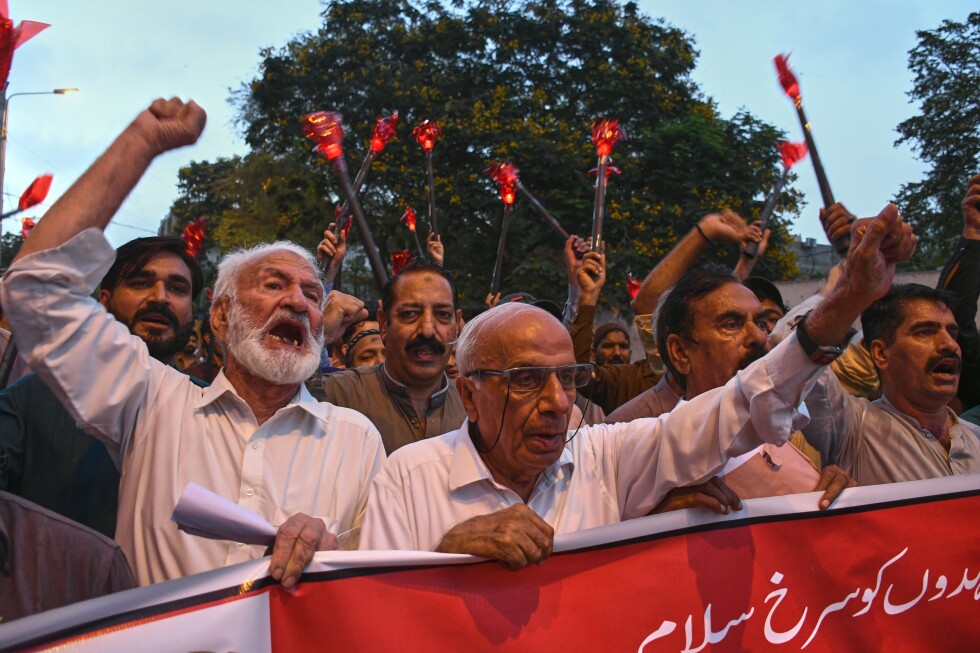
As working populations across the globe grapple with skyrocketing energy costs and plummeting purchasing power linked to ongoing conflict in the Middle East, millions of labor activists and ordinary workers are set to march in annual May Day rallies Friday, uniting behind core demands for fairer pay, improved working conditions and an end to armed conflict.
Celebrated as a public holiday in dozens of nations, May Day has long served as a platform for organized labor to highlight systemic economic and social inequities. This year’s gatherings, planned for major cities across every inhabited continent, carry heightened urgency as cost-of-living crises deepen in both developing and developed economies. Past editions of the demonstrations have occasionally seen isolated outbreaks of violence, and authorities across multiple regions are preparing for large-scale turnout.
The European Trade Union Confederation, which represents more than 40 million workers across 41 European countries through 93 affiliate organizations, issued a sharp statement blaming geopolitical policy for working people’s hardship. “Working people refuse to pay the price for Donald Trump’s war in the Middle East,” the group said. “Today’s rallies show working people will not stand by and see their jobs and living standards destroyed.” In the United States, activists critical of the Trump administration’s policy agenda have organized nationwide marches, boycotts and work stoppages to amplify their demands.
Spiking energy and consumer costs, directly tied to market volatility caused by the Middle East conflict, have emerged as the defining rallying cry for 2025’s demonstrations. In Manila, the capital of the Philippines, protest organizers anticipate massive turnout from workers grappling with record fuel price increases. “There will be a louder call for higher wages and economic relief because of the unprecedented spikes in fuel prices,” Renato Reyes, a leader of left-wing political coalition Bayan, told the Associated Press. Josua Mata, head of Philippine labor federation umbrella group SENTRO, added that workers across the country now recognize their domestic struggles are part of a broader global crisis.
In Indonesia, national labor leaders have warned that existing economic pressures on working households are reaching a breaking point. “Workers are already living paycheck to paycheck,” explained Said Iqbal, president of the Indonesian Trade Union Confederation. The crisis hits even harder for low-income daily wage workers in countries like Pakistan, where May Day is an official public holiday but many cannot afford to skip a day of work. “How will I bring vegetables and other necessities home if I don’t work?” said Mohammad Maskeen, a 55-year-old construction worker based near Islamabad. Pakistan, which is heavily dependent on financial support from the International Monetary Fund and allied nations, currently faces headline inflation of roughly 16%, driven largely by rising global oil prices.
Across Europe, demonstrations are planned in nearly all major European Union capitals, with many unions tying daily economic struggles to ongoing global conflicts. In France, organizing bodies have called for national demonstrations under the slogan “bread, peace and freedom,” explicitly linking worker hardship to conflicts in Ukraine and the Middle East. Ahead of the rallies, the Italian government approved a €1 billion ($1.17 billion) package of employment incentives this week, designed to boost stable hiring, curb labor exploitation, extend tax breaks for hiring young workers and disadvantaged women, and address abuse in platform-based gig work. The package was immediately dismissed as “pure propaganda” by opposition parties. In Portugal, tensions remain high after center-right government’s proposed labor law revisions sparked a general strike and widespread protests in 2024. After nine months of stalled negotiations with unions and employer groups, no agreement has been reached: unions warn the proposed changes would weaken core worker protections by expanding legal overtime limits and cutting key benefits.
This year holds special symbolic meaning for May Day in France, where a heated debate has erupted over long-standing rules that grant most workers a mandatory paid day off on May 1 – the country’s most protected public holiday. Under current law, nearly all private businesses, shops and malls are required to close, with exemptions only for essential sectors including healthcare, public transport and hospitality. A recent parliamentary proposal to expand eligibility for work on May Day prompted massive backlash from unions and left-wing political parties, which issued a joint statement demanding “Don’t touch May Day.” Backtracking amid widespread public controversy, the government ultimately introduced a scaled-back bill that would only allow additional workers to staff bakeries and florists – two sectors where May Day work is rooted in long-standing custom, as the French traditionally gift lily of the valley flowers on the day as a symbol of good luck. “May 1 is not just any day,” said Small and Medium-sized Businesses Minister Serge Papin. “It symbolizes social gains stemming from a century of building social rules that have led to the labor code we know in France. It is indeed a special day.”
In the United States, where May Day is not recognized as a federal public holiday, a coalition of labor unions and activist groups called May Day Strong has organized nationwide protests under the banner “workers over billionaires.” The coalition, which opposes multiple Trump administration policies including a hardline immigration crackdown, has listed thousands of independent actions across the country and called for a national economic “blackout” through a “no school, no work, no shopping” boycott. Key demands include higher taxes on the wealthiest Americans and an end to stricter enforcement against undocumented immigrants.
The modern observation of May Day as International Workers’ Day has its roots in 19th century American labor history. In the 1880s, U.S. unions organized mass strikes and demonstrations to push for a standardized eight-hour workday. A 1886 rally in Chicago’s Haymarket Square turned deadly when an unknown assailant detonated a bomb, prompting police to open fire on the crowd. Multiple labor activists, most of them first-generation immigrants, were convicted of conspiracy; four were executed. In the years after the Haymarket incident, global labor bodies designated May 1 to honor the fallen activists and the broader struggle for worker rights, and the holiday is now observed across much of the world, from Europe to Latin America, Africa and Asia. A monument at Chicago’s Haymarket Square still bears the inscription: “Dedicated to all workers of the world.”