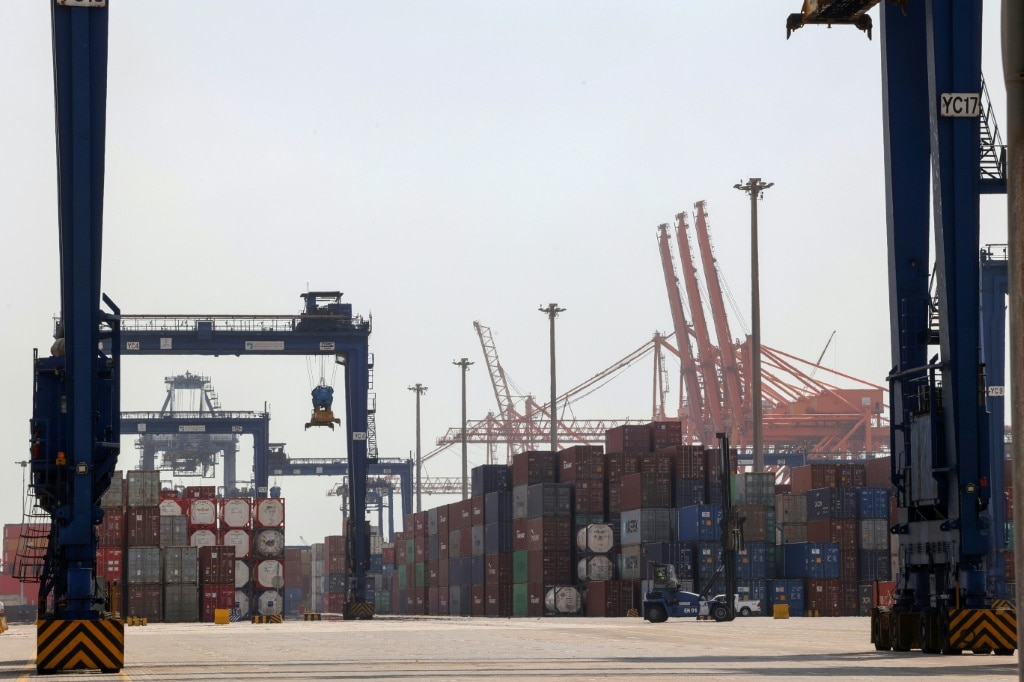
Geopolitical instability centered on conflict in Iran has triggered a sweeping restructuring of global maritime trade networks, pushing Africa into an unexpected central role as container shipping giants reroute major cargo flows away from historically critical chokepoints, logistics and maritime industry sources confirm. The dual pressures of Strait of Hormuz disruptions and escalating tensions in the Red Sea have forced shipping companies to overhaul decades-old supply chains, leaving land transport alternatives as the only reliable option for delivering goods to Gulf Cooperation Council nations.Over the past two months, widespread blockades of key sea lanes have cut off direct maritime access to most coastal Gulf states, prompting shipowners to develop overland trucking corridors to move food, consumer goods and industrial products from new regional entry points to end markets. The Saudi Red Sea port of Jeddah has emerged as the primary temporary hub for this reconfigured trade, with the world’s largest container lines—including Mediterranean Shipping Company, CMA CGM, Maersk and Cosco—diverting all Gulf-bound cargo through the port via the Suez Canal. Once unloaded, cargo is transported overland along desert highways to final destinations across the UAE, Bahrain and Kuwait, markets that have been cut off from direct sea service for two months.Despite its new role as a critical trade gateway, Jeddah was never designed to handle the sudden surge in cargo volumes, and port congestion is now worsening by the week. Arthur Barillas de The, co-founder of global freight forwarder Ovrsea, shared these observations with Agence France-Presse, noting that infrastructure constraints have created significant bottlenecks. Data from maritime analytics firm Kpler Marine Traffic underscores the growing strain: as of last Thursday, 11 container vessels were docked at Jeddah, nine more were anchored waiting for berth access, and the average waiting time for unloading climbed to 36 hours, up from 17 hours just one week prior.Beyond regional reconfiguration for Gulf-bound cargo, shipping lines have also established alternative port bases outside the Strait of Hormuz. Three key terminals—Oman’s Sohar Port and the UAE’s Khorfakkan and Fujairah ports—now serve as entry points for cargo that is moved overland across the Emirates to inland Gulf markets. Jordan’s Port of Aqaba has become the primary hub for cargo bound for Baghdad and Basra in Iraq, while a cross-border corridor through Turkey also supports deliveries to northern Iraq. The most dramatic shift, however, is playing out on long-haul Asia-Europe trade routes, where systematic diversion around the African continent has become the new norm.Shipping lines began diverting away from the Red Sea and Suez Canal long before the current outbreak of conflict in Iran, but the crisis has accelerated the trend dramatically. According to CyclOpe, a leading French commodities industry publication, the shift started on November 19, 2023, when Iran-backed Houthi militias based on Yemen’s Red Sea coast launched the first attack on a commercial container transiting the route. Since that time, rerouting has become standard practice for most major carriers, says Ronan Boudet, head of container intelligence at Kpler.Instead of transiting the Bab al-Mandeb Strait into the Red Sea and on to the Suez Canal, container ships now sail south along Africa’s entire east coast, round the Cape of Good Hope at the southern tip of South Africa, and then turn north to reach European and Mediterranean ports. Edouard Louis-Dreyfus, chairman of French shipping giant Louis Dreyfus Armateurs, told AFP that the latest escalation of tensions in the Gulf has only worsen supply chain disruptions, with no near-term improvement in sight. Yves Guillo, a supply chain expert at Paris-based management consultancy Efeso, estimates that 70 percent of all freight traffic that previously transited the Red Sea in 2023 is now rerouted via the Cape of Good Hope.Data from the International Monetary Fund’s PortWatch platform, which tracks vessel movements via GPS signals, confirms the scale of this shift. Commercial vessel traffic through the Cape of Good Hope has more than tripled in three years, while traffic through the Bab al-Mandeb Strait has plummeted by more than 50 percent. Between March 1 and April 24 this year, an average of 20 commercial vessels rounded the Cape of Good Hope every day, compared to just six vessels per day in the same period in 2023. By contrast, average daily transits through the Bab al-Mandeb Strait fell from 18 in March-April 2023 to just five this year.The restructuring of global shipping lanes has created a mix of winners and losers across the global economy, with tangible impacts on shipping costs and delivery times. Guillo explains that longer routes have stretched Asia-Europe transit times by an average of two weeks, while costs have spiked dramatically: the longer journey requires 30 to 50 percent more fuel, and carriers need 10 to 20 percent additional vessels to maintain the same service frequency. Citing data from the Drewry World Container Index, Guillo adds that the average cost to ship a standard 40-foot container on major trade routes rose 14 percent in April compared to the same period last year.Some African ports have seen unexpected gains from the new routing structure. The Tanger Med Port Authority in Morocco reported it handled 11 million standard containers in 2025, an 8.4 percent increase year-over-year, driven by increased traffic from rerouted vessels. But other economies have suffered severe losses: Egypt, which relies heavily on Suez Canal toll revenues for a large share of its national income, lost an estimated $7 billion in toll revenues in 2024, a drop of more than 60 percent compared to 2023, according to CyclOpe. As long as geopolitical tensions persist in the Middle East, industry analysts expect this reshaped trade landscape to remain in place, with Africa continuing to anchor the new core of global container shipping.