作者: admin

  • Man charged with attempted murder after stabbings of Jewish men in London

    Man charged with attempted murder after stabbings of Jewish men in London

    LONDON – British law enforcement authorities have brought attempted murder charges against a 45-year-old London man accused of stabbing two Jewish residents in a largely Jewish neighborhood of north London, an attack that has amplified already mounting anxiety across Britain’s Jewish community following a recent wave of targeted assaults on Jewish sites across the capital.

    The defendant, Essa Suleiman, a Somalia-born British citizen residing in London, faces two counts of attempted murder connected to the stabbing attack in Golders Green — an area widely recognized as the demographic and cultural hub of Britain’s Jewish population. A third additional attempted murder charge was also filed against Suleiman, linked to a separate stabbing incident at another London location that occurred earlier on the same day as the Golders Green attack, which left a third victim with minor injuries.

    Authorities confirmed that Suleiman is scheduled to make his first formal court appearance before a London judge later the same day that charges were announced. The two stabbing victims in the Golders Green attack, aged 34 and 76 respectively, both suffered serious wounds in the assault. Officials have updated that one victim has since been released from hospital care, while the second remains in medical care in stable condition.

    The latest attack comes on the heels of a series of unsolved arson attacks targeting synagogues and other Jewish community spaces across London over the preceding weeks, events that had already stoked widespread concern over rising antisemitic violence in the United Kingdom. In response to the stabbings, Prime Minister Keir Starmer announced that his newly seated government would ramp up protective security measures for British Jewish communities and made a public pledge to root out antisemitic hatred across the country. “We will do everything in our power to stamp this hatred out,” Starmer said in a public statement following the attack.

    In the wake of the assault, UK officials have raised the country’s official national terror threat level from “substantial” to “severe.” The severe designation is the second-highest on the country’s five-tier threat ranking system, indicating that intelligence assessments judge a further terror attack to be highly likely over the next six months.

    Investigators also confirmed that Suleiman was first referred to the UK government’s controversial Prevent program in 2020, a counter-extremism initiative designed to intervene and divert at-risk individuals from embracing violent extremist ideology. Law enforcement officials confirmed that Suleiman’s case file with the program was closed before the end of 2020, but declined to release any details about the nature of the original referral or the reason for closing the file.

  • Australia faces 1970s-style stagflation threat as oil shock pushes inflation higher

    Australia faces 1970s-style stagflation threat as oil shock pushes inflation higher

    Fears of a return to the crippling 1970s-era stagflation are mounting among Australia’s leading economic experts, as skyrocketing oil prices driven by Middle East tensions push inflation to multi-year highs and threaten to push unemployment sharply upward. The core risk stems from ongoing disruptions to global energy supplies, centered on potential extended disruptions to the Strait of Hormuz, the strategic chokepoint through which roughly 20% of the world’s daily oil shipments pass.

    In a stark analysis published in an investment note, Bob Cunneen, senior economist at MLC, warned that the ongoing conflict in Iran has created a dangerous dual threat of simultaneously rising inflation and rising unemployment — the toxic combination that defines stagflation. “The global economy currently confronts the prospect of both rising inflation and unemployment because of this Iran war,” Cunneen explained. “This stagflation mix of both higher inflation and unemployment creates a major policy dilemma for central banks, which are forced to choose between taming sky-high prices and preventing further job losses.”

    Stagflation is widely regarded as one of the worst possible scenarios for any modern economy, as it combines stagnant consumer spending and slowing growth with persistent accelerating inflation — a combination that leaves policymakers with few effective tools to address both crises at once. Australia last experienced a full stagflationary crisis in the mid-1970s, which was also triggered by a major global oil price shock.

    Before the escalation of Middle East tensions, global benchmark oil traded at roughly $US56 per barrel. In the weeks following the outbreak of conflict, prices spiked as high as $US120 per barrel, marking a 97% jump in crude prices in US dollar terms for the year to date. For Australian motorists, this translates to an extra 10 cents per litre at the fuel pump for every $10 per barrel rise in crude costs. While the Australian government has partially offset this pain by cutting fuel excise in half and returning GST windfall gains to consumers, the broader inflationary shock has already flowed through the entire national economy.

    Cunneen’s warning echoes a growing consensus among leading economic analysts. HSBC chief economist Paul Bloxham has projected that Australia will enter a stagflationary period for two of the next three quarters. “As we see it, a stagflationary shock has arrived,” Bloxham wrote in a note to clients. When asked whether this would mirror the extreme stagflation of the 1970s, Bloxham noted that the outcome depends heavily on the persistence of the energy shock and the policy choices made by Australian regulators. He added that outright stagflation is a growing risk, and policymakers should prioritize keeping the episode as short as possible through optimal policy settings.
    Bloxham pointed out that Australia entered this crisis already vulnerable, with inflation running above the Reserve Bank of Australia’s (RBA) target range at 3.7% even before the Middle East conflict escalated. “Because Australia’s economy has little or no spare capacity, there is a higher risk than in many other countries that the sharp fuel-related rise in inflation will more quickly end up in higher inflation expectations,” he explained.
    AMP chief economist Shane Oliver echoed that assessment, confirming that Australia is already experiencing a mild stagflationary environment, far less severe than the 1970s crisis but still damaging for households. “At this stage we are only expecting a mild form of stagflation with only slightly higher unemployment,” Oliver said. He did, however, warn that the risks grow sharply if the Strait of Hormuz remains disrupted for an extended period: prolonged closure could push oil prices even higher, trigger fuel supply restrictions, and lead to a full recession with a significant jump in unemployment. If that scenario plays out, Oliver added, it would also create major headwinds for Australia’s already fragile property market.

    Official data released Wednesday by the Australian Bureau of Statistics (ABS) confirms the severity of Australia’s inflation challenge. Headline inflation rose 1.1% in the March quarter, driven overwhelmingly by surging fuel prices, pushing annual inflation to 4.6% — the highest reading recorded since September 2023, when the Australian economy was still rebounding from post-Covid-19 disruptions. Even before the government cut fuel excise, national fuel prices rose 32.8% in the month leading up to the ABS survey.
    Morningstar market strategist Lochlan Halloway noted that Australia’s inflation problem is not just driven by global energy shocks — it is also deeply entrenched in the domestic economy. Even when stripping out the impact of the oil price jump, Australia’s trimmed mean core inflation rate still came in at 3.3%, well above the RBA’s target range. “That is still too high. And the fact that it held firm despite a significant external shock to household budgets tells you something about the persistence of the underlying problem,” Halloway said. He added that beyond energy prices, Australia urgently needs to boost lagging productivity growth to ease pressure on the economy: “Until we either lift productivity growth such that the economy gets a little breathing room, or, the more depressing outcome, squash demand back down again, this problem will keep re-emerging.”

    Westpac chief economist Luci Ellis has projected that inflation will peak at 5.4% in the June quarter, bringing even more cost-of-living pain for Australian households. In response to persistent inflation, she now expects the RBA to implement three consecutive 25-basis-point interest rate hikes at its May, June, and August policy meetings, up from earlier projections of a single hike. These higher rates are expected to slow economic growth, particularly household spending, and lead to net job losses across the country. Ellis now projects that Australia’s unemployment rate will peak around 5%, up from her earlier forecast of 4.7%, and warned that cost-of-living pressures will remain persistent until 2028, when inflation is finally expected to return to the RBA’s 2-3% target range.

  • Brazil’s Congress approves plan to drastically cut Bolsonaro’s jail term

    Brazil’s Congress approves plan to drastically cut Bolsonaro’s jail term

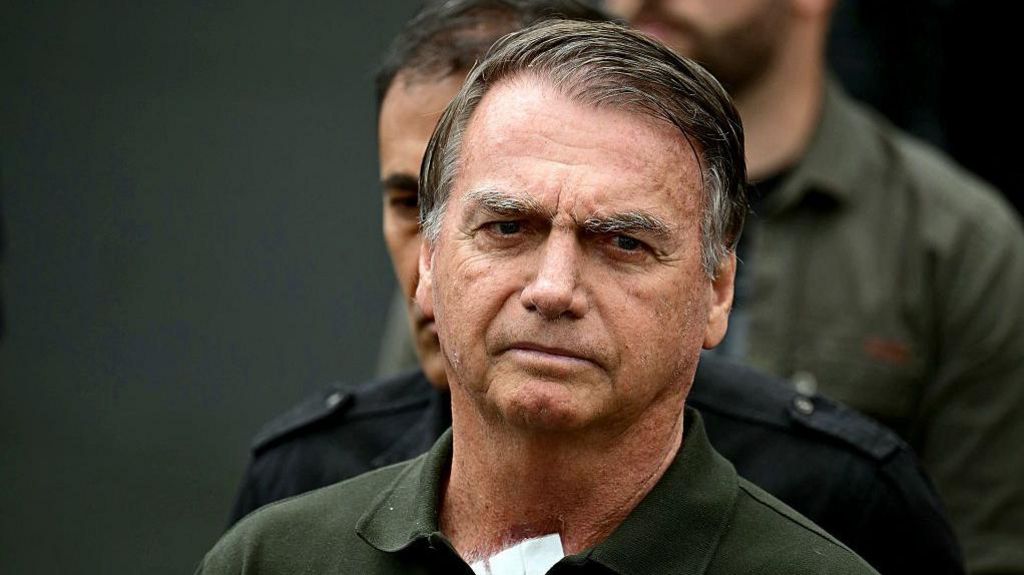
    In a high-stakes political shakeup that has shifted Brazil’s political landscape just months ahead of a critical presidential election, Brazil’s bicameral Congress has successfully overridden President Luiz Inacio Lula da Silva’s veto of a sweeping sentencing reform bill that will drastically cut the 27-year prison term handed to former President Jair Bolsonaro for his role in a post-2022 coup conspiracy. The outcome marks the second major setback for Lula’s left-wing administration in as many days, and it has amplified momentum for the opposition bloc led by Bolsonaro’s eldest son, who is already locked in a tight polling race for the nation’s top office.

    The core of the controversy dates back to 2022, when Bolsonaro, a one-term president and former army captain who held office from 2019 to 2022, lost his reelection bid to Lula. Rather than concede power peacefully, he plotted a coup to overturn the democratic result in an attempt to cling to the presidency. Supreme Court justices found him guilty of involvement in the conspiracy, including prior knowledge of plots to assassinate Lula and his running mate Geraldo Alckmin, and sentenced him to 27 years behind bars last year. The coup attempt ultimately collapsed after top Brazilian armed forces leaders refused to back the plot, allowing Lula to be sworn in without incident on January 1, 2023. Earlier this year, the 71-year-old former leader was moved to house arrest on humanitarian grounds due to ongoing health concerns.

    The controversial new law overhauls how Brazilian courts calculate prison sentences for people convicted of crimes including coup plotting, and would slash Bolsonaro’s sentence from 27 years to just over two years. With a conservative majority holding control of Congress, the chamber moved to advance the bill earlier this year, prompting Lula to issue a veto in a bid to block the reform. But during a tense, emotionally charged legislative session on Thursday, lawmakers voted by more than the required two-thirds majority to override Lula’s veto. The final vote has opened the door for the sentencing reduction to go into effect, though legal analysts note the law still faces potential challenges in the Supreme Court.

    Immediately after the veto was defeated, jubilant opposition lawmakers broke into chants of “freedom” and shouted the name of Flavio Bolsonaro, the former president’s eldest son and a sitting Brazilian senator, who is running to claim his father’s old office in this year’s presidential election. The override fell on Flavio Bolsonaro’s 45th birthday, and he took to social media platform X to praise the legislative outcome, calling it “a very special birthday present” from fellow deputies and senators.

    The defeat of Lula’s veto comes just one day after another humiliating loss for the president: the Senate rejected his chosen nominee for a vacant Supreme Court seat, Jorge Messias. The rejection marked the first time in decades that a sitting Brazilian president’s Supreme Court nominee has been turned down by the Senate, a clear sign of eroding government power in the conservative-led legislature. Current polling shows Flavio Bolsonaro tied with Lula, who is campaigning for a fourth presidential term, making this string of legislative wins a critical boost for the opposition ahead of the election.

  • Trump prods GOP states to gerrymander after voting rights ruling

    Trump prods GOP states to gerrymander after voting rights ruling

    In the wake of a landmark U.S. Supreme Court ruling that weakened key protections of the federal Voting Rights Act, former President Donald Trump moved swiftly Thursday to leverage the decision for partisan gain, pushing Republican governors to redraw congressional district maps to boost his party’s electoral odds ahead of November’s midterm elections.

    The high court’s Wednesday decision, which struck down Louisiana’s existing congressional map as unconstitutional, opened a legal pathway for Republican-led states to split majority-Black electoral districts to cement partisan advantage. The ruling has already upended election scheduling and sparked a nationwide rush by both major parties to rewrite district boundaries ahead of the critical congressional contests.

    Louisiana’s top officials, Democratic Governor Jeff Landry and state Attorney General Liz Murrill, announced Thursday they would suspend the state’s upcoming congressional primary, originally scheduled for mid-May. The pause grants state lawmakers extra time to draft a new map designed to eliminate at least one, and potentially two, congressional seats held by Black Democrats. Trump praised the move in a post on his Truth Social platform, thanking Landry for acting quickly to “fix the Unconstitutionality” of the state’s prior map.

    In a separate social media post, Trump revealed he had held a conversation with Tennessee’s Republican Governor Bill Lee, who faces growing pressure from within his party to immediately redraw the state’s congressional maps. “I had a very good conversation with Governor Bill Lee, of Tennessee, this morning, wherein he stated that he would work hard to correct the unconstitutional flaw in the Congressional Maps of the Great State of Tennessee,” Trump wrote. A spokesperson for Lee has not yet issued a public response to requests for comment on the exchange.

    While conventional redistricting follows a decade-long cycle aligned with national census counts, eight states have already broken with this longstanding norm after Trump openly called on Republican officials to pursue aggressive partisan gerrymandering. Ahead of the Supreme Court ruling, five states — Texas, Missouri, North Carolina, Ohio, and Utah — had already adopted new maps tilted in Republicans’ favor, while Florida’s GOP-controlled legislature approved a new gerrymandered map just hours after the high court released its decision. Democrats have pursued parallel efforts in blue states: California and Virginia have already enacted new maps that favor Democratic candidates.

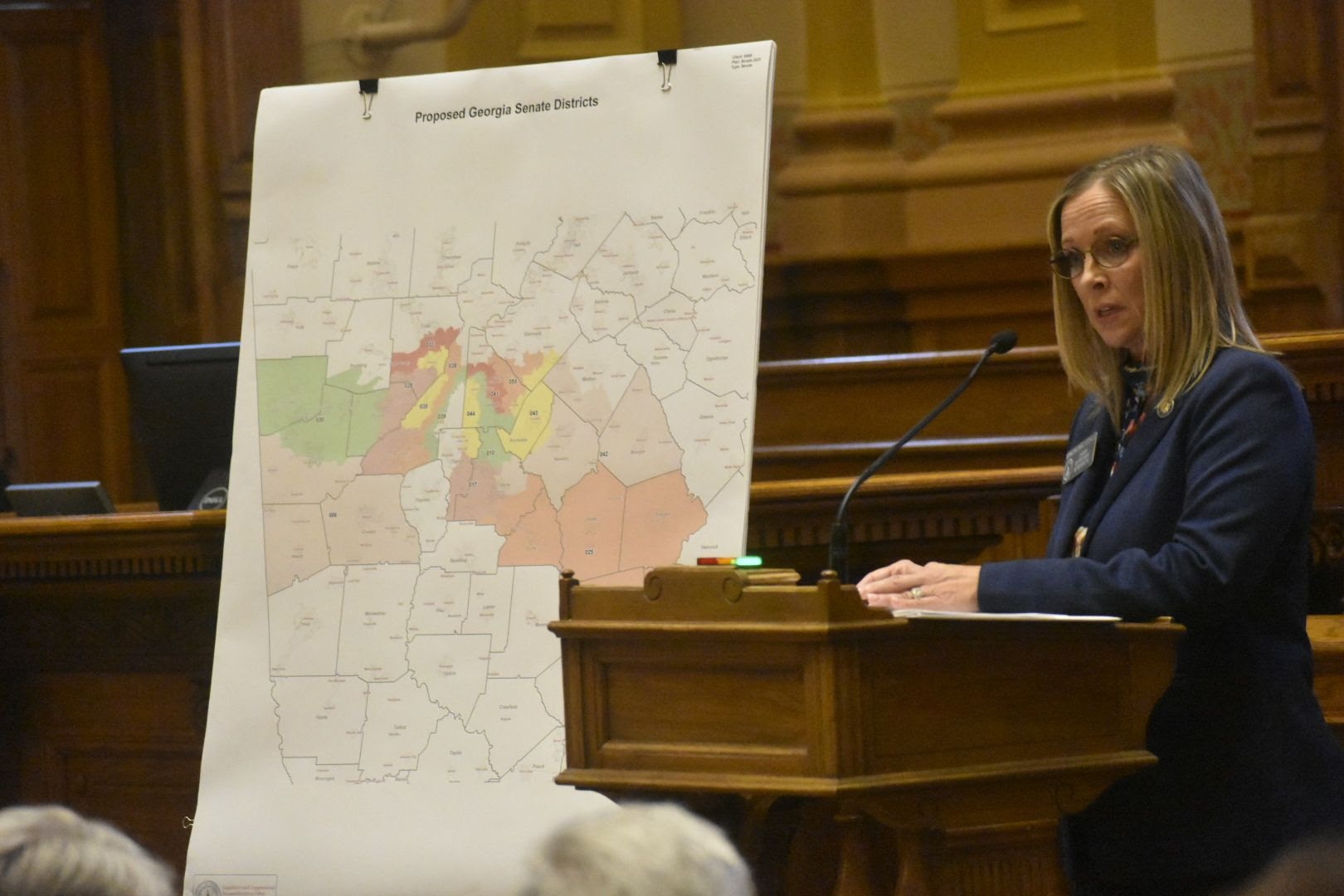
    Before Wednesday’s ruling, the national battle over redistricting had resulted in a near partisan draw. But the Supreme Court’s decision has shifted momentum firmly toward Republicans, who can now gain a structural advantage if state legislatures act quickly before candidate filing deadlines and primary elections. Multiple Republican-led states with upcoming primaries are currently weighing immediate map changes: Alabama, Georgia, Missouri, and Tennessee are all considered potential targets. While top GOP leaders in Alabama have ruled out or downplayed changes for 2026, some Tennessee Republicans have left the door open for action. In Georgia, Lieutenant Governor Burt Jones and other state GOP officials immediately called for new maps after the ruling, though candidate qualification already closed under the existing boundaries, and early voting has begun for the state’s May primaries, meaning any changes would not take effect until the 2028 election cycle at the earliest.

    U.S. House Speaker Mike Johnson, a Louisiana Republican, echoed Trump’s call in comments to CNN Thursday, urging all states with maps deemed unconstitutional to revise their boundaries before November’s midterms. “I think all states that have unconstitutional maps should look at that very carefully and I think they should do it before the midterms,” Johnson said.

    Democratic leaders have not rejected the push for partisan gerrymandering in response, instead signaling they will pursue their own map changes to counter Republican gains. New York Governor Kathy Hochul, a Democrat, announced post-ruling that she would work with the state legislature to revise New York’s current redistricting process, which currently relies on an independent commission that limits the scope for partisan map-drawing. Representative Terri Sewell, an Alabama Democrat, argued at a Congressional Black Caucus press conference Wednesday that the Supreme Court’s ruling prioritizes partisan gain over anti-discrimination protections, and effectively invites both sides to pursue aggressive gerrymandering. “It values partisan politics over discrimination. It’s really, really, really — I mean, it takes us back. So to the extent it’s urging, it’s inviting red states to totally take away all of the Democratic seats and be totally red, it also encourages blue states to do exactly the same,” Sewell said.

    With Republicans historically facing headwinds in midterm elections and Trump’s approval ratings remaining under water in public polling, Democrats have high hopes of retaking control of the U.S. House in November. The new push for redistricting represents a high-stakes effort by Republicans to rewrite the electoral map to lock in their majority before votes are cast.

  • Afghans celebrate spring in bright red poppy fields

    Afghans celebrate spring in bright red poppy fields

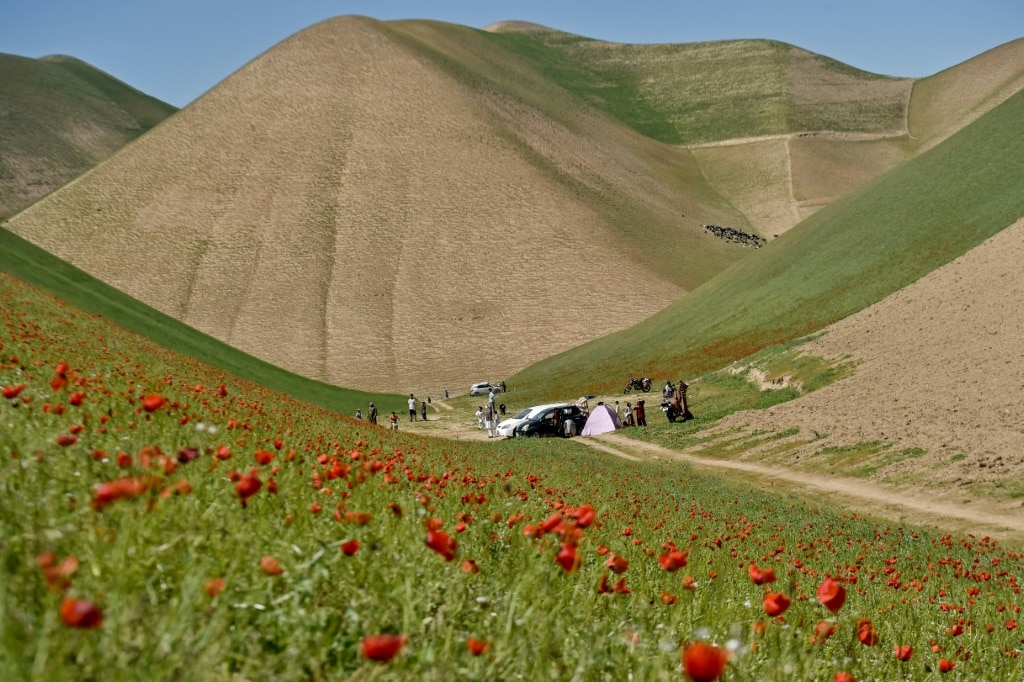
    After nearly a decade of crippling drought that parched northern Afghanistan’s landscapes and left hillsides barren of any greenery or blooms, this spring has brought a long-awaited transformation. Abundant seasonal rains have awakened rolling valleys near Shirin Tagab district, which sits along Afghanistan’s border with Turkmenistan, blanketing the terrain in sweeping swathes of vivid red common poppies. This has drawn hundreds of families back to the hills to revive a beloved local tradition that has persisted through years of hardship and political change.

    For many visitors, the sea of red blooms is a sight they never expected to see again in their lifetimes. Seventy-nine-year-old Ghawsudin, who goes by a single name, traveled three hours across rough terrain just to walk among the flowers. “There has been a drought for almost 10 years. No flowers or greenery grew,” he explained. “This year has been very good, and God is merciful.” Thirty-five-year-old Mohammad Ashraf echoed that sentiment, noting he had not witnessed such a dense, vibrant bloom of poppies for more than a decade. “Now there are so many red flowers, and you see people come here for picnics,” he told Agence France-Presse, as families spread blankets across the grass and children frolicked between the flower stalks.

    Crucially, the blooms attracting crowds are common poppies, not the illicit opium poppies that the ruling Taliban government has banned across the country. This annual gathering is a longstanding cultural practice tied to Nowruz, the Persian New Year that Afghans have celebrated for centuries. For generations, northern Afghans would travel out of the major city of Mazar-i-Sharif after their Nowruz festivities to see the poppy blooms. While the Taliban administration, which enforces a strict interpretation of Islamic law, has halted official public Nowruz celebrations in recent years, the quiet tradition of visiting the poppy fields has endured.

    Cultural observers note that flowers, and poppies in particular, hold a deeply embedded place in Afghan daily life. Oriane Zerah, a professional photographer who has published a full book documenting the connection between Afghans and flowers, emphasizes that floral culture is woven into nearly every part of society. “As soon as an Afghan has a little space in their garden, they plant a flower. Even in displacement camps, there’ll be a flower somewhere,” Zerah explained. “They put them on their pakol, one of their traditional hats, and there are desserts made with flowers.”

    Poppies also carry layered cultural meaning shaped by Afghanistan’s long history of conflict. Afghan writer Taqi Wahidi explains that for decades, poppies have been placed on the coffins of fallen fighters, a tradition that mirrors the use of poppies as a symbol of remembrance for war dead in countries including the United Kingdom, Australia, and New Zealand. In that context, the flower has long been tied to the idea of rebirth after sacrifice: “Dying in the path of the homeland, or in the path of religion and faith, was considered a kind of new resurrection and entry into a new life,” Wahidi said.

    Today, for Afghans gathering in these northern valleys, the poppy carries a new, hopeful meaning. Wahidi notes that the blooms now primarily “symbolise vitality and freshness. At the same time that nature is renewed, human beings also want to bring new colours into their lives.” For a community that has endured ten years of drought and ongoing political upheaval, this annual spring bloom is more than a recreational outing—it is a quiet celebration of resilience, cultural continuity, and the renewal of life after hardship.

  • EU-Mercosur trade deal takes provisional effect, boosting hopes and concerns for millions

    EU-Mercosur trade deal takes provisional effect, boosting hopes and concerns for millions

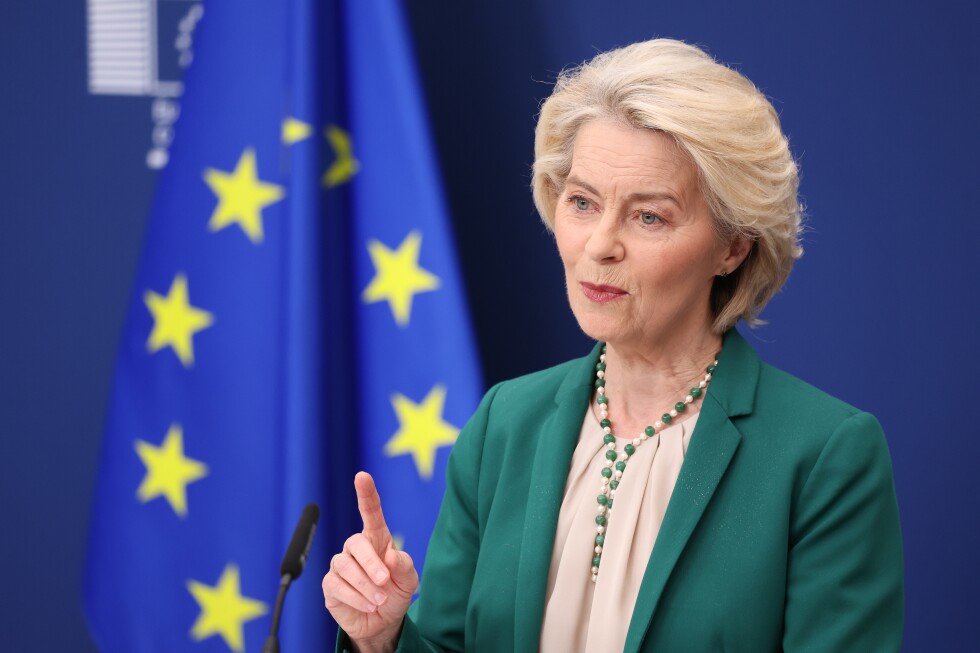
    After 25 years of grueling negotiations, the landmark trade agreement between the European Union and South American trade bloc Mercosur has entered into provisional force, marking a historic step toward creating one of the world’s largest trans-Atlantic commercial blocs – though its long-term future remains uncertain due to ongoing legal challenges. The initiative will build a combined market valued at an estimated $22 trillion, serving more than 720 million consumers across two continents. Full implementation by 2038 is projected to lift total exports from participating nations by over 10% compared to current levels. The agreement was formally signed by member states in January this year during a Mercosur leadership summit, but the path to entry into force has been fraught with political friction. European Commission President Ursula von der Leyen’s decision to enact the deal on a provisional basis, bypassing the European Parliament for immediate implementation, has drawn fierce pushback from EU lawmakers, who have brought a challenge against the move to the European Court of Justice. If the court rules in favor of the challengers, the entire agreement will be halted immediately. Ahead of the provisional entry into force, von der Leyen defended the policy in a Thursday statement, framing it as a win for multiple stakeholders across the EU. “This is good news for EU businesses of all sizes, good news for our consumers and good news for our farmers, who will gain valuable new export opportunities, with full protection for sensitive sectors,” she said. On Friday, von der Leyen is scheduled to host a virtual celebration with the heads of government of Mercosur’s four full member states: Brazil, Argentina, Uruguay, and Paraguay. In Brazil, Mercosur’s largest and most influential economy by a wide margin, President Luiz Inácio Lula da Silva – one of the deal’s most prominent backers – signed a national decree earlier this week to formally validate the agreement within Brazilian law. Lula framed the agreement as a deliberate pushback against the unilateral trade tariffs imposed by former U.S. President Donald Trump in 2023, positioning the deal as a powerful reaffirmation of multilateral global cooperation. “Nothing better than believing in the exercise of democracy, in multilateralism, and in cordial relations between nations,” Lula remarked during a celebratory ceremony in Brasilia, marking the end of a quarter-century of on-again, off-again negotiations. Speaking to the Associated Press and other international news outlets last week, Brazilian Vice President Geraldo Alckmin, who has served as one of the lead negotiators for the bloc, warned that rejecting the deal would have condemned Mercosur to economic stagnation as competitor blocs around the world advanced their own preferential trade agreements. “Staying out of this agreement would have meant falling behind, as other nations locked in better access to key global markets,” Alckmin implied. With a projected 2025 GDP of more than $2.3 trillion, Brazil accounts for the vast majority of Mercosur’s total economic output. Lia Valls, an associate researcher at Rio de Janeiro-based leading think tank Fundacao Getulio Vargas, shares Lula’s view that the deal sends a critical signal in an era of rising global unilateralism. “The EU and Mercosur are showing that it is possible for big blocs to reach a deal in this world where that multilateral system is being very weakened and where the U.S. clearly operates to do that,” Valls told the Associated Press. “It is a very positive sign.” For years, the agreement has faced fierce opposition from European farming unions and environmental advocacy groups, which led to a delay in talks last December before the deal was referred to the EU’s top judicial body. Stakeholders on both sides have high hopes for expanded trade, but also harbor lingering concerns about increased competition. South American agribusiness sectors, including beef producers, fruit growers, and mining firms, expect significant export gains to the EU market, while European automakers, pharmaceutical manufacturers, and technology companies anticipate greater access to the fast-growing consumer markets of Mercosur. That said, concerns are widespread on both sides of the Atlantic: Mercosur-based technology and advanced manufacturing firms worry they will be unable to compete with more established, efficient European competitors, while European farmers have raised alarms about downward price pressure and imports produced under weaker environmental and labor regulations than those enforced in the EU. French President Emmanuel Macron, one of the most high-profile European critics of the deal, has long pushed for stricter safeguards to prevent widespread economic disruption to EU domestic sectors, tighter environmental regulations for Mercosur exports (including strict limits on pesticide use), and enhanced customs inspections for goods entering EU ports. To address these concerns, the agreement includes built-in protections: while it will gradually phase out most tariffs and trade barriers between the two blocs, it retains binding economic safeguard clauses that allow European nations to protect sensitive domestic sectors including poultry, beef, sugar, and fruit from excessive import competition.

  • China’s Manus AI case sets red lines to bar ‘Singapore washing’

    China’s Manus AI case sets red lines to bar ‘Singapore washing’

    China has formally blocked Meta’s proposed $2 billion acquisition of Manus, a high-profile Chinese general-purpose agentic AI startup, and moved to clear up misperceptions around the decision, emphasizing that the prohibition targets regulatory circumvasion rather than domestic firms’ legitimate overseas expansion or foreign inbound investment.

    The ban was issued on Monday by the Office of the Working Mechanism for Security Review of Foreign Investment under the National Development and Reform Commission (NDRC), which ordered the involved parties to unwind the unreported transaction entirely. In the days following the ruling, Chinese state media outlets published a series of explanatory commentaries to outline the policy logic behind the decision, aiming to avoid misinterpretation that the move signals a broader crackdown on foreign capital or restrictions on Chinese tech firms going global.

    Chinese policy analysts stress that Beijing does not intend for the Manus ruling to send a misleading signal to the global investment community. As a CCTV-affiliated social media account Yuyuan Tantian clarified in a Thursday article, China’s existing Measures for the Security Review of Foreign Investment draw clear boundaries for regulatory scrutiny. Under the framework, all investments touching on national defense security require mandatory declaration regardless of foreign stake size, while for key sectors including core information technology, internet products and services, and critical technologies, any transaction that grants actual control to a foreign investor falls within mandatory review scope.

    Manus, the article noted, fits clearly into this defined key technology category as a developer of general-purpose AI agent systems. Meta’s proposed acquisition would have transferred full actual control of the startup to the US tech giant, yet neither party submitted the required proactive declaration to Chinese regulators, making the ruling a straightforward application of existing law.

    The article added that Chinese regulators assess risk across three core dimensions: technology, talent and data. All of Manus’s core assets — including its foundational algorithms, training data and core R&D team — were developed by domestic teams within China’s borders, so any transfer of control overseas legally requires a national security review. The commentary also pointed to growing global trends of expanding security review scopes and blurred threat definitions that specifically target other countries’ AI development, a practice that China must guard against to protect its own strategic technology ecosystem. Even as it enforces security rules, China remains committed to supporting AI innovation and maintaining an open market for foreign investment, the article emphasized.

    The Manus transaction grew out of a new regulatory workaround that has emerged since the United States barred American investment from China’s domestic AI sector in October 2024, dubbed “Singapore washing.” The term describes the practice of Chinese AI firms spinning off operations or relocating their registered headquarters to Singapore to avoid US investment restrictions and raise foreign capital. In the case of Manus, the startup restructured its operations to sever formal ties with its Chinese origins to secure Meta’s investment, a strategy that the ruling has now invalidated.

    Manus first captured global tech industry attention when it made its high-profile debut in March 2025. Unlike conventional large language models such as ChatGPT or DeepSeek, Manus is positioned as a general-purpose AI agent capable of completing complex, multi-step tasks traditionally handled by white-collar workers. In promotional demonstrations, co-founder Xiao Hong showcased the system’s capacity to sort through 10 candidate resumes, identify a New York City property matching a set budget, and analyze stock correlation trends between Nvidia, Marvell Technology and TSMC, leading the startup to adopt the slogan “Leave it to Manus.”

    The acquisition deal began taking shape in 2025, as Manus restructured to move its registered headquarters to Singapore between June and July that year. It reorganized under a new Singapore-based operating entity, Butterfly Effect Pte, reduced its mainland Chinese team from more than 120 employees to just 40 core members who were relocated to Singapore, deleted all Chinese-language social media accounts, and blocked IP addresses based in China from accessing its official website. By the end of 2025, Manus presented itself as a fully Singapore-based company, and Meta announced the $2 billion acquisition on December 30, with Xiao Hong slated to take a senior leadership role at the US firm.

    Chinese regulators launched their formal review of the unreported transaction in January 2026, and by late March, Xiao Hong and co-founder Ji Yichao were barred from leaving China as the review progressed. The formal ban on the deal was issued on April 27.

    According to Chinese analysts, Manus crossed three non-negotiable red lines in its restructuring and dealmaking: technology sovereignty, data sovereignty and national security. “Where the technology originates determines jurisdiction,” explained Guangdong-based business columnist Shengchandui. Manus’s core algorithms and core team were built entirely within China, so shifting the company offshore and selling it to a foreign buyer amounts to unauthorized export of domestically developed strategic capabilities, a form of “technology smuggling” that weakens China’s domestic innovation base. The columnist added that Manus processes vast volumes of user data, much of it originating from Chinese users, so transferring control overseas creates unacceptable risks of data leakage, particularly under existing rules governing cross-border data transfers. As AI agents are emerging as core infrastructure for digital work, communication and software development, putting a system built on Chinese technology and data under full foreign control creates unacceptable national security risks, he noted.

    Zhu Youping, a researcher at the NDRC’s State Information Center, clarified that the ruling is not a restriction on legitimate global expansion by Chinese firms, but a prohibition on efforts to evade national regulation. “If the proposed acquisition is completed, Meta would obtain 100% control in Manus, but neither Meta nor Manus had declared this to the Chinese regulators,” he said. Regulators apply a “look-through” approach that focuses on the actual origin of technology, the source of training data and ownership of core talent, rather than just the jurisdiction where a company is registered. “Manus’s relocation to Singapore is essentially a case of using domestic resources to incubate value and monetizing it through an offshore structure to bypass oversight,” Zhu added.

    Beyond blocking the unauthorized transaction, Chinese authorities have signaled that they want Manus to remain rooted in China to contribute to the country’s fast-growing domestic AI industry. In a Tuesday editorial, the Global Times noted that “China’s AI industry has entered a phase of rapid development, with a sustained burst of innovative vitality, making it a fertile ground for global AI innovation. We hope that more technology and innovation enterprises, including Manus, can find their place in this blue ocean in China, develop confidently, grow larger and stronger and achieve better development and breakthroughs.”

    The Manus ruling aligns with Beijing’s latest policy push to scale up domestic AI adoption for economic growth. On April 21, China’s State Council released a policy document outlining 20 measures to expand and upgrade the country’s AI sector, setting a target of growing total industry output to more than 100 trillion yuan (approximately $13.8 trillion) by 2030, up from 81 trillion yuan in 2025. The policy specifically supports deployment of AI tools in high-impact areas including intelligent programming, contract review, financial services and supply chain optimization, and calls for the construction of national AI application testing bases.

    Pang Chaoran, a researcher at the Chinese Academy of International Trade and Economic Cooperation (CAITEC), said the new policy marks a clear shift in China’s AI strategy: instead of focusing primarily on subsidizing AI model training, Beijing is now encouraging private service sector firms to adopt AI models and agents at scale. By driving widespread adoption of AI tools across industries, the government aims to accelerate commercialization of AI innovation, embed the technology deeper into real economic activity, and generate new growth momentum for both the service and technology sectors.

  • Arsenal seek to ramp up heat on Man City in title race

    Arsenal seek to ramp up heat on Man City in title race

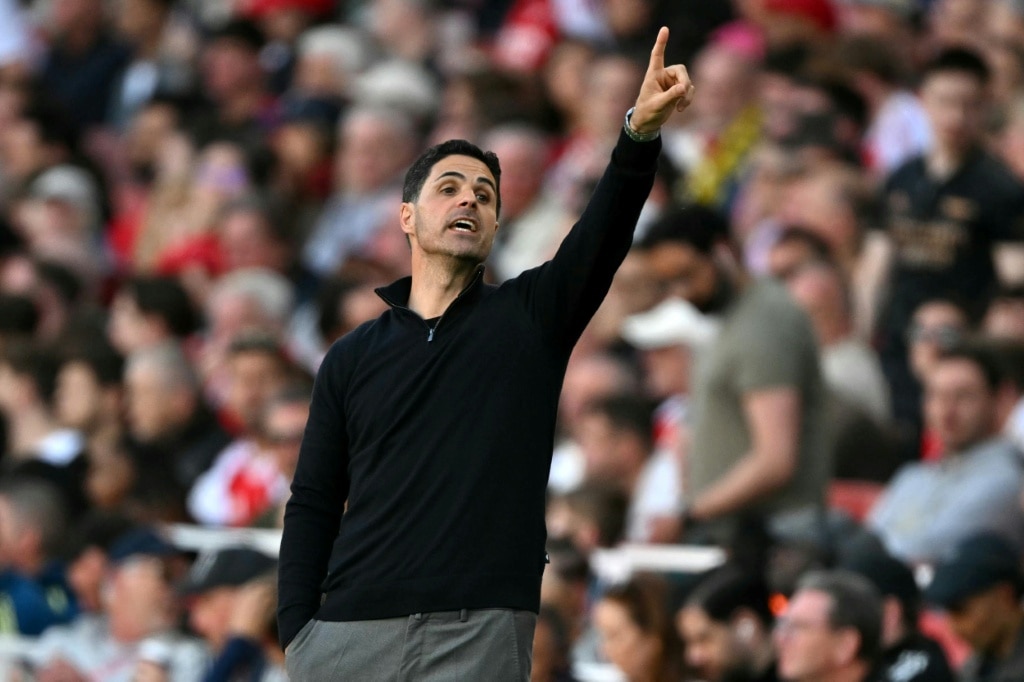
    The 2023-24 Premier League title race is reaching a dramatic climax this weekend, with Arsenal holding a three-point advantage over defending champions Manchester City and a golden opportunity to pile massive pressure on their chasing rival. Mikel Arteta’s side, commonly known as the Gunners, will take on Fulham at the Emirates Stadium on Saturday evening, and a three points against the London outfit would push their lead at the top out to six points – at least for 48 hours. That gap will hold until City takes their turn on the road, where they face a notoriously tricky test against Everton at Goodison Park on Monday night, a fixture that has upset title-chasing sides on multiple occasions in recent seasons.

    This title race has been defined by razor-thin margins, and that trend shows no sign of changing heading into the final stretch of the campaign. Just seven days ago, Arsenal and City were dead level on both points and goal difference, before the Gunners grabbed a crucial narrow victory over Newcastle United to pull ahead. But Arsenal’s path to a first top-flight title since the Invincibles season of 2003-04 is far from smooth: the north London side have failed to find the net more than once in any Premier League fixture since mid-March, a dry spell that could cost them dearly in the final four matches of the season. Even a perfect four-game finish may not guarantee the title, analysts warn, while City – who hold a game in hand over Arsenal – have clicked into devastating form, finding goals with far more consistency than their title rivals in recent weeks.

    Former England and Manchester United defender Gary Neville, one of the most high-profile analysts of the league, believes Arsenal will face an almighty battle to cross the finish line first. Speaking on his popular podcast, Neville noted: “They’re not going to sail over the line — it’s going to be a real struggle. They’re not going to all of a sudden hit form in this next couple of weeks.” The pundit added that Arsenal would need every bit of grit and luck to get over the line, saying they would have to be “wheelbarrowed” to the title.

    While all eyes are on the title race, the fight to avoid relegation is delivering equally high drama, and nowhere is that more evident than at Tottenham Hotspur. Just as new manager Roberto De Zerbi earned his first win at the club and sparked faint hopes of a Great Escape, the north London side’s season-long injury crisis has struck again with devastating timing. Dutch playmaker Xavi Simons was stretchered off with a serious knee injury during last week’s 1-0 away win over already-relegated Wolves, while striker Dominic Solanke is set to miss the remainder of the campaign with a hamstring injury.

    The full extent of Tottenham’s injury list this term makes for grim reading for fans. Long-term absentees already include creative stars Dejan Kulusevski, Mohammed Kudus, James Maddison and Wilson Odobert, while club captain Cristian Romero is the latest high-profile name to join the treatment table. Despite the devastating string of injuries, De Zerbi remains defiant, focusing on what his available players can achieve this weekend. “We can win the games with the players, not with the coaches,” the manager said. “The coaches are important but the players are more important. But I want to be positive.” Tottenham remain stuck in the relegation zone, two points adrift of 17th-placed West Ham United, and face another tough test this weekend as they travel to take on European-chasing Aston Villa.

    Elsewhere in the top flight, Chelsea will be looking to build on their first win in six matches and end a dismal domestic season on a positive note, while still clinging to faint hopes of snatching a late Champions League spot. The Blues sacked manager Liam Rosenior last month after a catastrophic five-match losing run in the Premier League, but interim head coach Calum McFarlane has overseen a marginal upturn in form, with a 1-0 win over Leeds United in the FA Cup semi-final booking the side a place in the FA Cup final against none other than Manchester City at the end of the season.

    Currently sitting in eighth place in the Premier League table, Chelsea still have a mathematical chance of claiming a top-four spot, though that outcome depends on a complex set of results. If Aston Villa – currently sitting in fifth place – holds that position and goes on to win the Europa League, the Champions League spot that comes with a fifth-place finish for the English league will be passed down to the sixth-placed team in the Premier League. If Villa finish fourth or higher and win the Europa League, however, no extra spot will be awarded. Right now, Brighton & Hove Albion occupy sixth place on 50 points and would be the first to benefit from this scenario, but the gap between the Seagulls and the chasing pack is tiny. Bournemouth, Chelsea, Brentford and Fulham are all within one or two points of Brighton, with Everton and Sunderland also still in touching distance of the European spot.

    The full matchweek fixture list (all times listed in GMT) is as follows: Friday at 19:00 sees Leeds United host Burnley. On Saturday, kick-off is at 14:00 for Brentford vs West Ham, Newcastle United vs Brighton, and Wolverhampton Wanderers vs Sunderland, with Arsenal vs Fulham kicking off later at 16:30. Sunday’s fixtures are Bournemouth vs Crystal Palace at 13:00, Manchester United vs Liverpool at 14:30, and Aston Villa vs Tottenham at 18:00. Monday closes out the matchweek with Chelsea vs Nottingham Forest at 14:00, followed by the highly anticipated clash between Everton and Manchester City at 19:00.

  • Aung San Suu Kyi: The Myanmar democracy icon detained for years

    Aung San Suu Kyi: The Myanmar democracy icon detained for years

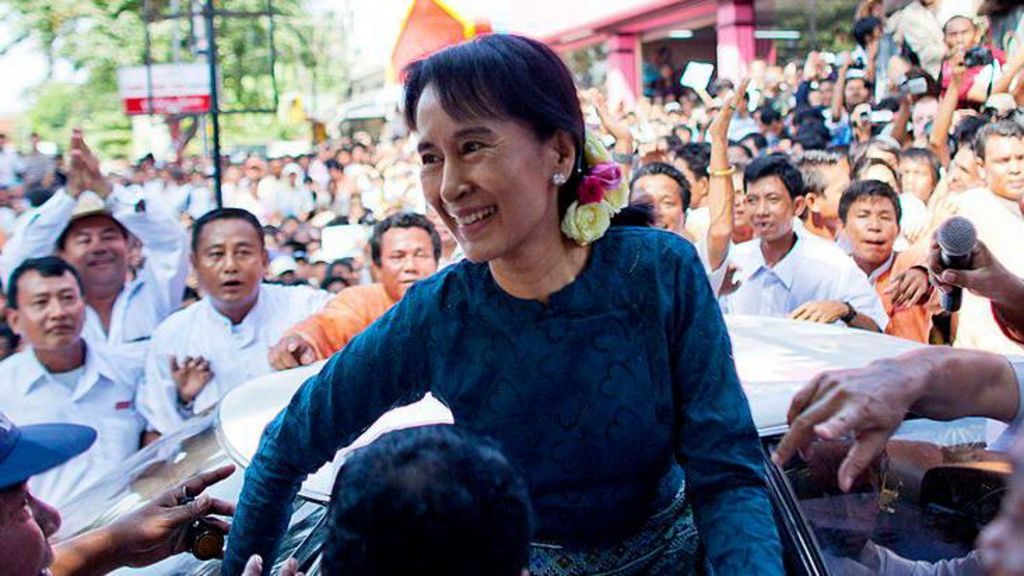
    Five years after Myanmar’s military seized power in a coup that ousted her democratically elected government, Myanmar’s state-controlled media has announced that 80-year-old former state counsellor Aung San Suu Kyi, who has remained in military detention since her 2021 arrest, will be moved from prison to house arrest. The development marks a shift in the treatment of one of the world’s most famous political prisoners, whose decades-long life has been intertwined with Myanmar’s turbulent quest for independence and democracy.

    Born in 1945 to Myanmar’s independence founding father General Aung San, Suu Kyi lost her father to assassination when she was just two years old, months before the country secured full independence from British colonial rule. She spent her formative years abroad: relocating to India with her mother in 1960, then studying philosophy, politics and economics at the University of Oxford in the United Kingdom, where she met her husband, British academic Michael Aris. After stints working in Japan and Bhutan, she settled in the UK to raise their two sons, Alexander and Kim, but never severed her ties to her home country.

    In 1988, Suu Kyi returned to Yangon to care for her ailing mother, arriving at a moment of mass pro-democracy upheaval, when thousands of students, workers and monks had taken to the streets to oppose decades of military rule under dictator Ne Win. Inspired by the non-violent philosophies of Mahatma Gandhi and Martin Luther King Jr., she stepped forward to lead the pro-democracy movement, famously declaring: “I could not as my father’s daughter remain indifferent to all that was going on.”

    The 1988 uprising was brutally crushed by a new military coup, and Suu Kyi was placed under house arrest in 1989. Over the next 21 years, she would spend 15 years in detention, much of it in solitary confinement. She was barred from leaving the country to see her dying husband in 1999, choosing to remain in Myanmar rather than risk permanent exile. Despite her isolation, her profile as a global symbol of peaceful resistance against oppression grew exponentially; she was awarded the 1991 Nobel Peace Prize while still under arrest, and was widely hailed as a beacon of human rights across the world.

    Released from house arrest days after Myanmar’s 2010 general election, Suu Kyi re-entered formal politics, leading her National League for Democracy (NLD) party to a historic landslide victory in Myanmar’s first openly contested general election in 25 years in 2015. Barred from the presidency by a military-drafted constitution, she took on the role of state counsellor, the de facto head of government, raising global hopes that Myanmar would cement its transition to full democracy after decades of military rule.

    Yet Suu Kyi’s time in office shattered her once-saintlike global reputation. When the military launched a brutal 2017 crackdown on the Rohingya Muslim minority in Rakhine State that forced more than 700,000 people to flee to neighboring Bangladesh, Suu Kyi refused to condemn the military or acknowledge widespread accounts of mass atrocities. She even personally defended Myanmar against charges of genocide at a 2019 International Court of Justice hearing, a decision that turned much of the international community against her. While she remained overwhelmingly popular among Myanmar’s Buddhist majority at home, her democratic transition stalled, as the military retained control of key ministries and a quarter of all parliamentary seats, and her government drew criticism for prosecuting journalists and activists using restrictive colonial-era laws.

    Despite widespread criticism of her tenure, the NLD won a second decisive landslide victory in the 2020 general election. Just hours before the new parliament was set to convene, the military launched a second coup, arresting Suu Kyi, President Win Myint and other senior NLD leaders on 1 February 2021. The coup sparked mass nationwide pro-democracy protests, which the military violently suppressed, pushing the country into a bitter ongoing civil war between the military junta and a broad coalition of ethnic armed groups and pro-democracy resistance forces.

    Following her arrest, Suu Kyi was charged with a litany of widely discredited offences ranging from Covid-19 restriction violations and illegal importation of walkie-talkies to corruption and voter fraud, all of which she has denied. The United Nations and global human rights groups have universally condemned her closed-door trials as a political sham. She was ultimately sentenced to 33 years in prison, a term that has been reduced multiple times in the years since.

    The junta’s 30 April 2026 announcement that Suu Kyi would be transferred to house arrest has been met with scepticism from her son Kim Aris, who has raised repeated concerns about her health and well-being in detention. Today, as an 80-year-old with uncertain health, Suu Kyi’s future role in Myanmar’s pro-democracy movement remains deeply unclear. Many younger pro-democracy activists have rejected her longstanding commitment to non-violence in favor of armed resistance against the junta, and a growing number have openly criticized her handling of the Rohingya crisis during her time in office. Even so, her decades-long struggle against military rule has cemented her as a global symbol synonymous with the struggle for a free and democratic Myanmar.

  • Clashes erupt in Australian town over death of Indigenous girl

    Clashes erupt in Australian town over death of Indigenous girl

    Central Australia’s remote outback town of Alice Springs has been roiled by violent overnight confrontation between enraged community members and police, triggered by the discovery of a body confirmed to be that of a missing 5-year-old Indigenous girl, identified at her family’s request as Kumanjayi Little Baby.

    The young girl went missing from Old Timers, an Indigenous community camp on the outskirts of Alice Springs, late Saturday. Her disappearance sparked a massive, multi-day search effort that captured national attention, with hundreds of volunteers joining authorities to comb the surrounding outback on foot, horseback and by air. On Thursday, search crews located the child’s body roughly five kilometers (three miles) from the camp where she was last seen, and police confirmed a formal forensic autopsy will be conducted to determine the cause of death.

    Hours after the body was found, police announced the arrest of 48-year-old Jefferson Lewis, the prime suspect in the case. But before law enforcement could take him into custody, Lewis turned himself in to members of the Indigenous community Thursday evening, where he was severely beaten by community members until he lost consciousness. When police, ambulance and emergency response teams arrived to extract Lewis and provide medical care, they were attacked by the gathered crowd, Northern Territory Police Commissioner Martin Dole told reporters during a press briefing Friday.

    “At the time of his apprehension by us, he was unconscious and he was in the process of being treated by St John’s Ambulance when they were set upon, as were the police,” Dole said. Lewis was eventually evacuated to Alice Springs’ main hospital for treatment of his injuries, but a large, angry crowd soon gathered outside the medical facility demanding access to the suspect, with many calling for traditional Indigenous “payback” punishment against him, according to public broadcaster ABC.

    Local media footage from the confrontation shows tear gas lingering in the air, a police vehicle engulfed in flames, and crowds shouting at heavily armed officers who formed a perimeter to block access to the hospital. To contain the unrest, Commissioner Dole said authorities deployed all available local resources to quell the violence, which left multiple first responders injured. A number of police officers suffered minor injuries, including one officer who received a head wound during the initial arrest operation. One firefighter sustained a serious facial injury after being attacked, and one woman is now under investigation for allegedly attempting to set an unoccupied police car on fire.

    Commissioner Dole rejected any justification for the unrest, saying “the behaviour that we saw last night cannot be explained away, excused or accepted,” and called for widespread calm across Alice Springs. For their safety, police ultimately transferred Lewis from the Alice Springs hospital to a correctional facility in Darwin, the capital of the Northern Territory, and he is expected to be formally charged with criminal offenses in the coming days.

    Northern Territory Chief Minister Lia Finocchiaro described the little girl’s death as “the realization of our worst nightmares”, but echoed Dole’s call for calm, noting that the entire town had come together in an extraordinary show of unity to search for the child earlier in the week. “This week, we’ve seen this town come together like never before — hundreds of people walking shoulder to shoulder through the long buffel grass, through the bush, to make sure we left no stone unturned,” Finocchiaro said. “I don’t want last night to take away from that extraordinary effort.”

    Robin Granites, a Warlpiri Indigenous elder and family spokesman, also issued a public statement calling for peace as the community enters what Indigenous Australians refer to as “sorry business” — the traditional period of mourning and grief following a death. “It is time now for sorry business, to show respect for our family and have space for grieving and remembering,” he said. “We need to be strong for each other, we must respect family and cultural practice.”