作者: admin

  • DeepZang, first AI model in Tibetan language, unveiled

    DeepZang, first AI model in Tibetan language, unveiled

    In a landmark development for both artificial intelligence and linguistic preservation, China has introduced DeepZang—the world’s inaugural large language model specifically engineered for the Tibetan language. The groundbreaking platform, unveiled in Lhasa by local technology firm Choknor, represents a significant stride in bridging digital divides and enhancing public service accessibility for Tibetan speakers.

    DeepZang facilitates multilingual interactions in Tibetan, Mandarin Chinese, and English, integrating advanced functionalities such as AI-driven dialogue, real-time translation, and speech-to-text conversion. Its certification by the World Record Certification Agency as the ‘World’s First Tibetan Large Language Model’ underscores its pioneering status in global AI research.

    According to Tenzin Norbu, founder of Choknor, the model culminates over four years of intensive development. It leverages an extensive dataset comprising nearly 70 million standardized parallel corpora and over 30,500 hours of voice recordings encompassing Tibet’s three primary dialects: Utsang, Kham, and Amdo. This repository now stands as China’s most comprehensive and meticulously annotated Tibetan speech database.

    Beyond its technical achievements, DeepZang is poised for practical implementation across multiple sectors. Several institutions, including China Mobile and PICC Property and Casualty Co’s regional branches, have entered collaborative agreements to deploy the technology in government services, education, healthcare, and financial operations.

    Li Yalong, Deputy General Manager at PICC Xizang, emphasized the model’s potential to overcome linguistic barriers in servicing rural communities: ‘It will enable the development of intelligent Tibetan-language customer support and policy interpretation tools, particularly in agricultural insurance.’

    Academic users have reported efficiency gains in research workflows. Sonam Yontan, a doctoral candidate at Xizang University, noted: ‘The translation and search functionalities significantly accelerate material processing and source retrieval, marking an unprecedented advancement for Tibetan in AI.’

    However, initial feedback indicates areas for refinement. Tibetan language instructor Nie Chang observed that while DeepZang’s linguistic capabilities are robust, its response latency exceeds that of mainstream models like ChatGPT. Some users also reported encountering paywalls after limited queries, potentially impacting accessibility.

    In educational contexts, the model currently functions more as a search engine than a tailored pedagogical tool, with grammar explanations sometimes lacking clarity for non-native learners. Online discourse reflects mixed reactions, praising cultural preservation efforts while noting challenges in translation accuracy, complex query handling, and pricing structures.

    Choknor acknowledges the model’s evolving status and commits to continuous improvement through data expansion and user feedback. The current mobile application represents merely one manifestation of the underlying technology, with potential future applications spanning wearable devices, sector-specific solutions in healthcare and education, and possibly extending to other minority languages like Mongolian and Uygur.

  • Zero-carbon zone in Hainan shows China’s green practices

    Zero-carbon zone in Hainan shows China’s green practices

    The Boao Zero-Carbon Demonstration Zone in China’s Hainan province has emerged as a global benchmark for sustainable urban development, achieving a remarkable 99.9% reduction in energy-related carbon emissions since its inception. Originally designated as a “near-zero” carbon zone, the project attained full “zero-carbon” status in March 2025 and has since maintained normalized operations at this exceptional environmental standard.

    According to official measurements, carbon dioxide emissions from buildings and municipal infrastructure within the zone plummeted from 11,350.1 tonnes in 2019 to approximately 14.6 tonnes in 2025. This transformative achievement represents one of the most dramatic carbon reduction successes recorded worldwide.

    The zone’s energy ecosystem now operates on a surplus model, generating 29 million kWh of clean electricity annually through extensive photovoltaic installations. This output substantially exceeds the zone’s internal consumption needs of 19.4 million kWh, allowing 9.6 million kWh of surplus green energy to be fed back into the regional power grid.

    Visual documentation from March 2026 reveals comprehensive solar panel deployments across key facilities, including the Boao Forum for Asia International Conference Center and adjacent hotel properties. These installations form the technological backbone of the zone’s renewable energy infrastructure.

    The project’s success provides a scalable model for regional decarbonization efforts and demonstrates China’s growing leadership in practical climate solutions. As international attention focuses on effective carbon reduction strategies, the Boao zone offers tangible evidence that ambitious environmental targets can be achieved through integrated planning and renewable technology implementation.

  • Belarusian President Lukashenko arrives in North Korea for talks with Kim Jong Un

    Belarusian President Lukashenko arrives in North Korea for talks with Kim Jong Un

    Belarusian leader Alexander Lukashenko commenced an official state visit to North Korea on Wednesday, marking a significant diplomatic engagement between two nations increasingly aligned against Western powers. The long-serving president was formally received at Pyongyang’s Sunan International Airport by senior North Korean official Kim Tok Hun, recently appointed vice premier, according to reports from Belarusian state media.

    The meeting between Lukashenko and North Korean Supreme Leader Kim Jong Un represents the latest development in strengthening bilateral relations between Minsk and Pyongyang. This diplomatic engagement follows their previous encounter in September 2025 during multilateral meetings in Beijing, where Kim extended the invitation for Lukashenko to visit North Korea.

    Both nations have positioned themselves as strategic partners to Russia amid ongoing geopolitical tensions. Lukashenko has permitted Belarusian territory to serve as a staging ground for Russian military operations in Ukraine and authorized the deployment of Russian tactical nuclear weapons within his country. Similarly, North Korea has provided substantial military support to Moscow’s campaign in Ukraine while pursuing an increasingly assertive foreign policy against American influence.

    During preparatory discussions earlier this week, Kim Jong Un delivered vehement criticism of United States foreign policy, accusing Washington of ‘state terrorism and aggression’ in global affairs. The North Korean leader emphasized the need for strengthened alliances among nations opposing American hegemony.

    The current visit is expected to culminate in the signing of a comprehensive friendship and cooperation treaty, building upon previous diplomatic exchanges including Belarusian Foreign Minister Maxim Ryzhenkov’s 2024 visit to North Korea. This agreement would formalize the growing partnership between two nations that have found common cause in their opposition to Western geopolitical dominance.

  • Efforts increase cross-Strait connectivity

    Efforts increase cross-Strait connectivity

    China’s newly ratified 15th Five-Year Plan (2026-2030) has charted an ambitious course for enhanced integration between Fujian province and Taiwan-administered territories, marking a significant advancement in cross-Strait connectivity. The strategic blueprint prioritizes the establishment of a seamless ‘common market’ framework that promises to transform economic and social ties across the region.

    The human dimension of this integration is exemplified by individuals like Chang Yang-yang, a Traditional Chinese Medicine practitioner at Xiamen Chang Gung Hospital. For Chang, what was once an arduous journey between his workplace and his ancestral home on Jinmen Island has evolved into a routine 20-minute commute—a dramatic improvement from the hour-plus crossings of his childhood.

    This transformation stems from systematic infrastructure upgrades implemented since the inauguration of direct ferry services in January 2001. The evolution from paper-based documentation to advanced facial recognition systems illustrates the technological progression enabling this connectivity revolution. The integration has expanded beyond transportation to encompass institutional coordination, economic cooperation, and physical infrastructure alignment.

    Chang’s personal narrative underscores the practical benefits of this integration. Having witnessed Jinmen’s historical medical resource limitations during his youth—where serious illnesses necessitated hazardous journeys to Taiwan’s main island—he deliberately pursued medical studies at Xiamen University. Now, he regularly returns to provide complimentary medical services to his community, embodying the human-centered development envisioned by the integration policy.

    The geographic proximity of Jinmen (approximately 2 kilometers from Fujian’s coast) and Matsu positions these islands as natural testing grounds for deeper cross-Strait collaboration. The ongoing improvements reflect a gradual but consistent advancement in regional connectivity, with the new Five-Year Plan expected to accelerate this trend through structured economic integration and enhanced people-to-people exchanges.

  • Russia says it shot down almost 400 Ukrainian drones as Moscow and Kyiv escalate aerial barrages

    Russia says it shot down almost 400 Ukrainian drones as Moscow and Kyiv escalate aerial barrages

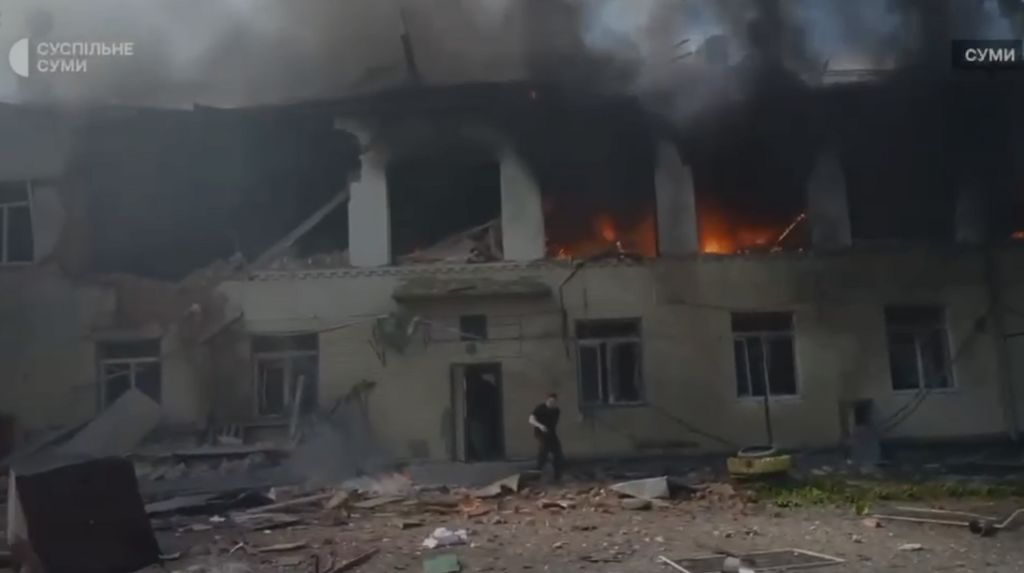
    In a significant escalation of aerial warfare, Russian defense systems reportedly intercepted an unprecedented wave of 389 Ukrainian drones overnight, marking the largest drone assault on Russian territories since the invasion began in February 2022. The Russian Defense Ministry confirmed the massive defensive operation across thirteen Russian regions and the illegally annexed Crimean Peninsula.

    The coordinated strike demonstrates a substantial advancement in Ukraine’s domestic military technology, particularly in long-range drone development and deployment capabilities. This offensive occurred just twenty-four hours after Russia launched one of its most intensive aerial barrages of the conflict, firing approximately 1,000 drones and 34 missiles at Ukrainian civilian areas within a single day.

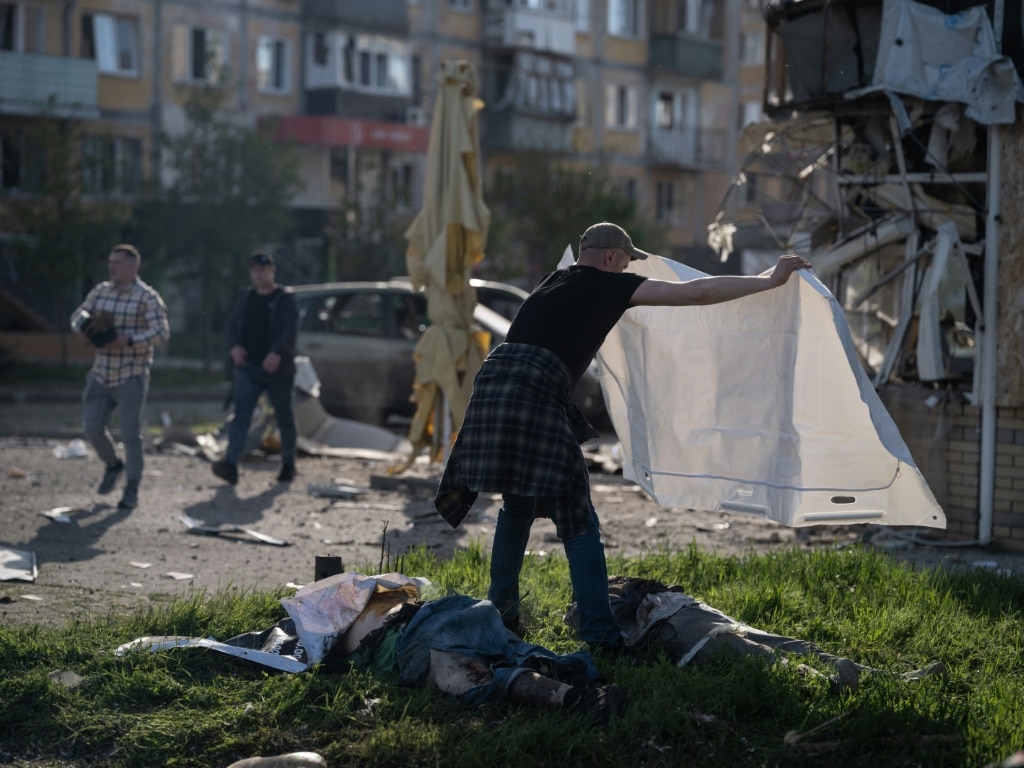
    According to Ukrainian authorities, the Russian bombardment resulted in at least six civilian fatalities and approximately fifty injuries, with attacks extending beyond typical nighttime operations into daylight hours.

    Regional officials reported significant impacts from the Ukrainian counterstrikes. Alexander Drozdenko, governor of the Leningrad region north of Moscow, confirmed 56 drones neutralized in his jurisdiction, with subsequent fires breaking out at the strategic Baltic Sea port of Ust-Luga. Simultaneously, Vyacheslav Gladkov, governor of the border Belgorod region, reported Ukrainian missile strikes damaging critical energy infrastructure, causing widespread disruptions to power, water, and heating supplies for local residents.

    The reciprocal escalation in drone warfare intensity highlights both nations’ increasing reliance on unmanned aerial technology while demonstrating Ukraine’s growing capacity to strike deep into Russian-held territory.

  • Dozens of bodies, mostly infants, discovered in Kenya mass grave

    Dozens of bodies, mostly infants, discovered in Kenya mass grave

    Authorities in Kenya have launched a comprehensive investigation following the horrific discovery of 32 bodies, predominantly infants and fetuses, exhumed from a mass grave on property belonging to the National Council of Churches of Kenya (NCCK) in the western town of Kericho.

    The grim operation, conducted under a court order initially seeking 14 bodies, revealed what government pathologist Richard Njoroge described as ‘quite unusual’ circumstances. The remains were found stacked in gunny bags, with the exhumation process hampered by heavy rains. Preliminary examination identified seven adults and 25 children, including numerous body parts.

    Dr. Njoroge noted concerning forensic evidence suggesting the victims died at different times, with adult remains showing advanced decomposition while children’s bodies were less deteriorated. He indicated that some remains appeared to originate from hospitals and mortuaries, though definitive conclusions await complete autopsies scheduled to begin Wednesday.

    The Directorate of Criminal Investigations (DCI) revealed initial findings indicating 13 unclaimed bodies had been officially released from a hospital in neighboring Nyamira county and transported to Kericho for burial last Friday. However, the discovery of additional bodies and the clandestine nature of the burial has raised serious questions.

    NCCK officials have denied any authorization or knowledge of the burial occurring on their property, expressing shock at the discovery. Law enforcement has reportedly arrested two suspects—a public health officer from Nyamira and a cemetery caretaker—with others being questioned for potential criminal activity beyond burial irregularities.

    Human rights organization Vocal Africa condemned the discovery as a ‘staggering and horrific escalation,’ citing reports of mutilation and dismemberment among the remains that suggest unprecedented violence requiring immediate transparent investigation.

    The shocking find echoes Kenya’s recent tragedy where 429 bodies were exhumed from mass graves in the remote Shakahola forest in 2023, linked to cult leader Paul Mackenzie who allegedly instructed followers to starve themselves to death.

  • Graffiti conviction for Australian woman who stuck googly eyes on sculpture

    Graffiti conviction for Australian woman who stuck googly eyes on sculpture

    A Mount Gambier court has sentenced 20-year-old Amelia Vanderhorst for vandalizing a prominent public artwork while under the influence of drugs and alcohol. The incident occurred in September when Vanderhorst adhered plastic googly eyes to the recently installed sculpture known as ‘Cast in Blue,’ locally referred to as the Blue Blob.

    Appearing before magistrates on Tuesday, Vanderhorst pleaded guilty to a graffiti charge that was reduced from initial property damage allegations through prosecutorial negotiations. Magistrate Court officials ordered her to compensate A$2,000 (US$1,394) to the City of Mount Gambier and perform 60 hours of community service.

    Defense attorney Michael Hill explained that his client had consumed three liters of vodka and MDMA before committing the act of vandalism. In a statement to media, Hill noted Vanderhorst has since taken substantial steps toward rehabilitation, including reducing substance use and stabilizing her personal circumstances. The defendant reportedly abandoned a crowdfunding effort for legal fees and returned all contributions, demonstrating accountability for her actions.

    The controversial sculpture, costing taxpayers A$136,000, was unveiled in July as a representation of a mythical megafauna inspired by ancient marsupial ant-eaters found in local caves. Mayor Lynette Martin condemned the vandalism as “willful damage to a valued public artwork,” noting that removal of the adhesive eyes would require expensive restoration due to potential surface damage.

    The sculpture’s installation initially sparked community debate regarding its abstract design and substantial cost, with residents expressing polarized opinions about the artistic value of the blue, amorphous structure.

  • Kenya’s flower industry loses millions of dollars weekly due to the Iran war

    Kenya’s flower industry loses millions of dollars weekly due to the Iran war

    Kenya’s prestigious flower export sector is facing severe financial hemorrhaging, with weekly losses reaching $1.4 million since the onset of Middle East hostilities, according to industry reports. The Kenya Flower Council (KFC), the premier organization representing floral growers and exporters, revealed that cumulative losses have exceeded $4.2 million over the past three weeks due to escalating transportation challenges and diminished market demand.

    Clement Tulezi, Chief Executive Officer of KFC, detailed the unprecedented cost pressures: “We’re experiencing significant logistical constraints, including substantial movement delays and extended routing alternatives. Current pricing has soared to $5.80 per kilogram—the highest rate witnessed in a decade.”

    The crisis is particularly evident at Isinya Flower Farms, located 56 kilometers south of Nairobi, where export volumes have plummeted dramatically. Marketing Manager Anantha Kumar reported: “Our daily exports have collapsed from 450,000 stems to approximately 150,000-200,000 stems. This drastic reduction forces us to discard nearly half of our production capacity.”

    While Middle Eastern destinations typically constitute about 30% of Isinya’s market and 15% nationally, the conflict’s ripple effects have severely impacted European-bound shipments—which normally represent 70% of Kenya’s floral exports. Kumar explained the dual challenge: “Sky-high freight rates have made purchases unaffordable for customers, while simultaneously, availability has drastically diminished. European carriers now charge approximately $5 per kilogram, doubling standard rates, as Middle Eastern carriers have suspended operations.”

    Industry experts warn of potential massive job losses in a sector that directly employs approximately 500,000 Kenyans. The Kenya Flower Council is actively petitioning the government to establish direct cargo flights to Europe to preserve market access and provide economic relief to struggling growers.

  • Woods targets Masters after return to action in TGL

    Woods targets Masters after return to action in TGL

    Golf legend Tiger Woods has signaled potential competitive ambitions for next month’s Masters Tournament following his return to golf in the TGL season finale. The 50-year-old icon, absent from professional play for over a year, participated in Tuesday’s championship match where his Jupiter Links team suffered a decisive 9-2 defeat against Los Angeles Golf Club.

    Woods’ appearance marked his first competitive action since undergoing spinal disc replacement surgery in October 2024. Despite his extended absence and numerous recent operations, the 15-time major champion demonstrated promising physical condition, delivering multiple drives exceeding 300 yards during the indoor league competition.

    When questioned about potential participation at Augusta National, Woods maintained cautious optimism. “I’ve been trying—this body doesn’t recover like it did when I was 24, 25,” he acknowledged. “It doesn’t mean I’m not trying; I’ve been trying for a while. I’ve had a couple of bad injuries last year that I’ve had to fight through.”

    The golf champion emphasized his profound connection to the Masters, which he has won five times throughout his legendary career. “I’ve loved the Masters tournament since I was 19 years old,” Woods reflected. “It’s meant so much to me and my family over the years. I’m going to be there either way.”

    Woods served in a non-playing capacity for Jupiter Links throughout the 2026 TGL season, the PGA Tour-supported technology-driven league co-founded by his organization. His team advanced to the championship series after defeating Rory McIlroy’s Boston Common in last week’s semifinal matchup.

    Despite early momentum in the final match—Jupiter Links led 2-0—the team’s fortunes shifted dramatically when Woods missed a critical three-foot putt on the seventh hole. Los Angeles Golf Club, featuring English stars Justin Rose and Tommy Fleetwood, capitalized with three consecutive eagles, prompting Jupiter’s concession on the tenth hole.

    Reflecting on the physical demands, Woods noted, “It was fine physically. We got our ass kicked at the end. Three eagles in a row, we didn’t respond. I missed a short one to kind of get it started and give them momentum and we never got it back.”

  • US sent Iran 15-point plan aimed at month-long ceasefire: Israeli media

    US sent Iran 15-point plan aimed at month-long ceasefire: Israeli media

    JERUSALEM—In a significant diplomatic maneuver, the United States has presented Iran with a comprehensive 15-point proposal aimed at establishing a month-long ceasefire, according to exclusive reporting from Israel’s Channel 12. The initiative, delivered amid heightened regional hostilities, outlines a structured framework for de-escalation and potential long-term agreement.

    The proposed roadmap, reportedly advanced by senior advisors to former President Donald Trump including Jared Kushner and Steve Witkoff, seeks an immediate 30-day cessation of hostilities. This temporary pause would create a diplomatic window for finalizing a more comprehensive agreement addressing multiple points of contention between the nations.

    Central to the proposal are stringent demands regarding Iran’s nuclear program. Tehran would be required to completely dismantle its nuclear weapons capabilities and cease all uranium enrichment activities, coupled with a permanent commitment to non-proliferation. The plan further stipulates that Iran must terminate financial and military support to regional allied groups while guaranteeing uninterrupted international access to the strategic Strait of Hormuz.

    Additional provisions call for limitations on Iran’s missile production, restricting future development exclusively to defensive purposes. In return, Washington offers substantial incentives including complete sanctions relief, technical assistance for civilian nuclear energy development at the Bushehr facility, and elimination of the “snapback” mechanism that could automatically reinstate previously lifted UN sanctions.

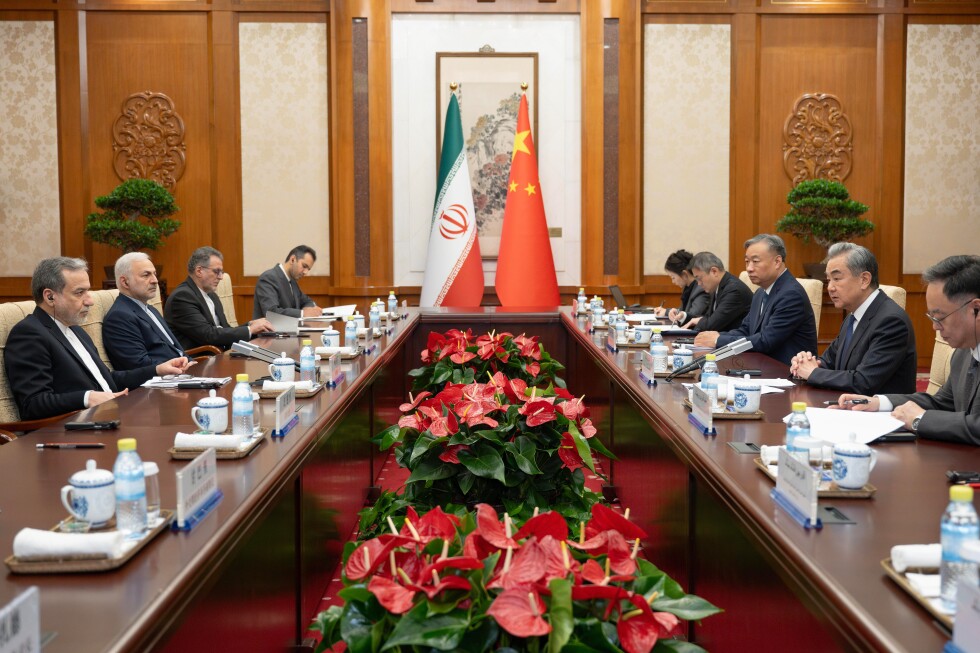
    The proposal emerges against a backdrop of escalating violence, with joint US-Israeli strikes against Iranian targets commencing February 28th prompting retaliatory attacks from Iran and its regional allies against American and Israeli interests throughout the Middle East. Israeli Prime Minister Benjamin Netanyahu, maintaining his longstanding opposition to diplomatic engagement with Iran, has yet to issue an official response but recently reiterated his position that Iran’s current leadership cannot be trusted.