The ongoing conflict in Ukraine is reshaping the future of global military engagement at an unprecedented pace, with a growing cohort of new-age defense firms predicting that robotic combatants could soon outnumber human troops on the battlefields of the country. This bold claim comes from UFORCE, a Ukrainian-British defense technology startup that operates out of an unmarked, low-profile office in London – a security precaution implemented to fend off potential sabotage attempts from Russian actors, according to company representatives.
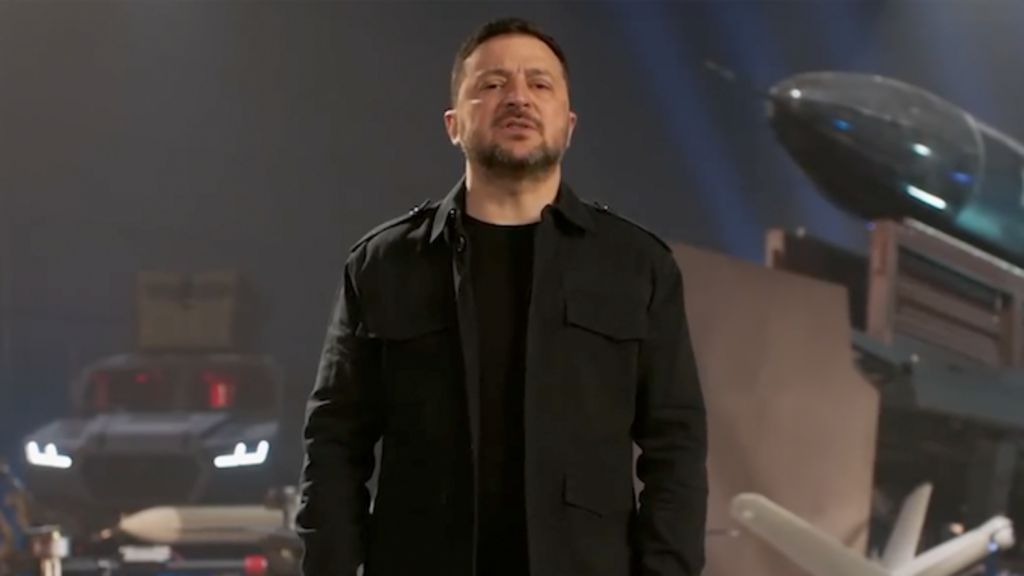
The discussion around robotic combat surged into the public eye last month, when Ukrainian President Volodymyr Zelensky highlighted a historic, first-of-its-kind military operation in a public video address. According to Zelensky, Ukrainian forces successfully seized hostile territory using only robotic systems and drones, a milestone he framed as a turning point in modern warfare. Neither the Ukrainian military nor UFORCE has released concrete details about the alleged operation; however, a UFORCE representative confirmed that the firm’s air, land, and sea unmanned systems are already active in frontline combat operations across Ukraine.
“I can’t go into specifics about the operation or how UFORCE was involved, but we’ve conducted more than 150,000 successful combat missions since the full-scale Russian invasion in 2022,” explained Rhiannon Padley, the company’s UK director of strategic interactions. Padley added that the trend of robots fighting robots will only become more widespread, projecting that unmanned systems will eventually surpass human soldiers in number on future battlefields.
Russia has already deployed its own robotic systems to deliver explosive payloads to Ukrainian positions, and independent defense analysts broadly agree that the war in Ukraine has accelerated the development and deployment of unmanned military technology by years. Beyond shifting the dynamics of the current conflict, this rapid advancement has ignited a global debate over the ethical, strategic, and operational implications of widespread robotic and AI-integrated warfare.
Melanie Sisson, a senior fellow at the Washington-based Brookings Institution, framed Ukraine as a global leader in the evolution of modern defense technology. “I really consider Ukraine to be a major teacher in the future of national defence and armaments,” Sisson noted. “It’s an impressive case study in how necessity drives invention.”
UFORCE is at the forefront of a new wave of disruptive “Neo-Prime” defense startups that are challenging the dominance of long-established legacy defense contractors including BAE Systems, Boeing, and Lockheed Martin. One of the most high-profile of these new entrants is Anduril, a US-based defense technology firm that completed its first test flight of an autonomous, unpiloted fighter jet in February of this year.
While the vast majority of unmanned systems currently in use remain remotely controlled by human operators, companies like Anduril are rapidly integrating artificial intelligence into weapons platforms to increase autonomous functionality. UFORCE’s land-based drones already use AI-powered software to assist human operators with targeting, and Anduril confirms that some of its newest systems can independently complete the final stage of an attack without human input.
The US federal government has publicly pushed for rapid adoption of AI across the US military, with Defense Secretary Pete Hegseth stating in January that the country must transition to an “AI-first warfighting force.” A 2025 assessment from the US Department of Defense also confirmed that China is rapidly expanding its own development and deployment of AI-integrated military systems, intensifying a global arms race in autonomous defense technology.
Many analysts argue that a future of widespread robot-on-robot combat is all but unavoidable. Jacob Parakilas, a researcher with the independent think tank RAND Europe, points out that cross-drone combat is already a regular occurrence in Ukrainian airspace. “Seeing that extend to land and maritime warfare seems extremely likely, if not inevitable,” Parakilas said.
Despite the strategic and operational advantages touted by developers, human rights organizations have raised urgent alarms over the growing autonomy of weapons systems, particularly the critical issue of accountability for civilian harm and unlawful killings. “Militaries adopt AI to speed up processes such as target identification. But delegating life-and-death decisions to machines poses profound ethical and human rights risks,” explained Patrick Wilcken, a military technology researcher at Amnesty International.
Defense manufacturers push back on these criticisms, arguing that retaining a “human in the loop” for critical decision-making mitigates these risks, and that all final decisions to use lethal force remain in the hands of military personnel. Proponents of AI-integrated systems also argue that autonomous technology can reduce human error in high-stress combat environments. “Humans need rest and food, and under combat conditions those needs aren’t always met,” said Dr Rich Drake, UK general manager at Anduril Industries. “Computing allows us to reduce errors across what we call the kill chain.”
The explosive growth of UFORCE underscores the massive commercial opportunity in autonomous military technology: the startup has expanded rapidly amid the war in Ukraine and recently achieved unicorn status, reaching a valuation of more than $1 billion. As global investment pours into this emerging sector, the question is no longer whether robotic warfare will become the norm, but how the international community will govern its use to mitigate ethical and humanitarian harm.