作者: admin

  • ‘Smashed by suppliers’: Servo on pristine tourist destination explains ‘reality’ of fuel crisis after prices soar to $4.25-a-litre

    ‘Smashed by suppliers’: Servo on pristine tourist destination explains ‘reality’ of fuel crisis after prices soar to $4.25-a-litre

    A remote fuel station operator on Queensland’s pristine K’gari island (formerly Fraser Island) has publicly defended charging A$4.25 per liter for diesel following social media criticism, citing severe supply chain challenges and supplier costs.

    The controversy emerged when 4WD influencer Matthew Baker, founder of The Explore Life with over 313,000 Instagram followers, highlighted Orchid Beach Trading Post and Driftwood Bar as having ‘the worst fuel price in Australia’ in a viral video. The post triggered widespread backlash against the small business.

    In response, co-owner Nicky issued a detailed explanation on Facebook, emphasizing the economic realities facing independent fuel retailers in remote locations. The station operates completely off-grid using generator power and lacks large storage capacity for fuel reserves. Notably, the business no longer receives previously included free delivery services to their Rainbow shed location, with these additional costs being passed through pricing.

    ‘No one likes high prices, including me,’ Nicky stated. ‘I’ve done everything I can to keep my margin at a fair level, but we’re getting absolutely smashed by suppliers.’ She emphasized her commitment to maintaining essential services in a challenging operational environment rather than taking advantage of customers.

    Following the explanation, Baker clarified that his post wasn’t intended to shame the business but rather to critique government policies affecting fuel prices. He encouraged support for remote small businesses facing logistical challenges, particularly during current fuel supply uncertainties.

  • Cambodian man deported by the US to Eswatini is being repatriated, his lawyer says

    Cambodian man deported by the US to Eswatini is being repatriated, his lawyer says

    A Cambodian national detained for five months in Eswatini under the Trump administration’s controversial third-country deportation initiative has been released pending repatriation, marking the second such release from the African kingdom. Pheap Rom, who previously served a 15-year U.S. prison term for attempted murder, was transferred to Eswatini in October 2024 under a program that has relocated approximately 300 migrants to nations with which they have no established connections.

    The United States has dispatched 19 migrants to Eswatini across three separate groups since July, pursuant to a $5.1 million agreement permitting detainment for up to one year. While Eswatini’s government characterizes these individuals as being in ‘transit,’ legal representatives contest the lawfulness of their detention without criminal charges in the host nation.

    This case highlights ongoing judicial scrutiny of the third-country deportation policy, which faces multiple legal challenges in both U.S. courts and recipient nations. Last month, a federal judge ruled the program unlawful due to insufficient procedural protections, though an appeals court subsequently suspended that decision.

    The selection of partner countries—including Eswatini, South Sudan, and Equatorial Guinea—has drawn criticism from human rights advocates and Democratic lawmakers. These nations have been criticized for authoritarian governance patterns and questionable human rights records, raising ethical concerns about the financial arrangements underpinning the deportation agreements.

    Rom’s attorney, Tin Thanh Nguyen, emphasized that the release validates their position that these deportations constitute unnecessary and illegal detention, fundamentally bypassing established immigration protocols and denying deportees their legal rights.

  • Penny Wong warns Israel Minister Australia does ‘not want’ Lebanon occupation

    Penny Wong warns Israel Minister Australia does ‘not want’ Lebanon occupation

    Australian Foreign Minister Penny Wong has issued a stern warning to Israel regarding its proposed military operations in southern Lebanon, emphasizing Canberra’s firm stance against any occupation of Lebanese territory. The diplomatic exchange occurred during a Tuesday night telephone conversation with Israeli Foreign Minister Gideon Sa’ar, where Wong expressed grave concerns about the potential expansion of conflict in the region.

    This high-level discussion follows Israel’s Defense Minister Israel Katz announcing plans for Israeli forces to establish control over extensive areas south of Lebanon’s Litani River. Katz described the intended operation as creating a “security zone” between Israel’s northern border (designated as the Blue Line) and the river, purportedly to enhance Israel’s security posture.

    The humanitarian situation has reached critical levels with over 1,000 Lebanese casualties reported since hostilities intensified, including more than 100 children killed in Israeli strikes targeting Hezbollah positions. The conflict has triggered massive displacement, forcing more than one million people from their homes amid escalating violence.

    Minister Wong explicitly communicated Australia’s support for Lebanon’s sovereignty and territorial integrity, stating: “We do not want to see occupation of southern Lebanon by Israel.” She further urged all parties to adhere strictly to international humanitarian law while emphasizing the imperative protection of civilians and humanitarian workers.

    The Australian diplomat also addressed concerning statements from Israeli Finance Minister Bezalel Smotrich, who had previously suggested expanding Israel’s borders into Lebanese territory and annexing occupied areas in Gaza and Syria. Additionally, Wong raised alarms about increasing violence by Israeli settlers against Palestinians in the West Bank and pressed for the safe return of Australian diplomats to Ramallah, the de facto administrative capital of Palestine.

    Historical context underscores the sensitivity of Israeli operations in southern Lebanon, where Israel maintained occupation forces from 1982 until their withdrawal in 2000 following sustained resistance from Hezbollah. The current hostilities represent a significant escalation since the outbreak of the Gaza conflict and subsequent Israeli strikes against Iranian targets.

    Wong also reiterated Australia’s condemnation of Iran’s activities in the Strait of Hormuz, noting that Tehran’s “weaponization” of the critical waterway has disrupted global energy supplies and contributed to rising oil prices worldwide, adversely affecting households and businesses across international markets.

  • Trump says he received Iranian ‘present’ as thousands of US troops head towards Gulf

    Trump says he received Iranian ‘present’ as thousands of US troops head towards Gulf

    In a statement delivered from the White House on Tuesday, President Donald Trump announced that Iran had presented the United States with a substantial “present” related to oil and gas resources, characterizing it as a positive development in ongoing negotiations to conclude the military conflict. Despite this diplomatic overture, the simultaneous deployment of thousands of U.S. troops to the region presents a contradictory narrative.

    Trump asserted American victory in the ongoing hostilities, stating, “We have won this war” and suggesting that the extensive targeting of Iranian officials amounted to effective “regime change.” He revealed that key administration figures, including son-in-law Jared Kushner, Special Envoy Steve Witkoff, Secretary of State Marco Rubio, and Vice President JD Vance, are actively engaged in negotiation efforts.

    Meanwhile, military mobilization continues unabated. The New York Times reported the imminent deployment of approximately 3,000 elite troops from the 82nd Airborne Division to the Middle East, supplemented by an additional 2,500 personnel redirected from Asia. Military analysts indicate these forces could potentially be utilized to seize Iranian islands and coastline assets, reasserting U.S. dominance over the critical Strait of Hormuz energy chokepoint.

    This dual approach of diplomacy and military posturing has created significant uncertainty among market analysts and regional diplomats. Amena Bakr, head of Middle East energy at analytics firm Kpler, emphasized on social media platform X that actions rather than words should be monitored, noting continued military movements and Iran’s maintained control over the Strait.

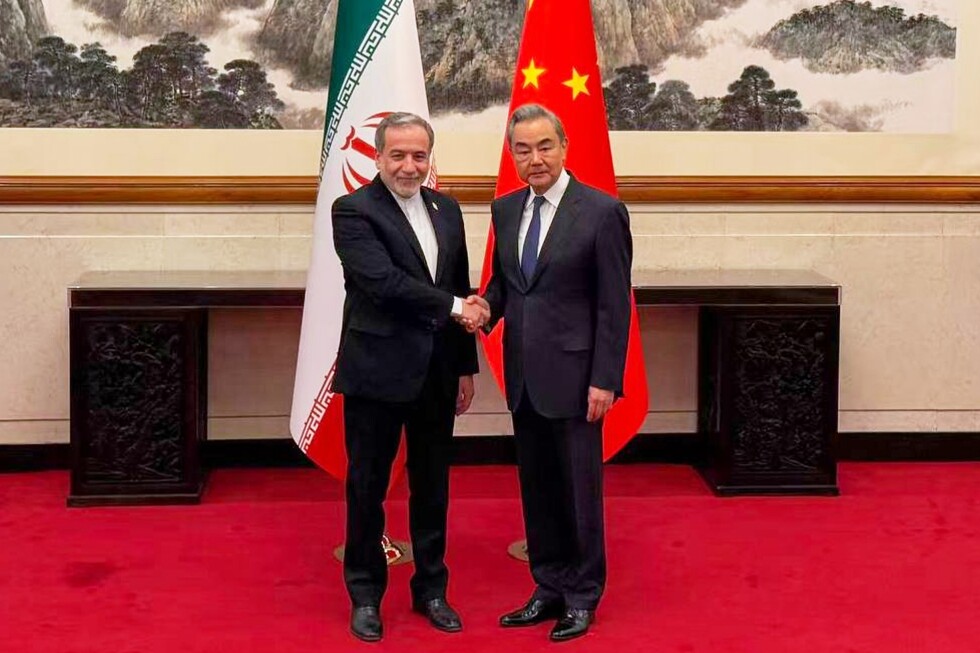
    Iranian officials have denied reports of direct negotiations, with Parliament Speaker Mohammad Bagher Ghalibaf dismissing them as “fake news.” However, Arab officials and Hebrew media sources indicate behind-the-scenes diplomatic efforts, including a purported 15-point peace plan presented by the U.S. Tehran remains skeptical of U.S. assurances, having suffered attacks during previous negotiation attempts in June 2025 and February 2026.

    The nature of Iran’s alleged “present” remains unclear, though Trump described it as “a very significant prize” worth “a tremendous amount of money” that demonstrated Iranian seriousness in negotiations. This development follows Trump’s recent threat to attack Iran’s energy infrastructure and his subsequent announcement of a five-day delay to allow for diplomatic resolution.

    Parallel developments include Iran’s circulation of a letter through the International Maritime Organization indicating coordination possibilities for “non-hostile vessels” transiting the Strait of Hormuz, and reports of successful tanker transits through the strategic waterway.

  • BTS concert drew 18.4 million viewers, says Netflix

    BTS concert drew 18.4 million viewers, says Netflix

    In a spectacular display of global influence, K-pop phenomenon BTS has shattered streaming records with their historic comeback concert, “ARIRANG,” drawing an unprecedented 18.4 million viewers worldwide according to Netflix’s official announcement. The streaming giant revealed that the live event, broadcast from Seoul’s Gwanghwamun Square on March 21st against the majestic backdrop of Gyeongbokgung Palace, marked multiple milestones for both the artists and the platform.

    The seven-member ensemble performed together for the first time following their extended hiatus due to mandatory military service requirements, coinciding with the release of their latest studio album. The concert, aptly staged for the self-proclaimed “Kings of K-pop,” represented Netflix’s inaugural live event in South Korea and their first global music performance livestream.

    Netflix’s data analytics placed the concert in the weekly Top 10 across 80 nations, achieving the number one position in 24 countries. The figures, derived from first-party data methodology, demonstrate the group’s intensified global reach during their time apart. Meanwhile, physical attendance reached remarkable numbers with over 100,000 fans flooding central Seoul, according to the group’s label HYBE. The Seoul metropolitan government’s crowd-tracking system estimated 40,000-50,000 attendees, though officials noted this figure doesn’t fully capture foreign visitors due to methodological limitations.

    The production required massive logistical coordination with approximately 15,000 police officers and security personnel deployed throughout the venue. Barricades lined surrounding roads while nearby establishments temporarily closed to accommodate the unprecedented gathering.

    Artistically, the performance featured “Body to Body,” a track from the new album that incorporates samples from the traditional Korean folk song “Arirang”—a melancholic piece about separation often considered South Korea’s unofficial national anthem. The album itself, released on March 20th, sold nearly four million copies on its first day and produced immediate chart-toppers. Spotify data confirmed “SWIM” held the Daily Top Songs Global chart’s top position for three consecutive days while “Body to Body” maintained the second spot.

    The concert serves as a prelude to the group’s ambitious “ARIRANG” world tour, scheduled to commence April 9th in Goyang, South Korea. The extensive 2026-27 itinerary spans 82 concerts across 34 cities throughout Asia, North America, Europe, and Latin America. Ticket sales for initial locations sold out within hours, further cementing BTS’s unparalleled commercial dominance in the music industry.

  • Elderly man, 84, charged with manslaughter of 78-year-old following alleged fatal brawl in Aspley

    Elderly man, 84, charged with manslaughter of 78-year-old following alleged fatal brawl in Aspley

    An 84-year-old man is facing a manslaughter charge in connection with the death of a 78-year-old man following a physical altercation in a northern Brisbane suburb. The incident occurred on February 21 outside a residence on Albany Creek Road in Aspley, where Queensland Police allege a confrontation turned physical.

    According to police reports, the octogenarian allegedly pushed his 78-year-old neighbor during the dispute, causing him to fall and sustain critical head injuries. Emergency services transported the injured man to a nearby hospital, where he remained for two days before succumbing to his injuries.

    Following an extensive investigation into the circumstances surrounding the fatal incident, authorities formally charged the 84-year-old suspect with one count of manslaughter. The accused is scheduled to appear before the Brisbane Magistrates Court on Thursday to face the criminal charge.

    The case has drawn attention to conflicts among elderly residents in community settings, highlighting how seemingly minor altercations can have tragic consequences. Queensland Police emphasized their thorough investigative process in bringing the charge, demonstrating their commitment to pursuing justice regardless of the age of those involved.

  • OSCE’s ‘chaotic’ Ukraine evacuation put staff at risk: leaked report

    OSCE’s ‘chaotic’ Ukraine evacuation put staff at risk: leaked report

    A confidential internal investigation has revealed severe operational failures within the Organization for Security and Cooperation in Europe (OSCE) during its emergency evacuation from Ukraine following Russia’s full-scale invasion in 2022. The leaked document, obtained by AFP, details how the organization’s “insufficient preparedness” and lack of contingency planning placed personnel at “serious security risk.

    The report highlights that approximately one month prior to the invasion, an explicit directive was issued to dismantle existing evacuation preparations and halt further planning to avoid creating panic within host nation Ukraine. This decision contributed to what the internal review characterizes as “chaotic movements of people and assets” during the actual evacuation, compounded by unclear roles, responsibilities, and decision-making authority among stakeholders.

    Tragically, the consequences of these failures were human. Ukrainian staff member Maryna Fenina lost her life during Russian bombardment of Kharkiv on March 1, 2022. Three other Ukrainian nationals who remained in eastern territories under rebel control—Dmytro Shabanov, Maxim Petrov, and Vadym Golda—were subsequently arrested on espionage charges disputed by the OSCE and remain detained in Russian prisons.

    The review further notes that sensitive records were left behind during the emergency withdrawal, creating ongoing concerns about potential persecution of locally hired national mission members. The evacuation complications were exacerbated when several member nations, including the United States, United Kingdom, Canada, and Denmark, independently decided to withdraw their contingents in mid-February 2022 without prior coordination with mission leadership.

    Despite these documented failures, the OSCE asserts it has implemented significant reforms in response to the lessons learned. The organization has strengthened its crisis response framework, introduced regular simulation exercises, and improved coordination between field operations and secretariat structures. These enhancements come as the OSCE positions itself to potentially deploy a new monitoring mission to Ukraine should ceasefire negotiations materialize.

  • Tough negotiations loom as Denmark’s Social Democrats fail to secure a majority

    Tough negotiations loom as Denmark’s Social Democrats fail to secure a majority

    Denmark’s political landscape has been reshaped by a general election that produced a fragmented parliament, leaving Prime Minister Mette Frederiksen’s Social Democrats victorious yet weakened. Despite securing 21.9% of the vote and 38 parliamentary seats—making them the largest party by a significant margin—the Social Democrats achieved their poorest electoral performance in over a century, falling far short of the 90-seat majority needed in the 179-seat Folketing.

    The election night at Christiansborg Palace saw mixed emotions as Frederiksen addressed supporters. ‘I’m sorry that we did not get more votes. I had also hoped for a better result,’ she acknowledged, while simultaneously celebrating that ‘the Social Democrats have once again become the Danes’ absolute favourite political party.’

    The electoral mathematics reveals a deeply divided nation. The left-leaning ‘red bloc’ commands 84 seats against the right-aligned ‘blue bloc’s’ 77 seats, with both coalitions failing to reach the majority threshold. This deadlock places unprecedented influence in the hands of the Moderates, a centrist party led by former Prime Minister Lars Løkke Rasmussen, which secured 14 seats and now holds the balance of power.

    Rasmussen, fresh from international attention following his diplomatic handling of the Greenland standoff with the United States and his viral fist-bump with Vice President JD Vance, declared his intention to form a government ‘across the centre.’ His position contrasts sharply with Troels Lund Poulsen of the Liberals, the blue bloc’s largest party, who has explicitly rejected governing with the Social Democrats.

    Political analysts, including DR’s Christine Cordsen, suggest the most plausible outcome involves a center-left coalition comprising the Social Democrats, Red-Greens, the Moderates, and the Danish Social Liberal Party. However, complex negotiations spanning days or weeks are anticipated.

    The election, called prematurely by Frederiksen hoping to capitalize on her handling of Trump’s threats to annex Greenland, ultimately turned on domestic concerns. Voters prioritized economic stability, cost of living pressures, welfare issues, and environmental concerns including pesticide contamination from pig farming and agriculture’s climate impact over geopolitical matters.

    Frederiksen, who has led Denmark for nearly seven years, affirmed her readiness to continue as prime minister, though her path to a third term depends on navigating the most complex government formation process in recent Danish history.

  • Australian businesses face ‘unprecedented’ failure rate amid dire oil shock warning

    Australian businesses face ‘unprecedented’ failure rate amid dire oil shock warning

    Australia’s economic landscape is confronting severe headwinds as escalating oil prices threaten to trigger widespread business failures across the nation’s most critical sectors. According to alarming new data from credit reporting agency CreditorWatch, business insolvencies have reached unprecedented levels and are projected to worsen significantly if current fuel market conditions persist.

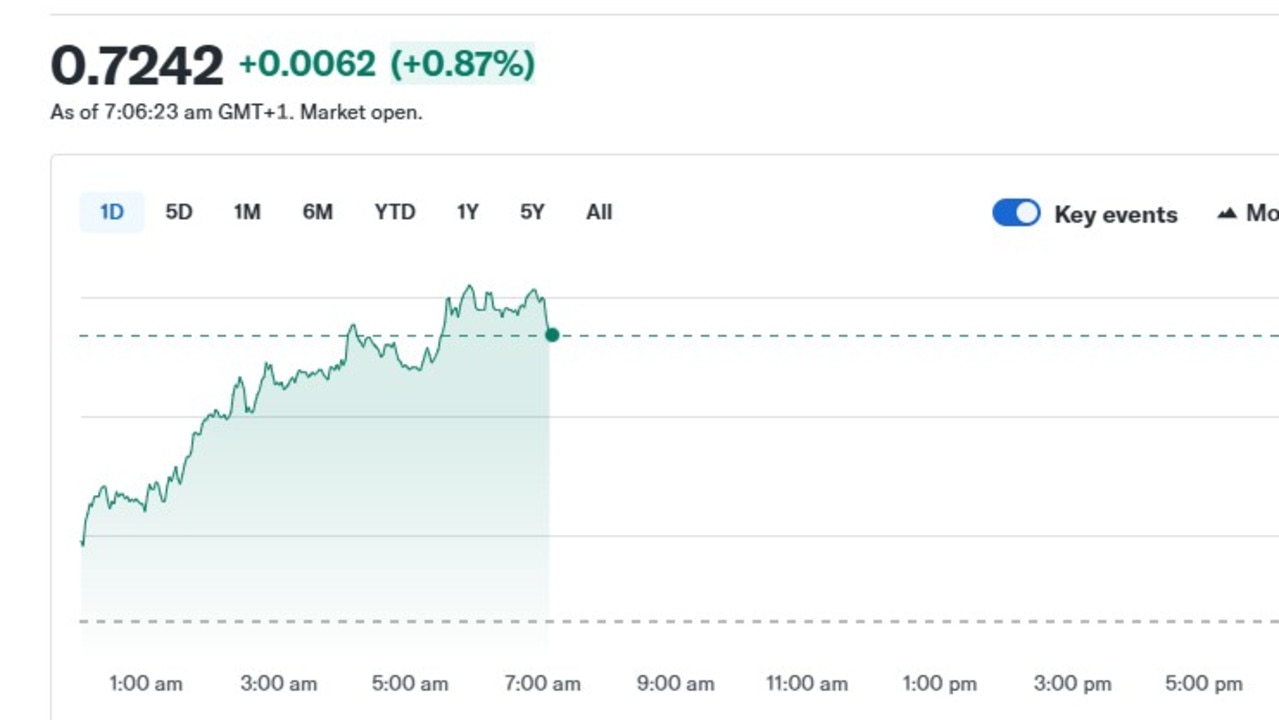
    The ongoing Middle East conflict has propelled oil prices from approximately $56 USD per barrel to nearly $100 USD, creating what economists describe as a 50-70% price shock. CreditorWatch Chief Economist Ivan Colhoun warns that should prices stabilize between $120-$150 USD per barrel, the economic impact would mirror the devastating effects experienced during COVID-19 lockdowns. Historical data indicates that sustained oil price increases of this magnitude over six to twelve months have frequently preceded global recessions.

    Fuel-intensive industries including agriculture, mining, manufacturing, and road transport face particularly acute vulnerability. The transportation sector already demonstrates concerning stress signals, with CreditorWatch’s Business Risk Index revealing that 7.1% of road freight businesses ceased operations in the past year—a significant increase from 6.2% the previous year. Rising fuel costs continue to erode profit margins throughout these essential supply chain components.

    Agricultural operations confront additional pressures due to their heavy reliance on diesel for machinery, irrigation systems, and product transportation. Compounding these challenges, natural gas restrictions have driven fertilizer costs higher, creating a multi-faceted cost crisis for farmers. While the agricultural sector currently maintains relatively low insolvency rates due to minimal leverage and consistent food demand, experts anticipate increased failures if high fuel costs persist beyond the next quarter.

    The economic deterioration is already materializing according to recent PMI data from S&P Global. Australia’s composite PMI registered at 47 in March, indicating contracting economic activity for the first time in eighteen months. S&P Global economist Eleanor Dennison noted that input costs have surged to their highest level in over three years, while business optimism has declined amid slowing demand and supply chain disruptions.

    The timeline for recovery remains uncertain. CreditorWatch suggests that if Middle East tensions de-escalate by mid-2026, fuel prices may retreat sufficiently to allow operational recovery. However, even in this optimistic scenario, elevated insolvency rates are expected to persist through the first half of the calendar year. Alternatively, prolonged oil prices above $120 USD would likely trigger additional business failures, particularly among small and mid-sized enterprises with limited financial buffers.

  • Dirty diapers born again in Japan recycling breakthrough

    Dirty diapers born again in Japan recycling breakthrough

    In a groundbreaking environmental initiative, Japan has developed revolutionary recycling technology that transforms soiled diapers into new sanitary products. This world-first pilot program addresses the dual challenges of Japan’s mounting waste management crisis and its rapidly aging demographic profile.

    The innovative process, spearheaded by hygiene product manufacturer Unicharm, operates in two forward-thinking municipalities—Shibushi and Osaki—where residents achieve an impressive 80% household waste recycling rate, quadruple the national average. These communities implemented radical waste management solutions a quarter-century ago when facing imminent landfill saturation.

    The sophisticated recycling methodology involves collecting specially marked diapers, then subjecting them to shredding, washing, and separation into core components: pulp, plastic, and super-absorbent polymer (SAP). Through proprietary ozone treatment technology, the materials undergo complete sterilization, bleaching, and deodorization. This breakthrough enables the reuse of diaper pulp—constituting the bulk of each product—to manufacture new diapers meeting strict hygiene standards.

    Japan’s demographic reality drives this innovation: the nation now produces more adult diapers (9.6 billion annually) than infant variants (8 billion), with projections indicating annual disposal of 2.6 million tons of soiled diapers by 2030. Currently, Japan recycles less than 20% of municipal waste, significantly trailing Germany (67%), Britain (44%), and the United States (32%).

    Unicharm’s ambitious roadmap targets full circularity by 2028, aiming to recycle both plastic and absorbent polymer components alongside pulp. The company plans to expand collaboration to 20 municipalities by 2035 while developing water-reduction techniques to enhance process sustainability. Although currently available at a 10% price premium in local markets, these recycled products represent a paradigm shift in sustainable hygiene solutions for an aging society.