作者: admin

  • Sweden detains sanctioned oil tanker believed to be linked to Russia’s shadow fleet

    Sweden detains sanctioned oil tanker believed to be linked to Russia’s shadow fleet

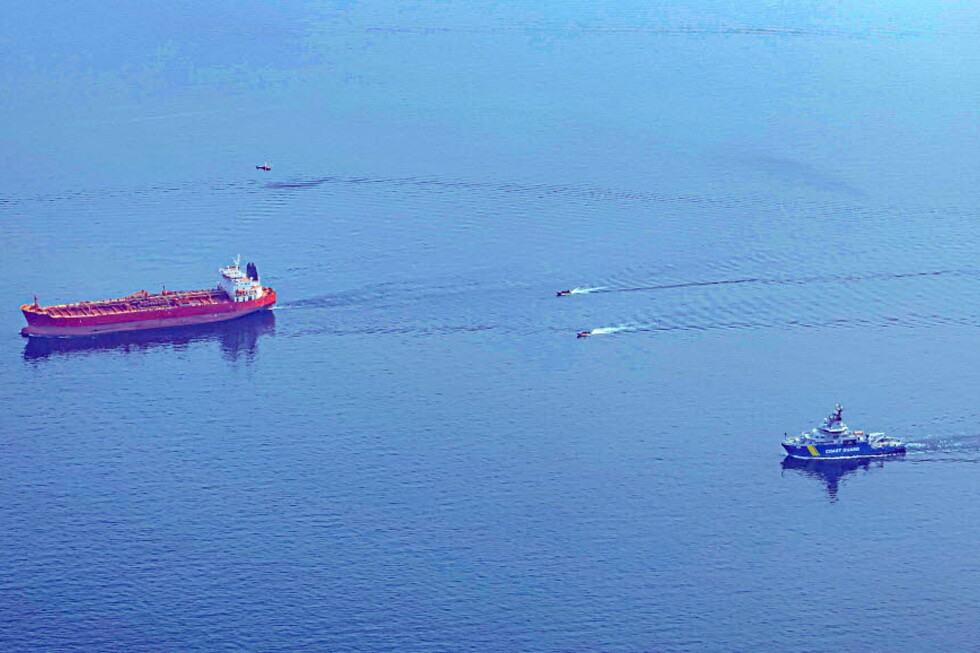
    STOCKHOLM – Swedish authorities have taken custody of a tanker linked to Russia’s controversial sanctioned shadow fleet, marking the fifth seizure of a questionable vessel in Swedish territorial waters in recent weeks, the country’s top civil defense official has confirmed.

    The Jin Hui, which was found transiting the Baltic Sea through Swedish waters flying a Syrian flag, was boarded and detained by the Swedish Coast Guard on Sunday. Along with its connections to the Russian shadow fleet, authorities have raised multiple red flags about the ship: it is suspected of using fraudulent flag registration, and questions remain about whether it meets international seaworthiness safety standards. As of Monday, the tanker remained anchored off the southern Swedish port of Trelleborg.

    In a post to the social platform X, Civil Defense Minister Carl-Oskar Bohlin confirmed the vessel appears on the European Union, United Kingdom and Ukraine sanctions designations lists. On Monday, Swedish prosecuting officials announced the ship’s captain, a Chinese national, has been taken into custody on suspicion of forging official documents and other related maritime violations.

    The seizure adds to a growing pattern of enforcement by Swedish maritime authorities targeting unsafe and sanction-violating vessels operating in the Baltic. “Ships with suspected deficiencies in their seaworthiness continue to sail in Swedish waters. This is not acceptable. We have intervened before, now we are intervening again,” said Daniel Stenling, the Swedish Coast Guard’s deputy chief of operations.

    As of Wednesday, Russia’s embassy in Stockholm had not responded to requests for comment on the incident.

    The operation comes as part of Sweden’s broader ongoing crackdown on vessels connected to Russian sanctioned energy and commodity trade. Last year, the Scandinavian nation announced it would ramp up mandatory insurance checks for all foreign vessels passing through its waters, a policy crafted specifically to tighten restrictions on Russian ships accused of smuggling oil, gas, and illegally seized Ukrainian grain.

  • France moves nuclear-powered carrier toward Hormuz in potential mission, as Trump pauses US effort

    France moves nuclear-powered carrier toward Hormuz in potential mission, as Trump pauses US effort

    PARIS – In a significant escalation of European military positioning in the Middle East, French armed forces announced Wednesday that the country’s flagship aircraft carrier strike group has transited the Suez Canal southward into the Red Sea, paving the way for a possible joint Franco-British security operation in the strategically critical Strait of Hormuz.

    The strait, a linchpin of global energy trade, has been effectively closed since Iran shut down access on March 4, in retaliation for joint U.S.-Israeli airstrikes that killed Iranian Supreme Leader Ayatollah Ali Khamenei on February 28. This closure has already choked off roughly 20% of the world’s daily oil supplies, triggering what the International Energy Agency has described as the most severe global oil supply disruption in modern history. For months, the standoff has paralyzed shipping through the waterway, sending war-risk insurance premiums soaring four to five times above pre-conflict levels and leaving roughly 2,000 commercial vessels stranded in the Persian Gulf.

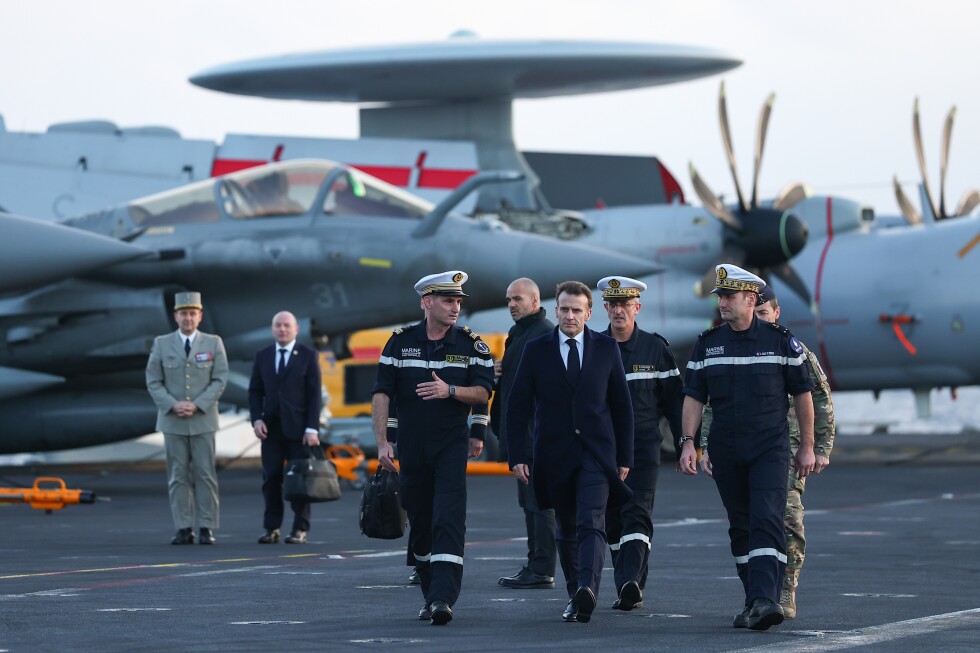
    This southward repositioning of the nuclear-powered Charles de Gaulle – Europe’s most powerful warship and the only nuclear-powered aircraft carrier outside the United States Navy – and its escort vessels brings the strike group closer to the Hormuz chokepoint than it has been at any point since the outbreak of the current conflict. The deployment is the next phase of a broader Middle East mission first announced by French President Emmanuel Macron in a March 3 televised address, one day before Iran closed the strait.

    “Going south of Suez is new for us,” Colonel Guillaume Vernet, spokesperson for the French armed forces chief of staff, told the Associated Press. “Geographically, it’s closer to the Strait of Hormuz and will therefore enable us to react faster, once the conditions are met.” Vernet confirmed that all operational planning for the mission has been finalized and the coalition is prepared to launch operations as soon as preconditions are met.

    The multi-nation coalition, led by France and the United Kingdom with participation from more than 50 additional countries, will not commence operations until two core thresholds are satisfied: a measurable reduction in threats to commercial shipping, and sufficient confidence among global maritime industry stakeholders to resume transits through the strait. Even after these conditions are met, Vernet added, any operational launch will require formal approval from neighboring states bordering the waterway. “Today the Strait of Hormuz is stuck because of the threat, and the insurance premiums are so high. Not a single ship will jeopardize their trip or go there,” he explained.

    This European-led initiative is separate from the U.S.-run “Project Freedom” mission, which was launched Sunday only to be paused by former U.S. President Donald Trump just 48 hours later. Washington has not been involved in Franco-British planning, a structure that military analysts note mirrors the “coalition of the willing” for Ukraine that Macron and current British Prime Minister Keir Starmer assembled early in the Russia-Ukraine conflict. Unlike the U.S. mission, the French-British operation is explicitly framed as conditional and strictly defensive.

    “The French position is the same since the beginning — defensive posture, respecting international law,” Vernet said. He traced the origins of the initiative back to the immediate aftermath of Iran’s strait closure, noting that Macron pushed for a multinational collective effort to restore freedom of navigation in the strait from the earliest days of the crisis. “Right after that, we had the opportunity to build things with different countries,” including the U.K., Italy, the Netherlands and other partner nations, he added. Coordination advanced rapidly following a Paris summit hosted by Macron and Starmer for dozens of participating nations on April 17, with military planners from more than 30 countries finalizing operational details at the United Kingdom’s Permanent Joint Headquarters in Northwood on April 22 and 23.

    The Charles de Gaulle strike group was originally repositioned from the Baltic Sea to the eastern Mediterranean following Macron’s March 3 order, part of what the French presidency called an “unprecedented” mobilization that also includes eight frigates and two Mistral-class amphibious assault ships. France already maintains a persistent military presence in the Gulf: under a long-standing defense agreement with the United Arab Emirates, roughly 900 French personnel are stationed at Al Dhafra Air Base, where French Rafale fighters have been intercepting Iranian drones and missiles targeting the UAE since the outbreak of hostilities on February 28.

    The strike group’s new position in the Red Sea places its 20 embarked Rafale fighters and E-2C Hawkeye early-warning aircraft within striking range of the Strait of Hormuz without entering the Persian Gulf, where the U.S. Navy has enforced a blockade of Iranian ports since April 13. Vernet declined to name a potential timeline for the launch of operations, emphasizing that the repositioning is a pre-emptive measure to ensure the coalition can act quickly when and if operational conditions are met.

  • NFL player Stefon Diggs found not guilty of attacking personal chef

    NFL player Stefon Diggs found not guilty of attacking personal chef

    NFL wide receiver Stefon Diggs has been cleared of all criminal charges stemming from allegations of assault by his former personal live-in chef, Jamila Adams, after a jury in Massachusetts reached a not guilty verdict following two days of deliberations. The 32-year-old veteran player, who became a free agent after being released by the New England Patriots in March 2024, had consistently denied the accusations of felony strangulation and misdemeanor assault, which were alleged to have occurred during a December 2, 2024 altercation. Adams accused Diggs of slapping and choking her during an argument, while prosecutors told jurors the dispute grew out of a romantic relationship between the two that had turned sour. Adams’ legal counsel ultimately acknowledged to the jury that his client had not been a completely reliable witness, though he still urged the panel to consider her testimony as valid, reporting from the Associated Press confirmed. Diggs’ defense team pushed back aggressively against the claims, framing the allegations as rooted in a non-violent financial disagreement rather than any physical attack. In post-verdict comments to media outlets, Diggs’ lead attorney Mitch Schuster highlighted what his team has argued is a common unfair trend facing high-profile professional athletes: opportunistic targeting for financial gain. “We were eager for the facts to come to light through the legal process,” Schuster stated in an official statement. “Professional athletes have a target on their back. When someone sees a uniform and a contract, they see leverage; they see a settlement. This case represents exactly the kind of opportunistic targeting that players can face the moment they step off the field.” The verdict closes a months-long legal process that has hung over Diggs’ professional future since he parted ways with the Patriots. The wide receiver joined New England in 2024 on a one-year deal worth up to $69 million, with $51 million guaranteed, but was released ahead of the 2025 offseason as he battled the legal claims. Now that the case has concluded, all attention has shifted to which NFL franchise will sign the free agent wide receiver, who has long been one of the league’s most productive offensive playmakers. A spokesperson for the NFL, Brian McCarthy, told ESPN that the league will continue reviewing the case under its official personal conduct policy, confirming that the organization had monitored the court proceedings throughout. It remains unclear whether the league will pursue any internal disciplinary action against Diggs following the acquittal, as the review process is still ongoing.

  • Bus and oil tanker collide in Indonesia, killing at least 16 people

    Bus and oil tanker collide in Indonesia, killing at least 16 people

    On a midday Wednesday in Indonesia’s Sumatra island, a devastating highway collision between a passenger intercity bus and a fuel tanker has left at least 16 people dead and four others injured, local disaster management officials confirmed. The crash unfolded on the Trans-Sumatra Highway in North Musi Rawas regency, South Sumatra province, as the bus traveling from Lubuklinggau city in South Sumatra to the neighboring city of Jambi carried roughly 20 passengers when it veered into the opposite lane and struck the oncoming tanker.

    Preliminary investigations, shared by Mugono, a local disaster agency official who goes by a single name consistent with common Indonesian naming conventions, point to a sudden mechanical emergency just moments before impact. According to initial findings, the bus began emitting sparks, prompting the driver to swerve right off the bus’s original travel lane in an attempt to prevent an on-board fire. That evasive maneuver put the bus directly in the path of the speeding oncoming tanker, leaving the tanker’s driver no time to react to avoid a catastrophic head-on crash.

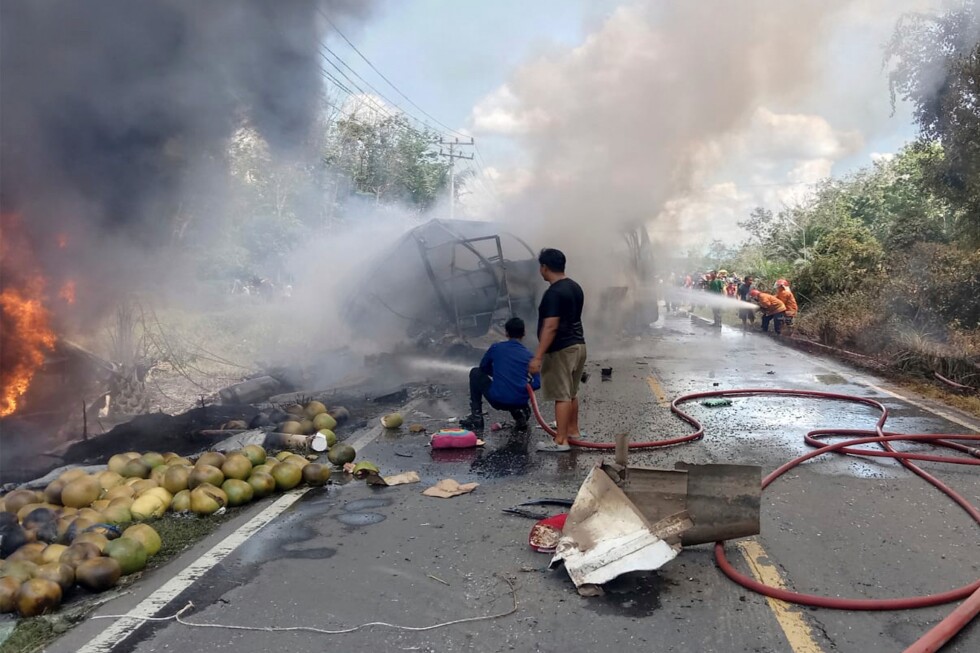
    The extreme force of the collision ignited an intense blaze that quickly engulfed both the bus and the tanker, trapping dozens of people inside the burning vehicles. All fatalities died from burns sustained in the fire: the count of the dead includes the bus driver, 13 bus passengers, and the tanker’s driver and assistant. Among the four survivors pulled from the wreckage, three suffered critical burn injuries while the fourth sustained only minor harm, and all four were immediately transported to a nearby local health clinic for emergency care.

    Authorities have not yet finalized the total death toll, as officials are still working to trace the bus’s full passenger manifest and cross-check data to confirm how many people were on board at the time of the crash. Visual documentation released by Indonesia’s National Search and Rescue Agency captures the scale of the disaster: thick black plumes of smoke billow into the sky above roaring orange flames as firefighters work to extinguish the blaze. After the fire was contained, the highway was left strewn with twisted, charred metal wreckage from both destroyed vehicles.

    Rescue teams composed of disaster management personnel, local traffic police, and other first responders worked to evacuate victims and clear the crash site, but the operation faced significant complications. Multiple victims remained pinned under the wreckage, slowing recovery efforts and causing major traffic disruptions along the busy Trans-Sumatra Highway.

    This fatal collision is far from an isolated incident: deadly road and transit accidents are an all-too-common occurrence across Indonesia, a pattern widely attributed to underfunded road infrastructure and widespread lax vehicle and driver safety standards. Just one week prior to this Sumatra crash, another deadly transit incident near Jakarta, the nation’s capital, claimed 15 lives. In that earlier crash, a long-distance passenger train hit a broken-down taxi stranded on the tracks, then collided with a stopped commuter train near a suburban station. All 15 fatalities were women, all seated in the commuter train’s women-only rear carriage.

  • Moment former FedEx driver sentenced to death for killing Athena Strand

    Moment former FedEx driver sentenced to death for killing Athena Strand

    A high-profile child murder case has come to a dramatic conclusion, as a former FedEx delivery driver has been formally sentenced to death for the fatal killing of 7-year-old Athena Strand. The sentencing hearing, held in a packed courtroom, saw grieving family members speak publicly about the irreversible damage the young girl’s death has left on their tight-knit community and every person who loved her. In raw, emotional testimony before the court, the victim’s uncle addressed the court directly, stating that Athena’s murder has taken an irreplaceable piece of the soul from every single member of her family and circle of loved ones. The case, which drew widespread public attention across the nation after Strand’s disappearance in 2022, sparked renewed conversations about personal safety for children in residential areas and background check protocols for delivery workers interacting with the public. Throughout the legal proceedings, prosecutors laid out overwhelming evidence linking the former driver to the abduction and killing of the young girl, leading a jury to return a guilty verdict that cleared the way for the capital punishment sentence handed down this week. While capital punishment remains a divisive issue in the United States, the brutality of the crime and the young age of the victim has led many local residents to express support for the sentence. Family members have stated they hope the final ruling will bring a small measure of closure after months of overwhelming grief, even as they acknowledge no sentence can bring their beloved Athena back.

  • Trump pauses Hormuz plan 50 hours after he announced it – what happened?

    Trump pauses Hormuz plan 50 hours after he announced it – what happened?

    In a stunning political reversal that has sent ripples across global energy and diplomatic circles, US President Donald Trump has announced a pause to his highly publicized ‘Project Freedom’ — a mission designed to escort stranded commercial ships through the blocked Strait of Hormuz — just 48 hours after formally launching the operation. The abrupt shift in policy comes amid a fragile backdrop of escalating regional conflict sparked by the US-Israel war with Iran, which has seen Tehran effectively close off one of the world’s most critical energy chokepoints. The strait, which carries roughly 20% of global oil and gas supplies, has been the center of growing tensions after Iran issued threats to transiting vessels, sending global crude prices soaring and stoking widespread fears of a catastrophic hit to the already fragile global economy.

    The chain of events unfolded rapidly over 48 hours, starting when Trump first announced the operation on his Truth Social platform at 21:35 BST on Sunday. In his initial post, the president framed the mission as a humanitarian gesture, writing: “For the good of Iran, the Middle East, and the United States, we have told these Countries that we will guide their Ships safely out of these restricted Waterways, so that they can freely and ably get on with their business.” He added that he had instructed US representatives to work to ensure the safety of all ships and crews trapped in the region, where the Baltic and International Maritime Council estimates roughly 1,000 vessels carrying 20,000 seafarers remain stranded. Trump announced the operation would kick off “Monday morning Middle East time,” noting that ongoing diplomatic talks with Iran were progressing positively and could lead to a breakthrough agreement for all parties.

    Shortly after midnight UK time on Monday, US Central Command (Centcom) confirmed the operation was underway, releasing details of the massive military deployment assembled for the mission: guided-missile destroyers, more than 100 land and sea-based aircraft, and 15,000 active-duty service members. UK maritime security agency UKMTO also confirmed that US officials were advising commercial vessels to transit through a secured corridor off the coast of Oman. By later that day, Centcom announced the first milestone of the mission: two US-flagged merchant ships had successfully completed transit through the strait and were continuing on their routes.

    Tensions flared quickly, however, as competing claims emerged over a reported strike on Iranian boats. Trump claimed that US forces had destroyed seven Iranian fast boats in the strait during the operation’s first day, but Iranian state media outlet Tasnim disputed the account. The outlet instead reported that US strikes had hit two small civilian cargo vessels, killing five civilian seafarers. The same day brought a wave of additional attacks across the region: an Adnoc-affiliated oil tanker owned by the United Arab Emirates was hit in the strait, a South Korean-flagged vessel anchored off the UAE coast suffered an explosion, and a fire broke out at the key Fujairah oil port following what the UAE called an Iranian strike — a claim Iran quickly denied.

    On Tuesday, top US defense officials doubled down on their commitment to the mission during a press briefing at the Pentagon. Defense Secretary Pete Hegseth told reporters that “hundreds more ships from nations around the world are lining up to transit,” and emphasized that “Project Freedom is under way, commerce will be flowing, and America is once again leading with strength, clarity and purpose for the benefit of the entire world. Our will is unshakable.” Chairman of the Joint Chiefs General Dan Caine added that the military expected more vessels to complete transits in the coming days, though neither official provided a clear timeline for how long the operation would continue. Secretary of State Marco Rubio echoed the administration’s confident tone at a separate White House briefing, framing the operation as a global public good, saying the US was acting as a “favour to the world” because it remained “the only country that can project power in that part of the world the way we’re doing now.”

    Just hours after these bold public statements, Trump upended the entire mission. At 18:52 Washington time, he posted another announcement on Truth Social: the entire operation would be paused “for a short period of time.” The president framed the pause as a mutual agreement reached with Iran, citing “great progress” in ongoing diplomatic talks aimed at finalizing a new deal. He wrote: “Project Freedom (The Movement of Ships through the Strait of Hormuz) will be paused for a short period of time to see whether or not the Agreement can be finalized and signed.”

    The sudden reversal came just hours after another attack: a French-owned CMA CGM container ship was hit in the strait, leaving multiple crew members injured and the vessel heavily damaged. Even before the pause, the global shipping industry had expressed deep skepticism of the mission. Shipping industry publication Lloyd’s List reported that ship owners and marine insurers said Project Freedom had failed to provide “sufficient clarity or credible protection to justify resuming transits” through the strait. As of the announcement, transit volumes through the strategic waterway continue to fall as security concerns escalate across the region.

  • Victorian government overturns World Cup venue ban

    Victorian government overturns World Cup venue ban

    For nearly two decades, Melbourne’s iconic Federation Square has stood as the beating heart of Australian World Cup fandom, drawing thousands of passionate supporters together to cheer on the national team under open skies. But earlier this year, the venue’s manager, Melbourne Arts Precinct, ended that long-running tradition, announcing a full ban on public screenings for the 2026 FIFA World Cup – a decision that has now been reversed by the top level of the Victorian state government.

    The original ban stemmed from repeated incidents of unruly, damaging behavior by a small subset of fans at past major tournament screenings. During Australia’s historic round-of-16 run at the 2022 Qatar World Cup, viral videos of jubilant crowd celebrations hid underlying trouble: multiple people were injured by illegally deployed flares and thrown projectiles. Tensions boiled over again at the 2023 Women’s World Cup, when fans charged barricades during Australia’s semi-final clash with England. The chaos forced organizers to cancel the planned public screening of the Matildas’ third-place playoff match at the venue, leaving thousands of supporters disappointed.

    Citing these past disruptions, Melbourne Arts Precinct CEO and director Katrina Sedgwick announced the full ban in early March, arguing that the behavior of a small minority had been “unacceptable and damaging to Fed Square” and could not be tolerated for the upcoming 2026 tournament. The decision marked the first time in more than 20 years that the venue would not open its big screen to the public for World Cup matches, a tradition stretching back to the Socceroos’ legendary 2006 World Cup campaign.

    But the announcement sparked immediate backlash from Australia’s peak football governing body Football Australia, fan groups, and the general public, who pushed for state leaders to intervene. Football Australia CEO Martin Kugeler argued the ban ran counter to Melbourne’s identity as Australia’s sporting and multicultural capital, pointing to the decades of shared iconic memories created at Federation Square screenings. Patrick Clancy, chair of the Football Supporters Association Australia, added that the viral global reach of 2022 Fed Square celebrations had turned the venue into a global symbol of Australian football passion, and fans were eager to recreate that collective energy for the 2026 tournament. The governing body also noted that a ban would harm local businesses that rely on the influx of tens of thousands of fans for tournament screenings.

    Heeding that call, Victorian Premier Jacinta Allan overturned the ban in an official statement, making clear that she believed the community deserved the chance to gather for free, shared entertainment. “I disagree with that decision – and I am overturning it,” Allan said. “There’s always a risk of bad behaviour from a few at every public gathering, but police and security will be on site, and there’ll be zero tolerance for it. Now more than ever, people deserve more free stuff to do together in the city.”

    The 2026 FIFA World Cup, co-hosted by the United States, Canada, and Mexico, kicks off on June 11, with the final scheduled for July 19. Australia’s national team has been drawn into a group with Turkey, Paraguay, and co-host the United States, and will now have their matches broadcast for free on Federation Square’s big screen for fans across the state to attend.

  • Former FedEx driver sentenced to death for killing seven-year-old Texas girl

    Former FedEx driver sentenced to death for killing seven-year-old Texas girl

    More than two and a half years after 7-year-old Athena Strand was abducted and killed while her Christmas gift was being delivered to her North Texas home, her family has received a final legal ruling in the case that has shaken the nation. On Tuesday, a Texas jury handed down a death sentence to 25-year-old Tanner Horner, the former delivery driver who admitted to the brutal capital crime. The guilty plea from Horner came earlier this year, as his trial got underway, where he formally confessed to charges of capital murder and aggravated kidnapping. The weeks-long sentencing phase concluded with jurors selecting the harshest available punishment over the alternative of life imprisonment without the possibility of parole.

    The details of the crime that emerged during court proceedings have added to the collective horror surrounding the case. On November 30, 2022, Horner arrived at the Strand family’s property near Fort Worth to drop off the little girl’s holiday gift: a box of Barbie dolls. Instead of completing the delivery, he kidnapped Athena, and two days later, her body was discovered just a short distance from her home. During the sentencing trial, jurors were forced to listen to a disturbing audio recording capturing the young victim’s final moments inside Horner’s delivery van, a piece of evidence that underscored the brutality of the crime. When the death sentence was read aloud by the judge, court video footage captured Horner showing absolutely no visible reaction to the verdict. He is scheduled to be executed via lethal injection at a date yet to be confirmed, in the early morning hours before sunrise.

    In the moments after the verdict was announced, Athena’s uncle, Elijah Strand, addressed the perpetrator directly in court, laying bare the irreversible damage his actions caused the entire family. “There are no words that truly capture the devastation that Tanner Horner caused us and our family,” he told reporters outside the courthouse. Speaking directly to Horner during proceedings, he added: “You destroyed a family. You will feel the wrath of God.” He emphasized that the family will forever honor Athena’s memory while Horner will be forgotten, saying: “I want you to know that you are nothing. You are a footnote in Athena’s story. Her name will forever be remembered, her name will forever be celebrated, and everyone will forget you.”

    Beyond the criminal case, a separate civil lawsuit has been filed by the Strand family against Horner, global delivery giant FedEx, and Big TopSpin Inc., the independent logistics contractor that hired Horner to complete deliveries for FedEx. The suit alleges that both companies failed to complete a required background check on Horner before putting him behind the wheel for residential deliveries, a negligent act that the family argues allowed the crime to occur. In the immediate aftermath of the 2022 murder, a FedEx spokesperson told U.S. media outlets that the company was aware of the pending litigation and extended its sympathies to the grieving family, saying “Our thoughts remain with the family of Athena Strand in the wake of this tragedy.” The BBC has reached out to FedEx for an updated statement following Tuesday’s sentencing, while Big TopSpin Inc. has not responded to multiple requests for comment and has not issued any public statement on the case since the murder.

  • Orphaned baby hippo to be hand-reared by keepers at Kenya sanctuary

    Orphaned baby hippo to be hand-reared by keepers at Kenya sanctuary

    Over the weekend, a moving and dramatic wildlife rescue operation unfolded on the shores of a Kenyan lake, where rescuers intervened to save a newborn hippo calf that had been left stranded next to its mother’s deceased body.

    The tiny calf, now named Bumpy, is estimated to be only a few days old, having lost his mother under circumstances that conservation teams are still clarifying. Initial investigations from the Kenya Wildlife Service (KWS) suggest the mother hippo may have died of natural causes. But experts from the Sheldrick Wildlife Trust (SWT), the conservation charity that now cares for Bumpy, have put forward another plausible explanation: hippo society regularly sees infanticide by competing males, and the mother may have lost her life in a territorial battle while defending her vulnerable calf.

    By the time conservation teams arrived at the scene, the mother hippo’s body had already been decomposing for more than 24 hours. Extracting the unweaned calf from the water presented unexpected logistical hurdles. The distressed newborn refused to leave his mother’s side, clinging tightly to her corpse even as rescuers approached. Faced with this difficult situation, the KWS team made the painful decision to use the decomposing body as an anchor to safely reach and retrieve Bumpy, a choice that prioritized saving the calf’s life despite the emotional weight of the decision.

    After the rescue was completed, Bumpy was first transported to a specialized wildlife nursery in Nairobi, Kenya’s capital. For his first night in human care, keepers wrapped him in a soft blanket and provided him with regular milk feedings, catering to the tiny calf’s every need. SWT teams noted that from the moment he arrived, Bumpy was clearly starved for comfort and social connection, and has stayed nearly glued to his assigned keepers ever since.

    Soon after his initial stabilization, Bumpy was airlifted via helicopter to SWT’s Kaluku Wildlife Sanctuary, located near Tsavo East National Park. This protected facility is designed to raise orphaned wildlife until they are old enough and strong enough to be released back into their natural wild habitat. At his new home, Bumpy spends most of his days submerged in a calm pool along the Athi River, but he is never left alone. A keeper stays with him around the clock, whether joining him in the cool water or staying beside him on the riverbank. According to sanctuary updates, Bumpy is an inherently affectionate young hippo, and he is most content when curled up on or pressed against his caretakers, a bond that has been captured in heartwarming shared photos.

    Bumpy is not the only young orphaned hippo at Kaluku Sanctuary; he joins another calf that is almost a year old, though the two are currently housed in separate enclosures as they acclimate to their surroundings. Both animals are on track to be released into the wild once they reach full maturity, where they will join existing wild hippo populations. Wildlife experts explain that in their natural habitat, hippo calves stay closely bonded to their mothers for multiple years, nursing for at least 12 months and remaining dependent until they reach sexual maturity, making Bumpy’s early orphanhood an especially challenging situation.

    The Sheldrick Wildlife Trust, the organization leading Bumpy’s care, was founded in 1977 and has earned global recognition for its work rescuing and rehabilitating orphaned elephants and rhinos, successfully reintegrating hundreds of animals back into wild African ecosystems. This rescue of Bumpy is part of the trust’s expanded work protecting vulnerable native wildlife across Kenya, giving newborn animals that would otherwise not survive a second chance at life in the wild.

  • Massive Alaska megatsunami was second largest ever recorded

    Massive Alaska megatsunami was second largest ever recorded

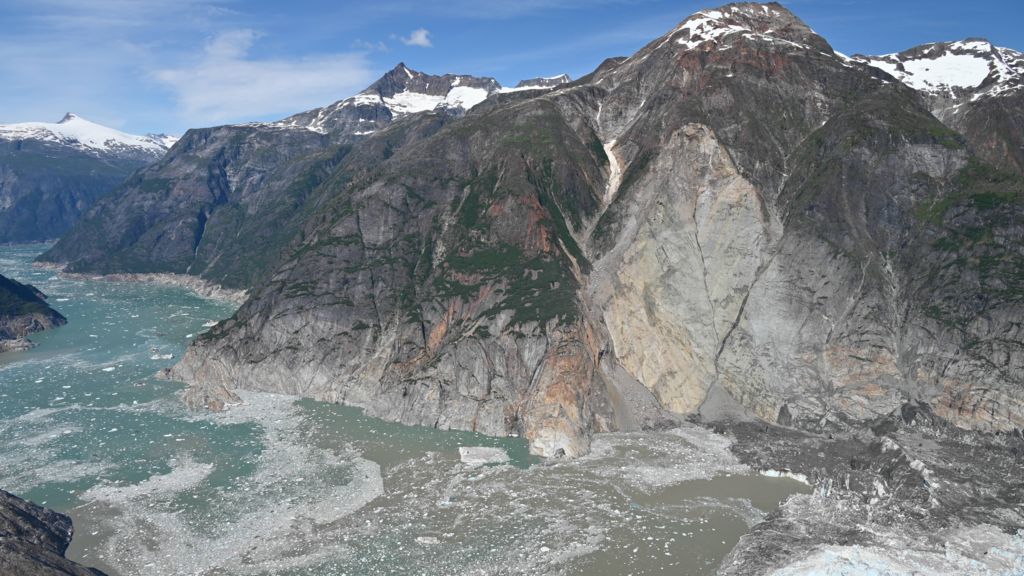
    In August 2025, a catastrophic natural event unfolded in a remote Alaskan fjord that has now emerged as a stark warning about the growing dangers of climate change in glacial regions. A massive section of a mountainside near South Sawyer Glacier in Tracy Arm Fjord, southeast Alaska, collapsed into the water following a series of minor seismic events, triggering a near-500-meter-tall megatsunami – the second such event ever recorded in human history, and the second massive megatsunami to strike Alaskan waters after the 1958 Lituya Bay disaster that claimed the top spot.

    New analysis published in the peer-reviewed journal *Science* has laid bare the full scale of the collapse, which saw an estimated 64 million cubic meters of rock plunge into the fjord in less than 60 seconds. To put that volume in perspective, the mass of rock that fell is equal to 24 of Egypt’s iconic Great Pyramids of Giza. The sheer force of the impact sent the enormous wave surging through the narrow, cliff-lined fjord, leaving a trail of widespread destruction in its path. Uprooted trees were scattered across mountainsides and hurled into the ocean, while large swathes of the shoreline were stripped bare of all soil and vegetation, leaving exposed, scarred rock in their wake.

    Remarkably, what made this event even more extraordinary was how close it came to causing mass casualties among tourists. Tracy Arm Fjord is one of Alaska’s most popular cruise ship destinations, drawing thousands of visitors every summer who come to witness the region’s dramatic glacial landscapes and icy scenery. Crucially, the landslide and subsequent megatsunami struck in the early hours of the morning, when no cruise ships were transiting the fjord. Researchers describe the outcome as a catastrophic close call that could have ended very differently.

    “We know that there were people that were very nearly in the wrong place,” said Dr. Bretwood Higman, an Alaskan geologist who led on-site fieldwork after the event. “I’m quite terrified that we’re not going to be so lucky in the future.”

    Unlike the more widely known open-ocean tsunamis triggered by large underwater earthquakes – such as the 2011 Japan tsunami that traveled thousands of miles and devastated coastal communities – megatsunamis are triggered when large volumes of rock or debris slide into enclosed bodies of water like fjords. These events are typically localized and dissipate much more quickly than open-ocean tsunamis, but they can produce waves hundreds of meters high that cause immediate, devastating destruction in the affected area.

    Alaska is already uniquely vulnerable to these events thanks to its combination of steep mountain slopes, narrow glacial fjords, and frequent seismic activity. But the new research confirms what many earth scientists have long suspected: climate change-driven glacier melt is drastically increasing the risk of these catastrophic rock collapses and subsequent megatsunamis.

    By combining on-site field surveys, seismic monitoring data, and high-resolution satellite imagery, the research team was able to reconstruct the full chain of events that led to the 2025 disaster. Dr. Stephen Hicks, a researcher at University College London and co-author of the study, explained that retreating glaciers had long acted as a natural support structure for unstable cliff faces. “The glacier was previously helping to hold up this piece of rock, and so when the ice retreated, it exposed the bottom of the cliff face, allowing that rock material to suddenly collapse into the fjord,” he said.

    Hicks and his colleagues, who have studied Alaskan tsunami hazards for decades, warn that the risk of future events is growing alongside increasing human activity in these remote, dangerous landscapes. “More people are now going to remote areas – often these tourist cruises are going to see the natural beauty of the area to actually learn more about climate change – but they are also dangerous places to be,” he noted.

    Dr. Higman’s research confirms that the frequency of these events is rising far faster than many expected. “At this point, I’m pretty confident that these are increasing not just a little bit, but increasing a lot,” he said. “Maybe in the order of 10 times as frequent as they were just a few decades ago.”

    In response to the new findings and growing safety concerns, the scientific community is calling for expanded hazard monitoring systems across all high-risk regions of Alaska. Already, some major cruise companies have announced they will reroute ships away from Tracy Arm Fjord indefinitely, amid ongoing fears of another catastrophic event.