WASHINGTON — A new annual audit released Wednesday by the Anti-Defamation League (ADL) has found that the total number of antisemitic incidents across the United States fell sharply in 2025, marking the first decline in five years. The decrease was led by a dramatic 66% drop in incidents on U.S. college campuses, a shift that came after widespread pro-Palestinian protests in 2024 and subsequent administrative pressure from the White House under the Donald Trump administration.
The organization’s 2025 audit counted 6,274 total incidents of antisemitic assault, harassment, and vandalism nationwide, a 33% pullback from 2024’s all-time record of 9,354 incidents. On college campuses alone, the numbers dropped even more steeply: after recording 1,694 antisemitic incidents in 2024, when pro-Palestinian and anti-Zionist protests spread across campuses amid the ongoing Israel-Hamas war in Gaza, that figure fell to just 583 in 2025. The decline followed coordinated action from hundreds of colleges and universities, which implemented new protest restrictions and policy changes under pressure from the Trump administration and advocacy from the ADL.
When broken down by state, New York recorded the highest number of total antisemitic incidents in 2025 at 1,160, followed by California with 817 and New Jersey with 687.
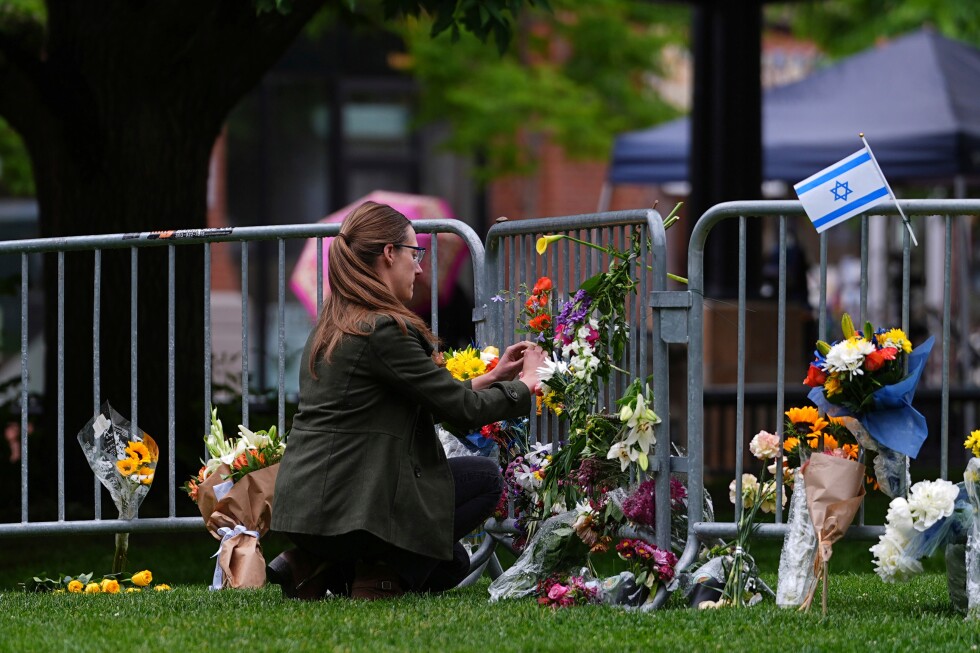
Even with the overall drop in incidents, the report confirms that 2025 was one of the most violent years on record for Jewish communities in the U.S. The audit counted 203 physical assaults, a new annual high, and three separate fatal attacks targeting Jewish people. These included a May shooting outside Washington D.C.’s Capital Jewish Museum that killed two people, and a June firebombing attack at a hostage awareness event in Boulder, Colorado that left an 82-year-old Jewish woman dead from her injuries.
Speaking to the Associated Press, ADL CEO and National Director Jonathan Greenblatt emphasized that even the reduced 2025 numbers remain far above pre-war baseline levels. “Numbers that would have shocked us five years ago are now our floor,” Greenblatt said. “People are being murdered because of antisemitism on American soil, and thousands more are threatened.” He added that while any reduction in antisemitic harm is a welcome development, the current moment does not allow for complacency: even with the 66% drop, campus antisemitic incidents remain nearly four times higher than they were in 2021, before the outbreak of the Israel-Hamas war.
The shifting share of Israel-linked antisemitic incidents reflects the changing landscape of hate speech and bias over the past two years. In 2024, 58% of all recorded antisemitic incidents were tied to criticism of Israel or Zionism, marking the first time since the annual audit launched in 1979 that Israel-related incidents made up a majority of total cases. That share fell to 45% in 2025, with the ADL recording an overall 67% drop in anti-Israel rallies that crossed into antisemitic rhetoric, and an 83% drop on campuses specifically.
The ADL’s counting methodology has long remained at the center of a fierce, ongoing debate about where to draw the line between legitimate criticism of Israeli policy and antisemitic hate speech. The organization says it explicitly distinguishes between general criticism of Israeli government policy and antisemitic speech, but classifies vilification of Zionism — the ideological movement supporting a Jewish state in Israel — as a form of antisemitism. This framing has drawn criticism from a range of groups, including some Jewish and anti-Zionist activists, who argue the ADL’s criteria are overly broad and penalize protected political speech.
Aryeh Tuchman, a former head of the ADL’s Center on Extremism who now directs the Nexus Center for Antisemitism, which promotes a more nuanced definition of antisemitism, noted that the ADL’s approach grows from legitimate concern for the safety of American Jewish communities, but that disagreement over the framework is valid. “There are a lot of people who would disagree with that. … It’s important that there be room for multiple approaches,” Tuchman said.
In response to pressure from the ADL and the Trump administration on college campuses, the Council on American-Islamic Relations (CAIR) launched its Unhostile Campus Campaign, which advocates for protecting free speech and academic freedom for pro-Palestinian students, faculty, and staff. In CAIR’s recent reporting, the group named Columbia University, the City University of New York, and the University of Michigan as the schools it considers most hostile to pro-Palestinian viewpoints.
The ADL’s new report comes amid a global surge in concern over rising antisemitism tied to the Israel-Hamas war. In the United Kingdom, Prime Minister Keir Starmer has called for stricter action against antisemitic chants at pro-Palestinian protests, after two Jewish men were stabbed in London in a recent attack. Senior British law enforcement officials have called the current moment the greatest ongoing threat to British Jewish communities in modern history, blaming social media platforms for normalizing antisemitic rhetoric. The UK has also seen a string of recent attacks targeting Jewish sites, including multiple arson attempts at London synagogues, and has raised its national terror threat level in response.
In Australia, a national public inquiry into antisemitism is currently hearing testimony from Jewish communities after a December 2024 mass shooting at a Hanukkah celebration on Bondi Beach that killed 15 people. Witnesses have described growing fear and vulnerability amid a sharp nationwide rise in antisemitic incidents that dates back to the outbreak of the Israel-Hamas war in October 2023.
A recent analysis from Tel Aviv University confirms that 2025 was the deadliest year for antisemitic attacks globally since 1994, when a bombing at a Jewish community center in Buenos Aires, Argentina killed 85 people. Combined, fatal attacks in the U.S., UK, and Australia claimed 20 lives in 2025, the highest annual death toll from antisemitic violence in more than three decades.