作者: admin

  • Russian man sentenced to 4 years in UK prison for assault witnessed on video by Barron Trump

    Russian man sentenced to 4 years in UK prison for assault witnessed on video by Barron Trump

    A Russian national has been sentenced to four years imprisonment at Snaresbrook Crown Court in London for a violent assault that was partially witnessed via video call by Barron Trump, the youngest son of former U.S. President Donald Trump.

    Matvei Rumiantsev, 23, received his sentence from Justice Joel Bennathan on Friday following his January 28 conviction for assault causing actual bodily harm. The court acquitted Rumiantsev of more serious rape and strangulation charges. Additionally, he was found guilty of perverting the course of justice after attempting to persuade his victim to withdraw her allegations through a letter sent from custody.

    The incident occurred on January 18, 2025, when Rumiantsev, employed as a receptionist in London, launched a drunken attack on his girlfriend after becoming envious of her social media friendship with Barron Trump. During the assault, Rumiantsev answered a FaceTime call from Trump on the victim’s phone, deliberately turning the camera to show the young woman in distress on the floor.

    Justice Bennathan characterized Rumiantsev as “totally unrepentant” and “a man given to jealousy,” noting his complete lack of insight and empathy throughout the judicial process. The judge emphasized that the defendant continued to blame the complainant for the entire situation.

    Barron Trump, who was 19 at the time of the incident and residing in the United States, immediately contacted London’s Metropolitan Police after witnessing the attack. In a recorded emergency call, Trump urgently pleaded with operators: “It’s really an emergency… I’m calling from the U.S., uh, I just got a call from a girl, you know, she’s getting beat up.”

    The court heard that police responded promptly to the address provided, where they arrested Rumiantsev. Justice Bennathan commended Trump’s swift action, stating that his responsible intervention potentially prevented a more tragic outcome. The victim reportedly feared for her life during the assault.

    Defense attorney Sasha Wass had argued during trial that the relationship was “full of dramas” and suggested the victim had exploited her connection to Trump to provoke jealousy. Rumiantsev testified that he felt both envious of and sympathetic toward Trump, believing his girlfriend was misleading the president’s son. Barron Trump did not testify in the case.

  • BBC journalist caught in travel chaos at Houston Airport

    BBC journalist caught in travel chaos at Houston Airport

    A BBC correspondent found herself at the epicenter of mounting travel disruption at Houston Airport, providing a firsthand account of the escalating crisis stemming from the ongoing partial government shutdown. The transportation hub is currently grappling with some of the most severe delays witnessed across the United States, as Transportation Security Administration (TSA) agents continue to work without receiving their regular paychecks.

    The situation at Houston’s airports reflects a broader national pattern of aviation security workforce challenges during the budget impasse. Security screeners, who are classified as essential federal employees, remain obligated to report for duty despite the lapse in funding that has suspended their compensation. This financial pressure has reportedly led to increased absenteeism among TSA staff, creating staffing shortages that directly impact security screening efficiency and passenger processing times.

    Aviation experts note that the disruption at Houston Intercontinental Airport, a major international gateway, demonstrates how the political stalemate in Washington creates tangible consequences for critical infrastructure and everyday travelers. The airport’s management has implemented contingency plans to address the growing queues and processing delays, but the fundamental solution remains tied to the resolution of the federal budget standoff.

    Travel industry analysts warn that continued deterioration of airport operations could potentially affect broader economic activity, as business travel and logistics networks face increasing uncertainty. The situation highlights the interconnected nature of government functions and civilian infrastructure, with the aviation security system serving as a visible indicator of the shutdown’s practical implications beyond the political sphere.

  • Man jailed for four years after Barron Trump reported attack to UK police

    Man jailed for four years after Barron Trump reported attack to UK police

    In a landmark legal proceeding at Snaresbrook Crown Court, 23-year-old Russian national Matvei Rumiantsev has been sentenced to four years imprisonment for assault and perverting the course of justice. The case gained international attention due to the involvement of Barron Trump, the youngest son of the former U.S. president, who initially reported the crime while residing in the United States.

    The judicial process revealed that in January 2025, Trump witnessed a violent assault during a brief video call with a London-based woman he had met through social media. According to court transcripts released by the Crown Prosecution Service, Trump immediately contacted UK authorities, stating: ‘I just got a call from a girl, you know, she’s getting beat up.’

    Evidence presented during the trial indicated that Rumiantsev and the victim had been drinking together on the evening of January 17th, 2025, continuing into the early hours. The prosecution demonstrated that Rumiantsev subsequently assaulted the woman, striking her in the face. Following his arrest, Rumiantsev further compounded his legal troubles by attempting to persuade the victim to retract her allegations through correspondence from prison.

    Presiding Judge Mr Justice Bennathan KC provided careful guidance to jurors, emphasizing that Trump’s account—while credible—should not serve as the primary basis for conviction since the witness had not provided sworn testimony or undergone cross-examination. Notably, Rumiantsev was acquitted of more severe charges including rape and intentional strangulation related to separate incidents alleged to have occurred in November 2024.

    During cross-examination, Rumiantsev acknowledged experiencing jealousy regarding the victim’s relationship with Trump, though he maintained that his primary concern was what he perceived as inappropriate behavior toward the presidential son. The defendant has already served two years in pre-trial custody, which will count toward his sentence.

  • Thirteen arrested in joint Scotland and Spain gangland raids

    Thirteen arrested in joint Scotland and Spain gangland raids

    In a meticulously coordinated international crackdown, law enforcement agencies from Scotland and Spain executed simultaneous pre-dawn raids targeting one of Scotland’s most powerful criminal organizations. The operation, culminating a two-year investigation into serious organized crime, resulted in thirteen arrests across both countries.

    At precisely 03:00 GMT, officers at Motherwell police station commenced final briefings under strict media embargo, prohibiting facial identification of personnel. The operation targeted high-ranking members of the Lyons crime syndicate, allegedly involved in sophisticated drug trafficking operations and large-scale money laundering schemes.

    Armed with specialized entry equipment rather than battering rams, tactical units approached targeted residences in Lanarkshire’s suburban neighborhoods under wintry rainfall. Spanish Guardia Civil observers monitored Scottish procedures while their counterparts simultaneously executed warrants in the Malaga region and Barcelona under considerably warmer conditions.

    Police Scotland’s Detective Chief Inspector George Calder emphasized the investigation’s independence from last year’s gangland violence that claimed two Lyons members on Spain’s Costa del Sol. ‘This represents over two years of diligent investigative work with our partners at the National Crime Agency and Spanish authorities,’ Calder stated. ‘We’re sharing intelligence, information and resources across international borders.’

    The arrests spanned eight Scottish locations including Bellshill, Glasgow, Gartcosh, Whitburn, Caldercruix, Cumbernauld and Coatbridge, with five additional apprehensions in Spain. Despite the dramatic nature of the early morning operations, most residents remained behind darkened windows, though one teenage bystander questioned media presence with the principle of ‘innocent until proven guilty.’

    This multinational operation signals a new era of cross-border law enforcement cooperation, with Calder issuing a stark warning to fugitives: ‘Our reach is far and wide. If you depart Scotland believing yourself safe, we will work with international partners to ensure you face justice.’ Initial court appearances for those detained are anticipated within the coming week.

  • Tonali’s breakfast-table dream pays off for childhood idol Gattuso in Italy’s World Cup playoff win

    Tonali’s breakfast-table dream pays off for childhood idol Gattuso in Italy’s World Cup playoff win

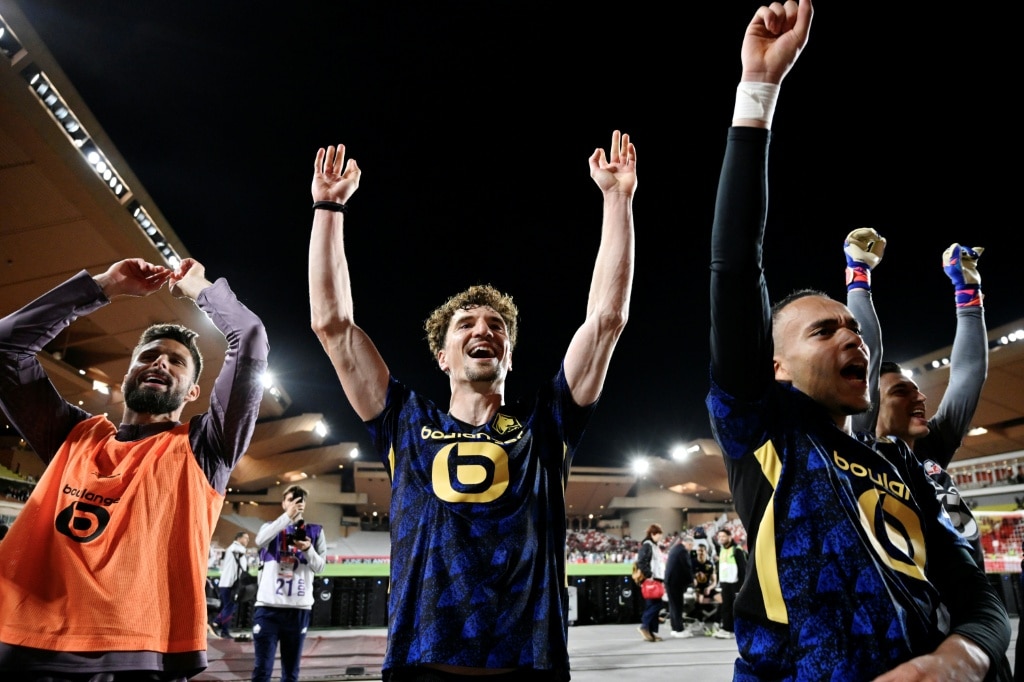
    In a story that transcends typical sports narratives, Italian midfielder Sandro Tonali transformed childhood devotion into national salvation during Thursday’s critical World Cup playoff semifinal. The Newcastle United player, whose childhood breakfast ritual involved drinking from a teacup adorned with images of Italian legend Gennaro Gattuso, delivered a performance worthy of his idol by scoring the opening goal and providing an assist in Italy’s 2-0 victory over Northern Ireland.

    Tonali broke the deadlock with a precise half-volley early in the second half before setting up Moise Kean for the insurance goal. The significance wasn’t lost on the emotional midfielder, who described it as “the most important goal of my career” while recalling his broken childhood teacup that featured Gattuso’s image—a cherished item he once begged his mother to repair and now hopes to have signed by his current coach.

    The victory represents a crucial step toward redemption for the four-time world champions, who have endured unprecedented World Cup disappointment since their 2006 triumph. Italy failed to qualify for the past two tournaments after shocking playoff defeats to Sweden and North Macedonia, and previously underwhelmed with group stage exits in 2010 and 2014.

    Tonali’s journey adds deeper resonance to Italy’s quest. The midfielder became an AC Milan fan specifically to support Gattuso, eventually playing for the club shortly after his idol’s coaching tenure ended. His career recently faced disruption through a 10-month betting ban that caused him to miss Euro 2024, but personal happiness arrived through marriage and the birth of his son Leonardo in January.

    Attention now turns to Tuesday’s playoff final against Bosnia and Herzegovina, who advanced through dramatic penalty shootout victory against Wales featuring goals from 40-year-old Edin Džeko and 18-year-old Kerim Alajbegović. Manager Gattuso anticipates “a tough atmosphere against experienced players” in what he characterizes as “another very tough match.”

    Should Italy overcome this final hurdle, they would join Group B alongside Canada, Qatar, and Switzerland in North America, potentially marking their return to soccer’s grandest stage after years of absence.

  • War in the Middle East: latest developments

    War in the Middle East: latest developments

    The Middle East conflict has entered a perilous new phase with Iran issuing explicit warnings targeting US military personnel and regional shipping, while diplomatic channels show signs of activation. The Iranian Revolutionary Guards declared that hotels housing American soldiers throughout the region are now considered legitimate military targets, with armed forces spokesman Abolfazl Shekarchi stating on state television that ‘when all American forces go into a hotel, from our perspective that hotel becomes American.’

    Simultaneously, Iran has enforced a naval blockade in the strategic Strait of Hormuz, with Revolutionary Guards turning back three vessels attempting transit and declaring the waterway closed to ships traveling to or from ports linked to ‘Zionist-American enemies.’ This maritime escalation coincides with reports of direct US-Iran negotiations being prepared, with German Foreign Minister Johann Wadephul revealing that talks are ‘expected to take place in Pakistan very soon.’

    The conflict’s regional impact continues to expand with Kuwait’s main commercial port at Shuwaikh sustaining damage from a dawn drone attack, though authorities reported no casualties. Saudi Arabia’s defense ministry confirmed intercepting and destroying four drones over the kingdom’s eastern region, while Ukraine and Saudi Arabia signed a significant air defense agreement during President Zelensky’s visit, aimed at countering Iranian drone capabilities.

    Cultural casualties mount as well, with Tehran city council’s cultural heritage committee head Ahmad Alavi reporting that US and Israeli strikes have damaged at least 120 museums and historical sites across Iran since the conflict began. The UN Security Council prepared for closed-door consultations requested by Russia to discuss attacks on Iranian civilian infrastructure, including educational and healthcare facilities.

    Meanwhile, G7 allies pressed US Secretary of State Marco Rubio for clarity on American strategy toward Iran during talks outside Paris, with UK Foreign Minister Yvette Cooper urging a ‘swift resolution to this conflict that restores regional stability.’ The conflict’s expansion continued as Lebanese media reported Israeli strikes hitting Beirut’s southern suburbs early Friday, with AFP correspondents documenting multiple explosions in the Hezbollah stronghold.

  • ‘I’ll never be the same’: Iranians recount one month of war

    ‘I’ll never be the same’: Iranians recount one month of war

    Iranian citizens are revealing the profound transformations in their daily lives following one month of sustained military engagement with Israel and the United States. Despite government restrictions on communication and extensive internet blackouts, numerous Iranians have managed to share their experiences with international media through covert channels.

    The economic landscape has deteriorated dramatically since hostilities began. Previously struggling under international sanctions, Iran now faces hyperinflation and widespread industrial paralysis. Golnar, a 29-year-old Tehran resident, reported complete loss of income from her online business. “Even with multiple family members working and no rent expenses, we cannot consider dining out or leisure activities,” she explained. “We’re barely covering essential living costs.”

    Tourism-dependent regions have suffered particularly severe impacts. Sadeq, a 42-year-old from Qeshm island, described how normally bustling Nowruz holiday celebrations yielded few visitors. “Our hotels and cafes operate at half-capacity,” he noted. “Many residents extend stays indefinitely awaiting conflict resolution, while fuel shortages create hours-long queues.”

    Beyond economic hardship, Iranians describe adapting to extraordinary circumstances. Shayan, a 40-year-old Tehrani, acknowledged maintained infrastructure: “Basic amenities remain available—gasoline, water, electricity. Cafes operate and social gatherings continue, but pervasive helplessness dominates our psyche.” Another resident from Iran’s Kurdish region reported normalization of violence: “Explosions and missiles become routine aspects of daily life. Our primary concern now targets potential attacks on oil infrastructure.”

    The conflict has accelerated existing emigration trends. Katayoon, a yoga instructor who recently fled to Turkey, cited compounded reasons for departure: “While airstrike blast waves physically threw me from bed, my decision stemmed from decade-long fears—from mandatory hijab enforcement to prohibited cross-gender teaching.” She emphasized economic desperation: “People lack food money. Life becomes impossible.”

    Psychological impacts appear profound and permanent. Ensieh, a 46-year-old Tehran dentist, confessed: “I lose more hope daily. Caught between three mad powers, war terrifies. I’ll never regain my former self—conflict has torn away irreplaceable parts of me.”

    Concurrently, Iranian authorities have intensified domestic surveillance and suppression. Citizens report heightened street security with frequent checkpoints involving vehicle searches and electronic device inspections. Kaveh, a 38-year-old artist, described armed forces patrolling nightly while “honking and carrying flags.” Opposition gatherings express concern about potential US-clerical regime agreements, fearing intensified persecution should diplomatic resolutions emerge.

  • Education ministry issues 20 prohibitions to regulate schools

    Education ministry issues 20 prohibitions to regulate schools

    In a landmark move to reform basic education, China’s Ministry of Education has introduced a comprehensive regulatory framework comprising twenty explicit prohibitions targeting long-standing malpractices in kindergartens, primary, and secondary schools. The sweeping guidelines, released Friday, establish clear boundaries across academic, ethical, and operational dimensions of school management.

    The regulations specifically ban educators from exploiting digital platforms—including livestream tipping services and knowledge-payment applications—to covertly solicit funds from parents through anxiety-driven marketing tactics. This addresses growing concerns about informal monetization practices within educational settings.

    Politically, the directives prohibit any form of speech or materials that oppose the Party or socialism, distort historical narratives, advocate secessionism, or defame national leaders and heroes. Such content is barred across all mediums including textbooks, examinations, digital devices, and public lectures.

    Academically, the ministry has outlawed several practices contributing to excessive student workloads. Schools are now forbidden from advancing beyond the national curriculum, reducing hours for moral education, physical education, or arts classes, and assigning homework that exceeds prescribed duration or contains punitive repetitions. The guidelines also protect student well-being by mandating respect for sleep schedules and recess periods, prohibiting the confinement of students during breaks.

    Additionally, the regulations ban weekend or holiday organized instruction outside the unified academic calendar, discriminatory treatment of students, and all forms of corporal punishment or verbal abuse. Enrollment practices are also reformed, prohibiting entrance examinations and the use of competition certificates as admission criteria.

    The ministry advocates leveraging technological solutions—including big data and artificial intelligence—to enhance oversight while reducing administrative burdens. Local education authorities are instructed to ensure nationwide dissemination and implementation of these standards across all institutions.

  • China opens investigations into US trade practices in response to Trump tariff moves

    China opens investigations into US trade practices in response to Trump tariff moves

    In a significant escalation of trade tensions, China has initiated two separate investigations into United States trade policies, marking a strategic countermove to recent actions taken by the Trump administration. The Chinese Commerce Ministry announced these probes on Friday, framing them as necessary measures to protect domestic industries and expressing strong opposition to what it characterizes as protectionist U.S. tactics.

    The first investigation will scrutinize American policies that allegedly restrict Chinese merchandise from entering U.S. markets while simultaneously limiting exports of advanced technology products to China. The second probe focuses specifically on barriers affecting China’s green energy exports, examining potential violations of international trade norms.

    These investigations, expected to span approximately six months with possible three-month extensions, represent the latest development in ongoing trade friction between the world’s two largest economies. The timing appears strategically significant, coming ahead of a postponed visit by President Donald Trump that was originally scheduled for May but delayed due to escalating tensions in Iran.

    The Chinese move responds directly to two Section 301 investigations announced by the U.S. earlier this month targeting multiple trading partners. One U.S. probe examines alleged excess industrial capacity and government subsidies in 16 economies including China and the European Union, while another investigates forced labor practices in dozens of countries.

    Chinese trade representatives previously warned during recent Paris talks that these U.S. investigations could destabilize the carefully maintained equilibrium in Sino-American economic relations. The discussions were intended to prepare for Trump’s now-delayed Beijing visit, highlighting how global geopolitical events increasingly influence bilateral trade dynamics.

  • Trump delays Iran power plant strike threat until April 6

    Trump delays Iran power plant strike threat until April 6

    Former President Donald Trump has postponed potential U.S. military strikes against Iranian energy infrastructure until April 6, 2026, marking the second extension of his initial 48-hour ultimatum. The decision comes amid mounting international criticism and concerns about market instability following Trump’s threats to target civilian power plants.

    Through his Truth Social platform, Trump announced the 10-day extension, asserting that negotiations with Iran were progressing favorably despite contradictory reports from media outlets. This development follows his original Saturday night declaration that the U.S. would “hit and obliterate” Iranian power facilities if Tehran failed to reopen the Strait of Hormuz without conditions within 48 hours.

    The threat prompted significant market reactions, with S&P experiencing its largest decline since the onset of the Iran conflict. Financial markets showed volatility as Trump’s announcements coincided with trading closures.

    International organizations and human rights advocates have condemned the proposed strikes as potential war crimes. Jan Vande Putte, a nuclear and radiation protection expert with Greenpeace International, warned that attacking civilian electricity infrastructure violates international law and could trigger a Fukushima-scale nuclear disaster at the Bushehr facility by forcing reliance on backup diesel generators.

    Amnesty International’s Erika Guevara-Rosas characterized Trump’s threats as “dangerous and deeply irresponsible,” emphasizing that intentionally targeting essential civilian infrastructure would constitute a violation of international humanitarian law. Such actions could deprive millions of civilians of basic human rights to water, healthcare, and adequate living standards.

    Diplomatic channels remain active despite contradictory statements from both sides. Pakistani and Egyptian mediators have reportedly facilitated communication, though Iranian Foreign Minister Abbas Araghchi denied direct negotiations. Iran has presented five conditions for conflict resolution, including cessation of assassinations, war reparations, and recognition of Iranian sovereignty over the Strait of Hormuz.

    Domestically, pressure mounts on Congressional Democrats to force a war powers resolution vote before a scheduled two-week recess, with concerns that Trump might pursue a ground invasion of Iran without legislative intervention.