作者: admin

  • G7 allies press Rubio on US Iran plans

    G7 allies press Rubio on US Iran plans

    At the G7 foreign ministers’ gathering outside Paris, allied nations intensified their pressure on U.S. Secretary of State Marco Rubio for detailed explanations regarding American strategy toward Iran, nearly one month into the escalating Middle Eastern conflict. The meeting, held at the historic Vaux-de-Cernay Abbey, convened top diplomats from the world’s leading industrialized democracies amid growing international anxiety over economic repercussions from Iran’s blockade of the Strait of Hormuz.

    German Foreign Minister Johann Wadephul emphasized the necessity for allied coordination, stating ahead of discussions that partners required clear understanding of “how the U.S. will proceed” in the ongoing confrontation that commenced with February airstrikes resulting in the death of Iranian Supreme Leader Ali Khamenei. Despite repeated assertions from President Donald Trump regarding ongoing negotiations with Tehran, specifics remain conspicuously absent from Washington’s communications.

    The economic implications of Iran’s strategic closure of the vital maritime passage have reverberated across global markets, with oil prices surging and commercial vessels accumulating at the energy transit chokepoint. U.K. Foreign Minister Yvette Cooper articulated collective concerns, emphasizing that “Iran cannot be able to just hold the global economy hostage” through control of international shipping routes.

    Secretary Rubio, undertaking his first international journey since hostilities began, maintained before departure that securing reopened access to the Strait represented a fundamental “interest” for all G7 members. Regarding diplomatic channels with Iran, he acknowledged progress through intermediary nations facilitating communication exchanges.

    In a notable departure from standard diplomatic protocol, the meeting concluded without issuing a joint communiqué—a telling indication of policy divergences between the United States and its traditional allies. Instead, the French presidency arranged for a singular statement reflecting discussions.

    The assembly additionally addressed continued support for Ukraine amid Russian aggression, with European ministers ensuring the conflict remained prioritized within multilateral agendas. France’s orchestration of the event included expanded participation from emerging economies, with invitations extended to diplomatic representatives from Brazil, India, Saudi Arabia, and South Korea.

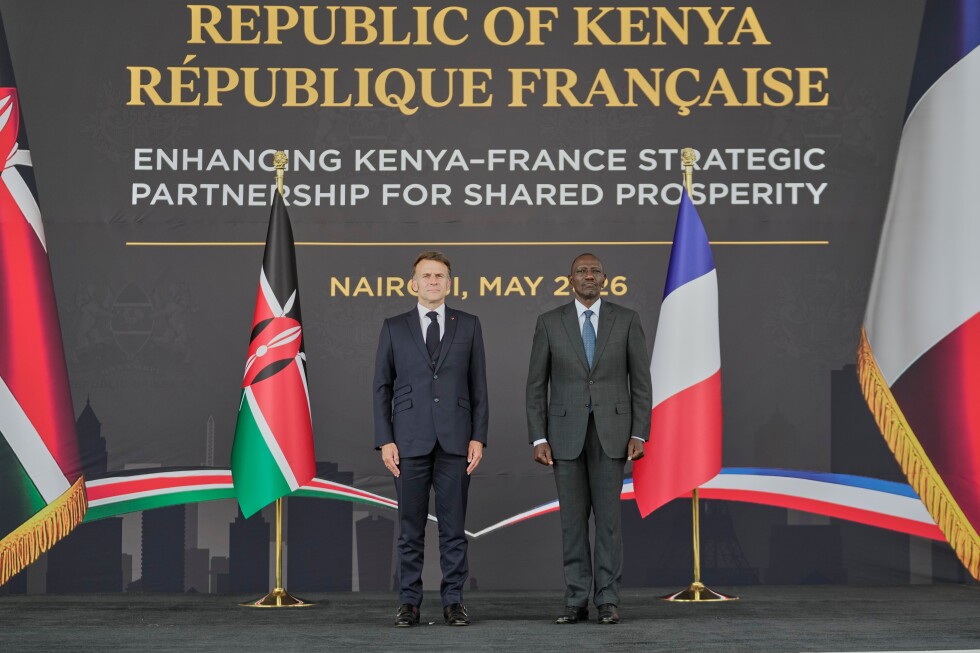
    Controversy emerged regarding summit invitations when South African leadership alleged American pressure to exclude President Cyril Ramaphosa from upcoming June meetings in Évian. French officials categorically denied yielding to external influence, clarifying that Kenya—not South Africa—had received invitation to the forthcoming gathering.

  • Landslides triggered by heavy rainfall kill at least 20 people in Tanzania

    Landslides triggered by heavy rainfall kill at least 20 people in Tanzania

    DAR ES SALAAM, Tanzania — Catastrophic landslides triggered by torrential rainfall have claimed at least 20 lives in southern Tanzania’s Mbeya region, authorities confirmed Wednesday. The tragedy adds to a growing humanitarian crisis across East Africa where seasonal flooding has already killed dozens more in neighboring countries.

    According to Rungwe district administrator Jaffar Haniu, the devastating landslides struck early Wednesday, destroying multiple homes and infrastructure. Among the confirmed fatalities was a toddler aged just one and a half years. Meteorological officials warn that additional rainfall is expected in coming days, prompting urgent evacuation orders for residents in high-risk zones.

    The Tanzanian disaster forms part of a broader regional emergency affecting multiple East African nations. In Kenya, seasonal flooding has resulted in at least 88 fatalities across 21 counties, with several rivers overflowing their banks since the onset of heavy rains earlier this month. The crisis has overwhelmed local emergency services, necessitating military deployment to assist rescue operations.

    Earlier in March, southern Ethiopia experienced similar devastation when landslides killed approximately 80 people. The Climate Prediction and Applications Centre of the Intergovernmental Authority on Development (IGAD) had previously warned of elevated flood risks, predicting a 45% probability of above-average rainfall during the March-May season across the region from Uganda to Djibouti.

    The escalating death toll and widespread destruction have raised serious concerns about disaster preparedness and the vulnerability of communities residing in flood-prone areas throughout East Africa. Emergency response teams continue to work against time as meteorological conditions remain unstable.

  • Iran Guards warn civilians after Trump pushes Hormuz deadline

    Iran Guards warn civilians after Trump pushes Hormuz deadline

    The Iranian Revolutionary Guards issued a stark warning to civilians across the Middle East on Friday, urging them to avoid proximity to American military installations. This advisory emerged shortly after President Donald Trump extended the deadline for Iran to reopen the strategic Strait of Hormuz, moving it from Friday to April 6.

    Trump asserted the extension responded to Tehran’s request for additional negotiation time, stating that talks to conclude the month-long regional conflict were progressing positively. However, Iran’s military posture indicated no de-escalation, with continued reprisal operations against Israeli targets and Gulf assets.

    The Revolutionary Guards accused ‘cowardly American-Zionist forces’ of employing human shields and explicitly warned regional civilians: ‘We recommend that you urgently leave locations where American forces are stationed so that no harm comes to you.’ This statement followed Iran’s threat to target hotels accommodating U.S. military personnel throughout the region.

    Concurrently, Kuwait reported damage to its primary commercial port from a dawn drone attack. The Guards additionally declared the Strait of Hormuz ‘closed’ to vessels traveling to and from enemy ports, claiming to have turned back three container ships attempting passage.

    Global economic repercussions intensified as oil prices and stock markets showed mixed responses to Trump’s deadline extension. Japan announced temporary easing of restrictions on coal-fired power plants to address energy shortages, while Vietnam implemented temporary fuel tax waivers.

    Diplomatic efforts continued as U.S. Secretary of State Marco Rubio met with G7 counterparts in France. British Foreign Minister Yvette Cooper emphasized the necessity for swift conflict resolution, stating ‘Iran cannot be able to just hold the global economy hostage.’

    Negotiations center on a 15-point U.S. proposal delivered through Pakistani intermediaries, with Iran reportedly demanding war reparations, recognition of its sovereignty over the Strait of Hormuz, and cessation of attacks on Iranian territory and allied regional groups including Lebanon’s Hezbollah.

    UN Human Rights Chief Volker Turk urged Washington to complete its investigation into a deadly strike on an Iranian elementary school that occurred during the conflict’s initial days, calling for accountability for ‘the terrible harm done.’

    Meanwhile, Israeli forces conducted fresh strikes in Tehran, Qom, and Urmia, targeting infrastructure. The attacks occurred amid concerns voiced by Israeli opposition leader Yair Lapid regarding the military being ‘stretched to the limit and beyond’ after weeks of sustained operations.

  • Africa draws inspiration from China’s rural tourism

    Africa draws inspiration from China’s rural tourism

    African tourism experts are increasingly looking to China’s successful rural tourism development as a blueprint for economic transformation across the continent. Over the past two decades, China has systematically transformed remote villages into thriving cultural destinations through strategic heritage preservation, infrastructure investment, and community entrepreneurship programs.

    The Chinese approach, which has lifted millions out of poverty while revitalizing rural landscapes from Yunnan’s terraced rice fields to numerous other regions, presents a compelling case study for African nations. According to Emmanuel Matambo, Research Director at the Centre for Africa-China Studies at the University of Johannesburg, Africa should consider establishing direct partnerships between its rural communities and their Chinese counterparts, moving beyond the traditional urban-focused international collaborations.

    Across Africa, from Ethiopia’s highland farming communities to Kenya’s cultural villages, Ghana’s historic settlements, and South Africa’s scenic countryside retreats, vast tourism potential remains largely untapped. Experts emphasize that developing this sector could diversify African tourism beyond the established wildlife attractions, beaches, and urban conference centers.

    Critical success factors identified include investment in road infrastructure, security enhancement, and reliable power generation to make rural areas more accessible and secure for visitors. Technology integration emerges as another crucial element, with Matambo noting that if technologies penetrate Africa’s rural areas as they have in China, tourists would maintain connectivity to their daily routines.

    Itumeleng Dube, Lecturer in the Department of Public Administration and Management at the University of South Africa, advocates for more sophisticated cultural packaging that moves beyond traditional dancing and drumming displays. He suggests African countries should systematically categorize and document their cultures, heritage, and traditions, making this information accessible online before tourists arrive.

    Thato Mothopeng, National Coordinator of the South African Township and Village Tourism Association, identifies African culture as one of the continent’s most underutilized tourism assets, urging countries to strategically package cultural experiences alongside hospitality services to create compelling visitor offerings.

  • US Congress faces heat to end funding shutdown

    US Congress faces heat to end funding shutdown

    WASHINGTON — A critical funding impasse over immigration enforcement policies has plunged the United States Congress into a severe crisis, with the 41-day government shutdown now threatening to paralyze the nation’s aviation security apparatus. The stalemate, which has left Transportation Security Administration (TSA) employees working without pay since mid-February, is escalating toward potential airport closures as absentee rates among unpaid screeners reach critical levels.

    Legislative efforts to break the deadlock appeared destined for failure on Thursday. Senate Republicans proposed funding the TSA and most Department of Homeland Security operations while deliberately excluding resources for Immigration and Customs Enforcement (ICE) removal operations. Democrats immediately rejected the measure as insufficient, demanding additional constraints on immigration enforcement agencies.

    The human toll of the political standoff was starkly illustrated during Wednesday’s House hearing, where acting TSA administrator Ha Nguyen McNeill described federal employees facing eviction notices, mounting debt, and even resorting to plasma donation to cover basic expenses. ‘This is a dire situation,’ McNeill testified, revealing that nationwide callout rates had surged to 11% as financially strained employees skip work.

    The administrator issued an unprecedented warning that the agency may soon face ‘very difficult choices’ about which airports to keep operational if the situation deteriorates further. The funding expiration on February 13 has created the longest homeland security funding gap in modern history, coinciding with Congress’s planned spring recess that begins this weekend.

    Political recriminations have intensified as travel disruptions mount. Former President Donald Trump accused Democrats of wanting ‘our country to fail’ in a social media post, while Senate Minority Leader Chuck Schumer countered that Republicans had ‘blocked TSA funding nine times’ and were ‘solely responsible for the chaos.’

    The fundamental disagreement stems from Democratic demands for immigration enforcement reforms following the January fatal shootings of two citizens by federal agents in Minneapolis. Republicans have repeatedly rejected these demands, creating a policy chasm that shows no signs of narrowing despite the escalating consequences for national security and transportation infrastructure.

  • Macao environmental cooperation forum, exhibition eye global collaboration

    Macao environmental cooperation forum, exhibition eye global collaboration

    MACAU – The 2026 Macao International Environmental Cooperation Forum and Exhibition (MIECF) commenced its proceedings on Thursday at the Cotai Expo, marking a significant stride in global environmental collaboration. Under the theme “Low-Carbon, Zero Waste Cities: Embarking on a Global Collaboration,” the event is orchestrated by the Macao Special Administrative Region (SAR) government and will continue through Saturday.

    The forum serves as a multifaceted platform integrating professional conferences, technological exhibitions, thematic matching sessions, and green networking activities, culminating in a public engagement day. This initiative solidifies Macao’s strategic positioning as a regional nexus for environmental dialogue and sustainable partnership development.

    Representing the SAR’s Chief Executive, Secretary for Economy and Finance Tai Kin Ip emphasized the event’s dual purpose during the opening ceremony. “The 2026 MIECF transcends technological exhibition to create substantive opportunities for deepened cooperation and mutual achievement,” he stated. The Secretary further articulated the government’s commitment to economic diversification while collaborating with community stakeholders to transform Macao into an environmentally sustainable, livable destination for both residents and international visitors.

    This year’s exhibition spans an impressive 12,000 square meters, featuring over 350 exhibitors representing 12 countries and regions, with international participants constituting 20% of the total showcase.

    Among the innovative solutions presented, Shawn Cheng, principal strategist of the Endeavour Environmental Education Foundation Limited, demonstrated the groundbreaking “Artificial Smart Floating Wetlands” system. This technology, developed by research teams at the Chinese University of Hong Kong, utilizes hydroponic plants on floating platforms to simultaneously purify water ecosystems and enhance wildlife habitats.

    Cheng expressed ambitions to leverage the Macao platform for mainland market connections, noting: “Having successfully implemented this project in Hong Kong, we are seeking collaborative partnerships with environmental technology counterparts in Zhongshan and Zhuhai within Guangdong Province.”

  • UN humanitarians say civilian casualties mount in Iran, Lebanon

    UN humanitarians say civilian casualties mount in Iran, Lebanon

    United Nations humanitarian agencies have issued a grave assessment of escalating civilian suffering across multiple Middle Eastern conflict zones, with particularly severe conditions reported in Iran and Lebanon. According to the UN Office for the Coordination of Humanitarian Affairs (OCHA), civilian casualties continue to mount amid ongoing hostilities.

    In Iran, the humanitarian impact has spread across widespread regions, with casualties reported in at least 20 of the country’s 31 provinces. Tehran and Hormozgan provinces have experienced the most severe impact according to official data. The Iranian Ministry of Health has documented approximately 23,000 casualties resulting from recent conflicts, including particularly vulnerable groups with 1,801 children and 4,150 women among the victims. The healthcare system itself has suffered significant losses, reporting 23 fatalities and 112 injuries among medical personnel.

    Humanitarian workers face extreme danger in their response efforts. The Iranian Red Crescent Society confirmed one relief worker death and 14 injuries among their personnel. The conflict has triggered substantial population displacement as civilians seek safety, further exacerbating vulnerabilities and disrupting access to essential services, basic support systems, and livelihoods.

    The displacement crisis extends beyond national borders. UN Refugee Agency (UNHCR) data indicates more than 33,300 Iranians have returned from Türkiye since hostilities escalated on February 28, while approximately 36,000 people have returned to Afghanistan.

    Meanwhile, Lebanon faces its own devastating humanitarian emergency. The country’s Ministry of Public Health has recorded 1,094 fatalities and over 3,000 injuries. The conflict has displaced more than one million people, with displacement orders continuing to affect vulnerable populations. Healthcare infrastructure has been severely compromised, with the World Health Organization documenting 77 attacks on medical workers resulting in 53 deaths and 117 injuries. At least 50 primary healthcare centers and five hospitals have closed due to security concerns, while nine hospitals and four primary care facilities have sustained damage.

    In Gaza, already strained humanitarian conditions have deteriorated further due to heavy rainfall that has damaged shelters and belongings of displaced families. OCHA reports at least 120 families have experienced flooding, destruction, or damage to their temporary shelters since Wednesday. Relief operations face multiple obstructions including import restrictions on critical items and supply chain disruptions.

    The UN humanitarian office expressed particular concern about civilian protection, noting that a recent airstrike in Deir al Balah destroyed 15 shelters and damaged 30 others at a displacement site. OCHA emphasized that ‘residential areas should be protected; this includes avoiding placing military objects in or near them — and respecting the prohibition on indiscriminate attacks.’

  • Top Oscar films reflect a divided America

    Top Oscar films reflect a divided America

    The 2026 Academy Awards ceremony transcended its traditional role as a celebration of cinematic excellence, instead revealing itself as a cultural barometer for the profound social and ideological fractures within contemporary American society. This year’s most honored productions, particularly the Best Picture winner ‘One Battle After Another’ and its formidable competitor ‘Sinners,’ dominated both the awards landscape and the ensuing national discourse, despite their markedly different artistic approaches.

    Directed by Paul Thomas Anderson and drawing inspiration from Thomas Pynchon’s novel ‘Vineland,’ ‘One Battle After Another’ explores activism, generational conflict, and clashing worldviews through a lens of political satire. Rather than advocating for any specific ideological position, the film presents a critical examination of polarization itself, portraying both progressive activists and conservative figures with nuanced ambiguity. Its narrative resonates with current American debates while simultaneously satirizing the very nature of these divisions.

    In contrast, ‘Sinners’ employs Gothic horror elements and supernatural imagery to explore how historical memory continues to shape contemporary identity formation. Veteran producer Andre Morgan praised the film’s sophisticated storytelling, noting how it transforms from a surface narrative about Black entrepreneurship into a profound meditation on symbolism and collective memory.

    Academic perspectives suggest these thematic preoccupations represent continuity rather than departure in American cinema. Professor Stanley Rosen of the USC US-China Institute observes that concerns about ‘race, identity, social divisions, and institutional power’ have consistently appeared in American films across decades, citing earlier works like Ryan Coogler’s ‘Fruitvale Station’ (2013) and Anderson’s own filmography including ‘There Will Be Blood’ (2007) as evidence of this enduring tradition.

    Industry professionals note a significant shift in audience preferences, with veteran producer Andre Morgan observing a decline in dystopian narratives as fictional depictions increasingly converge with reality. ‘The closer those stories get to reality,’ Morgan noted, ‘the less people are interested in being entertained by them.’ This suggests contemporary audiences seek not escapism but reflection in their cinematic experiences.

    The two films ultimately offer complementary perspectives on American division: one presenting conflict as immediate and politically visible, the other framing it as historically embedded within identity formation. Their simultaneous recognition at the Oscars indicates that these cultural conversations remain not only relevant but urgent, reflecting a society where consensus becomes increasingly elusive and polarization emerges as a defining characteristic of national life.

  • Martina Sicuso: A Chinese connection rooted in characters

    Martina Sicuso: A Chinese connection rooted in characters

    At the prestigious 2026 China Internet Media Forum in Zhengzhou, Henan province, Italian content creator Martina Sicuso emerges as a compelling voice in cross-cultural storytelling. The thematic forum “Telling Story Well: From Empathetic Communication to Cultural Identity” on March 28th will feature Sicuso among distinguished global creators sharing transformative experiences with Chinese culture.

    Sicuso’s journey with China began unexpectedly during her final year of high school in Italy. At just 17, seeking academic improvement, she enrolled in an afternoon Chinese language course that would ultimately redirect her life’s path. The revelation came through Chinese characters—their pictographic nature captivated her imagination. “The character ‘山’ (mountain) visually resembles actual mountain peaks. I thought Chinese was amazing,” Sicuso recalls of her initial encounter.

    This linguistic fascination evolved into scholarly pursuit. Over the subsequent six years, Sicuso dedicated herself to mastering oriental languages, earning both bachelor’s and master’s degrees while developing her popular social media presence as “Yang Friend.” Her digital platform now serves as a cultural bridge, translating her academic insights into accessible content that demystifies Chinese language and culture for international audiences.

    The Zhengzhou forum represents a significant moment in China’s soft power diplomacy, highlighting how foreign voices can foster genuine cultural appreciation. Sicuso’s story exemplifies how empathetic communication—beginning with something as fundamental as character recognition—can grow into profound cultural identity and mutual understanding between civilizations.

  • Two infectious diseases added to Category B for close monitoring

    Two infectious diseases added to Category B for close monitoring

    China’s National Health Commission has announced the reclassification of two viral diseases—chikungunya fever and severe fever with thrombocytopenia syndrome (SFTS)—as Category B infectious diseases effective April 1. This strategic move enhances national monitoring protocols and mandates standardized reporting mechanisms across healthcare institutions.

    The designation places both diseases under China’s rigorous infectious disease management framework, which requires coordinated prevention measures and immediate case reporting to public health authorities. While not subject to the extreme containment protocols of Category A diseases like plague and cholera, Category B status places chikungunya and SFTS alongside COVID-19, AIDS, and viral hepatitis in surveillance priority.

    Chikungunya fever, transmitted primarily through Aedes mosquito bites, causes high fever, severe joint pain, and skin rashes. Since its initial importation to China in 2008, the country has experienced periodic outbreaks, with several provinces reporting localized transmission clusters in 2025 linked to international travel.

    SFTS presents different epidemiological challenges as a tick-borne illness prevalent in rural mountainous regions. Characterized by fever, thrombocytopenia, and leukopenia, the disease first emerged in China in 2009 and remains endemic in areas with established tick populations.

    Health authorities express particular concern about chikungunya’s transmission potential. Liu Qing, deputy director of infectious disease control at the National Disease Control and Prevention Administration, warned that 2026 brings elevated risks for local outbreaks of mosquito-borne diseases due to increased international travel and expanding mosquito habitats driven by climate change.

    The reclassification enables enhanced surveillance capabilities through China’s national infectious disease intelligent monitoring system, which employs advanced algorithms to detect potential outbreaks. Additional measures include public education campaigns, intensified environmental sanitation programs targeting mosquito breeding grounds, and improved diagnostic protocols.

    For SFTS prevention, health experts recommend protective clothing and insect repellent in endemic areas. Liu Qiyong, chief vector-borne disease expert at China CDC, emphasized proper tick removal techniques and urged immediate medical attention for any post-bite fever symptoms.