作者: admin

  • Gilgo Beach serial killings suspect to plead guilty, US media report

    Gilgo Beach serial killings suspect to plead guilty, US media report

    Rex Heuermann, the New York architect accused of perpetrating the notorious Gilgo Beach serial killings, is reportedly preparing to reverse his plea to guilty in a dramatic courtroom development. According to multiple U.S. media sources, the 62-year-old suspect is expected to formally change his plea during an upcoming hearing scheduled for April 8th, potentially averting a trial that was set to commence in September.

    The case, which has haunted Long Island for over a decade, involves the deaths of at least ten individuals discovered in the Gilgo Beach area since 2010. Prosecutors have linked Heuermann to seven of these fatalities—all women working as sex workers at the time of their disappearances between 1993 and 2011. The victims include Melissa Barthelemy (24), Megan Waterman (22), Amber Costello (27), Maureen Brainard-Barnes (25), Jessica Taylor (20), Valerie Mack (24), and Sandra Costilla (28).

    Forensic evidence played a pivotal role in the investigation, with DNA analysis reportedly connecting Heuermann to multiple crime scenes. Law enforcement officials described his alleged approach as methodically planned with ‘excruciating detail.’ Among the most chilling discoveries was a strategic document authorities believe Heuermann created for his operations, containing columns labeled ‘problems’ and ‘supplies.’ The ‘problems’ section notably included entries for ‘DNA,’ ‘tire marks,’ and ‘blood stains,’ indicating his awareness of forensic investigation techniques.

    The investigation yielded substantial physical evidence, including the seizure of 300 firearms and hundreds of electronic devices from Heuermann’s residence. Most victims’ remains were discovered in close proximity to his Long Island home, creating a geographical pattern that aided investigators.

    Heuermann’s initial not guilty plea followed his July 2023 arrest outside his Manhattan office, where he was initially charged with three murders before additional charges were filed over the subsequent eighteen months. The defendant’s legal representative has not responded to requests for commentary regarding the anticipated plea change.

  • Lebanon at risk of ‘humanitarian catastrophe’: UN

    Lebanon at risk of ‘humanitarian catastrophe’: UN

    The United Nations has issued a grave warning that Lebanon stands on the brink of a full-scale humanitarian catastrophe as the Middle East conflict enters its fourth week. UN agencies report that over one million residents—representing approximately 20% of the population—have been forcibly displaced from their homes since hostilities escalated on March 2.

    Karolina Lindholm Billing, UNHCR’s representative in Lebanon, described the situation as ‘extremely worrying’ during a virtual briefing from Beirut to journalists in Geneva. ‘We are witnessing a rapidly deepening humanitarian crisis on the ground,’ she stated, emphasizing that ‘the risk of a humanitarian catastrophe is real.’

    The displacement crisis has overwhelmed Lebanon’s infrastructure, with more than 136,000 displaced individuals crammed into 660 collective shelters, primarily school facilities operating far beyond their intended capacity. Conditions in these shelters remain dire, with limited access to sanitation facilities and elderly residents struggling to sleep on classroom floors.

    Complicating relief efforts, Israel’s destruction of critical bridges in southern Lebanon has isolated over 150,000 people and severely restricted humanitarian access to the most affected regions. UN Women reports that pregnant women are giving birth in temporary shelters with inadequate medical care, while women throughout the displacement camps describe constant fear, sleeplessness, and exhaustion as they comfort frightened children.

    The crisis has particularly affected children, with UNICEF reporting that more than 370,000 Lebanese children have been displaced with ‘no safe place’ to go. Marcoluigi Corsi, UNICEF’s Lebanon representative, characterized the situation as ‘a sudden, chaotic mass displacement tearing families apart and hollowing out entire communities,’ noting that the mental and emotional toll on children is ‘devastating.’

    UNHCR has appealed for over $60 million to scale up its response operations, warning that needs are escalating faster than available resources. The crisis compounds Lebanon’s existing multidimensional challenges, placing immense strain on families and already strained public services.

    Despite the organized relief efforts—including the World Health Organization’s first humanitarian convoy reaching Lebanon via Syria and the Lebanese Red Cross distributing essential supplies—humanitarian workers face extreme dangers. The International Federation of Red Cross and Red Crescent Societies reported that one Lebanese Red Cross volunteer has been killed and several others wounded during ambulance missions conducted between March 2-23.

    The overwhelming sentiment among the displaced population, according to UN officials, is a simple but powerful desire: ‘They simply want to go home.’

  • Tianjin job fair sees 200 employers target aviation talent

    Tianjin job fair sees 200 employers target aviation talent

    Tianjin’s Civil Aviation University of China hosted a major spring recruitment event on Thursday that attracted over 200 enterprises, signaling robust growth in aviation sector employment opportunities. The job fair demonstrated particularly strong demand in the emerging low-altitude economy sector, which has become the fastest-growing career pathway for the university’s graduates.

    The event marked a significant expansion from previous years, with employer participation increasing from approximately 140 companies to more than 200 this year. University officials reported that since 2023, over 100 graduates annually have entered the low-altitude sector, with annual growth rates hovering around 15 percent.

    In response to market developments, the university has identified five core employment categories within the low-altitude economy: flight operations, technology research and development, operational support, safety compliance, and operational services. This strategic framework aims to better align academic programs with industry requirements.

    The career trajectory of Zhou Jian, a 2014 graduate in aeronautical and astronautical science and technology, exemplifies the competitiveness of the university’s alumni. Zhou was recently appointed chief technology officer at Shenzhen Zero UAV Technology, a nationally recognized “little giant” enterprise specializing in drone systems.

    As one of China’s pioneering institutions in offering unmanned aircraft systems engineering, the university provides comprehensive training that emphasizes civil aviation standards, safety protocols, and specialized low-altitude expertise, preparing graduates for successful careers in this rapidly expanding field.

  • Will the energy crisis hit global economy harder than Covid?

    Will the energy crisis hit global economy harder than Covid?

    The strategic Strait of Hormuz remains effectively shut to oil tankers despite ongoing negotiations between the US and Iran, creating a massive supply disruption that has removed approximately 11 million barrels per day from global markets. This represents over 10% of worldwide oil supply, triggering economic repercussions that analysts compare to the unprecedented demand collapse experienced during COVID-19 lockdowns.

    While a 10% supply reduction might appear manageable theoretically, oil markets operate with such precision that even minor imbalances create substantial economic turbulence. The current supply shock mirrors the pandemic’s 8 million barrel per day demand drop in severity, though originating from the opposite side of the equation. The outcome manifests similarly: constrained travel, elevated transportation costs, diminished economic activity, and intensified pressure on household finances.

    The inherent inflexibility of both oil supply and demand exacerbates the situation. Essential transportation needs persist regardless of price fluctuations, requiring significant price increases to forcibly reduce consumption. Emergency petroleum reserves maintained by IEA members—mandated to hold 90 days of consumption—currently cushion the initial impact in developed economies. However, these stockpiles offer merely temporary relief rather than lasting solutions.

    Developing nations face particularly severe vulnerability due to limited commercial reserves. Countries across Asia, Africa, and South America experience immediate consequences through surging food prices, inflation spikes, and economic instability. The shortage hierarchy begins with middle distillates—diesel and jet fuel—which power critical infrastructure including trucks, ships, and agricultural machinery. Gulf producers typically export substantial volumes of these refined products.

    The crisis extends beyond transportation fuels into broader economic dimensions. Petroleum serves as fundamental feedstock for plastics, fertilizers, chemicals, and synthetic materials, meaning supply disruptions reverberate through food production, packaging, electronics, and clothing manufacturing.

    A dangerous protectionist trend emerges as some nations implement export restrictions on petroleum products, ironically intensifying global shortages. Historical precedent exists for such measures, including the US crude export ban from 1975-2015. Should Washington reinstate export controls, European markets would experience particularly severe supply constraints.

    If the Strait remains closed long-term, export losses could approach 20 million barrels daily, potentially creating economic disruption rivaling or exceeding pandemic-era conditions. While markets currently rely on strategic reserves and diplomatic hopes, the global economy faces potentially unprecedented energy shock consequences without swift resolution.

  • Whale filmed giving birth, with a little help from her friends

    Whale filmed giving birth, with a little help from her friends

    In a groundbreaking scientific observation, researchers have documented the first known instance of non-primate birth assistance among marine mammals. The extraordinary event occurred on July 8, 2023, when an international team from Project CETI witnessed a 19-year-old sperm whale named Rounder giving birth off the coast of Dominica while receiving active support from both related and unrelated pod members.

    During the 34-minute birthing process, multiple adult females demonstrated remarkable cooperative behavior. They positioned themselves beneath Rounder’s dorsal fin, often swimming on their backs with their heads oriented toward her genital slit. Immediately following the birth, the entire pod of 11 whales underwent a dramatic behavioral shift, with all adults actively engaging with the newborn through physical contact and coordinated pushing motions.

    The research team, which published its findings in both Scientific Reports and Science journals, captured the event using drone footage, boat observations, and underwater audio recordings over nearly five and a half hours. This documentation represents an exceptional rarity in marine biology, as only nine of 93 cetacean species have been observed giving birth in wild conditions.

    Notably, the assisting whales included both family members and unrelated individuals—the first documented evidence of such behavior outside primate species. Researchers noted that the whales’ evolutionary history as land mammals that returned to the ocean approximately 36 million years ago necessitated specialized birthing adaptations. Unlike terrestrial mammals, whale calves emerge tail-first and require immediate assistance to prevent drowning before developing swimming capabilities.

    The team also recorded significant vocalization changes during key moments, suggesting sophisticated communication coordination among pod members. The newborn calf, measuring approximately four meters at birth, was spotted over a year later with other young pod members, indicating successful survival through the critical first year—a positive indicator for reaching adulthood.

  • Austria plans social media ban for under-14s

    Austria plans social media ban for under-14s

    Austria has positioned itself at the forefront of digital child protection by announcing groundbreaking plans to prohibit social media access for children under 14. The conservative-led coalition government reached this decision after extensive negotiations, marking a significant shift in how nations approach digital safety for minors.

    Vice-Chancellor Andreas Babler of the Social Democrats articulated the government’s stance, emphasizing that social media platforms have created environments where children become ‘addicted and often ill.’ Drawing parallels to established protections against alcohol and tobacco, Babler asserted that digital spaces require equally stringent regulations. ‘There must be clear rules in the digital world too,’ he declared, outlining plans to shield young users from addictive algorithms.

    This Austrian initiative aligns with a growing international consensus. Recent months have seen Australia implement restrictions for under-16s, while France’s lower house approved similar measures for under-15s. The UK government has initiated consultations regarding potential bans for under-16s, with Denmark, Greece, Spain, and Ireland considering comparable legislation.

    The technological implementation remains under development. Education Minister Christoph Wiederkehr highlighted the ‘harmful’ nature of social media, stressing the need for responsible usage education. State Secretary for Digitalisation Alexander Pröll confirmed that a draft bill specifying age verification mechanisms will be presented by June’s end. Austria intends to utilize EU verification systems if available, but will develop national solutions if necessary.

    Political analyst Thomas Hofer observed that such measures enjoy substantial public support, particularly among parents. The ban represents one of the few policy areas where governing parties find consensus amid economic challenges and budget deficits. The social media prohibition forms part of broader educational reforms that include enhanced lessons on democracy and artificial intelligence, alongside reductions in classical language instruction.

  • France calls Olympic gender test ‘a step backwards’, other countries approve

    France calls Olympic gender test ‘a step backwards’, other countries approve

    A profound schism has emerged within the international sporting community following the International Olympic Committee’s (IOC) landmark decision to reintroduce mandatory gender verification testing for the female competition category. The policy, announced Thursday and set for implementation at the 2028 Los Angeles Games, mandates that only ‘biological females’ may participate in women’s events, effectively excluding transgender women and many athletes with Differences in Sexual Development (DSD).

    France has positioned itself as the policy’s most vocal critic. French Sports Minister Marina Ferrari condemned the move as a ‘regressive step,’ highlighting its conflict with French law, which prohibits such testing. Minister Ferrari articulated major concerns that the policy ‘specifically targets women by introducing a distinction that undermines the principle of equality.’ She further noted that the IOC had abandoned a similar protocol in 1999 due to significant scientific reservations regarding its utility and ethical standing.

    Conversely, several national Olympic committees have endorsed the IOC’s framework. New Zealand’s Olympic Committee (NZOC) chief executive Nicki Nicol stated the ruling would provide ‘greater clarity, consistency and fairness to eligibility for the female category.’ This perspective is notable given New Zealand’s prior inclusion of transgender weightlifter Laurel Hubbard in the 2020 Tokyo Olympics, a decision that generated substantial controversy. Similarly, Australian Olympic Committee president Ian Chesterman supported the move, acknowledging the IOC’s comprehensive investigation into this ‘complex issue.’

    The policy also received significant backing from high-profile figures outside sports. Author J.K. Rowling, a staunch advocate for defining womanhood by biological sex, celebrated the decision on social media platform X. She hailed it as a ‘welcome return to fair sport for women and girls,’ while simultaneously criticizing the handling of a gender eligibility controversy involving Algerian boxer Imane Khelif at the recent Paris Games.

    Logistically, the IOC will determine eligibility through genetic testing for the SRY gene, a key determinant of biological male sex. This test, conducted via cheek swab or blood sample, will be a one-time requirement in an athlete’s career. IOC President Kirsty Coventry acknowledged the legal complexities, confirming that athletes from nations where such testing is illegal, like France, would be tested during international travel to other competitions. President Coventry defended the policy as one ‘supporting equality and fairness and the protection of the safety on the field of play.’

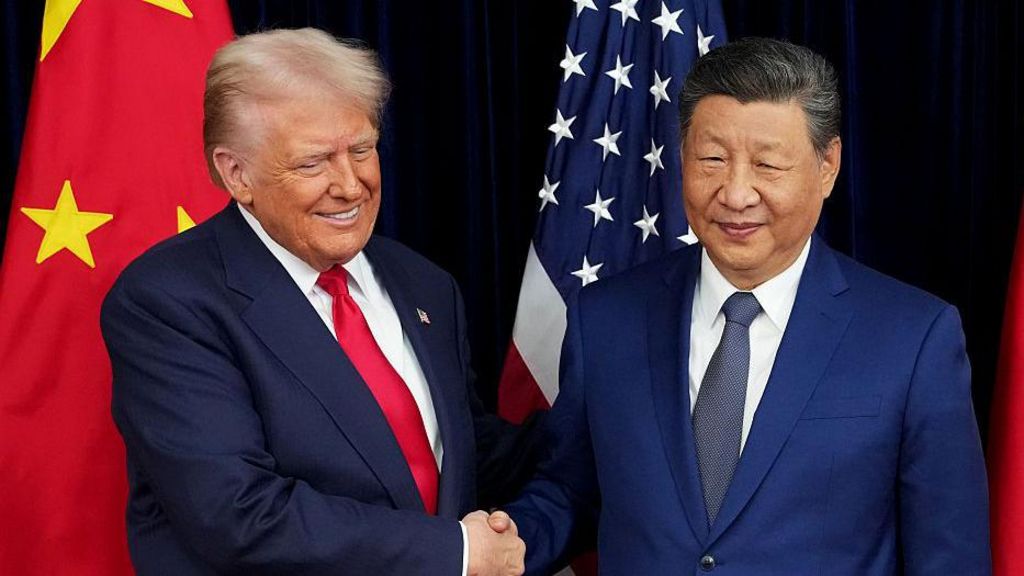
    The IOC’s stance aligns with an executive order issued previously by former U.S. President Donald Trump, who claimed credit for the shift, stating it was ‘only happening because of my powerful Executive Order.’ The decision signifies a pivotal and contentious turning point in the ongoing global debate over inclusivity, fairness, and the very definition of sex in elite athletics.

  • Japan defense minister ‘regrets’ Chinese embassy break-in

    Japan defense minister ‘regrets’ Chinese embassy break-in

    Japan’s Defense Minister Shinjiro Koizumi has characterized a recent security breach at the Chinese embassy in Tokyo as “deeply regrettable” during a press briefing held on Friday morning. The incident involved an active-duty officer from Japan’s Ground Self-Defense Forces (SDF) who unlawfully entered the diplomatic compound on Tuesday.

    The identified individual, reported to be second lieutenant Kodai Murata, scaled the embassy’s perimeter wall and gained unauthorized access to the premises. During the intrusion, the officer allegedly made threats against Chinese diplomatic personnel while invoking religious references. Japanese authorities have confirmed Murata’s arrest and subsequent transfer to prosecutors on Thursday, facing charges of illegal entry.

    Minister Koizumi emphasized that SDF personnel are expected to maintain the highest standards of discipline and legal compliance. He assured that once all factual details are thoroughly investigated, appropriate disciplinary measures will be implemented. The incident occurs amid ongoing diplomatic relations between Tokyo and Beijing, though officials have not suggested any connection to broader bilateral tensions.

    The Chinese embassy compound, located in Tokyo’s diplomatic district, has maintained heightened security protocols following the breach. Both Japanese and Chinese authorities are coordinating through appropriate diplomatic channels to address the incident while maintaining standard diplomatic protocols.

  • US boots on the ground looming darkly over Iran

    US boots on the ground looming darkly over Iran

    The United States’ military strategy against Iran has reached a critical juncture where aerial supremacy alone proves insufficient for achieving decisive victory. Historical patterns from the Gulf War to anti-ISIS campaigns demonstrate that air power, while effective for targeted strikes and infrastructure degradation, consistently fails to produce regime change or lasting resolution.

    Current operations against Tehran have successfully eliminated key political figures and impaired missile capabilities, yet Iran’s deliberately decentralized military architecture has withstood these precision attacks. The Islamic Republic maintains operational capacity to launch assaults against US-allied neighbors and strategically disrupt vital shipping lanes through the Strait of Hormuz.

    This tactical stalemate has forced Washington policymakers to confront an uncomfortable question: if aerial bombardment cannot force surrender, what alternative remains? The emerging answer points toward ground deployment—not necessarily full-scale invasion but potentially targeted operations against critical infrastructure like Kharg Island, through which 90% of Iran’s oil exports flow.

    Special operations units—Navy SEALs, Delta Force, and Green Berets—present politically palatable intermediate options between air strikes and full invasion. Their tactical flexibility and perceived deniability make them attractive to military planners, though historical precedents like Operation Eagle Claw’s catastrophic failure in 1980 serve as sobering reminders of operational risks.

    The recent deployment of Marine Expeditionary Units to the Persian Gulf signals escalating capabilities rather than immediate invasion intent. These 2,500 troops with amphibious assets represent tools for controlled escalation while diplomatic channels remain theoretically open.

    Geopolitical complications abound regarding any ground engagement. Iran’s coastline features sophisticated defensive networks including radar systems, mobile missile batteries, and naval assets optimized for asymmetric warfare. Even successful seizure of territory would initiate prolonged occupation challenges, with Iran’s harsh terrain, larger population, and cohesive political structure presenting greater difficulties than those encountered in Iraq.

    The ultimate escalation—full-scale invasion—would require troop commitments dwarfing the 2003 Iraq campaign, with daunting logistical demands and uncertain regional support. Victory would merely begin a longer struggle, as Iran’s complex ethnic and religious landscape would complicate any stabilization effort.

    This conflict embodies fundamental asymmetry: America seeks measurable outcomes while Iran pursues survival through endurance. The discussion now centers not on whether ground troops are desirable, but whether they have become unavoidable as the conflict enters its fourth week—with historical patterns suggesting that limited engagements often expand into prolonged commitments once boots touch ground.

  • ‘It’s absolutely beautiful’: DC’s cherry blossoms burst into peak bloom

    ‘It’s absolutely beautiful’: DC’s cherry blossoms burst into peak bloom

    The iconic cherry blossoms of Washington D.C. have erupted into their magnificent peak bloom phase, creating a breathtaking spectacle along the National Mall. This year’s floral display arrived notably early, marking the seventh consecutive year that peak bloom has occurred before April 1st, according to the National Park Service.

    The accelerated blooming pattern has been attributed to an unseasonably warm period that swept through the capital region, providing ideal conditions for the delicate flowers to develop. Horticultural experts note that temperature patterns in recent weeks created perfect circumstances for the blossoms to reach their maximum splendor ahead of schedule.

    Visitors from across the nation and around the world have flocked to the Tidal Basin to witness the stunning transformation, with the delicate pink and white flowers creating a vibrant canopy against the backdrop of Washington’s monuments. The annual phenomenon, which celebrates the 1912 gift of 3,000 cherry trees from Tokyo to Washington, continues to draw record numbers of spectators despite the shifting bloom calendar.

    Park officials indicate that while the early bloom has become more frequent in recent years, the duration and intensity of this year’s display remain particularly impressive. The peak bloom period typically lasts several days to a week, depending on weather conditions, with gentle rains and mild temperatures helping to prolong the floral showcase.

    The changing bloom patterns have sparked discussions among climate scientists and horticulturists about long-term environmental trends and their impact on seasonal biological cycles in urban ecosystems.