作者: admin

  • Seven Georgians tried in France over theft of rare Russian books

    Seven Georgians tried in France over theft of rare Russian books

    A high-stakes trial centered on one of the most brazen cultural theft rings in recent European history opens Tuesday in Paris, where seven Georgian nationals will answer for charges connected to the systematic theft of rare 19th-century Russian literary classics valued at more than 1.25 million euros from leading institutional libraries across the continent.

    The case is the culmination of a multi-year cross-border investigation into a string of identical heists that targeted rare collections across Germany, Switzerland, the Czech Republic, and France. Law enforcement and judicial officials have linked the thefts to a sophisticated organized criminal network that operated across European borders for years, outwitting library security protocols through carefully planned deception.

    Targeted works included first and early editions from iconic Russian literary figures Alexander Pushkin and Nikolai Gogol, with the total collective value of all stolen volumes across Europe estimated in the millions of euros. All seven defendants facing the Paris tribunal have been charged with criminal conspiracy and intent to commit theft; several also face additional charges for stealing cultural items on public display. If convicted, they could receive prison sentences of up to 10 years.

    Two of the accused are being tried in absentia, and international arrest warrants remain active for their detention. Two other defendants, identified only as 50-year-old Mikheil Z. and 49-year-old Beqa T. by French judicial procedure, are already serving prison sentences for identical theft convictions in Lithuania and Estonia respectively, and have been temporarily extradited to France to stand trial for their alleged roles in the French heists. Last year, Mikheil Z. was sentenced to three years and four months in a Lithuanian prison for stealing 19th-century publications worth 606,000 euros, while Beqa T. received a three-year-and-six-month sentence in Estonia for similar crimes.

    French investigating judges who reviewed the case file shared with Agence France-Presse confirm the network’s operational method was consistent across all targeted institutions. Thieves would first pose as academic researchers to gain access to the rare reading rooms of major libraries, where they would photograph, measure, and document the target volumes before leaving. They would later return to swap the authentic rare books with near-identical high-quality forgeries that evaded detection for months.

    In France, the heists unfolded in 2023 across three major cultural institutions: the Diderot Library at the Ecole Normale Superieure in Lyon, the National Library of France (BnF) in Paris, and the University Library of Languages and Civilisations (BULAC), also in Paris. Court records show that between March and October 2023, Mikheil Z. visited the BnF 40 times, requesting access to rare Pushkin manuscripts under the pretense of writing academic research on democratic themes in 19th-century Russian literature. It was not until November 2023 that library staff discovered nine authentic rare works had been swapped for fakes, with the BnF alone suffering an estimated loss of 650,000 euros.

    When questioned by investigators, Mikheil Z. confessed to stealing the volumes but claimed he acted alone, stating his motive was purely financial greed and that he had sold all stolen books to buyers in Russia. A curious development in the case came in June 2024, when Russia’s Litfond auction house listed a second edition of Pushkin’s *The Prisoner of the Caucasus* — a volume matching the description of one stolen from the BnF — in its public auction catalogue. Litfond representatives provided French authorities with documentation claiming the book had been acquired from a private Russian owner between 2014 and 2015, years before the French heist.

    Investigative judges have put forward two competing working theories for the network’s motive: beyond simple financial profit, the thefts may be connected to a broader push to “repatriate” Russia’s cultural heritage at a time of unprecedentedly strained relations between Moscow and Western Europe following the 2022 Russian invasion of Ukraine. To date, none of the stolen volumes have been recovered.

    Despite the loss, the BnF remains committed to its core public mission, according to the institution’s lawyer Alexandre de Konn. “The National Library of France has not given up hope of recovering these works,” de Konn told Agence France-Presse. “It remains true to its mission: to continue making heritage open to the public while constantly strengthening its protection.”

    The cross-border investigation that led to the 2024 arrests and this week’s trial was made possible by a joint investigation team launched under the auspices of Europol and Eurojust, the European Union’s law enforcement and judicial coordination agencies, formed specifically to dismantle the theft ring after heists were reported across multiple member states.

  • Wembanyama stars as Spurs trim Knicks’ Finals lead

    Wembanyama stars as Spurs trim Knicks’ Finals lead

    The 202X NBA Finals took another dramatic twist on Monday, as the San Antonio Spurs secured a nail-biting 115-111 road victory over the New York Knicks at the world-famous Madison Square Garden, cutting the Knicks’ series lead to 2-1.

    At the center of the win was 7-foot-4 generational talent Victor Wembanyama, who bounced back from a costly error-ridden performance in Game 2 to deliver a dominant 32-point outing. The young star added eight rebounds and six assists to his stat line, anchoring the Spurs’ comeback after a slow first half.

    The sell-out crowd at Madison Square Garden, which hosted its first NBA Finals game since 1999, also got a surprising political spotlight: sitting US President Donald Trump, who made history as the first sitting US president to attend an NBA Finals championship series, was loudly booed by attendees when his image appeared on the arena’s big screen during the pre-game national anthem.

    Wembanyama was not alone in securing the critical win for San Antonio. Guard Stephon Castle chipped in 23 crucial points, while reserve Dylan Harper added 13 points off the bench to shore up the Spurs’ second unit. The win was far more than just a single game victory: it kept the Spurs from falling into a 0-3 series deficit, a hole no NBA franchise has ever climbed out of in Finals history.

    For the Knicks, the defeat snapped a 13-game overall winning streak that had carried them through the early rounds of the playoffs, leaving them two wins short of the Golden State Warriors’ all-time playoff winning streak record set in 2017. The Knicks have not claimed an NBA championship since 1973, and their quest to end the 50-plus-year drought now heads to a pivotal Game 4.

    The game unfolded as a back-and-forth battle: New York held a 64-57 lead at halftime, but the Spurs rallied with a 35-point third quarter to flip the score in their favor. With just under two minutes remaining, Castle drained a three-pointer to push San Antonio’s advantage to 111-104. Unlike Game 1, where the Spurs collapsed under a late New York surge, this time San Antonio held firm under pressure. Even after OG Anunoby knocked down a late three-pointer to cut the lead to two points, Castle iced the game with two clutch free throws in the final 10 seconds.

    Anunoby finished the game with 28 points for the Knicks, while point guard Jalen Brunson matched Wembanyama’s output with 32 points of his own.

    Speaking after the game, Wembanyama kept his team grounded despite the much-needed win. “We’ve done what we were supposed to do but the job is absolutely not done,” he said. “We’re not even halfway. The hardest is yet to come.”

    The best-of-seven series will remain at Madison Square Garden for Game 4 on Wednesday, with tipoff scheduled for 01:30 BST on Thursday. After that, the series will travel back to San Antonio for Game 5 on Saturday, scheduled to tip off at 01:30 BST on Sunday.

  • All 24 Indian crew rescued from tanker set ablaze off Oman after US strike

    All 24 Indian crew rescued from tanker set ablaze off Oman after US strike

    In an incident that underscores the escalating dangers to commercial maritime traffic in the Gulf region, all 24 Indian crew members aboard the stricken tanker MT Marivex have been successfully evacuated to safety following a strike by United States military forces off the coast of Oman. The event, which unfolded on Monday 8 June local time, is the latest in a growing string of disruptions to global shipping linked to rising geopolitical tensions between the U.S., Iran and Israel.

    According to official confirmation from India’s Ministry of Ports, Shipping and Waterways spokesperson Opesh Kumar Sharma, the fire broke out on board the unladen Palau-flagged tanker at approximately 1:30 p.m. local time. Immediately after the blaze ignited, crew members transmitted urgent distress signals, reporting that the vessel was both on fire and at risk of sinking. Sharma confirmed that initial assessments confirmed all seafarers were unharmed, and Indian authorities had launched a cross-agency coordination effort to secure the crew’s safe return. The Indian government declined to offer immediate further details on the incident’s root cause at the time of the announcement.

    Local Omani authorities led the evacuation operation, with helicopter crews extracting all 24 sailors from the burning tanker and transferring them to safety on Masirah Island, according to multiple Indian media reports. The Reuters news agency later confirmed that the MT Marivex had been previously targeted with U.S. sanctions over its alleged ties to Iranian oil networks.

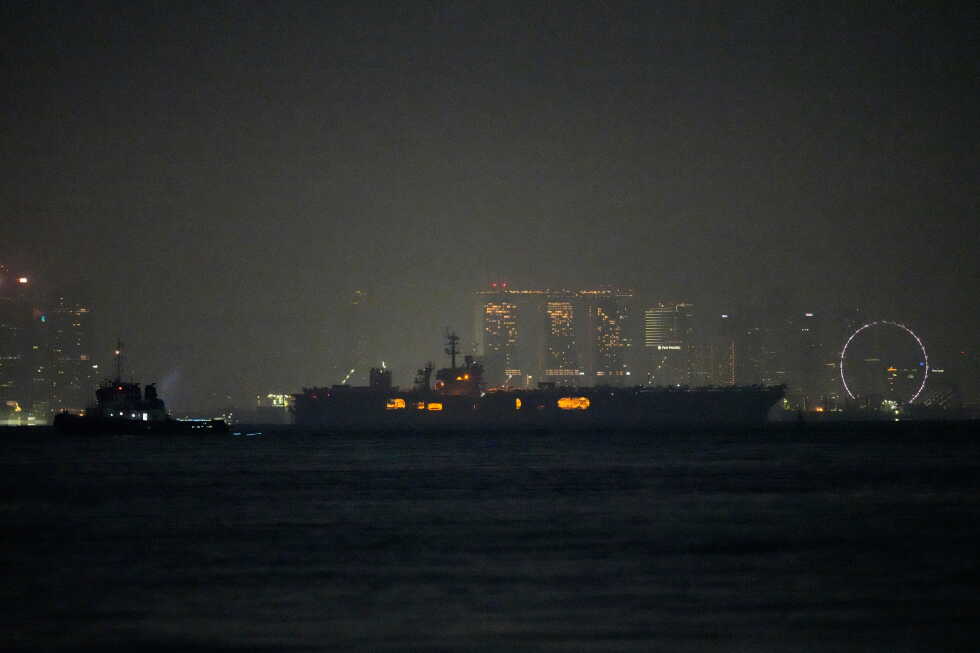
    U.S. Central Command later issued an official statement acknowledging the operation, saying that American military forces disabled the empty tanker after it violated the U.S.-led blockade on Iran by attempting to sail to an Iranian port. The statement detailed that an F/A-18 Super Hornet strike fighter launched from the USS Abraham Lincoln aircraft carrier fired a precision-guided munition at the tanker’s engineering and steering compartments after the crew refused to comply with U.S. military orders. The statement concluded that the vessel was no longer en route to Iran. The strike occurred south of the Strait of Hormuz, the critical global maritime chokepoint that carries approximately 20% of the world’s daily energy supplies during normal operations.

    Two major Indian seafarers’ unions, the All India Seafarers Union and the Forward Seamen’s Union of India, monitored the incident from its onset. The All India Seafarers Union reported that it received the first distress alert from a crew member just moments after the fire started, and maintained constant communication with both the crew and responding authorities throughout the rescue. The Forward Seamen’s Union of India labeled the incident a “matter of serious concern,” calling for rapid action to protect the crew, provide support to their families back in India, and prioritize the safety of all commercial seafarers operating in the high-risk region. Both unions ultimately confirmed the safe evacuation of all 24 crew members.

    The incident comes amid a months-long period of heightened risk for commercial shipping in Gulf waters, where rising geopolitical friction linked to the ongoing Iran conflict and U.S.-led enforcement actions have drastically increased security hazards for civilian vessels. Tensions between the U.S., Iran and Israel have already disrupted key shipping routes and driven a sharp increase in military activity across the Gulf of Oman and the surrounding Strait of Hormuz, leaving civilian seafarers caught in the crossfire of geopolitical competition.

  • Why super-sized and politicised World Cup comes at a cost

    Why super-sized and politicised World Cup comes at a cost

    As the opening match of the 2026 FIFA World Cup kicks off Thursday at Mexico City’s iconic Estadio Azteca – the first venue ever to host three World Cup opening games – the global football community is gearing up for what FIFA President Gianni Infantino calls “the greatest event humanity has ever seen.” This summer’s tournament, the first 48-team, tri-nation World Cup spread across 16 cities in the United States, Mexico and Canada, is already making history for far more than just its groundbreaking size. From political polarization to exorbitant ticket prices, unresolved security gaps and environmental concerns, this expanded showcase of the world’s most popular sport carries with it a level of contention unseen in any previous World Cup.

    Infantino has framed the first pan-continental iteration of the tournament as the most inclusive, welcoming and unifying edition in the event’s 96-year history. But critics say those superlatives mask deep flaws that have undermined the tournament before a ball is even kicked: it is the most politicized, the most expensive, the most carbon-intensive, and the most commercially lucrative for FIFA itself, which is projected to pull in a record-breaking $9 billion in revenue this year alone.

    The current state of play began eight years ago, when FIFA awarded the 2026 hosting rights to the North American bid, a move crafted to help the governing body rebuild its reputation after crippling 2010 corruption scandals tied to the 2018 Russia and 2022 Qatar World Cups. With most stadium infrastructure already in place across the three countries, the bid was seen as a low-risk, high-reward proposition that would leverage the world’s most valuable commercial sports market to unlock unprecedented broadcasting and sponsorship revenue. That windfall will let FIFA distribute $2.7 billion to global member associations over the next four years, a boost widely viewed as strengthening Infantino’s odds of securing a third term as president in 2027.

    But the first major controversy to erupt has centered on ticket pricing, which has sparked public backlash and even official investigations. Ahead of the 2018 bid, organizers promised final tickets would cost no more than $1,550. When tickets went on sale last December, the most expensive premium seats hit $8,680, with dynamic pricing – a first for World Cup, where ticket costs fluctuate based on demand – pushing costs even higher for popular matches. Leading supporters’ groups called the pricing a “monumental betrayal,” and while FIFA released a limited batch of $60 entry-level tickets, New York and New Jersey officials have launched a formal probe into allegations that FIFA artificially inflated prices and misled fans. Thousands of tickets for matches featuring lower-ranked nations are currently selling below face value on official and secondary platforms, suggesting the governing body overestimated demand for high-priced inventory.

    Off the pitch, other costs have also sparked anger. Regular train fares from New York City to MetLife Stadium, host of the 2026 final, jumped from $12.90 to as high as $150, with New Jersey’s governor blaming FIFA for refusing to subsidize public transport costs. A late policy change that initially banned reusable water bottles from stadiums drew widespread condemnation over public health risks, with 14 of 16 host venues expected to see dangerous summer heat; FIFA walked back the ban days later under intense pressure from fans and politicians, though scientists still warn the governing body’s heat safety protocols remain inadequate to protect players and spectators.

    The tournament’s most intractable challenges, however, stem from its unprecedented entanglement in global politics, amplified by the policies of U.S. President Donald Trump’s second administration. Never before has a host country been engaged in ongoing military conflict with a participating nation: after the U.S. and Israel launched strikes against Iran in February, with a ceasefire holding only nominally since April, Trump initially questioned whether Iran should be allowed to participate, suggesting unqualified Italy should replace the four-time World Cup qualifier. Iran ultimately secured its place in the draw, but the country has accused the U.S. of denying visas to dozens of its backroom staff, imposing harsh entry requirements for matches hosted in the U.S., and revoking all fan ticket allocations for its group stage matches. FIFA has also moved to ban Iran’s pre-revolutionary flag from stadiums, turning Iran’s opening two matches in Los Angeles – home to one of the world’s largest Iranian diaspora communities – into inherently politically charged events. The team relocated its training base from Arizona to Tijuana, Mexico, to avoid ongoing political and travel friction.

    Immigration policies have created even broader barriers to entry. Back in 2017, during Trump’s first term, Infantino warned that a U.S. travel ban on majority-Muslim nations violated FIFA rules and could disqualify the U.S. from hosting. Today, four participating nations – Iran, Haiti, Senegal and Ivory Coast – face full or partial travel bans on their fans under second-term Trump administration policies, with the White House citing security concerns. BBC analysis found fans from more than a quarter of the 48 participating teams face either travel bans, tightened visa restrictions, or extremely high visa rejection rates. Most recently, FIFA confirmed that Omar Artan, set to become the first Somali referee at a men’s World Cup, was dropped from the officials’ roster after U.S. immigration denied his entry visa. The International Sports Press Association has also complained that dozens of accredited journalists have been denied entry visas to cover the tournament.

    Infantino’s close public relationship with Trump has drawn further criticism: last year, he awarded the U.S. president a controversial FIFA Peace Prize during the World Cup draw, drawing condemnation from human rights groups that label the tournament a “bonanza of sportswashing” as Trump leverages the event to boost his political standing, coinciding with the 250th anniversary of U.S. independence. Amnesty International has warned the World Cup risks becoming “a stage for repression,” highlighting abusive U.S. immigration enforcement and the role of Immigration and Customs Enforcement (ICE) in the tournament’s security apparatus, coming off a high-profile fatal shooting of two U.S. citizens during an ICE immigration crackdown earlier this year. The White House World Cup Task Force has pushed back, vowing the tournament will be “the safest, most welcoming sporting event in history,” though a recent partial shutdown of the Department of Homeland Security – the agency leading tournament security – exposed critical planning gaps that officials admit are still being addressed just weeks ahead of kickoff. The recent Ebola outbreak centered in the Democratic Republic of Congo, whose team will play group matches in Houston, Atlanta and Guadalajara, has added an additional public health layer to security planning.

    Even environmental pledges have come under fire. While the use of existing stadiums aligns with FIFA’s goal to cut carbon emissions 50% by 2030, the expanded 104-match tournament spread across three countries has forced teams, fans and media to rely heavily on air travel, leading environmental groups to label it the most climate-damaging World Cup in history. It is projected to generate more than nine million tonnes of carbon dioxide equivalent, almost double the average of the past four World Cups – far exceeding the 3.6 million ton estimate included in the original 2018 bid, which promised the tournament would set new sustainability standards for global sport.

    In host co-host Mexico, challenges are already playing out in plain view: high ticket prices have priced out local fans, ongoing cartel violence has raised security concerns, and teacher protests demanding higher wages have toppled World Cup player statues and threatened to disrupt match play. In the U.S., polls show a majority of average Americans say the tournament is too expensive to attend, and hotel bookings across almost all host cities are well below initial projections, suggesting high costs and political tensions have deterred casual fans. Even for international visiting supporters, turnout is lower than expected: the Football Supporters’ Association projects just 12,000 to 15,000 England fans will attend each of the team’s group matches, a figure leaders call disappointing given pre-tournament excitement.

    As the world turns its attention to Estadio Azteca for the opening match between Mexico and South Africa, the tournament stands at a crossroads. Proponents argue the expanded 48-team format will be a transformative moment for football in the U.S., which last hosted the tournament in 1994, when the event helped propel the sport into the American mainstream. Today, with a thriving domestic MLS and massive U.S. investment in European football, supporters see an opportunity to unlock a trillion-dollar growth market for the global game. But critics warn that the unbridled expansion, commercialization and politicization of this World Cup has created a perfect storm of controversy that could overshadow the on-pitch action. The next five weeks will answer one burning question: will this unprecedented tournament cement football’s place as the world’s most popular sport, or will it collapse under the weight of its own unaddressed challenges?

  • Round 15 team lists: Souths name Jai Arrow in touching act as Ezra Mam remains on the Broncos bench

    Round 15 team lists: Souths name Jai Arrow in touching act as Ezra Mam remains on the Broncos bench

    The National Rugby League community is coming together to celebrate the career of beloved player Jai Arrow, who was forced into early medical retirement earlier this year after a devastating motor neurone disease diagnosis, as Round 15 of the competition opens Thursday with a series of touching tributes planned by both his former and current clubs.

    Arrow’s current club, the South Sydney Rabbitohs, have pulled off one of the most emotional gestures in recent rugby league history, naming the retired forward to their extended bench for Thursday’s clash against the Brisbane Broncos — Arrow’s first professional club. He will wear jersey number 23 for the match, and the club has invited all fans and members to join in honoring his legacy ahead of kickoff.

    The tributes do not end with South Sydney, either. The Broncos, where Arrow launched his NRL career across two seasons before moving to the Gold Coast Titans and ultimately signing with the Rabbitohs in 2021, will also honor the former representative star, with every Broncos player set to display Arrow’s name and original club number on their game jerseys for the matchup.

    The pre-game ceremony will include one particularly poignant moment: Arrow will have the honor of ringing the iconic Rabbitohs Legacy Bell before the match, while players from both the Rabbitohs and Broncos will form a guard of honor to welcome him as he takes the field. The Rabbitohs confirmed the plans in an official statement, calling on supporters to turn out to celebrate Arrow’s career alongside him.

    Beyond the emotional tributes, Round 15 brings a host of team selection changes across the league, largely driven by State of Origin representative commitments and injury updates. For the Rabbitohs, the club will be missing all their Origin-selected stars, plus starting center Campbell Graham who sidelined by a calf injury. Tallis Duncan will shift to the backline to pair with Latrell Siegwalt in Graham’s absence.

    For the Broncos, standout playmaker Ezra Mam will remain on the bench after missing a match-winning opportunity in the final minute against the Titans last week and subsequently being dropped from Queensland’s squad for State of Origin II. Hayze Perham will step into the fullback position to replace Reece Walsh, while backrower Jordan Riki returns to the starting side after recovering from an injury layoff.

    Across other Round 15 fixtures, the Cronulla Sharks will again be without star halfback Nicho Hynes, who remains sidelined by a calf injury for their cross-Tasman trip, with Luke Metcalf held over on the extended bench. For the Dolphins, Trai Fuller will step in at fullback for Hamiso Tabuai-Fidow, while playmaker Isaiya Katoa is set to be released from New South Wales Blues Origin camp to take the field against the Sydney Roosters.

    The Roosters will have Cody Ramsey in at fullback to replace the Origin-bound James Tedesco, with Hugo Savala moving to his preferred halves position to partner Daly Cherry-Evans. Tommy Talau will make his club debut on the wing, filling in for Mark Nawaqanitawase who is with the NSW Origin camp. The Wests Tigers have received a major boost, with winger Taylan May returning to the side after recovering from a shoulder injury as the club chases a much-needed win at Leichhardt Oval.

  • Hundreds of aftershocks jolt Philippines as officials say death toll could rise

    Hundreds of aftershocks jolt Philippines as officials say death toll could rise

    A powerful magnitude 7.8 earthquake that struck the southern Philippine island of Mindanao early Monday has left at least 37 people dead and 487 others injured, with disaster officials warning the casualty count is likely to climb as emergency teams reach cut-off coastal communities. Hundreds of aftershocks have continued to rattle the disaster zone, hampering rescue and recovery efforts across the region.

    The seismic event left a trail of catastrophic destruction in its wake: multi-story buildings have collapsed, paved roads have split open or been swallowed by landslides, and large portions of Mindanao remain completely cut off from power and communications infrastructure. The initial quake also triggered widespread tsunami warnings across regions as far as southern Indonesia and Japan’s Pacific coastline, forcing tens of thousands of residents to evacuate their homes for higher ground.

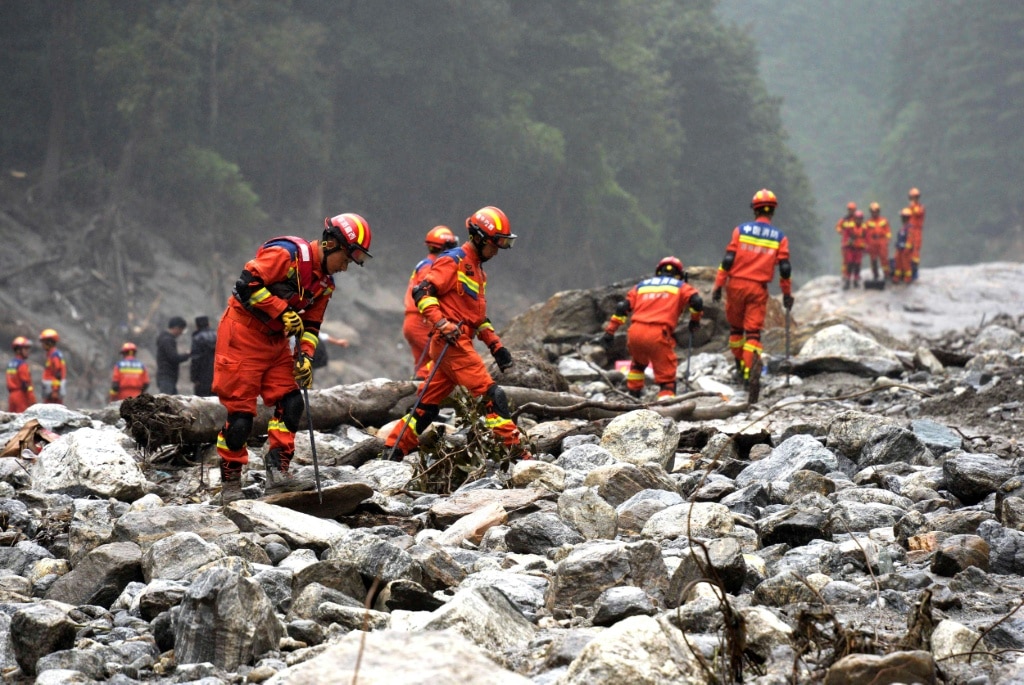
    As search operations entered their first full day, disaster response officials confirmed that priority remains focused on pulling survivors from rubble and reaching isolated communities. “We hope the death toll does not increase further, but we are expecting it to move. Our priority today is search and rescue,” Bernardo Alejandro, assistant secretary of the Philippines’ disaster response oversight agency, told local radio station DZMM. As of initial assessments, close to 2,000 residential structures and more than 6,000 public schools have sustained damage across the affected region.

    The Philippines sits along the geologically active Pacific Ring of Fire, making it highly prone to major earthquakes and volcanic eruptions. Monday’s temblor originated from tectonic movement along the Cotabato Trench, a fault zone off the country’s southern tip that has produced some of the deadliest seismic events in the nation’s recorded history. In 1976, a magnitude 7.9 quake from the same trench generated a devastating tsunami that killed an estimated 5,000 people.

    On-the-ground accounts from survivors capture the chaos and terror of the two-minute-long quake. In Lebak town, public school teacher Cesar Sundo described the shaking as feeling like being violently rocked in a hammock, with the intensity building by the second. Thousands of young students, most under 10 years old, panicked and cried as the ground bucked beneath them. By chance, the entire school was gathered outside for their weekly Monday morning flag ceremony when the quake hit, a circumstance that likely saved countless lives.

    “They were lucky to be outside. They were able to stay put and sit down,” explained Renato Solidum, the Philippines’ science minister and a veteran seismologist, confirming that the outdoor assembly saved many students from injury or death when structures collapsed around them. “These areas have experienced strong earthquakes before. This is one of the strongest.”

    Viral footage captured from the scene shows a branch of popular local fast-food chain Jollibee in General Santos City crumble to the ground as onlookers scream and retreat to safety. The chain released an official statement Monday night confirming that all its employees across earthquake-impacted areas are unharmed.

    Philippine President Ferdinand Marcos Jr. has mobilized the full capacity of the national government to coordinate disaster response. Both the transportation and health secretaries have traveled from the capital Manila to Mindanao to oversee relief efforts on the ground. Health secretary Teodoro Herbosa noted that medical teams treating injured survivors have been interrupted repeatedly by strong aftershocks even as they work.

    Access to many hard-hit communities remains severely limited. In Jose Abad Santos, a coastal town on Mindanao’s eastern Davao Occidental province, landslides have buried the region’s only paved highway, cutting off half the town from overland access. “Relief goods have to be flown in to far-flung barangays (villages),” Mayor Jason John Joyce told DZMM.

  • Ecuadorian artisans working to preserve the traditional craft of weaving horsehair strainers

    Ecuadorian artisans working to preserve the traditional craft of weaving horsehair strainers

    Nestled in the highlands east of Ecuador’s capital Quito, the small village of Guangopolo holds a 200-year-old Indigenous craft tradition that is quietly slipping into history: the hand-weaving of cedazos, traditional horsehair sieves that once defined the community’s identity and economic life.

    Inside 76-year-old artisan Ligia Ipiales’ modest family home, she moves with deliberate care, separating individual strands from raw horse tails to weave an intricate mesh as fine as medical gauze — the signature texture that made Guangopolo’s cedazos prized across Ecuador for generations. Today, only nine practicing cedacero artisans remain in the entire village, a dramatic collapse from the thriving trade that supported hundreds of households just half a century ago.

    Among the remaining craftspeople is 51-year-old Guido Paucar, the youngest and only man in the group. He remembers a very different Guangopolo from his childhood: 50 years ago, roughly 500 Indigenous families in the village made their full or partial living crafting and selling cedazos, shipping up to 600 finished sieves to markets across the country every month, priced between $6 and $30 depending on size. “This is our village’s identity. If it disappears, Guangopolo loses a part of who we are,” Paucar said. “We are the last generation making these sieves.”

    What doomed the centuries-old trade? The mass production of cheap plastic kitchen sieves and synthetic alternatives pushed handcrafted horsehair cedazos out of everyday Ecuadorian households, reducing them to decorative display pieces for tourists rather than functional kitchen tools. “Now we only sell up to 10 each week,” Paucar added. Compounding the decline is a growing scarcity of the traditional raw materials required for authentic cedazos. The craft relies on two key local resources: horsehair from working farm horses, and wood from the native Pumamaqui tree used to craft the 15-centimeter drum-shaped wooden rims that hold the mesh in place.

    Where working horses once populated every Andean farm in the region, modern agricultural mechanization has replaced equine labor with motorcycles and tractors, eliminating the local supply of horsehair. Artisans are now forced to import horsehair from distant regions of southern Colombia and central Ecuador, paying a steep premium: 45 kilograms of raw horsehair costs roughly $1,000, a major expense for small-batch producers.

    The process of crafting a single sieve remains labor-intensive, unchanged for two centuries. After harvesting, horsehair is washed, sun-dried, and sorted by length before being stretched onto a simple handcrafted wooden frame called a guanga. Seated cross-legged on the floor, artisans sort, stretch, and knot individual strands at a speed that makes their fingers blur, resulting in a fine, durable mesh that was once indispensable for sifting flour in Ecuadorian homes.

    For decades, the craft also played a critical social role: it provided rural women with independent extra income, often enough to cover school fees and other expenses for their children. Today, efforts to pass the tradition to younger generations at Guangopolo’s El Cedacero craft center — through free workshops and targeted training programs — have repeatedly failed.

    Leaving the village for higher-paying professional careers has become the norm for young people, turning traditional craft work into an unappealing option. “From the age of 6 or 7 our mothers taught us how to weave sieves,” explained 57-year-old artisan Leonor Cuje, gesturing to a table lined with finished sieves and smaller horsehair goods like bracelets and brushes. “Now they are professionals and they don’t want to do this anymore.”

  • Italian commuters find a moment of peace on a cable-guided ferry sketched by Leonardo da Vinci

    Italian commuters find a moment of peace on a cable-guided ferry sketched by Leonardo da Vinci

    Nestled along the scenic Adda River in northern Italy’s Lombardy region, a one-of-a-kind vessel has reclaimed its historic purpose, offering local commuters and visitors a quiet, eco-friendly alternative to gridlocked roads after a nearby bridge shutdown for maintenance.

    Known popularly as Leonardo’s Ferry, this cable-guided reaction ferry operates on a 500-year-old design first sketched by Renaissance polymath Leonardo da Vinci in 1513, during his detailed studies of northern Italian waterways including Milan’s famous canal network. The original drawing is held in the Royal Collection at Windsor Castle, outside London, and while historians debate whether da Vinci personally invented the reaction ferry concept, his detailed rendering has cemented the vessel’s place in engineering and cultural history. Today, it is the last fully operational reaction ferry of its kind remaining on the entire Adda, which stretches from the Alpine foothills to join the Po River.

    Unlike modern motorized ferries, the vessel relies entirely on the natural current of the Adda for propulsion, making it a zero-emission form of transport. Its ingenious operating principle relies on basic high school physics: a fixed cable tethers the ferry to both banks, and the force of the downstream river current is split per the parallelogram rule of force, with one component creating resistance along the cable and the other generating lateral movement that carries the craft across the water. The ferry’s rudder adjusts the vessel’s angle to the current, fine-tuning its speed and trajectory across the 5-minute crossing.

    The historic ferry almost vanished permanently last year, when its long-time concession operator stepped down, leaving the service without a steward. Refusing to let the centuries-old community link disappear, Imbersago mayor Fabio Vergani took matters into his own hands: he earned a commercial ferryman’s license himself, then partnered with the local tourism association to recruit and train a team of local volunteers to run the service.

    Through 2024, the volunteer team primarily catered to weekend tourists drawn to the ferry’s historic charm and riverside scenery. That changed this spring, when a nearby connecting bridge was closed for extensive repairs, sending road traffic into hours-long gridlock and forcing local residents to take a 20-kilometer detour to cross between Imbersago on one bank and Villa d’Adda on the other. Stepping up to fill the gap, the volunteer crew added a daily commuter service to their schedule, operating from 7 a.m. to 7 p.m. daily with a two-hour midday break.

    Fares are modest: 1.50 euros (around $1.75) for foot passengers, 2 euros ($2.30) for cyclists, 2.50 euros ($2.88) for motorbikes, and 3.50 euros (roughly $4) for cars. For local residents, the ferry has become more than a tourist attraction — it’s a vital, welcome shortcut that cuts hours off daily commutes.

    Gianpaolo Graffagnino, who lives in Villa d’Adda and works on the opposite bank, now bikes to work and uses the ferry to avoid the detour. “Right now this is the fastest system, but above all the nicest because you get five minutes of peace,” he said of the quiet crossing. Another local commuter, Mauro Carnati, who drives his car across the ferry to take his daughter to school, says the small fare is worth the unique experience. “It’s true that we spend a little money, and it’s not possible every day, but the romance and added value of the Adda and the ferry are truly amazing. It makes for a better start to the day,” he noted.

    For volunteer ferryman Massimo Zoia, the ferry’s new role as a modern community link is a perfect full-circle moment for the centuries-old design. “This is a means of transport that has been here for 500 years and has always connected the two banks of the Adda,” he said. “And now it has returned to its original purpose: connecting two populations living on different banks of a river.”

  • He told us we were slaves – The fight  for justice on a Scottish fishing trawler

    He told us we were slaves – The fight for justice on a Scottish fishing trawler

    After nine years of relentless campaigning for accountability, a landmark Scottish modern slavery case has finally drawn to a pivotal guilty plea, exposing horrific abuse of migrant fishermen at the hands of a local trawler operation. For Ghanaian fisherman Joshua Amissah, the moment the court confirmed the admission of wrongdoing was overwhelming: he stepped away from the witness stand, retreated to a quiet corner of the silent courtroom, and crouched to compose himself, overwhelmed by the weight of nearly a decade of unaddressed trauma.

    Amissah was one of five Ghanaian fishermen recruited to work on the *Sea Lady*, a scallop trawler owned and operated by Annan-based TN Trawlers, headed by Thomas Nicholson Sr. The vessel’s skipper was Nicholson’s son, Tom Nicholson Jr., who Amissah says openly viewed his Black crew as disposable labor. “He told us we were slaves,” Amissah told the jury at Hamilton Sheriff Court. “He said that his father had told him that any black person he worked with, he must treat that person as a slave.”

    What the fishermen endured on the *Sea Lady* in 2017 matches the legal definition of modern slavery, the court has confirmed. Work demanded was non-stop, with no scheduled rest periods. Amissah and his crewmates were forced to create an underground, secret rotating schedule just to steal minutes of sleep between shifts. Food rations were so inadequate that crew members resorted to scavenging raw fish and octopus caught by the vessel’s dredges to avoid starvation. There was no formal onboarding, no safety training, and no opportunity to push back against the exploitative conditions. “As soon as we got there, he said we should just get to work,” Amissah recalled. “[Tom Jr] said there was no time and that we needed to go hunt for scallops. There was no rest during the trip.”

    The ordeal only came to light after a life-threatening accident forced the vessel into port. In rough December 2017 weather in the English Channel, 55-year-old crew member Augustus Mensah fell and struck his head open on the hard deck. The only first aid supply on board was a single bandage. When the *Sea Lady* docked in Portsmouth for emergency medical care, police were alerted, launching what would become a years-long battle for justice.

    After three days of witness testimony, the case took a sudden turn when Nicholson Jr. changed his plea to guilty on amended charges, admitting he failed to provide adequate food, rest, and mandatory safety training to his Ghanaian crew during their months-long 2017 voyage. The unexpected plea meant three other accusers—Kow Mensah, Gershon Norvivor, and Kojo Attah—never got the chance to deliver their testimony in court. Augustus Mensah, who waited nine years to share his account, said he was still relieved that justice finally moved forward. “It wasn’t easy for me, but I am very happy that at long last we got our justice,” he told reporters outside court.

    The convictions are not the first for the Nicholson family or TN Trawlers. In 2022, Thomas Nicholson Sr. pled guilty to failing to provide adequate care for a Filipino crew member in a separate case stemming from a 2012 probe that identified 18 Filipino crew as modern slavery victims. He was fined £13,500 and ordered to pay £3,000 compensation to the injured worker.

    This week, the elder Nicholson pled guilty to breaching a landmark Trafficking and Exploitation Risk Order (TERO), a court order designed to restrict the movement of vessels operated by those under trafficking investigation. He is the first person in Scottish legal history to breach one of these orders, which required him to disclose details of all non-European crew before moving any of his vessels. Nicholson moved his trawler *Olivia Jean* from the Netherlands to Scotland without submitting the required documentation to the Maritime and Coastguard Agency; his defense claimed the breach was a “genuine mistake” with no foreign crew on board, but the court still fined him £2,700. He remains under active investigation for human trafficking.

    The case, which originated from a three-year undercover investigation by BBC journalists, has sparked widespread criticism over systemic failures in the UK fishing industry and government oversight of public funding for abusive operators. Charity Open Seas director Phil Taylor revealed that TN Trawlers received more than £250,000 in public funding while human trafficking investigations were already ongoing, calling the fine against Nicholson Sr. “paltry.” “This is a really concerning case, and it’s hard to understand how this firm was provided with public funding,” Taylor said. “It shouldn’t be possible for ministers to hand out tens of thousands of pounds to a business under investigation for human trafficking. This case shows how important it is for government to scrutinise the work of firms it is supporting with public money, and to publish details of historical convictions and ongoing investigations on the UK fishing vessel register, to ensure those who break the rules are held accountable.”

    Detective Chief Inspector Paul McNamara of Police Scotland said the case was the result of a years-long joint operation between multiple agencies, noting that TEROs play a critical role in stopping exploitation before more harm occurs. “They allow police to step in at an early stage to prevent harm and disrupt organisations while we investigate. Partnership working is essential as we share knowledge and skills to target those who make money by exploiting others. We want to make Scotland a hostile environment for organisations involved in slavery and exploitation, to protect potential victims and keep our communities safe,” McNamara said.

    Industry advocates say the TN Trawlers case is not an isolated incident, but evidence of deep, systemic exploitation of migrant workers in the UK fishing sector. Chris Williams, fisheries section co-ordinator at the International Transport Workers Federation, called for sweeping regulatory reform to guarantee basic labor protections for migrant crew. “What we need is a solution that enables workers from the Philippines, Ghana, Sri Lanka and India to come into the UK fishing industry with employment rights, minimum wage protections, and their hours of work and rest being recorded,” Williams said. “We should not allow a ‘race to the bottom’ where workers can be exploited and abused. If we’re so desperate to have them to keep this food-producing sector working, we should be paying people fairly and treating them fairly.”

    To date, the UK Home Office has recognized 35 former TN Trawlers workers as official victims of modern slavery, following investigative reporting by the BBC that first exposed the widespread abuse in 2024’s *Slavery At Sea* documentary. In October 2024, a separate group of Ghanaian fishermen rescued from another TN Trawlers vessel, the *Olivia Jean*, each received £20,000 in government compensation for their abuse. TN Trawlers has repeatedly denied all allegations of modern slavery and human trafficking, maintaining that all its workers have always been well-treated and fairly paid. Tom Nicholson Jr. will return to Hamilton Sheriff Court next month for sentencing.

  • Survivors share experiences and lessons from Congo’s 2018 Ebola outbreak

    Survivors share experiences and lessons from Congo’s 2018 Ebola outbreak

    In the bustling eastern Congolese border city of Beni, where trade routes connect the Democratic Republic of Congo to Uganda and Rwanda, the word “Ebola” still triggers sharp, traumatic memories for local survivors like Vianney Kambale Kombi. Kombi lived through the 2018–2020 Ebola epidemic, the second-largest in recorded history that infected more than 3,400 people and claimed over 2,200 lives. While that outbreak was ultimately contained through the rollout of experimental vaccines, Kombi says community denial, deep-rooted skepticism, and violence against frontline health workers accelerated the virus’s deadly spread. Back then, many residents in his community blamed the outbreak on supernatural forces, he recalls.

    “We thought it was witchcraft,” Kombi explained. “The community had not accepted that this disease existed and it had not accepted that we could recover from it.”

    Now, as Beni faces a new, emerging Ebola outbreak caused by the rare Bundibugyo strain, local residents and health workers fear the same damaging patterns of misinformation and distrust that fueled past tragedy could derail the response once again. Compounding these concerns is the absence of a widely approved, targeted vaccine for this specific strain of the virus. As of the latest update, 515 confirmed infections have been reported, with 91 people dead and only 12 confirmed recoveries.

    Kombi, who survived the 2018 outbreak after contracting the virus, says misinformation took many forms during that crisis beyond the belief in witchcraft. Many residents dismissed Ebola as a Western conspiracy invented to draw international aid funding, while others framed it as a political tool amid national election campaigns. This widespread denial made life hard for survivors even after they recovered from the virus. “The community had not accepted that we could recover from this disease, that’s why reintegrating into the community at first was a bit difficult,” Kombi said.

    Bienfait Wanzire, another 2018 Ebola survivor, echoed this account of community confusion. “When a pandemic hits here in Congo, we initially think it’s a political issue,” he said. “At first, we thought it was a spiritual illness. Then because there were election campaigns, we believed it was political.”

    For frontline health workers, the legacy of that mistrust remains personal. Dr. Babah Mutuza Lusungu, a physician at Beni’s “Dieu Est Grand” Medical Center, lost his uncle and two colleagues to the 2018 outbreak, even as he worked tirelessly to convince local residents the virus was a real, treatable threat. “There was very strong resistance,” Lusungu recalled. “And so there was a climate of mistrust that took place between the population, the authorities, the partners too, right, and the health workers.”

    Looking back at the failures of the 2018 response, Lusungu argues that local leaders made a critical mistake by excluding young people from public outreach and response efforts. He is now urging officials to partner directly with youth community leaders to spread accurate information about the new outbreak before the virus can gain further traction. “If we wait until they have so many declared cases to start making an effective response, we will have totally missed the target,” he warned.

    Esperance Masinda, who worked for the United Nations children’s agency UNICEF in Beni during the 2018 outbreak, knows firsthand the dual toll of the virus and community stigma. She contracted Ebola while caring for her husband, a medical doctor who also caught the virus. Both survived, thanks in part to early access to experimental Ebola vaccines, but the treatment that saved their lives left them isolated from their own community.

    “When we were in the community, we were told that you’re not going to make it even five years, you’re going to die with that medication that you took there,” Masinda recalled. Years later, however, that stigma has slowly faded. “And today, when they see us, these people no longer stigmatize us,” she said. “We are all humans, even though we have been victims of Ebola, all of us are humans.”

    For Beni’s residents and public health experts, that hard-won lesson—of recognizing Ebola as a treatable, human disease rather than a curse or a plot—could make all the difference in containing the new outbreak before it repeats the scale of the 2018 crisis.