As the opening match of the 2026 FIFA World Cup kicks off Thursday at Mexico City’s iconic Estadio Azteca – the first venue ever to host three World Cup opening games – the global football community is gearing up for what FIFA President Gianni Infantino calls “the greatest event humanity has ever seen.” This summer’s tournament, the first 48-team, tri-nation World Cup spread across 16 cities in the United States, Mexico and Canada, is already making history for far more than just its groundbreaking size. From political polarization to exorbitant ticket prices, unresolved security gaps and environmental concerns, this expanded showcase of the world’s most popular sport carries with it a level of contention unseen in any previous World Cup.
Infantino has framed the first pan-continental iteration of the tournament as the most inclusive, welcoming and unifying edition in the event’s 96-year history. But critics say those superlatives mask deep flaws that have undermined the tournament before a ball is even kicked: it is the most politicized, the most expensive, the most carbon-intensive, and the most commercially lucrative for FIFA itself, which is projected to pull in a record-breaking $9 billion in revenue this year alone.
The current state of play began eight years ago, when FIFA awarded the 2026 hosting rights to the North American bid, a move crafted to help the governing body rebuild its reputation after crippling 2010 corruption scandals tied to the 2018 Russia and 2022 Qatar World Cups. With most stadium infrastructure already in place across the three countries, the bid was seen as a low-risk, high-reward proposition that would leverage the world’s most valuable commercial sports market to unlock unprecedented broadcasting and sponsorship revenue. That windfall will let FIFA distribute $2.7 billion to global member associations over the next four years, a boost widely viewed as strengthening Infantino’s odds of securing a third term as president in 2027.
But the first major controversy to erupt has centered on ticket pricing, which has sparked public backlash and even official investigations. Ahead of the 2018 bid, organizers promised final tickets would cost no more than $1,550. When tickets went on sale last December, the most expensive premium seats hit $8,680, with dynamic pricing – a first for World Cup, where ticket costs fluctuate based on demand – pushing costs even higher for popular matches. Leading supporters’ groups called the pricing a “monumental betrayal,” and while FIFA released a limited batch of $60 entry-level tickets, New York and New Jersey officials have launched a formal probe into allegations that FIFA artificially inflated prices and misled fans. Thousands of tickets for matches featuring lower-ranked nations are currently selling below face value on official and secondary platforms, suggesting the governing body overestimated demand for high-priced inventory.
Off the pitch, other costs have also sparked anger. Regular train fares from New York City to MetLife Stadium, host of the 2026 final, jumped from $12.90 to as high as $150, with New Jersey’s governor blaming FIFA for refusing to subsidize public transport costs. A late policy change that initially banned reusable water bottles from stadiums drew widespread condemnation over public health risks, with 14 of 16 host venues expected to see dangerous summer heat; FIFA walked back the ban days later under intense pressure from fans and politicians, though scientists still warn the governing body’s heat safety protocols remain inadequate to protect players and spectators.
The tournament’s most intractable challenges, however, stem from its unprecedented entanglement in global politics, amplified by the policies of U.S. President Donald Trump’s second administration. Never before has a host country been engaged in ongoing military conflict with a participating nation: after the U.S. and Israel launched strikes against Iran in February, with a ceasefire holding only nominally since April, Trump initially questioned whether Iran should be allowed to participate, suggesting unqualified Italy should replace the four-time World Cup qualifier. Iran ultimately secured its place in the draw, but the country has accused the U.S. of denying visas to dozens of its backroom staff, imposing harsh entry requirements for matches hosted in the U.S., and revoking all fan ticket allocations for its group stage matches. FIFA has also moved to ban Iran’s pre-revolutionary flag from stadiums, turning Iran’s opening two matches in Los Angeles – home to one of the world’s largest Iranian diaspora communities – into inherently politically charged events. The team relocated its training base from Arizona to Tijuana, Mexico, to avoid ongoing political and travel friction.
Immigration policies have created even broader barriers to entry. Back in 2017, during Trump’s first term, Infantino warned that a U.S. travel ban on majority-Muslim nations violated FIFA rules and could disqualify the U.S. from hosting. Today, four participating nations – Iran, Haiti, Senegal and Ivory Coast – face full or partial travel bans on their fans under second-term Trump administration policies, with the White House citing security concerns. BBC analysis found fans from more than a quarter of the 48 participating teams face either travel bans, tightened visa restrictions, or extremely high visa rejection rates. Most recently, FIFA confirmed that Omar Artan, set to become the first Somali referee at a men’s World Cup, was dropped from the officials’ roster after U.S. immigration denied his entry visa. The International Sports Press Association has also complained that dozens of accredited journalists have been denied entry visas to cover the tournament.
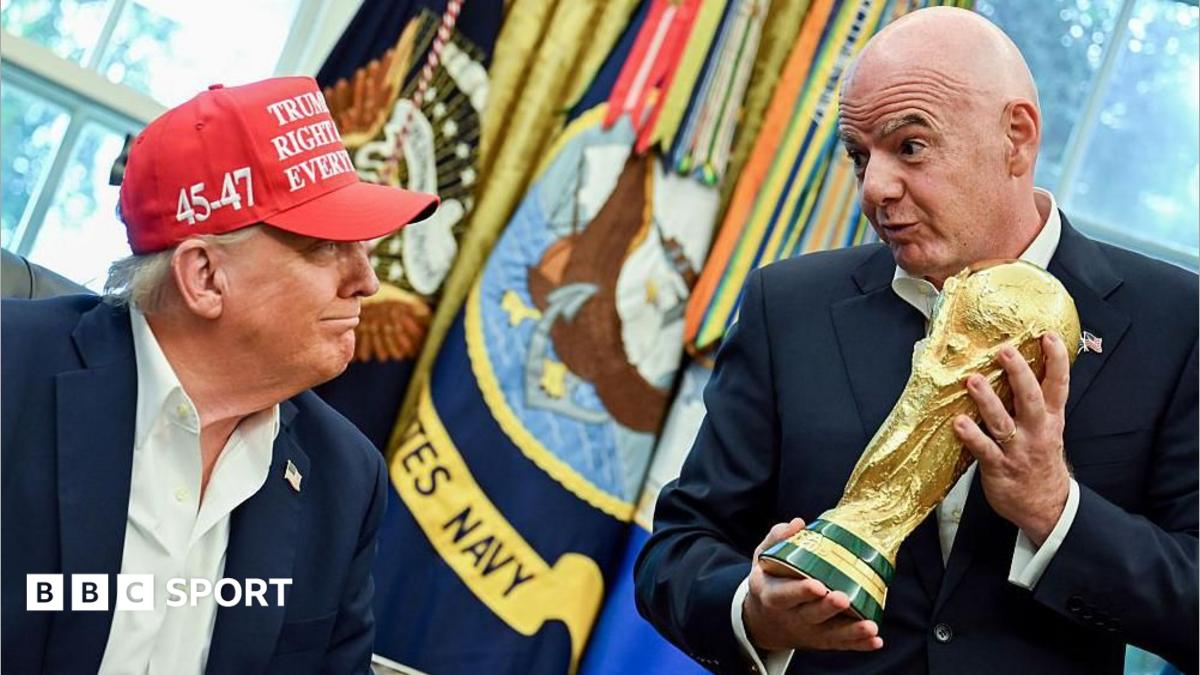
Infantino’s close public relationship with Trump has drawn further criticism: last year, he awarded the U.S. president a controversial FIFA Peace Prize during the World Cup draw, drawing condemnation from human rights groups that label the tournament a “bonanza of sportswashing” as Trump leverages the event to boost his political standing, coinciding with the 250th anniversary of U.S. independence. Amnesty International has warned the World Cup risks becoming “a stage for repression,” highlighting abusive U.S. immigration enforcement and the role of Immigration and Customs Enforcement (ICE) in the tournament’s security apparatus, coming off a high-profile fatal shooting of two U.S. citizens during an ICE immigration crackdown earlier this year. The White House World Cup Task Force has pushed back, vowing the tournament will be “the safest, most welcoming sporting event in history,” though a recent partial shutdown of the Department of Homeland Security – the agency leading tournament security – exposed critical planning gaps that officials admit are still being addressed just weeks ahead of kickoff. The recent Ebola outbreak centered in the Democratic Republic of Congo, whose team will play group matches in Houston, Atlanta and Guadalajara, has added an additional public health layer to security planning.
Even environmental pledges have come under fire. While the use of existing stadiums aligns with FIFA’s goal to cut carbon emissions 50% by 2030, the expanded 104-match tournament spread across three countries has forced teams, fans and media to rely heavily on air travel, leading environmental groups to label it the most climate-damaging World Cup in history. It is projected to generate more than nine million tonnes of carbon dioxide equivalent, almost double the average of the past four World Cups – far exceeding the 3.6 million ton estimate included in the original 2018 bid, which promised the tournament would set new sustainability standards for global sport.
In host co-host Mexico, challenges are already playing out in plain view: high ticket prices have priced out local fans, ongoing cartel violence has raised security concerns, and teacher protests demanding higher wages have toppled World Cup player statues and threatened to disrupt match play. In the U.S., polls show a majority of average Americans say the tournament is too expensive to attend, and hotel bookings across almost all host cities are well below initial projections, suggesting high costs and political tensions have deterred casual fans. Even for international visiting supporters, turnout is lower than expected: the Football Supporters’ Association projects just 12,000 to 15,000 England fans will attend each of the team’s group matches, a figure leaders call disappointing given pre-tournament excitement.
As the world turns its attention to Estadio Azteca for the opening match between Mexico and South Africa, the tournament stands at a crossroads. Proponents argue the expanded 48-team format will be a transformative moment for football in the U.S., which last hosted the tournament in 1994, when the event helped propel the sport into the American mainstream. Today, with a thriving domestic MLS and massive U.S. investment in European football, supporters see an opportunity to unlock a trillion-dollar growth market for the global game. But critics warn that the unbridled expansion, commercialization and politicization of this World Cup has created a perfect storm of controversy that could overshadow the on-pitch action. The next five weeks will answer one burning question: will this unprecedented tournament cement football’s place as the world’s most popular sport, or will it collapse under the weight of its own unaddressed challenges?