作者: admin

  • Police arrest a Sudanese suspect in a Belfast stabbing as Starmer calls for calm

    Police arrest a Sudanese suspect in a Belfast stabbing as Starmer calls for calm

    LONDON – A violent stabbing in a residential neighborhood of Belfast, Northern Ireland, has thrown the United Kingdom into a fresh public conversation about violence, immigration, and online misinformation, after law enforcement took a Sudanese man into custody this week in connection with the attack. The incident, which took place late Monday, gained rapid national attention after graphic videos of the assault were widely circulated across social media platforms.

    According to local law enforcement, the victim, a man in his 40s, was rushed to a local hospital with severe, life-altering injuries to his face, eyes, and back. The suspect, a 30-something Sudanese national, was arrested on suspicion of attempted murder and remains in police custody, with a kitchen knife recovered at the attack site. As of Tuesday, investigators are still working to map out a clear motive for the assault, though senior police officials have confirmed there is no current evidence linking the attack to terrorist activity. Ryan Henderson, assistant chief constable of the Police Service of Northern Ireland, confirmed Wednesday that no additional persons of interest are being sought in connection with the case, and that the suspect had been granted official permission to reside in the U.K. and lived close to where the stabbing occurred. Henderson declined to release further details, noting that the active investigation is still ongoing.

    In response to questions in Parliament about the suspect’s immigration status, Northern Ireland Secretary Hilary Benn stated he could not confirm whether the man had entered the U.K. through legal or irregular channels. Gavin Robinson, leader of the Democratic Unionist Party, told lawmakers Wednesday that the suspect had been allowed to stay in the U.K. on a five-year visa, and used the incident to push for stricter government controls on what he called “uncontrolled immigration.”

    The Belfast stabbing comes just one week after another high-profile stabbing murder in southern England amplified national tensions around immigration and policing. In that case, 21-year-old university student Henry Nowak, who was white, was stabbed to death in Southampton in December by Vickrum Digwa, a Sikh man who falsely told responding officers that Nowak had assaulted him in a racist attack. First responders initially treated the wounded Nowak as a suspect before recognizing his critical injuries and attempting lifesaving resuscitation. Digwa was convicted of murder last week and sentenced to life in prison with a minimum 21-year term before eligibility for parole. The case has sparked fierce public debate over policing protocol and racial dynamics in the justice system, and a public protest over Nowak’s death turned violent when attendees attacked police officers with chairs and rocks. Multiple people have since been charged with violent disorder in connection with the unrest. U.S. Vice President JD Vance and right-wing activists have already seized on the Southampton case to publicly blame lax U.K. immigration policies for the violence.

    Prime Minister Keir Starmer, whose Labour party took power earlier this year, has publicly condemned the Belfast attack as a “sickening” act of violence. “We have no tolerance for abhorrent scenes of violence like this on our streets,” Starmer said. On Tuesday, his office issued a formal public call for collective calm, stressing that investigators need adequate time and space to conduct a full, unpressured inquiry into the stabbing. Senior political and law enforcement leaders have also joined a coordinated appeal to the public: urging people not to share the graphic attack videos circulating online, and to avoid spreading unconfirmed misinformation that could inflame community tensions.

  • World Cup ref from Somalia who was denied entry to the US was about to make history for his country

    World Cup ref from Somalia who was denied entry to the US was about to make history for his country

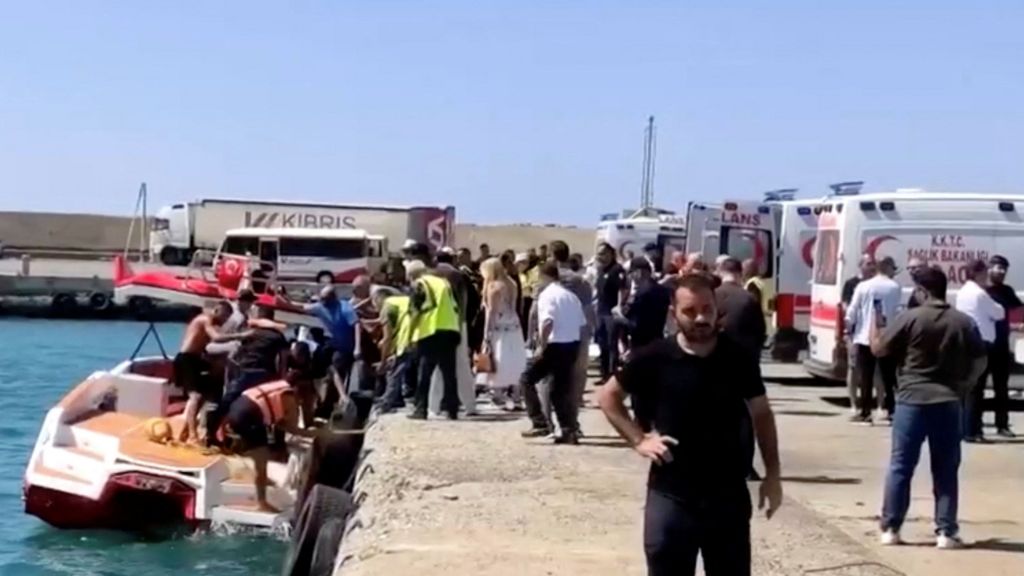
    As the 2026 FIFA World Cup co-hosted by the U.S., Mexico and Canada prepares to kick off this Thursday in the U.S., a historic breaking development has upended expectations for one of Africa’s top soccer officials. Omar Artan, the Somali referee set to become the first official from his conflict-affected East African nation to officiate at a men’s World Cup, has been denied entry to the United States at Miami International Airport and subsequently removed from the tournament’s official roster by FIFA.

    Artan’s path to the World Cup was a story of perseverance against extraordinary odds. Selected for FIFA’s final referee roster two months ago, he had already earned recognition as the African Football Confederation’s 2025 Best Male Referee, and just last month he handled the decisive second leg of the African Champions League final, the continent’s most high-profile club soccer fixture. In a recent interview with Al Jazeera, Artan opened up about the daily challenges he has navigated building his career in Somalia, where ongoing instability in the capital Mogadishu often forced him to change his route to referee training to avoid street explosions. Despite these barriers, he called the World Cup selection his life’s biggest goal, saying “You cannot give up as a referee.”

    Last week, Artan was issued a valid U.S. travel visa through the Somali Embassy in Kenya, which processes the country’s U.S. visa applications. But when he arrived in Miami Saturday to join the global cohort of World Cup referees for their pre-tournament training camp, U.S. Customs and Border Protection (CBP) detained him for additional screening, a step agency officials described as routine for verifying traveler admissibility. Following the inspection, CBP ruled Artan inadmissible to the U.S. citing unspecified “vetting concerns”, and did not elaborate on the nature of those concerns in its official statement. In an unusual detail, CBP did not name Artan in its statement, only referencing a Somali national who is a World Cup referee — a description that applies exclusively to Artan, the only Somali official selected for this year’s tournament.

    The incident follows a pattern of travel restrictions implemented by the Trump administration last year that targeted a list of mostly African nations, including Somalia, with heightened immigration screening and entry limits. Even before Artan’s denial, soccer stakeholders had raised concerns that players, fans and officials from these restricted countries could face entry barriers to the U.S.-hosted World Cup despite holding valid travel visas. As of Tuesday, Somalia’s Ministry of Sports and Youth said it had still not received a formal explanation for why Artan was turned away, and the country’s U.S. embassy has launched urgent diplomatic efforts to reverse the decision and clear Artan to take up his place at the tournament.

    In a public statement following the denial, FIFA confirmed it would remove Artan from the World Cup roster, noting that host national governments retain final authority over entry and visa decisions for event participants. The governing body added that it had been informed by U.S. authorities that Artan’s admissibility status would not be adjusted in time for the tournament, making it impossible for him to complete required pre-tournament training or officiate any matches. The decision comes amid longstanding close ties between FIFA leadership, including president Gianni Infantino, and the Trump administration, ties that Infantino and FIFA had publicly highlighted as a guarantee of smooth operations for the 2026 co-hosted tournament. Infantino has not issued any public comment on Artan’s case as of press time.

    In a statement released through FIFA, Artan struck a measured, optimistic tone despite the disappointment. “Despite the circumstances, I am in a positive mood and I am focused on the next challenges in my refereeing career,” he said. He thanked FIFA and the African Football Confederation for their support, extended well wishes to his fellow referees ahead of the tournament, and said he looked forward to competing in future global competitions.

  • Kenyan police fire tear gas at protest against US Ebola quarantine centre plan

    Kenyan police fire tear gas at protest against US Ebola quarantine centre plan

    Fresh unrest has erupted in the central Kenyan town of Nanyuki, where local law enforcement deployed tear gas to disperse demonstrators gathering to oppose the planned construction of an Ebola quarantine facility exclusively for United States citizens. This demonstration marks the latest round of public pushback against the project, which has roiled local communities and sparked legal challenges since it was first announced.

    Wednesday’s protest saw small clusters of demonstrators marching through Nanyuki, waving national Kenyan flags, holding hand-painted placards criticizing the government and project partners, and carrying a symbolic coffin marked with the word “Ebola” to underscore their fears of the virus. The group’s core demand is the full cancellation of the plan to build the 50-bed isolation centre. The demonstration comes just one week after two local residents were shot and killed during police operations to break up an earlier identical protest.

    Public anger over the facility has centered on two core grievances: widespread concerns about the risk of cross-border Ebola transmission into Kenya, which has not recorded any confirmed cases of the current outbreak, and repeated criticism that the Kenyan national government has failed to provide transparent information about the facility’s operations, safety protocols, and long-term plans. Last month, Kenya’s High Court ordered an immediate halt to all construction work on the site, after a local human rights organization filed a legal petition arguing that the centre posed “grave and imminent risks” to local public health.

    Despite the court ruling, satellite imagery analyzed by the British Broadcasting Corporation confirms that construction work has continued at the facility, which is being built on a local airbase. United States officials have confirmed the facility is intended to treat American citizens who contract Ebola during the ongoing outbreak in the neighboring Democratic Republic of the Congo, where the virus has killed more than 100 people out of 608 confirmed cases to date. The facility would be staffed entirely by American medical personnel. A US official told the BBC that Kenya was chosen as the site for three key reasons: its geographic proximity to the DRC outbreak epicenter, limited appropriate airport infrastructure in closer locations, and the need to ensure timely medical care for any affected Americans. The outbreak’s center in the Congolese city of Bunia sits roughly 780 kilometers from Nanyuki, with Uganda positioned between DRC and Kenya.

    For local residents, the project has already had tangible negative impacts on daily life. Protester Priscilla Imani told Reuters that fear over the facility has kept visitors away from Nanyuki and the wider Laikipia County, harming local livelihoods. “Laikipia is not a dumping site and our voices must be heard,” Imani said in a statement to reporters.

    Kenyan President William Ruto has publicly defended the plan, pushing back against growing opposition. Ruto explained that the Kenyan government received a formal request from the US to host the facility, and argued that turning down the request would be “inhuman.” He urged Kenyans against turning the public health issue into a political football, calling on political leaders to avoid what he described as “reckless” commentary surrounding the project. US officials remain confident that the project can move forward despite the legal challenge: last week, a US administration representative told reporters that the government is aware of the ongoing court case but remains “optimistic we can resolve objections.”

  • Man accused of killing mother-in-law with poison-laced satay

    Man accused of killing mother-in-law with poison-laced satay

    A chilling case of premeditated violence has emerged in Central Java, Indonesia, where a 40-year-old man has been taken into custody on suspicion of killing his mother-in-law by lacing chicken satay with rat poison. According to local law enforcement, the suspect, Purwadi Wahyudi, carried out the planned attack in mid-May after feeling he had been disrespected by 57-year-old victim Aminah.

    Authorities detailed the elaborate plot on Wednesday, outlining how Purwadi ordered chicken skewers through a delivery app on May 18, before tampering with the order by dipping the satay into toxic rat poison. To cover his tracks and deflect blame, the suspect created a fake account on the delivery platform, using his sister-in-law Luriyanti Putri’s name and profile photo to frame her for the crime. The poisoned food was then couriered directly to Aminah’s residential home.

    The following day, Putri discovered her mother’s body covered in vomit at the property. Even after the victim was laid to rest, lingering doubts about the sudden, unnatural death prompted family members to reach out to local police in Boyolali Regency to launch an investigation.

    During initial interviews, Putri told detectives that her mother had mentioned receiving an unexpected satay delivery from an unknown sender the day before her death. Putri, who confirmed she had not ordered any food to her mother’s home, had explicitly warned Aminah against eating the unrequested skewered chicken. Further testimony from a nearby neighbor added another key clue: the neighbor had reported finding multiple dead chickens near Aminah’s chicken coop in the days after the victim’s death.

    Acting on the family’s suspicions, investigators obtained permission to exhume Aminah’s body for post-mortem forensic analysis. Testing confirmed the investigators’ worst fears: traces of toxic chemicals were found throughout most of the victim’s major organs, confirming poisoning as the cause of death.

    Indonesian national outlet Kompas quoted Boyolali Police Criminal Investigation Unit head Indrawan Wira Saputra confirming that the killing was carried out after careful pre-planning. Multiple inconsistencies in the case also helped crack the plot open: the delivery driver who dropped off the satay told police he had been expecting a woman to place the order, matching the profile details on the fake account, raising early red flags. Additionally, the satay vendor who prepared the original order confirmed that the packaging handed to the driver differed from the packaging the food arrived in when it reached Aminah, further confirming the suspect had tampered with the order after purchasing it.

    As of the latest update, Purwadi has been officially named a suspect and remains in pre-trial detention. He has not yet been formally charged with murder. Under Indonesian criminal law, a murder conviction carries a maximum sentence of the death penalty and a minimum prison term of 20 years.

  • Iran soccer body claims fans’ tickets for World Cup games in the US have been revoked

    Iran soccer body claims fans’ tickets for World Cup games in the US have been revoked

    Just three days before Iran kicks off its 2026 FIFA World Cup campaign against New Zealand at the 70,000-seat SoFi Stadium in Inglewood, California, the Iranian Football Federation announced Tuesday that FIFA has fully revoked its ticket allocation for all three of the team’s group stage matches held on U.S. soil. This development marks a new low in growing frictions between Iranian football authorities, global governing body FIFA, and tournament co-host the United States, tensions that have escalated steadily since U.S. military strikes against Iran in late February.

    Under standard FIFA tournament rules, each of the 48 participating national federations is allocated 8% of the total stadium capacity for every one of its matches, a quota that typically amounts to thousands of tickets per team. These allocations are customarily distributed by federations to their most loyal supporters, who follow the national team across both home and international fixtures. However, in a statement carried by Iran’s semi-official state media, the federation confirmed that it is now unable to release even a single ticket to Iranian supporters following the sudden cancellation of its quota.

    The Iranian federation directly pointed to political interference from the United States, noting that while FIFA holds formal authority over all World Cup ticketing operations, Washington has deliberately moved to block Iranian fans from accessing the host venues. “This incident raises serious questions about the influence of non-sporting and political considerations on the organization of the world’s biggest football event,” the federation said in its official statement. FIFA has not yet issued any public response to the claims, despite multiple requests for comment.

    The revoked ticketing quota is not the only complication Iran has faced in preparation for this tournament, the team’s seventh appearance at a men’s World Cup. Originally, the squad planned to hold pre-tournament training camps in Tucson, Arizona, but those arrangements were scrapped, and the team has instead relocated its base to the Mexican border city of Tijuana. Multiple senior federation officials have also been denied entry visas to the United States for the tournament. Iran is scheduled to face Belgium in Inglewood on June 21, followed by a final group stage match against Egypt in Seattle on June 26.

    U.S. travel restrictions have long complicated access for Iranians ahead of the tournament: Washington has enforced a full travel ban on Iranian citizens since last year, making entry visas for the World Cup all but impossible for fans based inside Iran. It remains unclear how many of the originally allocated tickets had already been sold to members of the Iranian diaspora, including those already residing in the United States, prior to the revocation.

    With the first match just days away, FIFA now faces a tight timeline to resell the roughly 5,600 tickets that had been reserved for the Iran-New Zealand opener. As of Tuesday, the official FIFA ticketing website still showed dozens of field-level seats available for the match, priced at $450 each, though no large blocks of tickets were listed as available.

    The revocation also stands in direct contradiction to public promises made by FIFA President Gianni Infantino back in 2017, when the United States, Canada and Mexico were campaigning for their successful joint hosting bid. At the time, Infantino explicitly stated that unimpeded access for fans and officials is a non-negotiable requirement for any World Cup. “It’s obvious when it comes to FIFA competitions as well (that) any team, including the supporters and the officials of that team, who would qualify for a World Cup need to have access to the country, otherwise there is no World Cup,” Infantino said nine years ago. “That is obvious.”

    Iran’s ticketing dispute is part of a broader pattern of access issues for global football stakeholders ahead of the 2026 tournament, fueled by restrictive U.S. immigration policies. Over the weekend, a FIFA-appointed match referee from Somalia was denied entry to the United States at Miami International Airport, and was subsequently removed from the tournament’s 104-referee roster earlier this week. An Iraqi player was detained for multiple hours upon arrival in Chicago, while a photographer traveling with the Iraqi delegation was barred from entering the country entirely.

    Piara Powar, executive director of the Fare Network, FIFA’s official anti-discrimination monitoring partner, issued a scathing rebuke of the ongoing disruptions Tuesday. “The disruption is such that one has to ask who is running the World Cup. Is it FIFA or is it the U.S. government with its racially charged immigration policies?” Powar said. “Before a ball has been kicked, the sense that this World Cup is anything but the celebration of global humanity a World Cup should be is beginning to take over.”

  • ‘I’ve been diagnosed with severe depression’: Storm stars share personal stories as the club launches historic mental health round

    ‘I’ve been diagnosed with severe depression’: Storm stars share personal stories as the club launches historic mental health round

    One of Australia’s most storied and successful professional rugby league clubs is breaking new ground in athlete mental health advocacy, launching an unprecedented national initiative to confront the stigma that still prevents millions of Australians from seeking support for mental health challenges. Top National Rugby League (NRL) players from the Melbourne Storm have opened up about their own raw, deeply personal struggles with anxiety, depression, and public pressure to encourage people across the country to speak up about their battles rather than suffering in silence.

    For veteran prop Josh King, the relentless mental pressure of early career losses and constant public criticism left him brought to his lowest point. Young utility Alec MacDonald experienced unexplained severe stomach cramps during matches that were later traced to untreated performance anxiety, while winger Will Warbrick battled undiagnosed severe depression for a full year before he finally sought help. These are not isolated stories — they are just a sample of the quiet struggles that many elite athletes face off the field, which inspired the club to host its first ever Mental Health Round, branded “Tackle Tough Together”.

    Scheduled to take center stage on June 21 during the club’s Round 16 home match against the Canberra Raiders at Melbourne’s AAMI Park, the event marks the first initiative of its kind for rugby league in Victoria. The day will feature a public march of Storm legends to raise community awareness, free on-site mental health screenings for all attending fans, and fundraising efforts through the sale of commemorative pins, with 100% of proceeds going directly to leading Australian mental health organization Beyond Blue.

    Melbourne Storm Chief Executive Justin Rodski emphasized that the initiative aims to redefine what “toughness” actually means, both in sport and everyday life. “We know that in men’s sport, and for men broadly, the expectation is that you stay tough on the field,” Rodski explained. “But this round is about changing that narrative: real toughness isn’t hiding your pain. Real strength is checking in on your friends, and speaking up when you need help. We want men to feel safe to be vulnerable about the hard times they’re going through, to share what they’re feeling and work through it together.”

    For King, who joined the Storm in 2022 after a brutal start to his career with the Newcastle Knights, the message comes from years of personal experience. The 31-year-old front-rower lost 20 of his first 21 professional matches, collected two consecutive wooden spoons (for the league’s worst performing team), and faced constant public criticism that left him questioning whether he even wanted to continue playing professional footy. “The mental side of the game really had me on my knees for a while there,” King said. “At some point, everyone goes through a stretch where they’re struggling mentally, stuck in a dark place. For me that was early on in Newcastle. I was young, thrown into the first team too early, getting hammered in the press and on social media, and I didn’t know if I belonged here.”

    King eventually recognized he needed to make major changes to protect his mental health, stepping back from social media to cut out constant negativity, starting a regular gratitude practice, and beginning regular sessions with a psychologist. He also credits his volunteer work as a Starlight Children’s Foundation ambassador with changing his whole perspective on life. The Storm recently raised more than AU$100,000 for seriously ill children and their families through the foundation, and King has been volunteering with children’s hospitals since his time in Newcastle. “It sounds selfish, but those kids gave me more perspective than I ever gave them,” King admitted. “I’d be stressing about having a bad game, and there they are fighting for their lives and still smiling every day. Seeing how resilient those kids and their families are, it puts every little problem I have in its place.”

    MacDonald, now in his fifth season with the Storm, says the high-pressure environment of professional rugby league forced him to confront his anxiety early, and that experience sparked a new passion that could shape his post-playing career. “When I started playing top-level footy, the pressure was so intense that my anxiety started showing up physically — I had terrible stomach pains during games that no doctor could figure out for a while,” MacDonald explained. “It turned out I was stuck in fight-or-flight mode all the time, which stopped my stomach from digesting food properly. That forced me to start working on my mental health, and I’m actually grateful for it now. It gave me the tools I’ll have for life.”

    Like King, MacDonald intentionally limits his social media use, regularly deleting all apps for weeks at a time to avoid the constant negativity that comes with public life. Working through his own anxiety also sparked a passion for mental health, and he is currently studying psychology with the goal of one day helping other athletes and ordinary people work through their own struggles. “I never would have imagined I’d be studying this,” he said. “At first it was just about helping myself play better, but now I see how much good it could do to help other people too.”

    Warbrick, the Storm’s young winger, was diagnosed with severe depression at a young age, but hid his struggle for nearly a year because of the stigma around men talking about mental health. “I grew up around the idea that you just crack on and bottle everything up,” Warbrick said. “I didn’t even understand what I was feeling back then. I didn’t know what depression was, it was just a word to me. I tried to handle it on my own for a year, and it ended up taking over everything.”

    Warbrick eventually took the step of seeing a doctor and getting a formal diagnosis, which allowed him to access counseling and psychological support. His message to anyone struggling is simple: don’t try to handle it alone. “You can’t fix this by yourself. The first and hardest step is recognizing you need help, and then asking for it. That’s not weakness — that’s the bravest thing you can do,” he said. “It’s so important that big clubs with big platforms like the Storm are shining a light on this. Mental health is a serious issue, and it needs the attention to get better for everyone.”

    The inaugural Melbourne Storm Mental Health Round is held in partnership with AIA Australia and supported by Beyond Blue, with organizers encouraging all fans and community members to join the movement to “Tackle Tough Together” on June 21.

  • Dozens dead in Philippines quake

    Dozens dead in Philippines quake

    On a Monday morning in June 2026, a powerful 7.8-magnitude offshore earthquake struck off the coast of Mindanao, the second-most populous island in the southern Philippines, leaving a trail of death, destruction, and displacement across the region and triggering tsunami warnings across Southeast Asia and the Western Pacific.

    Provincial disaster officials have confirmed at least 32 fatalities from the quake, which caught communities off guard as it hit just as schools across the country were reopening following an extended holiday break. More than 200 people were treated for earthquake-related injuries, and at least 12 people remain unaccounted for amid ongoing search and recovery operations, according to national disaster response authorities. Thousands of local residents have been forced to leave their damaged or at-risk homes, with displacement numbers expected to rise as full damage assessments get underway.

    Tremors from the massive quake were felt as far as 420 kilometers away, reaching the Indonesian city of Manado on the island of Sulawesi and shaking structures across a dozen Philippine provinces. The port city of General Santos, home to roughly 720,000 residents, bore the brunt of the damage, with multiple buildings collapsing and critical public and private infrastructure suffering significant damage. In Sarangani Province’s coastal town of Glan, the quake triggered a devastating landslide that alone claimed the lives of 13 villagers.

    Teresito Bacolcol, director of the Philippine Institute of Volcanology and Seismology, noted this event is the strongest earthquake to hit the archipelago nation so far this year. In the hours following the initial tremor, at least nine powerful aftershocks rattled Mindanao, the largest of which registered a magnitude of 6.7, keeping emergency crews and residents on edge amid fears of additional structural collapse.

    The offshore quake also generated small tsunami surges along nearby coasts, with a 1-meter wave recorded along parts of Mindanao’s shoreline and a 0.75-meter surge detected in parts of Indonesia’s North Sulawesi. Immediately after the quake, tsunami alerts were issued for southern Philippines, northern Indonesia, and the Malaysian state of Sabah on Borneo. The U.S. Tsunami Warning System warned the surges could impact multiple countries, while Australian authorities issued an initial advisory for potential small waves on the country’s northern coasts. Japan’s Meteorological Agency also issued an advisory, confirming a 0.2-meter or smaller tsunami had been observed, leading to temporary ferry disruptions and precautionary closures of coastal beaches.

    In the wake of the disaster, Philippine President Ferdinand Marcos Jr. quickly ordered the cancellation of all classes across affected regions and directed national disaster-response agencies to deploy immediately to the hardest-hit areas. “The national government is moving and we will not leave Mindanao behind,” Marcos Jr. said in a public statement. The Philippine military confirmed its dedicated disaster response units have already been deployed to affected areas to support search, rescue, and relief operations. General Santos’ international airport was forced to temporarily close due to infrastructure damage, resulting in the cancellation of 17 domestic flights, according to the Civil Aviation Authority of the Philippines.

    This latest major seismic event comes just eight months after the Philippines experienced its deadliest earthquake in 12 years: a shallow 6.9-magnitude tremor off the island of Cebu that killed 79 people. Just two weeks after that Cebu quake, two large quakes, the strongest registering magnitude 7.4, also struck Mindanao, leaving the island already familiar with large-scale disaster response and recovery efforts.

    As of the latest update, authorities stress that the full scope of damage and casualties remains unclear, with systematic damage and needs assessments still ongoing across the affected region.

  • What happened and why?

    What happened and why?

    A historic milestone in global soccer officiating has fallen through at the last minute, after Omar Artan — the Somali referee set to make history as the first official from his country to work at a men’s World Cup finals — was removed from the tournament’s official roster of match officials. The sudden shakeup comes directly after U.S. border authorities denied Artan entry into the country, derailing his preparations for the high-profile global competition. The development was first reported 59 minutes ago under Africa Sport coverage, leaving the international soccer community surprised by the unforeseen barrier that blocked Artan’s once-in-a-lifetime opportunity. No further details on the specific reason for the entry denial or whether a replacement referee has been named have been released as of the latest update.

  • Zelenskyy arrives in Estonia to attend Nordic-Baltic summit

    Zelenskyy arrives in Estonia to attend Nordic-Baltic summit

    In a high-stakes diplomatic visit that underscores continued regional and global support for Ukraine amid its ongoing full-scale war with Russia, Ukrainian President Volodymyr Zelenskyy touched down in Tallinn, the capital of Estonia, on Tuesday. Accompanied by First Lady Olena Zelenska, the trip centers on his participation in a gathering of Nordic and Baltic leaders hosted by Estonia, which currently holds the rotating presidency of the NB8 cooperation bloc. The grouping brings together five Nordic nations and three Baltic states, with this session bringing together the bloc’s national prime ministers alongside Zelenskyy to address issues tied to the war. Estonia’s Foreign Ministry formally welcomed the first lady in an official post shared to the social platform X, marking the warm official reception for the Ukrainian delegation.

    This visit unfolds against a backdrop of growing cross-border friction, as Ukrainian drones have repeatedly drifted into Baltic territory in recent months. The unintended incursions stem from Kyiv’s stepped-up campaign of strikes against Russian-controlled Baltic Sea ports that Moscow relies on for oil exports, a key part of Ukraine’s strategy to raise the economic pressure on the Kremlin for its invasion. Even as Zelenskyy holds diplomatic talks in Tallinn, deadly violence continues to unfold across Ukraine: Russian forces launched a massive wave of overnight airstrikes, sending 166 long-range attack drones and two precision-guided missiles toward Ukrainian targets. Ukraine’s Air Force reports that its air defense systems successfully intercepted and destroyed 146 of the inbound drones. On the ground, the human cost of the latest assault has been steep. In Ukraine’s northeastern Kharkiv region, regional governor Oleh Syniehubov confirmed that three people were killed and 25 more, including three children, were wounded in Russian attacks over the preceding 24 hours. Further south, in the Dnipropetrovsk region, overnight strikes targeting multiple districts left three people injured, according to regional administration head Oleksandr Hanzha.

    The exchange of fire extended across the border into Russian territory as well. Russia’s Defense Ministry claimed that its own air defenses downed 140 Ukrainian drones overnight. In Russia’s Belgorod region, local emergency officials confirmed one civilian woman was killed when a stray Ukrainian drone struck a residential apartment building.

    Alongside Zelenskyy’s summit participation, Ukrainian Foreign Minister Andrii Sybiha also joined the delegation in Tallinn for bilateral talks with his Estonian counterpart, Margus Tsahkna. The two diplomats covered three core priorities: Ukraine’s ongoing security needs, new strategies to increase international pressure on Russia, and Kyiv’s progress in its bid to join the European Union. Tsahkna reaffirmed Estonia’s unwavering commitment to Ukraine in a post on X, writing, “Estonia will continue to stand by Ukraine for as long as it takes. As Putin intensifies his attacks and shows no sign of abandoning his imperial ambitions, our responsibility is to increase pressure, not offer concessions.” This stance aligns with comments Tsahkna made in May, when he confirmed Estonia’s full support for Ukraine’s EU accession process and called for the bloc to accelerate negotiations.

    Ahead of his arrival in Estonia, Zelenskyy made headlines on Monday for unexpected talks with two U.S. envoys, Steve Witkoff and Jared Kushner, during a refueling stopover in Chișinău, the capital of Moldova. Zelenskyy described the discussions as positive, noting the talks centered on pathways to end the ongoing war. The Ukrainian leader added that the two sides explored diplomatic opportunities ahead of the upcoming Group of Seven summit scheduled for later this month, and that he shared Ukraine’s full intelligence assessment of Russian strategic intentions with the U.S. delegation.

  • Black bear caught in Japan after days of sightings

    Black bear caught in Japan after days of sightings

    Japan is grappling with an unprecedented surge in human-bear conflicts that has pushed annual attacks to record highs, leaving authorities scrambling to contain two rogue bruins that have terrorized populated areas near Tokyo in recent days.

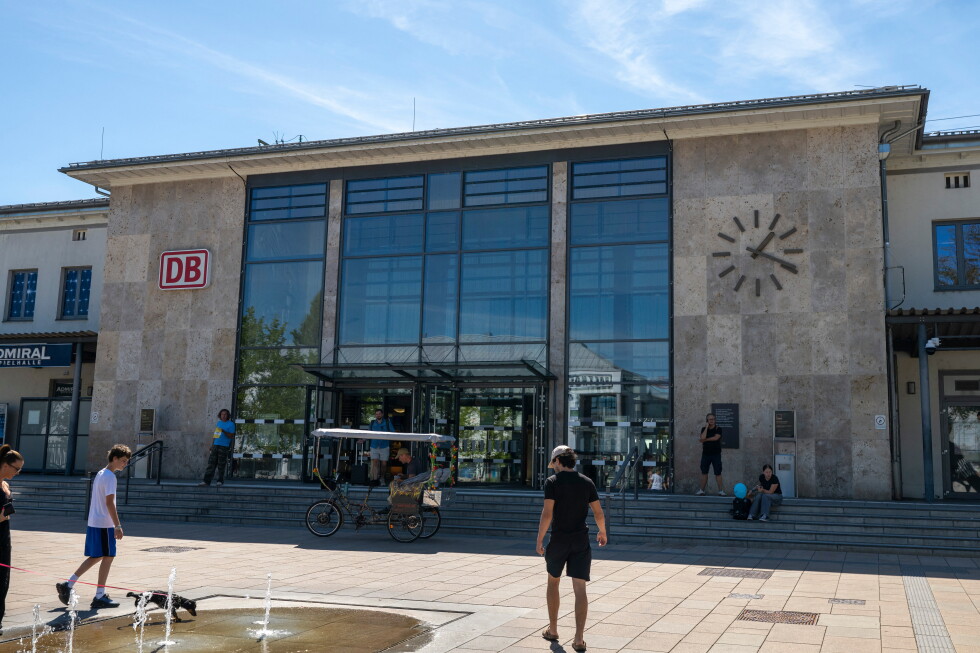
    In Utsunomiya, a city of 500,000 located roughly 100 kilometers north of Tokyo, law enforcement and wildlife officials successfully captured an approximately 100-kilogram black bear on Tuesday, concluding a days-long search that disrupted daily life for the entire community. The operation, which took 1 hour and 40 minutes after the bear’s position was confirmed 2.5 kilometers south of the city’s main railway station, was far from straightforward: a veterinarian’s first tranquilizer shot missed the target, and two additional doses fired 15 minutes apart were required to subdue the animal. Since the bear was first spotted on Saturday, local residents reported more than 20 sightings across residential and public spaces, including near family homes, elementary schools, urban parks, a local river where the bear was seen swimming, and backyards where it scaled privacy fences. The repeated, unprecedented close encounters prompted city officials to close all 94 public primary and middle schools in Utsunomiya as a precaution, and warnings were issued that a second bear may still be roaming the area, urging locals to lock all exterior doors and windows day and night.

    Some 100 kilometers north of Utsunomiya in Fukushima Prefecture, a second bear described by local officials as “extremely intelligent” remains at large after injuring four people in a residential neighborhood last week. Multiple attempts to tranquilize the animal have failed, and it has repeatedly outmaneuvered search teams. In one notable incident, the bruin broke into an electronics factory, then surprised surrounding police officers by unlocking a window and escaping the surrounded building. Fukushima’s mayor added that search teams have even observed the bear drinking from a public water tap, suggesting it may have figured out how to turn the tap handle on its own, cementing the animal’s reputation for unusual cunning. Authorities have now launched a large-scale aerial search using surveillance drones to track the bear across the region’s mixed residential and forested terrain.

    This pair of high-profile incidents comes as Japan faces a growing public safety crisis around bear encounters. Data from Japan’s Ministry of the Environment shows that bear attacks hit an all-time record in 2025, with 238 people injured and 13 killed across the country in encounters with wild bears. In response to the rising casualty numbers, the Japanese national government launched a coordinated response earlier this year, establishing a cross-ministerial task force and rolling out new emergency response protocols to reduce harm to residents. Local governments and private firms are increasingly turning to cutting-edge technology to address the problem, as traditional bear management strategies struggle to keep pace with growing conflicts. One small village in Fukushima Prefecture is currently testing an AI-powered image analysis system that can automatically identify bears in footage from remote trail cameras, cutting down on the time wildlife teams spend reviewing footage. Telecom firm KDDI SmartDrone has developed an unmanned aerial system equipped with thermal imaging cameras that can track bears through thick woodland without requiring specialized training for local operators, allowing teams to follow animals until hunters or police can arrive on scene. Other firms have developed creative non-lethal deterrent tools: Ohta Seiki, a manufacturing company, launched the “Super Monster Wolf” back in 2016, a solar-powered robotic wolf designed to scare off bears and other unwanted wildlife by mimicking the predator’s appearance and calls. The company reports that it has already received dozens of orders for the device in 2026, far exceeding the typical annual demand for the product.