Nestled in the highlands east of Ecuador’s capital Quito, the small village of Guangopolo holds a 200-year-old Indigenous craft tradition that is quietly slipping into history: the hand-weaving of cedazos, traditional horsehair sieves that once defined the community’s identity and economic life.
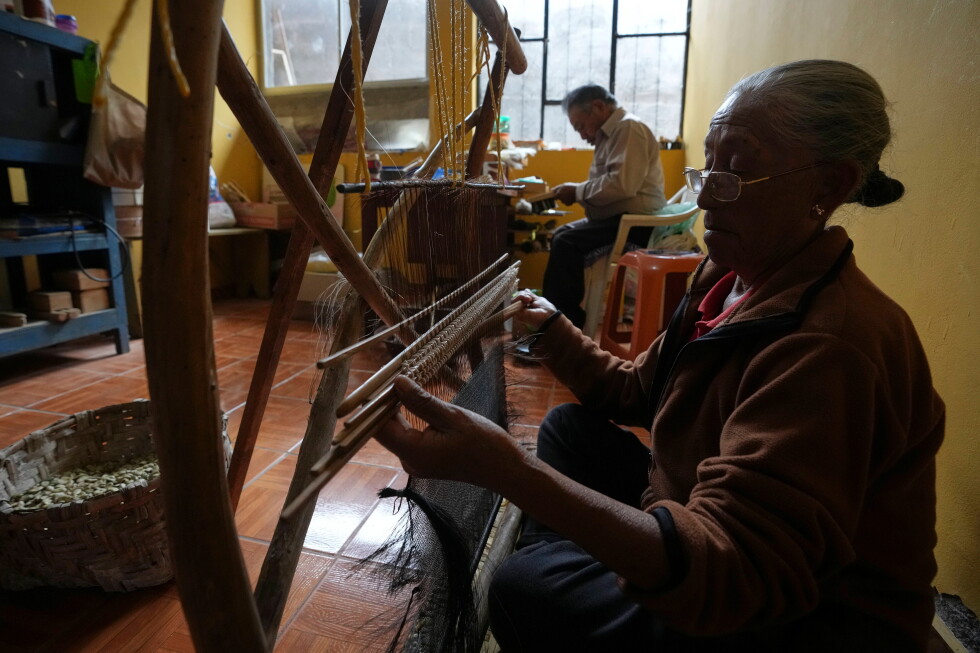
Inside 76-year-old artisan Ligia Ipiales’ modest family home, she moves with deliberate care, separating individual strands from raw horse tails to weave an intricate mesh as fine as medical gauze — the signature texture that made Guangopolo’s cedazos prized across Ecuador for generations. Today, only nine practicing cedacero artisans remain in the entire village, a dramatic collapse from the thriving trade that supported hundreds of households just half a century ago.
Among the remaining craftspeople is 51-year-old Guido Paucar, the youngest and only man in the group. He remembers a very different Guangopolo from his childhood: 50 years ago, roughly 500 Indigenous families in the village made their full or partial living crafting and selling cedazos, shipping up to 600 finished sieves to markets across the country every month, priced between $6 and $30 depending on size. “This is our village’s identity. If it disappears, Guangopolo loses a part of who we are,” Paucar said. “We are the last generation making these sieves.”
What doomed the centuries-old trade? The mass production of cheap plastic kitchen sieves and synthetic alternatives pushed handcrafted horsehair cedazos out of everyday Ecuadorian households, reducing them to decorative display pieces for tourists rather than functional kitchen tools. “Now we only sell up to 10 each week,” Paucar added. Compounding the decline is a growing scarcity of the traditional raw materials required for authentic cedazos. The craft relies on two key local resources: horsehair from working farm horses, and wood from the native Pumamaqui tree used to craft the 15-centimeter drum-shaped wooden rims that hold the mesh in place.
Where working horses once populated every Andean farm in the region, modern agricultural mechanization has replaced equine labor with motorcycles and tractors, eliminating the local supply of horsehair. Artisans are now forced to import horsehair from distant regions of southern Colombia and central Ecuador, paying a steep premium: 45 kilograms of raw horsehair costs roughly $1,000, a major expense for small-batch producers.
The process of crafting a single sieve remains labor-intensive, unchanged for two centuries. After harvesting, horsehair is washed, sun-dried, and sorted by length before being stretched onto a simple handcrafted wooden frame called a guanga. Seated cross-legged on the floor, artisans sort, stretch, and knot individual strands at a speed that makes their fingers blur, resulting in a fine, durable mesh that was once indispensable for sifting flour in Ecuadorian homes.
For decades, the craft also played a critical social role: it provided rural women with independent extra income, often enough to cover school fees and other expenses for their children. Today, efforts to pass the tradition to younger generations at Guangopolo’s El Cedacero craft center — through free workshops and targeted training programs — have repeatedly failed.
Leaving the village for higher-paying professional careers has become the norm for young people, turning traditional craft work into an unappealing option. “From the age of 6 or 7 our mothers taught us how to weave sieves,” explained 57-year-old artisan Leonor Cuje, gesturing to a table lined with finished sieves and smaller horsehair goods like bracelets and brushes. “Now they are professionals and they don’t want to do this anymore.”