作者: admin

  • Israeli army chief warns reserve forces could ‘collapse’ amid manpower crisis

    Israeli army chief warns reserve forces could ‘collapse’ amid manpower crisis

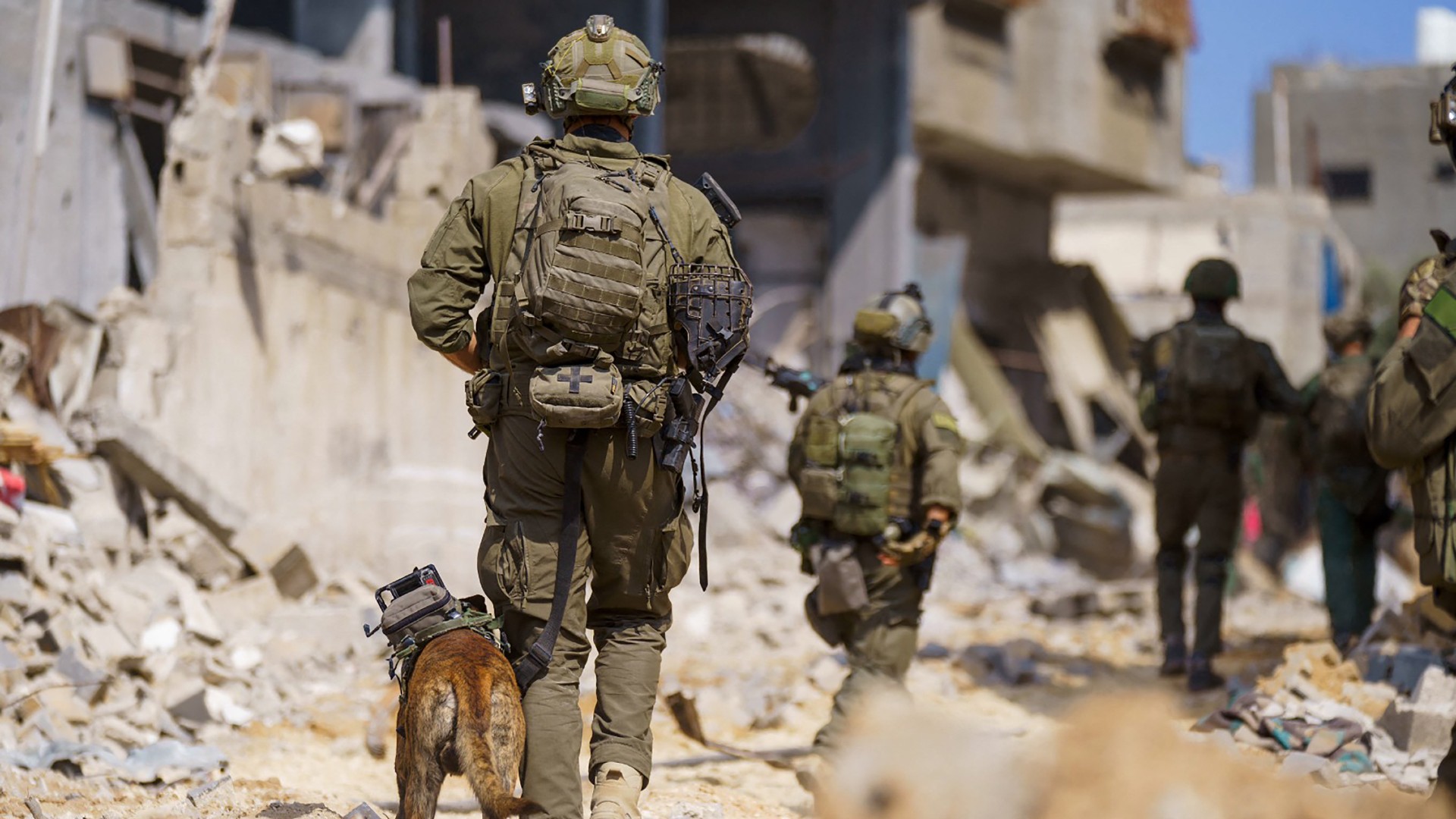
    Israeli military chief of staff Eyal Zamir has delivered a stark, urgent warning to Israeli lawmakers that the Israel Defense Forces (IDF) could see its entire reserve force collapse within a matter of months if the government fails to immediately pass sweeping conscription and service extension legislation, multiple Israeli media outlets have confirmed. Speaking during a closed-door classified session of the Knesset’s Foreign Affairs and Defence Committee on Monday, Zamir laid out an urgent set of policy demands, including raising mandatory active military service from 30 months to 36 months, expanding overall recruitment pools, and updating outdated reserve duty requirements to address the growing shortfall.

    Zamir’s projection painted a grim picture for the IDF’s force structure: by January 2027, the scheduled reduction of mandatory service to 30 months will strip the service of thousands of additional frontline combat troops, creating a gap so severe that “the reserve army will collapse into itself,” according to comments reported by Israeli outlet i24news. The top uniformed official stressed that after nearly three years of constant combat operations across multiple fronts, the IDF is already grappling with a critical manpower shortage that threatens to undermine the military’s ability to carry out future missions. “I do not deal with political or legislative processes,” Zamir told the committee. “I am engaged in multi-front warfare and in defeating the enemy. In order to continue doing that, the IDF urgently needs more soldiers.”

    Per Israeli news outlet Ynet, Zamir confirmed the IDF is already operating at “the lower threshold in terms of manpower,” as prolonged large-scale military campaigns continue to drain personnel resources. Monday’s warning comes just weeks after Zamir first notified the government that the IDF needs an additional 15,000 troops, between 7,000 and 8,000 of whom are required for frontline combat roles. This need has grown more pressing in recent weeks after the Israeli government approved construction of 30 new illegal outposts in the occupied West Bank, all of which require dedicated military protection for residents and operations.

    A senior official from the IDF Manpower Directorate added further context Sunday, noting that if mandatory service is not extended, reservists could be forced to serve between 80 and 100 days of active duty annually, a burden that many observers believe will lead to widespread retention issues. Just one day after the Manpower Directorate’s comments, Israel Hayom reported that the Knesset committee had extended the active call-up order for roughly 400,000 reservists through the end of the current month. While the IDF has attempted to alleviate the shortage over the past 18 months by recruiting 8,000 new troops through an accelerated career-service program, Israeli financial newspaper The Marker reported that the initiative has failed to meaningfully reduce the strain on existing personnel. As of today, an estimated 100,000 reservists remain on active duty, placing unprecedented pressure on Israel’s reserve force structure.

    Opposition politicians across the ideological spectrum have seized on Zamir’s comments to attack Prime Minister Benjamin Netanyahu’s governing coalition, arguing that the government’s failure to end longstanding military conscription exemptions for ultra-Orthodox Jewish communities is directly responsible for the worsening manpower crisis. Gadi Eisenkot, a former IDF chief of staff and opposition figure, accused the government of “evading responsibility and prioritizing political considerations over the country’s security.” Writing on social platform X, Eisenkot added: “A government that does not demand conscription for everyone at such a critical moment for Israel is a government that does not deserve to remain in office for even one more day.”

    Former Israeli Prime Minister and current opposition leader Naftali Bennett echoed Eisenkot’s criticism, stating that the ongoing draft exemptions are “costing the lives of our soldiers.” Bennett pointed to the scale of the unmet personnel demand: “There are 100,000 healthy ultra-Orthodox young men who, because of politics, are not being drafted.”

    Public debate over ultra-Orthodox conscription exemptions has exploded in intensity in Israel since October 2023, as expanded operational demands across Gaza, the West Bank, and northern border with Lebanon have stretched the IDF’s personnel capacity to breaking point. Senior military leaders and politicians from across the political divide have repeatedly called for an end to the exemptions to close the manpower gap, but Netanyahu’s coalition has been unable to advance new conscription legislation due to deep internal divisions within his ruling alliance.

    Avigdor Liberman, leader of the right-wing Yisrael Beiteinu party, called the failure to mandate ultra-Orthodox conscription “a devastating blow to the security and future of the State of Israel.” Yair Golan, leader of the opposition Democrats party and a retired senior IDF officer, went further, accusing the government of “selling out the country’s security simply to preserve ultra-Orthodox draft evasion. This is simply a betrayal of our soldiers,” Golan said.

    The ongoing manpower crisis has also amplified a separate contentious debate over the recruitment of women into combat units. During his testimony to the Knesset committee, Zamir pushed back against opposition from religious leaders, reaffirming the IDF’s commitment to recruiting women for combat roles. “Women are an inseparable part of the IDF’s strength,” he stated.

    Last month, leading religious-Zionist rabbis issued a formal warning that continued recruitment of women into mixed-gender combat units would drive members of their communities to refuse military service. “Under no circumstances can we allow our male and female students to serve in mixed-gender frameworks that place them in impossible situations,” one rabbi declared during an emergency conference of religious-Zionist leaders. A second rabbi added: “We will not serve in a field unit in a setting where there is mixing with women.”

    Days after that conference, Israel’s public broadcaster Kan 11 reported that three religious Israeli soldiers had already refused to report for duty at a northern Israel military base after a female service member was assigned to the same post, marking the first public case of protest-related refusal tied to the mixed-gender debate.

    With the Netanyahu government deadlocked on passing new conscription legislation, Israeli security analysts and researchers have floated a series of unorthodox alternative proposals to address the IDF’s critical manpower shortage. In February, two researchers at the Jerusalem Institute for Strategy and Security, a prominent right-leaning security think tank, proposed the creation of a foreign legion modeled on the longstanding unit operated by the French military. The researchers argued that increasing recruitment from global Jewish diaspora communities would not meet the IDF’s current needs, and instead called for allowing “the enlistment of non-citizen volunteers” to build a new auxiliary fighting force. While the pair acknowledged that the proposal “will likely make many Israelis uncomfortable,” their report argued that “there is no compelling reason to forgo the assistance of foreign volunteers in advancing the Zionist project.”
  • South Africa’s top court bars repeat asylum applications

    South Africa’s top court bars repeat asylum applications

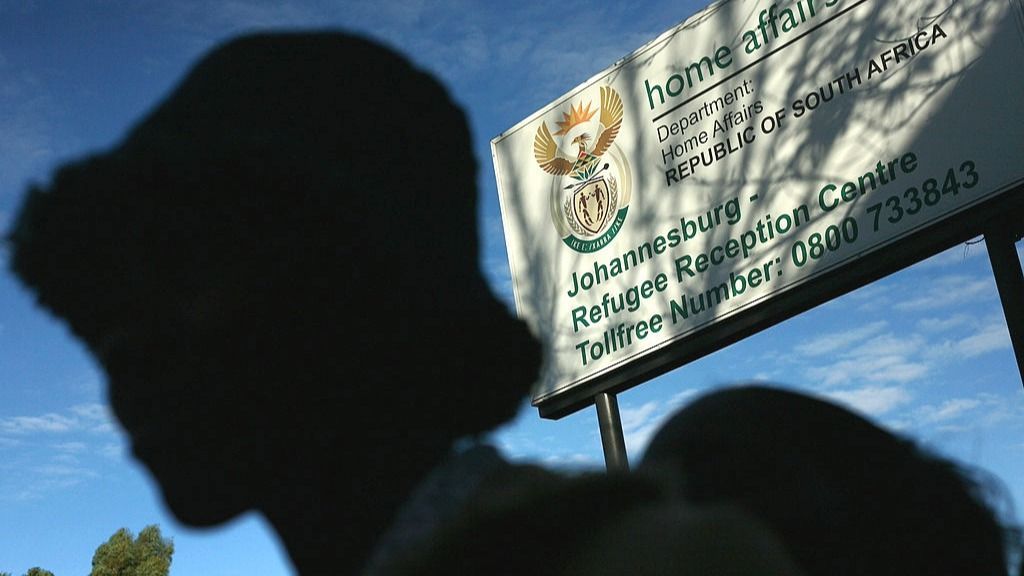
    In a landmark final ruling that has reshaped South Africa’s asylum framework, the country’s Constitutional Court has moved to block foreign nationals from submitting repeated asylum claims after an initial application has been rejected. The judgment, which upends a prior ruling from the Supreme Court of Appeal, addresses longstanding administrative and policy concerns over the nation’s overstretched refugee processing system.

    The court’s majority opinion emphasized that without explicit governing legislation, allowing endless cycles of repeat asylum applications would create a permanent logjam: a “never-ending cycle” of processing that would block ordered deportations and overwhelm government administrative capacity. The case that led to the ruling originated with two Burundian nationals who first had their asylum claims rejected in 2014, then submitted a new application in 2018. The pair argued that renewed political violence that erupted in Burundi following the 2015 controversial presidential election, which left at least 70 people dead amid widespread unrest after then-President Pierre Nkurunziza’s bid for a third term, justified a reevaluation of their claim.

    Lower courts sided with the two claimants, but the Constitutional Court, South Africa’s final court of appeal, overturned that decision. The ruling has been celebrated by the nation’s current coalition government as a critical check on systemic abuse. Home Affairs Minister Leon Schreiber, a member of the Democratic Alliance – the second-largest party in President Cyril Ramaphosa’s ANC-led unity government – called the outcome a “major victory” over misuse of the refugee system. In remarks to local broadcaster Newzroom Afrika, Schreiber explained his department had spearheaded the legal challenge to the Supreme Court of Appeal’s ruling, warning that upholding the lower court’s decision would have opened the door to “multiple bites at the cherry” for rejected claimants, enabling ongoing abuse of the asylum process.

    Schreiber added that the judgment is a key step toward the government’s broader goal of building a more “effective and fair system to manage refugees and asylum seekers.” As of 2025, UN High Commissioner for Refugees (UNHCR) data shows South Africa hosts more than 167,000 registered refugees and asylum seekers, the vast majority originating from neighboring and conflict-affected African states including Burundi, the Democratic Republic of Congo, Somalia, South Sudan, Rwanda and Zimbabwe. Official census figures estimate South Africa is home to roughly 2.4 million documented migrants, accounting for just under 4% of the total population, though observers believe a large additional number of undocumented migrants reside in the country without formal status. As Africa’s most industrialized economy, South Africa has long drawn migrant workers from across the continent seeking better economic opportunity.

    The ruling comes at a moment of heightened domestic tension over immigration, with South Africa recently swept by a wave of large-scale protests targeting undocumented migrants. Thousands of demonstrators have marched in major urban centers to demand mass deportations of foreign nationals, and the unrest has included targeted attacks on migrant-owned businesses and communities. Several African governments have formally raised concerns through the African Union and have issued travel advisories warning their citizens residing in South Africa of potential targeting. Earlier this week, President Ramaphosa issued a public statement blaming “opportunists” for orchestrating the violent anti-immigrant attacks, stressing that the unrest does not reflect the will of the South African public or official government policy. “The recent violent protests and criminal acts directed at foreign nationals in parts of our country do not represent the views of South Africa’s people nor reflect our government’s policy,” Ramaphosa said in an open letter.

    The judgment marks a significant shift in South Africa’s asylum policy, and comes as the government faces growing pressure from domestic political factions to crack down on unauthorized migration while navigating criticism from human rights groups and neighboring nations over the treatment of foreign residents.

  • Trump ‘very disappointed’ in Kurds who just ‘take, take, take’

    Trump ‘very disappointed’ in Kurds who just ‘take, take, take’

    Weeks after the United States and Israel launched their large-scale military assault on Iran starting in late February, former U.S. President Donald Trump has publicly slammed Iranian Kurdish groups, saying he is “very disappointed” in their failure to provide military backing to Iranian opposition forces. His remarks at the White House Monday came amid persistent unconfirmed media reports that the Central Intelligence Agency had supplied weaponry to Kurdish opposition factions to deploy against the Iranian government, claims that Kurdish leaders have repeatedly and flatly denied.

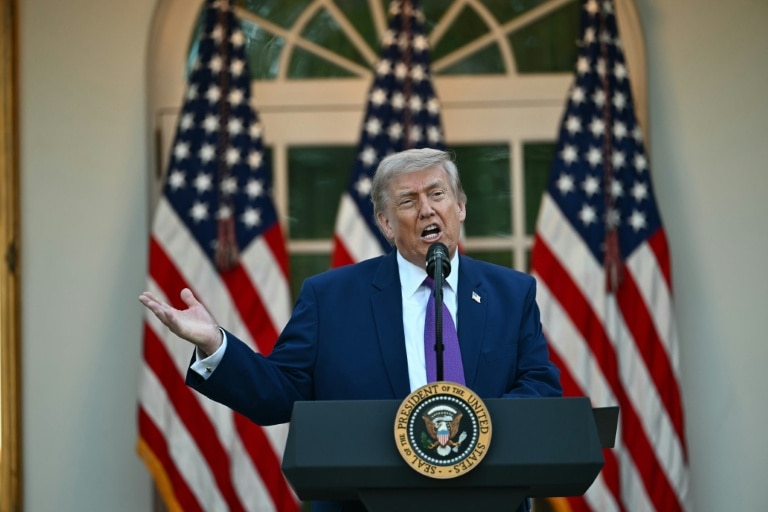
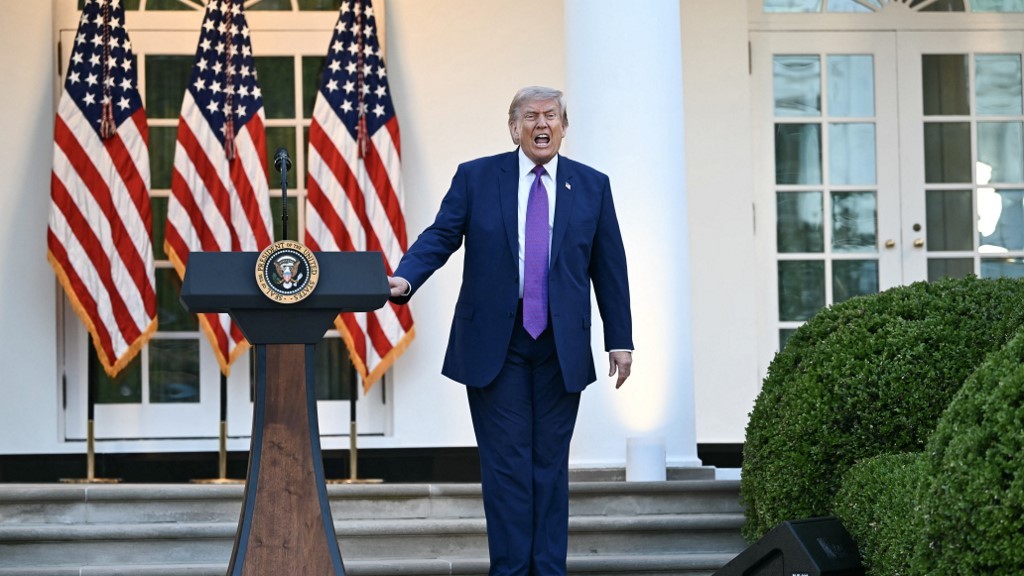
    In his comments, Trump painted a critical picture of the Kurdish groups, saying, “The Kurds take, take, take. They have a great reputation in Congress. Congress says they fight hard. They fight hard when they get paid.” These latest critical remarks mark a sharp shift from Trump’s own conflicting public statements on the issue just weeks earlier, highlighting the chaotic alignment of U.S. policy around the Iran conflict.

    Shortly after the U.S.-Israeli offensive began in early March, Trump confirmed to Reuters that he would openly support a Kurdish offensive against the Iranian government, a comment that aligned with widespread media reports of CIA arms shipments to Kurdish factions. However, just days later, Trump backtracked entirely, telling reporters he had explicitly instructed Kurdish groups not to join the conflict. “They’re willing to go in, but I’ve told them I don’t want them to go in,” he stated at the time.

    These contradictory statements from the U.S. head of state have left Iranian Kurdish party leaders caught off guard. The factions collectively maintain roughly 6,000 armed fighters based primarily in northern Iraq, and none of the groups have entered the ongoing U.S.-Israeli war against Iran to date.

    Mustafa Mawloudi, deputy secretary-general of the Kurdistan Democratic Party of Iran (PDKI) — one of the largest Iranian Kurdish opposition groups — told independent outlet Middle East Eye that his organization has neither received U.S. weapons nor shipped arms to activists inside Iranian Kurdistan, referred to locally as Rojhalat. “A proof of this is that we cannot send arms through Iraq to our people,” Mawloudi explained, noting that cross-border arms shipments would create serious legal complications for the group, which is based in Iraq’s northern Kurdish autonomous region.

    Tensions have spiked dramatically in the border region since the U.S.-Israeli offensive began. Data compiled by independent Kurdish news outlet Rojhelat Info shows that Iran and its allied militias have launched nearly 700 missile and drone strikes targeting Iraqi Kurdistan since February 28. At least 15 people have been killed in these attacks, according to the data. Roughly 170 of those strikes have specifically targeted bases of Iranian Kurdish opposition groups, killing six opposition fighters to date.

    The back-and-forth rhetoric from Trump comes on the heels of major unrest inside Iran just months earlier: in late December, widespread nationwide anti-government protests spread across the country, lasting roughly two weeks before Iranian security forces violently suppressed the demonstrations amid a total national internet blackout.

  • EU agrees to sanctions on Israeli settlers after Hungary’s new government lifts veto

    EU agrees to sanctions on Israeli settlers after Hungary’s new government lifts veto

    After months of diplomatic deadlock, the European Union has finally moved forward with targeted sanctions against violent Israeli settlers in the occupied West Bank, a breakthrough made possible when Hungary’s new government reversed a veto held by the country’s former pro-Israel right-wing administration.

    For months, the EU’s plan to penalize settlers amid a sharp spike in anti-Palestinian attacks had been held up by Viktor Orban, the former Hungarian prime minister and a longstanding close ally of Israel, who blocked the proposal after settler violence surged across the occupied territory starting in October 2023. Orban’s tenure ended when he lost re-election in April, and his successor Peter Magyar moved quickly to end the stalemate, clearing the path for a formal vote.

    The sanctions package received final approval during a meeting of EU foreign ministers from all 27 member states on Monday. Under the terms of the new measures, three individual Israeli settlers and four settler organizations will be targeted, though the identities of those affected have not yet been released to the public. The sanctions also extend to leading figures from Hamas, the Palestinian militant group that controls the Gaza Strip.

    EU High Representative for Foreign Affairs Kaja Kallas emphasized that the long-delayed action marked a shift from stalled negotiations to tangible policy. “It was high time we move from deadlock to delivery… extremisms and violence carry consequences,” Kallas stated. She also acknowledged that broader, more sweeping measures — including a French-Swedish proposal for a full trade embargo on goods from illegal Israeli settlements — failed to gather enough backing from EU member states to move forward.

    French Foreign Minister Jean-Noel Barrot welcomed the decision, praising the bloc’s action in a social media statement. “The EU is sanctioning the main Israeli organisations guilty of supporting the extremist and violent colonisation of the West Bank,” Barrot wrote, adding, “These most serious and intolerable acts must cease without delay.”

    Israeli officials were swift to condemn the sanctions, issuing harsh pushback within hours of the announcement. Israeli Foreign Minister Gideon Saar called the measures “unacceptable” and “without any legal or factual basis.” Far-right Israeli Security Minister Itamar Ben Gvir went further, labeling the EU’s decision antisemitic.

    “To expect the antisemitic union to make a moral decision is like expecting the sun to rise in the west. While our enemies perpetrate attacks and murder Jews, the European Union is trying to tie the hands of those who defend themselves,” Ben Gvir wrote in a social media post. He added that “the settlement enterprise will not be deterred. We will continue to build, to plant, to defend, and to settle throughout the entire land of Israel.”

    The EU’s move comes as Israeli settlement expansion in the occupied West Bank has accelerated dramatically in the months following Israel’s military campaign in Gaza. The hardline government led by Prime Minister Benjamin Netanyahu has introduced a raft of policies to expand settlements, approving new construction at a record-breaking pace. In April, Israeli media reports revealed that the Israeli cabinet secretly authorized an unprecedented number of new settlements amid rising regional tensions with Iran, approving 34 new outposts in a single decision — that number is more than half of the total settlements approved in 2025, the previous record-setting year for expansion.

    Under international law, all Israeli settlements built in the West Bank, territory captured by Israel in the 1967 Six-Day War, are widely recognized as illegal. The United Nations, the International Court of Justice, and most of the global community have repeatedly reaffirmed this position, though Israel rejects the classification and has continued to expand its presence in the territory.

  • Zelensky’s ex-chief of staff in court as Ukraine corruption probe escalates

    Zelensky’s ex-chief of staff in court as Ukraine corruption probe escalates

    Two major overlapping developments have rocked the ongoing conflict in Ukraine this week: a high-stakes corruption probe targeting one of Volodymyr Zelenskyy’s closest former aides has unfolded in Kyiv, even as Russia resumed large-scale drone strikes after a three-day Victory Day ceasefire and announced plans to deploy a cutting-edge intercontinental nuclear missile by the end of 2026.

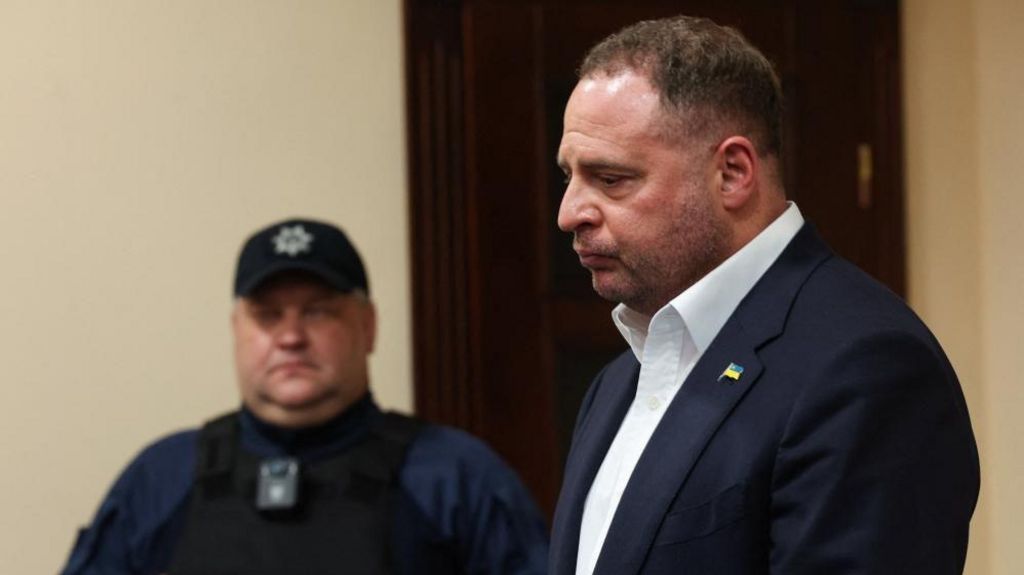
    On Tuesday, Andriy Yermak, who once served as head of Ukraine’s presidential office and Zelenskyy’s most senior advisor through the opening years of Russia’s full-scale invasion, appeared before a Kyiv court following formal designation as a suspect in a multi-million dollar money laundering scheme. Yermak, who stepped down from his post last November after anti-corruption agents raided his apartment, has forcefully pushed back against the claims. Speaking to reporters hours ahead of his scheduled court appearance, Yermak stated, “I do not have any house, I only have one flat and one car.” His defense attorney, Ihor Fomin, has repeatedly described the allegations against his client as “baseless”, telling Ukraine’s public broadcaster Suspilne that the unsubstantiated charges were driven by unprecedented public pressure, rather than evidence of wrongdoing.

    The suspicions against Yermak center on two separate alleged corruption schemes. The first is an elite luxury housing development named “Dynasty” outside Kyiv, where investigators claim roughly $10.5 million in construction funds were laundered through illegal channels. The case is also tied to a broader ongoing inquiry into an alleged $100 million embezzlement ring within Ukraine’s state-owned nuclear energy sector. Nabu, Ukraine’s National Anti-Corruption Bureau, and SAPO, the Anticorruption Prosecutor’s Office, the two agencies leading the investigation, have confirmed that six additional people have been named as suspects alongside Yermak, and have released partial transcripts of wiretapped conversations as part of their evidence. Prosecutors are requesting that the Kyiv court impose either pre-trial detention or set bail at approximately $4 million. In a key clarification for national politics, Nabu’s leadership stressed that President Zelenskyy himself is not part of the ongoing pre-trial investigation.

    Yermak was once one of the most powerful figures in Zelenskyy’s government, leading Ukraine’s diplomatic negotiations with the United States and serving as the president’s closest confidant throughout the first phase of the full-scale invasion. This corruption case is the latest high-profile fallout from Operation Midas, a sweeping anti-corruption probe that has already ensnared multiple other former senior officials and members of Zelenskyy’s old inner circle. Former Deputy Prime Minister Oleksiy Chernyshov has been charged with abuse of office, former Energy Minister Herman Haluschenko was detained while attempting to cross the Ukrainian border, and businessman Timur Mindich, a one-time business partner of Zelenskyy who co-owned his former production studio Kvartal 95, has fled Ukraine after being named a suspect. All individuals named in the probe deny any criminal wrongdoing.

    The unfolding corruption scandal carries significant geopolitical weight for Ukraine, as it comes as the country pursues formal accession to the European Union. Brussels has repeatedly made clean governance and robust independent anti-corruption efforts a core requirement for Ukraine’s membership bid. Last year, Zelenskyy was forced to reverse a controversial law that would have weakened the operational independence of Nabu and SAPO after widespread domestic protests and sharp criticism from EU officials.

    Simultaneously, military tensions have spiked across the region following the end of Russia’s three-day Victory Day ceasefire, marking the 80th anniversary of the Soviet Union’s victory over Nazi Germany in World War II. Overnight, Russia launched a massive drone assault targeting multiple regions across Ukraine, with more than 200 drones launched. Ukrainian authorities confirmed that the attacks left at least one civilian dead. Kyiv, which had seen a period of relative calm in the days leading up to the strikes, faced new air raid alerts across the capital overnight. For its part, the Russian Ministry of Defense claimed it had shot down more than 100 Ukrainian drones launched into Russian territory over the preceding 24 hours.

    Military and diplomatic positioning has shifted in recent days following conflicting statements from Russian and Ukrainian leaders over the prospects of peace talks. At the weekend, Russian President Vladimir Putin suggested that the war was “coming to an end”, but Kremlin spokesperson Dmitry Peskov clarified on Tuesday that “a lot of homework is still to be done”, indicating that a planned meeting between Putin and Zelenskyy is unlikely to happen in the near future. Zelenskyy has repeatedly rejected Russian overtures, stating earlier that Moscow has “no intention of ending this war” and is actively preparing for new offensive operations.

    In one of the most provocative announcements of the week, Putin confirmed on Tuesday that Russia will deploy the new Sarmat intercontinental ballistic nuclear missile by the end of 2026. The missile has an advertised maximum range of 35,000 kilometers, putting any target on the globe within striking distance. The Russian Ministry of Defense released newly published footage of a Sarmat test launch this week, with Putin describing the system as “the most powerful missile system in the world”. Putin added that development work on three other next-generation strategic nuclear weapons — the Burevestnik nuclear-powered cruise missile and a nuclear-powered torpedo — is in its final stages of completion.

  • Ministers take office in Hungary’s first non-Orbán government in 16 years

    Ministers take office in Hungary’s first non-Orbán government in 16 years

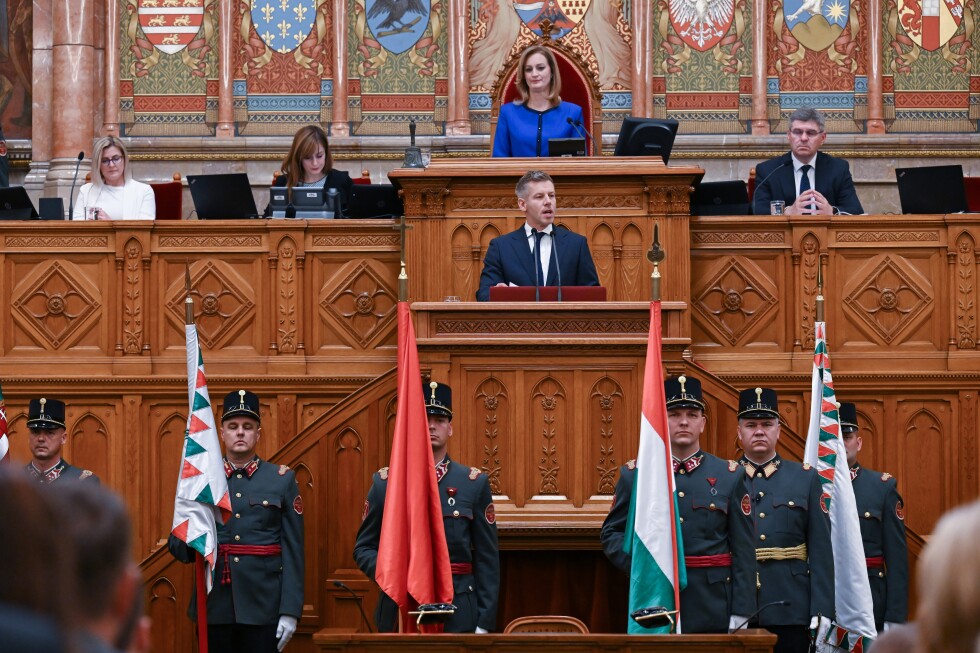
    In a landmark political shift that reshapes both Hungary’s domestic trajectory and European Union dynamics, Péter Magyar’s new 16-member cabinet was officially sworn into office on Tuesday in Budapest, completing the full transfer of power away from Viktor Orbán, who led Hungary with a nationalist-populist agenda for 16 years. This historic handover follows a stunning electoral upset last month, where Magyar’s pro-European Tisza Party secured an unprecedented two-thirds parliamentary majority — a result unmatched in Hungary’s post-Communist history.

    Magyar, a 45-year-old lawyer who assumed the prime ministership on Saturday, moved through parliamentary confirmation hearings for his cabinet in just two days, a deliberate timeline that signals his urgency to dismantle the political system Orbán built over nearly two decades. Tisza’s landslide victory gave the party 141 of the 199 total seats in parliament, pushing Orbán’s long-ruling Fidesz party from 135 seats to just 52, with the far-right Mi Hazánk movement holding the remaining six seats.

    In remarks delivered moments after his cabinet’s swearing-in inside Hungary’s parliament, Magyar drew a clear line between his administration and his predecessor’s leadership. Stating that the new government would “be the government of all Hungarians” and act as “a servant of the nation and not of the prime minister”, he directly challenged the concentrated power that defined Orbán’s tenure. He outlined his core mandate: undoing the “destruction, division, backwardness and loss of trust” accumulated over the past 20 years, and rebuilding Hungary into a “functioning, livable and self-reliant country”.

    A top priority for Magyar’s electorate is holding former Fidesz officials and their affiliated business allies accountable for alleged widespread corruption and misconduct during Orbán’s administration. To advance this goal, the new government plans to establish a National Asset Recovery and Protection Office, a dedicated body tasked with investigating and recovering public funds misused under the previous regime. Magyar has also committed to Hungary joining the European Public Prosecutor’s Office, a move that will allow EU investigators to probe cross-border fraud and the mismanagement of EU funding allocated to the country.

    Media reform is another immediate policy focus: Magyar has vowed to suspend programming at Hungary’s public broadcaster, long decried as a partisan mouthpiece for Fidesz, until full editorial objectivity can be guaranteed. He has also called on all senior public officials appointed during Orbán’s tenure — including the Hungarian president, attorney general, head of the national media authority, and chief justice of the Constitutional Court — to resign by May 31 to clear the way for independent appointments aligned with democratic norms.

    Structurally, the new government expands the cabinet from 12 ministries under Orbán’s final administration to 16, with standalone portfolios for health, environmental protection, and education, all of which were merged into larger departments under the previous government. This restructuring is part of a broader overhaul of state institutions, with Magyar prioritizing the restoration of democratic governance and the rule of law, both of which eroded significantly during Orbán’s time in power.

    Beyond domestic reform, Magyar’s administration is set to transform decision-making dynamics within the EU. Orbán frequently used veto power to block bloc-wide initiatives, most recently blocking new support packages for Ukraine, creating repeated deadlock for the union. The new Hungarian government has made unlocking approximately 17 billion euros ($20 billion) in frozen EU funds its top foreign policy priority. The funds, frozen by the EU over rule-of-law and corruption concerns during Orbán’s tenure, are critically needed to revitalize Hungary’s stagnant economy, which has seen little to no growth for four consecutive years.

    In a Facebook video posted the day before the cabinet swearing-in, new Hungarian Foreign Minister Anita Orbán, a career diplomat and foreign policy expert, confirmed that her ministry’s core mission will be to “bring EU funds home” and “consolidate Hungary’s place in Europe and in the EU”. Other key cabinet appointees include former Shell executive István Kapitány, who takes on the role of Minister of Economy and Energy, and former Erste Bank economist András Kármán, who serves as Minister of Finance. This report included contributions from AP correspondent Don McNeil reporting out of Brussels and AP writer Béla Szandelszky based in Budapest.

  • Trump due in China for superpower summit with Xi

    Trump due in China for superpower summit with Xi

    In a landmark diplomatic moment marking the first visit by a sitting US president to China in nearly ten years, former and current President Donald Trump is set to arrive in Beijing on Wednesday for a critically important bilateral summit with Chinese President Xi Jinping, against a backdrop of simmering tensions fueled by the February US-led war on Iran that has added new strains to the already fraught relationship between the world’s two largest economies.

    This upcoming meeting, the first between the two leaders on Chinese soil since Trump’s 2017 visit, will feature two days of high-stakes negotiations scheduled for Thursday and Friday, wrapped into a packed official itinerary that includes a formal state banquet and a ceremonial tea reception with senior Chinese officials. The agenda for the talks covers a wide range of longstanding and newly emergent flashpoints, from long-running disputes over US arms sales to self-ruled Taiwan and Chinese export controls on critical rare earth minerals to the two countries’ deeply interconnected but often contentious trade relationship. The ongoing conflict in the Middle East will also take a top spot on the discussion list: a senior anonymous US administration official confirmed to reporters earlier this week that Trump will push Xi to make concessions on Iran, as the White House pursues a negotiated deal to end the two-month-old conflict.

    In the lead-up to the summit, signs of heightened security were already visible across Beijing on Tuesday. AFP correspondents on the ground reported that uniformed police were deployed to monitor major urban intersections, while transit authorities conducted routine ID checks for passengers on the city’s metro system, a common security step ahead of major high-level diplomatic events. Ordinary Chinese residents expressed a range of outlooks on the landmark meeting. 24-year-old Nanjing native Wen Wen, who was traveling through Beijing when speaking to AFP, called the visit a major event for global relations. She said she expected the summit to deliver at least some tangible progress, and shared her hope that both nations can work toward lasting peace despite widespread recent global instability.

    Bilateral trade ties between Washington and Beijing have remained rocky for years, though the two sides have upheld a one-year truce in their costly tariff war, an agreement struck during Trump and Xi’s last meeting in South Korea last October. Trump has long criticized China’s persistent large trade surplus with the US, a grievance that led him to impose sweeping tariffs on hundreds of billions of dollars worth of Chinese goods during his first term in office. Accompanying Trump on his Beijing trip is a high-profile delegation of top American business leaders, including Tesla CEO Elon Musk and Apple CEO Tim Cook, according to White House announcements.

    The summit comes at a moment of significant economic uncertainty for China, which has battled years of sluggish domestic consumer spending and a prolonged systemic debt crisis in its once-booming real estate sector, issues that have weighed on global growth projections. Not all ordinary Beijing residents are optimistic about a quick resolution to longstanding bilateral rifts. Li Jiahao, a 30-year-old manager of a karaoke bar in central Beijing, told AFP he does not expect the meeting to solve every issue in US-China ties, though he remains hopeful for positive incremental outcomes. “Coming here and actually resolving the issues are two different things,” he explained. “China and the United States both have responsibilities as major powers. Only through friendship can we achieve mutual development and become stronger.”

    The Iran war, launched jointly by the US and Israel on February 28, has thrown a new set of complications into the already tangled relationship between the two global powers. Trump previously delayed this Beijing trip once to focus on managing the conflict, which has effectively shut down commercial shipping through the strategic Strait of Hormuz, a critical global energy chokepoint, for more than two months. China is Iran’s largest customer for crude oil, but the Trump administration has imposed sweeping unilateral sanctions to cut off all Chinese purchases of Iranian energy. Just on Monday, the US Treasury Department expanded those sanctions, blacklisting 12 individuals and entities—several based in Hong Kong—that it accuses of facilitating the sale and shipment of Iranian oil to Chinese buyers. When asked about the new sanctions at a Tuesday press briefing, Chinese Foreign Ministry spokesman Guo Jiakun reaffirmed Beijing’s position that “China firmly opposes illegal unilateral sanctions.”

    Another core sticking point for Chinese leadership remains longstanding US military support for Taiwan, the self-governing democratic island that Beijing claims as an inalienable part of its territory. Speaking on Monday, Trump said he was open to discussing US arms sales to Taiwan during the summit, and claimed his personal relationship with Xi would prevent any Chinese military invasion of the island. “I think we’ll be fine. I have a very good relationship with President Xi. He knows I don’t want that to happen,” Trump told reporters.

  • Dali ship operator charged over deadly  Baltimore bridge collapse

    Dali ship operator charged over deadly Baltimore bridge collapse

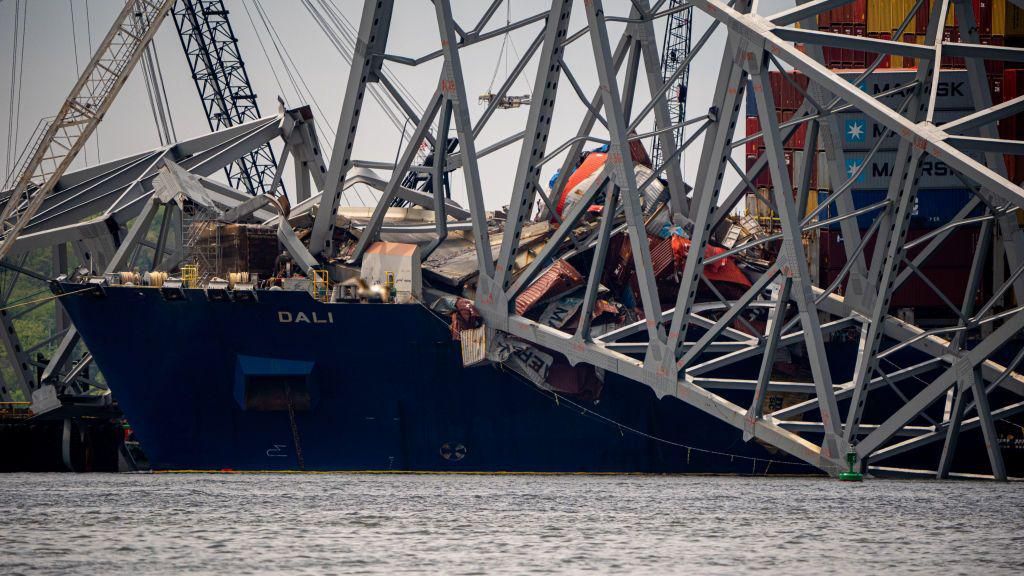
    It has been two years since the cargo ship Dali crashed into Baltimore’s iconic Francis Scott Key Bridge, triggering a catastrophic collapse that claimed six lives and upended regional commerce. Now, federal prosecutors have brought formal criminal charges against the vessel’s operator and a senior company employee over the disaster.

    Synergy Marine, the Singapore- and India-based firm that managed the Dali’s operations, and Radhakrishnan Karthik Nair, the ship’s technical supervisor, face a slate of charges including conspiracy, obstruction of justice, and misconduct leading to death, according to the recently unsealed indictment. Prosecutors allege the company and its staff intentionally misled federal investigators and hid critical safety hazards from the U.S. Coast Guard in the wake of the March 26, 2024 collision.

    In court documents, prosecutors laid out a detailed timeline of preventable failures that led to the crash. They say the Dali lost electrical power twice in just four minutes before striking the bridge. The first outage stemmed from a loose wire in the ship’s switchboard, while the second was caused by the crew’s reliance on an unapproved flushing pump to supply fuel to the vessel’s generators. Unlike purpose-built fuel pumps, this flushing pump was not designed to automatically restart after an outage, meaning the crew could not restore power in time to avoid the collision. Prosecutors argue that with a properly configured fuel system, the ship would have regained power before hitting the bridge.

    The indictment further alleges that Synergy employees were fully aware of the improper use of the flushing pump not only on the Dali but across other vessels in the company’s fleet, and actively took steps to cover up the noncompliant practice. Prosecutors also accuse the firm of falsifying official safety records to hide the violations from regulators.

    Acting U.S. Attorney General Todd Blanche framed the charges as a long-awaited step toward accountability in a tragedy he called entirely preventable. “This indictment is a critical step toward holding accountable those whose reckless disregard for maritime safety regulations caused this disaster,” Blanche said in a public statement released Tuesday.

    In response to the charges, a Synergy Marine spokesperson told The New York Times that the company “will defend against these allegations with vigor.” The BBC has also reached out to the firm for additional comment, and no further response has been issued as of publication.

    The disaster itself unfolded in the early hours of that March morning, when the powerless Dali drifted into the bridge, collapsing the entire span within minutes. Six construction workers who were conducting maintenance on the bridge were killed when their work vehicles plunged into the Patapsco River below. The collapse shut down the Port of Baltimore for weeks, triggering massive shipping disruptions that rippled through regional and national supply chains, costing billions of dollars in lost economic activity.

    Reconstruction of the Key Bridge is still ongoing, with officials projecting the project will take several years and cost billions of dollars to complete. Prior investigations by the National Transportation Safety Board identified multiple contributing factors to the disaster, beyond the ship’s mechanical and operational failures, including a lack of protective design measures to reduce the bridge’s vulnerability to ship strikes.

    This is not the first legal action stemming from the collapse. The Dali’s owner has already paid more than $100 million to the U.S. Department of Justice to settle a civil claim for bridge damage, plus an additional $350 million to Maryland’s state insurance agency. Another separate civil trial against Synergy Marine is scheduled to begin next month.

  • South Africa declares natural disaster as flooding kills at least 10

    South Africa declares natural disaster as flooding kills at least 10

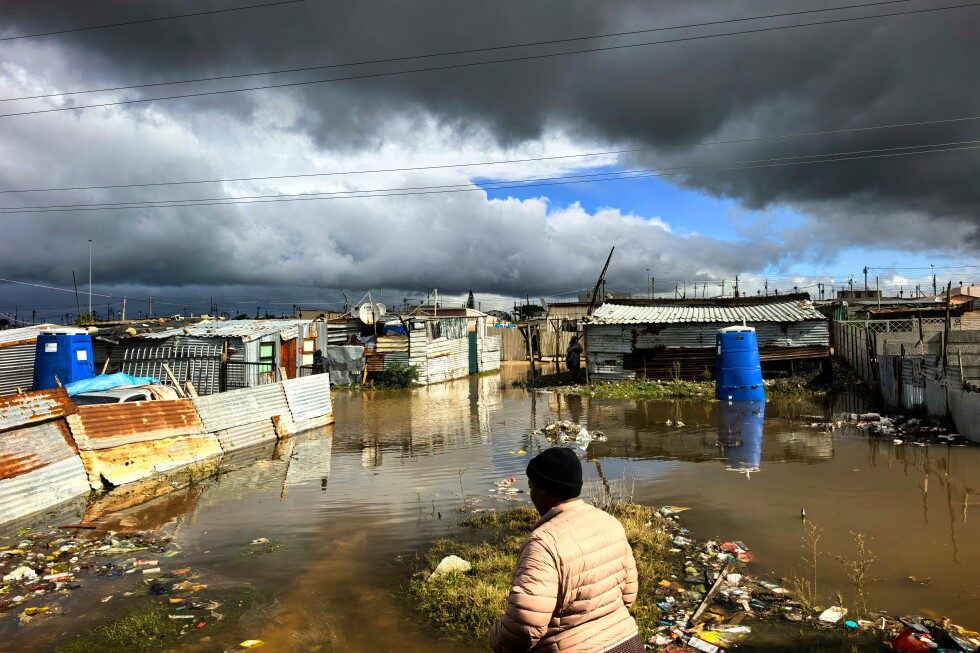
    JOHANNESBURG – A catastrophic weather system bringing record-breaking torrential rainfall has unleashed devastating flooding across six of South Africa’s provinces, leaving at least 10 people dead and destroying hundreds of vulnerable residential structures, with low-income informal communities bearing the brunt of the destruction. Since May 4, extreme weather spanning flooding, severe thunderstorms, powerful high winds, and unseasonal snowfall has impacted regions including Western Cape, North West, Free State, Eastern Cape, Northern Cape, and Mpumalanga, prompting national authorities to issue an official natural disaster designation. This official declaration unlocks immediate access to emergency government funding and priority deployment of response resources, allowing rapid relief action to reach affected communities. The coastal hub of Cape Town, located in Western Cape, has emerged as one of the hardest-hit urban centers. In response to rapidly deteriorating conditions, the Western Cape provincial government has ordered temporary closures for all public and private schools across high-risk flood zones, as well as restricted access to portions of the iconic Table Mountain, one of the city’s most popular global tourist attractions. Local officials confirmed Tuesday that at least 26 informal settlements on the outskirts of Cape Town have been inundated by floodwaters, damaging more than 10,000 informal residential structures that largely lack engineered flood-resilient infrastructure. South African President Cyril Ramaphosa, speaking Monday as winter officially gets underway across the Southern Hemisphere, voiced deep sorrow over the lives lost to the extreme weather event. “We grieve with the families who have lost their loved ones, and we are standing with all those who have lost their homes and livelihoods to this disaster,” Ramaphosa stated, adding that national disaster management authorities are leveraging modern meteorological science to improve early warning for future extreme weather events and streamline response efforts in the wake of disasters. The current disaster marks the second major flooding crisis to hit South Africa in 2024, underscoring a growing regional trend of intensifying extreme weather linked to shifting global climate patterns. Climate researchers have repeatedly warned that severe flood events across Southern Africa are growing more frequent and more destructive, driven by rising global temperatures that amplify extreme rainfall patterns. In recent months, neighboring Mozambique and Zimbabwe have also experienced unusually high rainfall and the worst regional flooding in decades. Back in January, South Africa was forced to declare a separate national disaster after torrential rains and flooding in the country’s northern regions killed at least 30 people, destroyed thousands of homes, and washed out critical road and bridge infrastructure connecting rural and urban communities.

  • Italian rider Ciccone seizes the Giro lead as Thomas Silva cracks and Narváez wins stage 4

    Italian rider Ciccone seizes the Giro lead as Thomas Silva cracks and Narváez wins stage 4

    After three opening stages held in Bulgaria and a scheduled rest day, the 109th edition of the Giro d’Italia finally crossed into Italian territory this week, marking a major turning point in one of cycling’s most prestigious Grand Tours. When racing resumed on Tuesday, it was Ecuador’s Jhonatan Narváez who claimed the top spot on the podium for the 138-kilometer fourth stage, which ran from the southern Calabrian city of Catanzaro — located on the toe of the Italian peninsula — to the regional hub of Cosenza.

    Heading into Tuesday’s stage, history-making Uruguayan rider Guillermo Thomas Silva held the overall general classification lead. Silva made Giro history as the first Uruguayan rider to ever win a stage and claim the iconic pink jersey, but his run at the top came to an abrupt end on Tuesday. Struggling with fatigue on a long, second-category climb that came in the latter half of the route, Silva faded dramatically mid-ascent and ultimately crossed the finish line more than 10 minutes behind the stage’s leading pack, losing his hold on the overall standings.

    Italy’s own Giulio Ciccone, a home favorite, was in contention for the stage win right until the final sprint, but Narváez outpaced him in the final dash to the line. Venezuela’s Orluis Aular crossed the line in second place to round out the stage podium. Ciccone, who finished third, secured four valuable bonus seconds for his placement — a small margin that proved just enough to propel him into the overall lead. He currently holds a four-second advantage over his closest challengers: Jan Christen, Florian Stork, and 2021 Giro champion Egan Bernal.

    The competition is set to intensify significantly on Wednesday, when riders take on the fifth stage of the race. The 203-kilometer route from Praia a Mare to Potenza is one of the most demanding stages of this year’s race, featuring nearly 4,000 meters of total climbing and almost no flat terrain, a profile that is widely expected to reshuffle the general classification standings.

    The 109th men’s Giro d’Italia will conclude on May 31, with the final stage finishing in Rome. Following the men’s race, the annual women’s Giro will run from May 30 to June 7, with Italian star Elisa Longo Borghini set to defend her 2024 title.