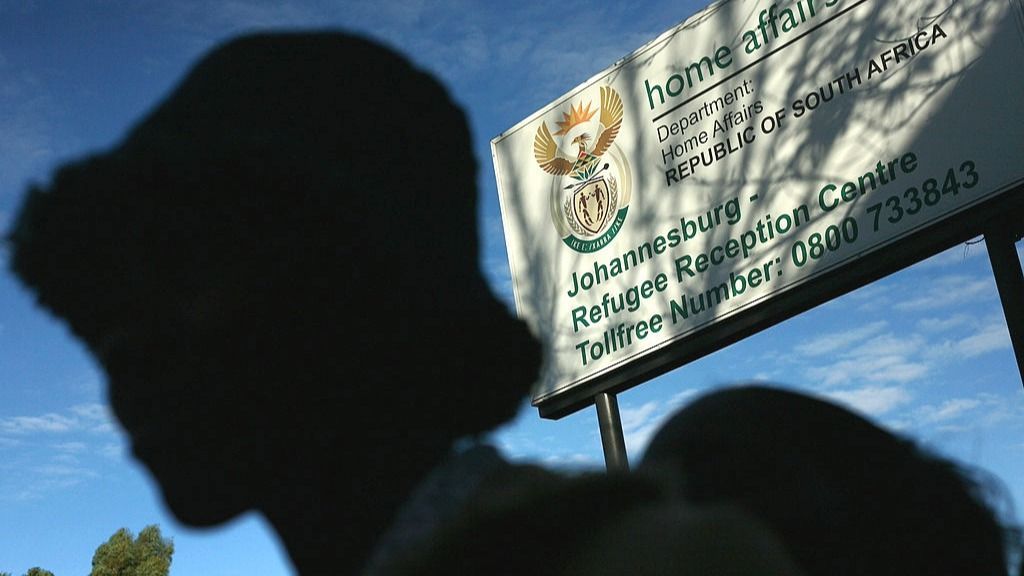
In a landmark final ruling that has reshaped South Africa’s asylum framework, the country’s Constitutional Court has moved to block foreign nationals from submitting repeated asylum claims after an initial application has been rejected. The judgment, which upends a prior ruling from the Supreme Court of Appeal, addresses longstanding administrative and policy concerns over the nation’s overstretched refugee processing system.
The court’s majority opinion emphasized that without explicit governing legislation, allowing endless cycles of repeat asylum applications would create a permanent logjam: a “never-ending cycle” of processing that would block ordered deportations and overwhelm government administrative capacity. The case that led to the ruling originated with two Burundian nationals who first had their asylum claims rejected in 2014, then submitted a new application in 2018. The pair argued that renewed political violence that erupted in Burundi following the 2015 controversial presidential election, which left at least 70 people dead amid widespread unrest after then-President Pierre Nkurunziza’s bid for a third term, justified a reevaluation of their claim.
Lower courts sided with the two claimants, but the Constitutional Court, South Africa’s final court of appeal, overturned that decision. The ruling has been celebrated by the nation’s current coalition government as a critical check on systemic abuse. Home Affairs Minister Leon Schreiber, a member of the Democratic Alliance – the second-largest party in President Cyril Ramaphosa’s ANC-led unity government – called the outcome a “major victory” over misuse of the refugee system. In remarks to local broadcaster Newzroom Afrika, Schreiber explained his department had spearheaded the legal challenge to the Supreme Court of Appeal’s ruling, warning that upholding the lower court’s decision would have opened the door to “multiple bites at the cherry” for rejected claimants, enabling ongoing abuse of the asylum process.
Schreiber added that the judgment is a key step toward the government’s broader goal of building a more “effective and fair system to manage refugees and asylum seekers.” As of 2025, UN High Commissioner for Refugees (UNHCR) data shows South Africa hosts more than 167,000 registered refugees and asylum seekers, the vast majority originating from neighboring and conflict-affected African states including Burundi, the Democratic Republic of Congo, Somalia, South Sudan, Rwanda and Zimbabwe. Official census figures estimate South Africa is home to roughly 2.4 million documented migrants, accounting for just under 4% of the total population, though observers believe a large additional number of undocumented migrants reside in the country without formal status. As Africa’s most industrialized economy, South Africa has long drawn migrant workers from across the continent seeking better economic opportunity.
The ruling comes at a moment of heightened domestic tension over immigration, with South Africa recently swept by a wave of large-scale protests targeting undocumented migrants. Thousands of demonstrators have marched in major urban centers to demand mass deportations of foreign nationals, and the unrest has included targeted attacks on migrant-owned businesses and communities. Several African governments have formally raised concerns through the African Union and have issued travel advisories warning their citizens residing in South Africa of potential targeting. Earlier this week, President Ramaphosa issued a public statement blaming “opportunists” for orchestrating the violent anti-immigrant attacks, stressing that the unrest does not reflect the will of the South African public or official government policy. “The recent violent protests and criminal acts directed at foreign nationals in parts of our country do not represent the views of South Africa’s people nor reflect our government’s policy,” Ramaphosa said in an open letter.
The judgment marks a significant shift in South Africa’s asylum policy, and comes as the government faces growing pressure from domestic political factions to crack down on unauthorized migration while navigating criticism from human rights groups and neighboring nations over the treatment of foreign residents.