
One of Australia’s busiest regional air travel hubs was thrown into chaos on Thursday, when two unexpected everyday items sparked a full-scale bomb alert that suspended domestic flight operations for nearly half a day. Avalon Airport, the second-busiest air gateway in the state of Victoria located 31 miles southwest of central Melbourne, was placed under partial lockdown after security screening staff flagged a suspicious piece of checked baggage just before 6 a.m. local time, which equals 8 p.m. GMT on the previous day. Emergency protocols were immediately activated, with local law enforcement and bomb disposal units dispatched to the scene to investigate the potential threat. International flight schedules remained unaffected throughout the incident, but all domestic operations were paused as a precaution, leading to widespread cancellations and delays for thousands of passengers. After a thorough examination by the bomb squad, the suspicious package was found to contain nothing more dangerous than a laser hair removal device and an insulated hot chocolate container, a far cry from the explosive device authorities had prepared for. The owner of the baggage, a Melbourne resident, was taken into custody for questioning immediately after the discovery, but was eventually released without any criminal charges, Victoria Police confirmed. According to Acting Inspector Nick Uebergang of Victoria Police, the uncooperative behavior of the baggage owner extended the duration of the security lockdown. “The person who had the bag wasn’t too cooperative with us to start off with, which made things a little bit difficult. They probably could have averted things and we could have got out of here a little bit quicker,” Uebergang told reporters. Full operations at the airport resumed approximately four hours after the initial alert was raised. In a statement following the incident, an Avalon Airport spokesperson emphasized that the rapid, by-the-book response to the potential threat highlighted the effectiveness of the facility’s security protocols. “This response demonstrates the vigilance of the screening and security processes, and precautionary measures were taken immediately to ensure the safety of passengers, staff and the broader community,” the spokesperson said. Many passengers caught up in the sudden lockdown shared their chaotic experiences with local media outlets. One traveler who arrived at the airport around 7 a.m. told ABC Radio Melbourne, “We arrived at the airport around 7am and they had just put up the closure. No one sort of knew what was going on. We knew something was fairly significant because there were a lot of police cars and other sort of cars going into the airport.” Manjeet Singh, who was scheduled to board a flight to Brisbane, said he was directed to wait in the airport carpark with no basic amenities provided during the lockdown. “There’s no arrangements, no bathroom, no toilet, no beverages, no nothing,” he told local newspaper The Age. As Victoria’s second busiest aviation hub, Avalon Airport is a key base for budget airline Jetstar, a Qantas subsidiary that operates both domestic and international services from the facility. By the time the airport reopened, two domestic services – one incoming flight from Sydney and one outgoing flight to Sydney – had already been cancelled, with multiple other domestic routes facing lengthy delays. No injuries or actual security threats were reported during the incident.
作者: admin
-
Europe faces stray Ukrainian drones as Kyiv targets Russian oil exports
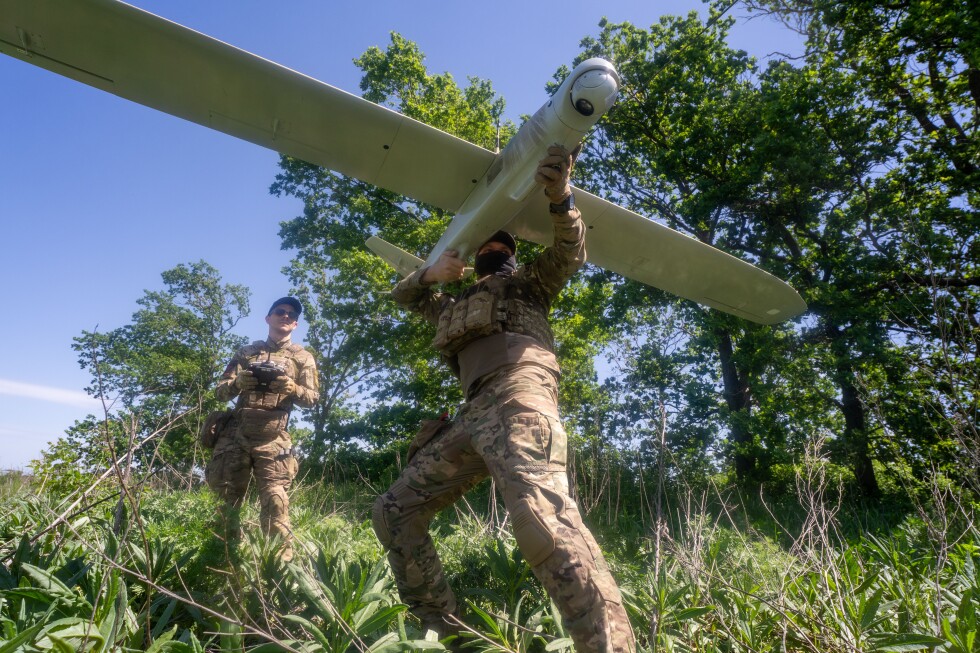
Over recent months, a string of unintended Ukrainian drone incursions into the airspace of NATO and European Union Baltic member states has exposed gaps in regional air defenses, sparked political upheaval, and escalated geopolitical tensions along the alliance’s eastern border. What began as a series of isolated incidents has evolved into a major security challenge, with far-reaching implications for NATO cohesion and Ukraine’s efforts to disrupt Russia’s energy revenue streams.
The incursions trace back to Kyiv’s expanded military campaign targeting Russian Baltic Sea ports that serve as critical hubs for Moscow’s oil exports. With oil prices pushed higher by U.S. involvement in the Iran conflict, these energy exports represent a core source of funding for the Kremlin’s war effort in Ukraine, making port and energy infrastructure a top strategic target for Kyiv. Ukraine has concentrated its strikes on key Russian ports of Ust-Luga and Primorsk, located just kilometers from the Estonian and Finnish borders. In one major May attack on Primorsk that ignited large port fires, regional Russian governor Alexander Drozdenko confirmed more than 60 Ukrainian drones were intercepted and downed during the assault.
But as Ukraine’s long-range drones travel north to reach these targets, several have gone off course, crossing into NATO territory. Incidents have included a drone crashing into a power plant chimney in Estonia, another striking empty fuel storage tanks in Latvia, and a third being shot down by a Romanian fighter jet deployed to Lithuania as part of NATO’s rotational defense mission. Most recently, on a Wednesday in Vilnius – the capital of NATO member Lithuania – residents were ordered to shelter in underground parking garages amid official warnings of unidentifiable drone activity near the Belarusian border. It marked the first time a NATO capital has implemented such shelter protocols since Russia’s full-scale invasion of Ukraine in 2022. To date, no fatalities or injuries have resulted from the stray incursions, but the repeated airspace violations have triggered significant political and security fallout: in May, the incursions directly contributed to the collapse of Latvia’s sitting government, with both the prime minister and defense minister stepping down after the incident.
Ukrainian officials have repeatedly apologized for the unintended incursions, blaming Russia’s widespread electronic jamming and spoofing operations for pushing the drones off their intended course. The explanation has been backed by Baltic leaders, who have long documented consistent Russian interference with global navigation satellite systems (GNSS) across the region. Russia uses two primary tactics to disrupt drone navigation: jamming, which overwhelms satellite navigation receivers with strong competing radio frequencies that block location calculation, and spoofing, which transmits fake satellite signals to trick a drone’s navigation system into believing it is operating in a different location. Lithuanian Foreign Minister Kęstutis Budrys has explicitly stated Russia is deliberately redirecting stray Ukrainian drones into NATO airspace to sow chaos and stoke tensions between Kyiv and the alliance.
The repeated incursions have also drawn renewed attention to longstanding gaps in air defense coverage across NATO’s eastern flank. A September 2025 incident that saw 20 Russian drones enter Polish airspace – which required scrambling expensive multirole fighter jets to intercept – first exposed these vulnerabilities, as the drones were not detected prior to crossing the border. Last week, an armed Ukrainian drone crashed in Lithuanian territory after also evading early detection, according to Vilmantas Vitkauskas, head of Lithuania’s National Crisis Management Centre. While Poland and Romania have already deployed new purpose-built anti-drone defense systems, the first of their kind used by the alliance, this specialized technology has not been rolled out across the entire Baltic region. Estonian Defense Forces Colonel Janno Märk notes that countering drone incursions is an inherently complex challenge: drones operate across a wide range of speeds and altitudes, requiring a layered, multi-system defense approach rather than a single one-size-fits-all solution. Despite the tensions, Budrys says Baltic nations are looking to Ukraine itself for support: as Kyiv has led the world in developing advanced counter-drone technology amid its two-year war with Russia, Ukrainian expertise offers the most effective path to mitigating future incursions, especially as Kyiv now holds the capability to strike targets deep inside Russian territory, increasing the volume of drone traffic near NATO borders.
The drone incidents have also prompted aggressive rhetoric from Moscow, which has sought to frame the incursions as proof that NATO is directly involved in the war against Russia. Russia’s Foreign Intelligence Service (SVR) recently made an unsubstantiated claim that Ukraine plans to launch drone strikes against Russia from Baltic territory, and alleged Ukrainian military personnel have already deployed to Latvia. The SVR warned that Latvia’s NATO membership would not shield the country from what it called “just retribution.” Both Ukraine and Baltic leaders have rejected the claim outright. Ukrainian foreign ministry spokesman Heorhii Tykhyi confirmed no Baltic state or Finland has ever permitted Ukraine to use their territory for strikes against Russia, while Budrys dismissed the SVR’s allegation as a “transparent act of desperation” designed to distract from Ukraine’s successful strikes against Russia’s military supply chains. NATO Secretary-General Mark Rutte has echoed that framing, praising the alliance’s calm, decisive, and proportional response to the drone incidents, and placed full blame for the incursions on Russia’s illegal war of aggression against Ukraine.
-

Montenegro at 20: After breaking with Serbia and joining NATO, EU is the next frontier
This week, the small Balkan nation of Montenegro is holding nationwide celebrations to commemorate two decades of full independence following its split from the state union with Serbia. Over the past 20 years, the country has already achieved one major strategic milestone by joining the North Atlantic Treaty Organization, and now it is laser-focused on its next ambitious goal: full integration into the European Union.
In an interview with the Associated Press on the sidelines of national independence festivities, Montenegrin President Jakov Milatovic framed NATO membership as a defining achievement for the young nation. He expressed unwavering confidence that Montenegro, a country with a total population of just 623,000, will meet its target of becoming the 28th member of the 27-nation EU by 2028. This goal has become so central to the country’s national agenda that the motto “28 by 28” has even been painted on the fuselage of one of Montenegrin national airline’s aircraft. “We can achieve it,” Milatovic stated from his office in the capital Podgorica. “I am optimistic about it.”
Known for its dramatic, turquoise Adriatic coastline and rugged, towering mountain ranges, Montenegro is hosting concerts, community events and formal celebrations across Podgorica and smaller towns throughout the country this week to mark the historic anniversary of the 2006 independence referendum.
The path to independence was far from unified two decades ago. After a decade of regional conflict that accompanied the dissolution of Yugoslavia, capped by the 1999 NATO bombing campaign to end the Kosovo War, Montenegro held its independence referendum on May 21, 2006. The final result was narrow: 55.5% of voters backed splitting from the State Union of Serbia and Montenegro to form an independent Montenegrin state.
The split exposed deep divisions across the country, given Montenegro’s centuries-long cultural, political and social ties to Serbia. Roughly one-third of the population identifies as ethnically Serb, the two nations share the Eastern Orthodox Christian faith, their languages are mutually intelligible, and they have a long history of political alliance. The independence movement was led by longtime Montenegrin leader Milo Djukanovic, who guided the country into NATO and shifted its geopolitical alignment away from Russia, another historic Slavic ally.
Milatovic emphasized that the 2006 referendum put Montenegrins in control of their own future, laying the groundwork for all progress that has followed. “The major progress probably happened when the country became a part of NATO in 2017,” he added. “Being a part of NATO for a small country like Montenegro is very important because NATO is indeed a security guarantee for our independence and statehood.”
Today, Montenegro stands as the leading candidate for EU accession among the six Western Balkan nations that are at varying stages of the membership process. The EU has already established a specialized working group to draft Montenegro’s accession treaty, a clear signal that membership is within tangible reach. EU leaders are expected to reaffirm their support for Western Balkan integration at a summit of candidate country leaders to be held in the coastal Montenegrin town of Tivat in early June, where delegates from Albania, Bosnia-Herzegovina, North Macedonia, Serbia and Kosovo will also gather. Multiple other countries, including Ukraine, also hold candidate status and aim to join the bloc in the coming years.
Milatovic noted that public support for EU membership in Montenegro remains very high, hovering around 80%. However, he acknowledged that the country still needs to complete a series of key democratic and economic reforms, and the speed of progress moving forward “is now entirely up to Montenegro.”
Challenges remain substantial on the road to accession, according to Jovana Marovic, Montenegro’s former European integration minister. The country has been an official EU candidate since 2010, and a top unmet priority is strengthening democratic state institutions to meet EU standards. “What was missing in the last 14 years, we have to provide now just in six months,” she said. “So it’s really demanding, but the process is going on.”
For ordinary Montenegrin citizens, improving economic conditions and raising living standards are the most pressing priorities. While Montenegro has already adopted the euro as its national currency and made significant democratic strides, its economy remains small and disproportionately reliant on the seasonal tourism industry. Zorana Popivoda, a 28-year-old Montenegrin, praised the restoration of independence but echoed widespread economic frustration: “then you go into a store and you see that you can buy absolutely nothing.”
Milatovic, a 39-year-old economist who took office in 2023, criticized previous administrations for failing to move faster on democratic reforms and crack down on endemic organized crime and corruption in the early years of independence. “I think that over the last 20 years, we can objectively say that the country experienced progress,” he said, “but also that Montenegro had a number of missed opportunities.” Moving forward, the president’s administration is committed to meeting the 2028 accession target and delivering tangible improvements to the lives of all Montenegrin citizens.
-
The United Nations’ top court will issue an advisory opinion on the right to strike
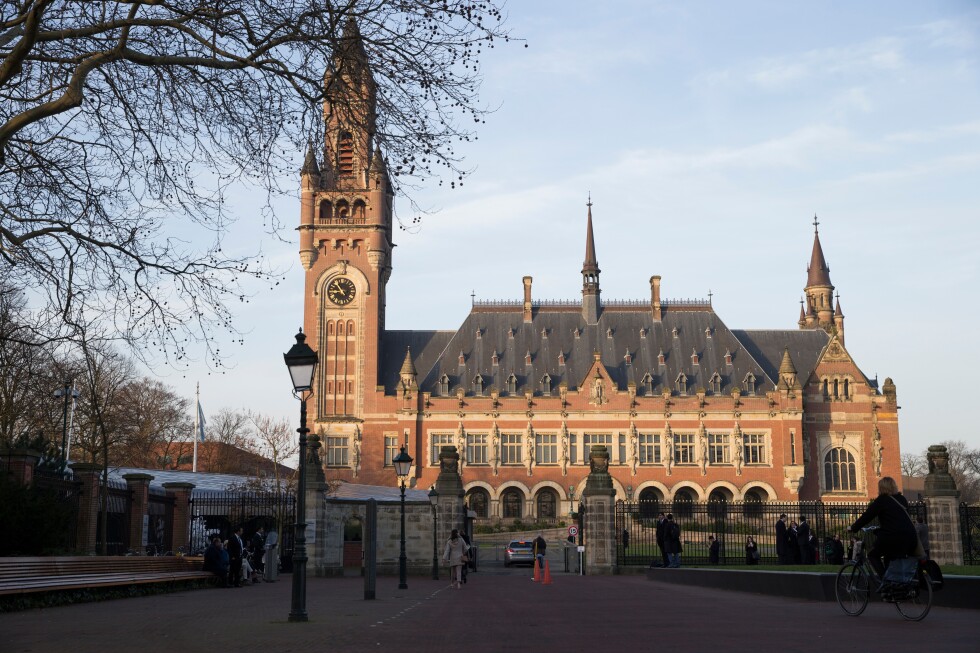
THE HAGUE, Netherlands — A highly anticipated landmark ruling from the United Nations’ highest judicial body is scheduled for Thursday, which will bring long-awaited clarity to the long-debated question of whether workers hold a legally recognized right to walk off the job. Back in 2023, the International Labour Organization (ILO), a specialized United Nations agency focused on global labor standards, turned to the 15-judge panel of the International Court of Justice (ICJ) to resolve an ongoing internal disagreement: does one of the ILO’s core labor conventions explicitly enshrine the right to strike for employees around the globe?
The convention at the center of the dispute has already been ratified by 158 countries around the world. Its standards are already embedded in binding United Nations labor frameworks, official guidance from the Organization for Economic Cooperation and Development, and countless international trade agreements that govern cross-border commerce. Notably, while the United States holds membership in the ILO, it has not completed the ratification process for this specific convention.
While ICJ advisory opinions are not formally legally binding on sovereign states, they carry substantial moral and political weight in international law, and Thursday’s decision is widely expected to reshape labor regulations across every region of the world. This is not the first time the ICJ has delivered a high-stakes advisory opinion on a matter of global interest in recent years: in 2023, the court issued a groundbreaking ruling that found countries can be held in violation of international law if they fail to enact adequate measures to protect the global climate system from dangerous anthropogenic climate change.
When the ICJ held public hearings on the right to strike case last October, legal representatives from 18 sovereign countries and five major international organizations (including the ILO itself) presented oral arguments before the court. Dozens of other governments submitted formal written arguments for the judges to consider, and the clear majority of participating stakeholders voiced support for recognizing an explicit right to strike under the convention.
-

From AI to interceptors, Ukraine is trying to drone-proof its skies
The distant wail of air raid sirens hung over Kyiv this week as mourners gathered to bury 12-year-old Liubava and 17-year-old Vira, two sisters whose lives were cut short in one of the deadliest Russian aerial strikes of the ongoing war. The pair were among 24 civilians killed when a Russian missile turned their apartment building into rubble earlier this month. They had already lost their father to combat on the front line, leaving their grief-stricken mother as the only surviving member of their family.
This devastating loss underscores the brutal human toll of Russia’s largest continuous aerial campaign against Ukraine to date, which saw more than 1,500 drones and 56 missiles launched across Ukrainian territory in just 48 hours. But officials say the death toll would have been far higher without marked improvements in Ukraine’s air defense capabilities. According to Ukrainian President Volodymyr Zelensky, Ukrainian forces successfully intercepted 94% of the long-range drones and 73% of the missiles fired in that assault – a sharp improvement from the 55% interception rate recorded in a nationwide strike back in May 2025. Ukraine, it is clear, is rapidly growing more effective at protecting its skies.
“Unfortunately for us, we are now the best in the world at this,” noted Lieutenant Colonel Yuriy Myronenko, an inspector general with Ukraine’s Ministry of Defence. He did, however, acknowledge that intercepting Russia’s ballistic missiles remains a particularly daunting challenge.
More than four years into Russia’s full-scale invasion, Ukraine has built an increasingly advanced, layered air defense network that blends Western-supplied systems with innovative domestic development. At the outbreak of the full-scale war, Ukraine relied heavily on aging Soviet-era weaponry. Western partners later bolstered its defenses with high-end, costly systems including Patriot air defense missiles. But alongside imported systems, Ukraine has poured resources into homegrown solutions, ranging from mobile machine gun teams mounted on trucks to low-cost, mass-produced interceptor drones.
Homegrown technological innovation has emerged as a key advantage for Ukraine’s air defense campaign. At the core of the country’s integrated network is Sky Map, a proprietary tracking software that monitors every glide bomb, missile and drone launched by Russian forces. The platform combines data from radar arrays, thousands of ground sensors, real-time video feeds and artificial intelligence to detect incoming threats and redirect air defense assets to intercept them. In the early days of the war, Ukraine relied on a jerry-rigged network of mobile phones mounted on telephone poles to detect the distinctive engine sound of approaching Russian drones. Today, the system relies on far more sophisticated sensors, and its effectiveness has even drawn international interest: the U.S. military now uses Sky Map to protect one of its major bases in the Middle East.
But the workhorse of Ukraine’s counter-drone campaign is one simple, low-cost domestic innovation: domestically built interceptor drones. Among the most effective of these is the P1-SUN, a bullet-shaped interceptor powered by four base rotors that Ukraine now produces at an unprecedented scale of more than 1,000 units per day. According to Ukrainian air force data, these interceptor drones destroyed more than 30,000 Russian attack drones in March alone.
In a field outside the southern city of Kherson, Ukraine’s Marine Corps Unmanned Systems Regiment recently demonstrated the P1-SUN’s capabilities. Launched from a static position, the interceptor can hit speeds in excess of 300km/h (186mph) with an operational range of more than 30km. The unit had just returned from a successful mission intercepting incoming Russian drones when they demonstrated the system.
Welkos, the regiment’s commander, described the P1-SUN as a “very serious weapon.” “It shows how quickly we can adapt, how we can hold the line and how much we can develop even amid ongoing war,” he said. What makes the P1-SUN particularly revolutionary is its low cost: the 3D-printed interceptor costs roughly $1,000 (£750) to build, a tiny fraction of the $50,000 price tag of the Iranian-made Shahed one-way attack drones it is designed to destroy.
Ukraine’s domestic air defense effort has also tapped into the resources of the country’s private sector, with dozens of local companies joining a coordinated national initiative. “We need to cover all of Ukraine and track every incoming target, so we use every resource we have available,” Myronenko, who oversees the public-private partnership program, explained. For private companies, the incentive is clear: defending civilian and industrial infrastructure directly protects their own operations and workforces, after repeated Russian strikes on energy infrastructure left millions of Ukrainians without power during past winter months. So far, 25 companies have signed on to the program.
One of the participating firms, Carmine Sky, now provides air defense coverage for other private sector clients across northeastern Ukraine. The company has already built a network of defensive towers fitted with remotely operated machine guns in the Kharkiv region, just kilometers from the Russian border. During a visit to the company’s underground control room, rows of monitors display the Sky Map tracking feed as it plots the position of Russian drones and jets across the region. Most of the operators manning the screens are ordinary civilians – working mothers, former taxi drivers, and military veterans – who have completed a multi-week vetting and training program before taking up their posts.
Ruslan, a spokesman for Carmine Sky, said the work is surprisingly straightforward. Operating the remote-controlled guns to shoot down incoming drones “is just like a computer game – like playing Xbox or PlayStation,” he explained. Ruslan emphasized that private participants act strictly as a complement to state-run air defenses, not independent actors. “We are fully integrated into the military command structure,” he said. “This is not the Wild West; we follow all military instructions and commands.” He added that private participation brings a key benefit: private companies can scale up defensive capabilities far faster than government bureaucracies can. Though the program is still in its early stages, private air defense teams have already shot down dozens of Russian drones.
Alongside improving its defensive capabilities, Ukraine has ramped up its own long-range strikes on Russian territory. Recent Ukrainian attacks have sparked massive infernos at oil refineries across Russia and reached deep into major Russian cities including Moscow and St. Petersburg. The strikes have even forced the Kremlin to scale back its annual May Victory Day parade over fears of an attack.
The rapid innovation on Ukraine’s side has spurred an arms race of sorts, with Russia also rushing to develop new aerial technologies to gain an edge. Russia has begun deploying faster jet-powered attack drones and uses decoy drones to bait Ukrainian air defenses into revealing their positions.
Even with these advances, critical gaps remain in Ukraine’s air defense network. At the high end, Ukraine still faces a shortage of the advanced, expensive Patriot missiles that are currently the only proven effective defense against Russian ballistic missiles. Global supply chains have been strained by ongoing conflicts in other regions, leaving Ukraine struggling to secure enough of the systems it needs. Along the front line, both sides have struggled to counter the threat of small, first-person-view (FPV) drones, which are operated remotely by Russian forces and remain one of the leading causes of infantry casualties on the Ukrainian side. Even with all the latest technological advances, basic defensive measures like roadside netting, rifles and shotguns still serve as the last line of defense against these small, agile threats.
Defending Ukraine’s skies will remain an enormous challenge. Zelensky has warned that Russia’s strategy of mass aerial strikes is explicitly designed to overwhelm Ukrainian air defenses by sheer force of numbers. When hundreds of drones and dozens of missiles are launched in a single 48-hour window, it is inevitable that some will get through – meaning more families will face the same unthinkable grief that left Lyubava and Vira’s mother the only survivor of her family.
-

Storm chasers: Young guns have the chance to do something special as Melbourne look to heap more misery on Bulldogs
The National Rugby League (NRL) blockbuster between the Melbourne Storm and Canterbury Bulldogs on Friday night will go ahead without three key Storm players, but legendary head coach Craig Bellamy is framing the absences as a once-in-a-lifetime breakout chance for the club’s rising young talent.
Star playmaker Cameron Munster and dynamic hooker Harry Grant, two of the Storm’s most influential All-Star core players, have been called up to State of Origin representative duty, joining lock forward Trent Loiero in stepping away from club fixtures for the representative round. In their place, Bellamy has shaken up his starting lineup to give untested youngsters their first real taste of top-flight rugby league.
Keagan Russell-Smith will get the nod at five-eighth, slotting into the huge gap left by Munster – a player who has dominated the position at club, state, and international level for years. This will mark only Russell-Smith’s second NRL appearance, following a single outing for the Storm back in 2022, with his development slowed by repeated injury setbacks that have kept him off the pitch for extended stretches. Trent Toelau will step into the starting hooker role, while young Gabriel Satrick will make his first-grade debut off the interchange bench, where he is expected to bring an energetic running threat from dummy-half.
While losing two of the game’s biggest superstars will undoubtedly test the Storm’s push for a third consecutive win, Bellamy says he has seen countless young prospects step up during the annual State of Origin break over his decades-long tenure, and he is confident this cohort can deliver similarly memorable performances. He urged the rookies to stick to their strengths and avoid overcomplicating their approach as they adjust to the intensity of top-level NRL.
“We’ll certainly feel the absence of our representative players, but this is exactly the sort of opportunity these young guys have worked so hard for,” Bellamy said. “Gabe gets his first crack at first grade this weekend, Keagan has only played one game two years back, and Trent has a handful of NRL appearances under his belt. This is incredible high-level experience for them, and the biggest thing they can do is keep it simple, play the way they know how, and lean into what makes them effective.”
Speaking specifically of Russell-Smith, who faces the unenviable task of replacing one of the sport’s best five-eighths, Bellamy highlighted the young playmaker’s natural footy smarts and defensive toughness as key assets that will help him adapt to the pressure.
“He’s a sharp kid, a really intelligent footballer, and the thing I love most about him is how tough he is,” Bellamy said. “He’ll handle the defensive side of the game no problem. His development has been a bit slower than we initially hoped it would be, that’s all down to the injuries he’s dealt with. Fingers crossed this gives him a good, consistent run of game time now to build momentum.”
For the Storm as a whole, Friday’s clash comes at a key turning point in the season. After a disastrous seven-game losing streak that put their finals hopes in serious jeopardy, the club has steadied its form with back-to-back wins, restoring much-needed confidence to the roster. They will face a Bulldogs side that is mired in its own slump, having dropped five consecutive matches and struggling to put points on the scoreboard in recent weeks.
The veteran coach declined to comment on the Bulldogs’ ongoing struggles, instead choosing to focus on his own team’s resurgence and their renewed bid to secure a spot in the end-of-season finals. Bellamy noted that back-to-back wins have already made a tangible difference to the squad’s mindset after a brutal losing run.
“When you get through a tough stretch like we did and start picking up wins again, that’s where you rebuild your confidence,” he said. “This is what these players do for their career. Aside from their families, this game is the most important thing in their lives. When you get a little bit of success like we’ve had over the past couple of weeks, you start to feel better about yourself and about the guys you’re running out onto the pitch with.”
-
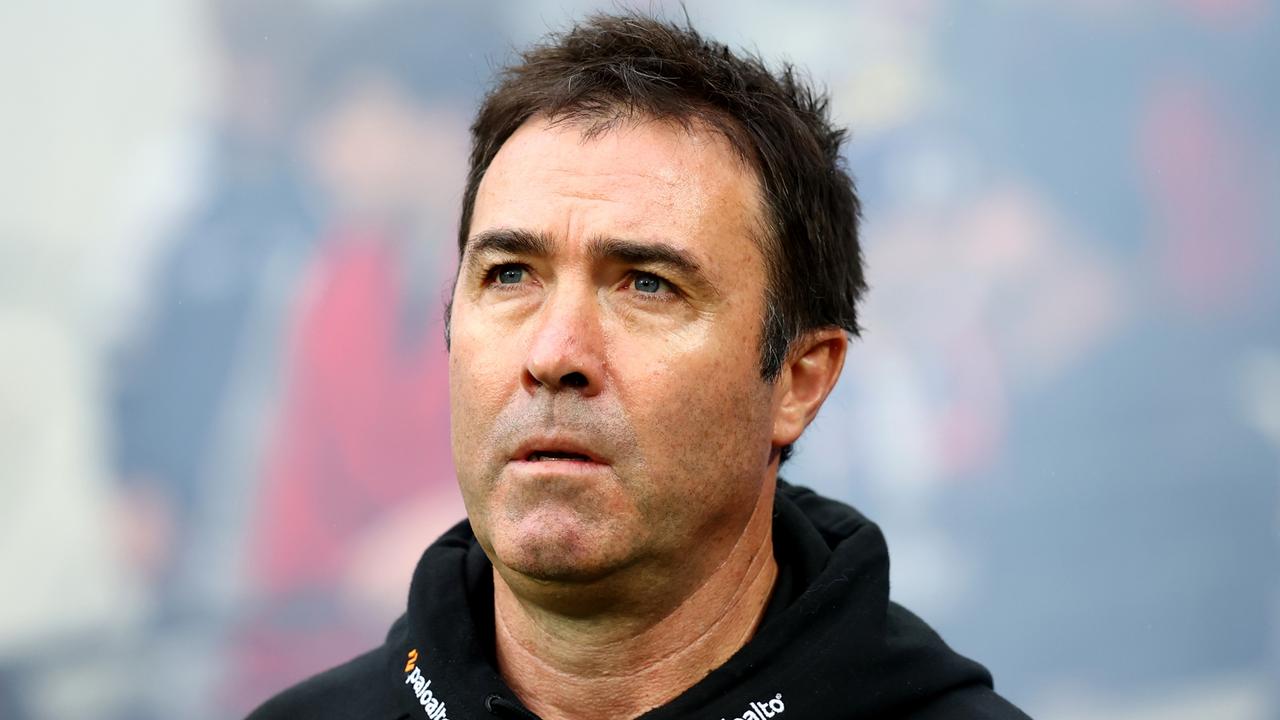
AFL 2026: Essendon coach Brad Scott responds to ‘rampant speculation’ about senior players
Ahead of one of the Australian Football League’s most anticipated annual fixtures, the Dreamtime at the ‘G clash this Friday, Essendon Bombers head coach Brad Scott has moved swiftly to push back against growing off-field speculation, addressing two swirling rumors that have dominated headlines around the club this week.
Currently sitting near the bottom of the AFL ladder with only a single win from their opening 10 rounds, the club and Scott have been under intense public and media scrutiny. Recent unconfirmed reports claimed the Bombers’ senior player core was deeply confused about the timeline and trajectory of the club’s ongoing rebuild, a claim Scott outright rejected during his weekly Thursday press conference.
According to Scott, the reports of internal confusion are nothing more than unsubstantiated “rampant speculation” that does not align with the actual situation inside the club. He emphasized that the club’s leadership has maintained full transparency with every player about the rebuild’s direction, and that every player currently on the Essendon list is included in the club’s long-term plan for future success.
“Every player on our list is well and truly capable from an age perspective and a capability perspective of being part of our next successful era,” Scott explained. “We’ve been very clear with those players: ‘Look, this is where the club is at, this is the direction of the club’. I don’t think we’ll have a player on our list, at least voluntarily, retire in the next two, three, four years. Everyone is part of the plan.”
The coach also noted that it is normal for players to prioritize their individual match-to-match performance rather than long-term organizational strategy, and the coaching staff has actively worked to keep the group focused on competing week in and week out, rather than getting distracted by off-field noise.
In addition to addressing speculation about player unrest, Scott also shut down growing talk about his own future at the club, amid mounting pressure from fans and pundits following the team’s poor start to the season. The 30-year veteran of the sport said discussion about his job security simply does not concern him.
“Quite frankly, it just doesn’t faze me, I don’t live in that space. It’s not and has never been about me,” Scott said. “I’ve been in this game for over 30 years and I understand how things work and what people choose to talk about and what people are interested in. People can be interested in that, it just doesn’t interest me.”
On Friday night, Essendon will take on a Richmond side severely weakened by a lengthy injury list, in the annual Dreamtime at the ‘G match, one of the marquee events on the AFL calendar that celebrates Indigenous contribution to Australian rules football.
-

‘Disappointed with my performances’: Nathan Cleary out to right last year’s wrongs after ‘devastating’ Origin loss
A year on from one of the most crushing defeats of his professional career, NSW Blues star halfback Nathan Cleary has opened up about the lingering pain of last year’s State of Origin decider loss, revealing he is turning that devastating disappointment into fuel as his side prepares to kick off the 2025 series on home soil next Wednesday.
The 2024 series came to a humiliating end for the Blues at Sydney’s Accor Stadium, where Queensland Maroons ran riot in the first half to secure a comfortable 12-point victory, wasting NSW’s shot at claiming the championship on home turf. The blow hit the squad hard in the post-game sheds, with Cleary leaving the defeat to process alongside his family, who helped him break down what went wrong on the night.
Reflecting on the loss from Blues training camp this week, Cleary did not sugarcoat the severity of the heartbreak. “It’s never nice losing, but particularly such a big game being a game three Origin at home as well,” he said. “It was devastating, I can’t lie. But you’ve sort of just got to pick yourself back up, dust yourself off, move forward, and get better. There’s no point sort of sulking about it and feeling sorry for yourself. Here we are a year on, and I’m hoping I can use those lessons to play better.”
Cleary explained that the sting of the defeat has become a quiet motivator, pushing him to grow both as an athlete and a person over the past 12 months. “I think you’ve got to grow from it. You can’t live in the past too much, but you can learn from it. That pain is definitely a sort of burning fire there. But I sort of used that last year to try and just get better as a person and as a player.”
The world-class playmaker, who has three State of Origin series wins to his name, has long faced questions over whether he has dominated the iconic representative arena the same way he consistently dominates the NRL for his club side Penrith Panthers. His 2024 decider performance was widely marked as below his usual high standard, leading to renewed public criticism of his Origin form. But Cleary insists that proving external doubters wrong is not what is driving him ahead of the new series.
“It’s not so much doubters (for me) to prove wrong,” he said. “I know what I need from myself, and I’ve been disappointed with my performances in the past. I’d say that I am my own harshest critic. So, it’s not so much about proving doubters wrong, it’s about repaying the faith that Loz (NSW coach Laurie Daley) has shown in me and the Blues have shown in me, but also my family and stuff as well. It’s about repaying that faith and also to myself. I know what I’m capable of and it’s trying to reach those heights.”
Drawing on years of experience in the representative fixture, Cleary noted that State of Origin requires a uniquely sharp focus, given its far higher intensity and fewer chances to seize game-changing moments compared to club football. “I think it’s just you sort of understand Origin is different to club footy, and you just don’t get as many opportunities as you would in regular season games. You’ve got to be prepared to take those and just be willing to put your best foot forward and not step back and just play. It’s the hardest game you’ll play, no doubt. Just the intensity and the physicality of it.”
“As I said before, it’s those minuscule moments. There’s not many that pop up in a game, so you’ve got to be ready to take them. If you miss them, you might not get one again. It’s definitely something that I’ve learnt over time, but you’ve got to put yourself in the frame to be able to take those moments, too.”
This year’s series opener will see Cleary reunite in the halves with Parramatta Eels star Mitchell Moses, marking just the second time the pair have started together at representative level. The duo steered the Blues to a win in last year’s opening game, but a camp injury ruled Moses out ahead of game two, cutting their partnership short before the decider. Despite ongoing questions over whether two specialist halfbacks can successfully coexist in Origin’s halves combination, Cleary said he is confident the pair can build on their strong 2024 opening.
“I always watch Mitch from afar in admiration of his game,” Cleary said. “I think he’s easily one of the best halfbacks in the game and being able to team up with him again – we only got the one game last year – but I thoroughly enjoyed it and looking to build on that now. I hope we can solidify that partnership and grow it. I think Mitch actually grew up as a six, so it’s obviously there for him and he’s got that X-factor about him as well. I thought game one last year we combined pretty well, and that was only off 10 days of preparation or something. So we’re looking to build on that again. It’s just been fun getting to team up with him in these first few days of training and looking to build on it.”
In a side note on team selection, Cleary also defended Bulldogs captain and former Penrith teammate Stephen Crichton, who returned to training on Thursday after missing a session the prior day with a shoulder injury. Crichton has faced heavy criticism for his club form in 2025, but Cleary said the backlash is unfounded, pointing to his long track record of delivering in high-stakes matches.
“He’s never shied away from a big moment,” Cleary said. “I think the criticism is pretty ridiculous. Every time he’s been asked to do a job in a big game, he’s gone over and above. I absolutely love taking the field with him and just his leadership as well, his presence. Every time I look across and I’m next to him on the field, I feel great so I’m happy he’s there.”
-

French artist JR begins his giant ‘cave’ art inflation over Paris’ oldest bridge
Paris’ oldest surviving river crossing, the 400-year-old Pont Neuf, has begun disappearing from the city’s iconic Seine river skyline this week, as globally renowned street artist JR — often dubbed the “French Banksy” — rolls out one of the French capital’s most ambitious public art installations in modern history.
The project, years in the planning and more than 12 months in active development, entered its most dramatic phase this week after a weather-related delay pushed back the overnight inflation of the massive rocky structure. What started as a concept has now emerged as a startling prehistoric-looking cliff rising from the heart of central Paris, gradually swallowing the 17th-century stone bridge from view.
Titled *La Caverne du Pont Neuf* (The Cave of Pont Neuf), the monumental work pays direct homage to one of the most famous public art pieces in Paris’ history: the 1985 installation where legendary artists Christo and Jeanne-Claude wrapped the entire Pont Neuf in shimmering golden fabric. That groundbreaking project helped redefine what large-scale public art could be in modern urban centers, and today a square adjacent to the bridge bears the pair’s names. JR acknowledges the weight of following in their footsteps, saying “It’s pretty hard to go after them.”
Funded through sales of JR’s original artwork and support from a small group of corporate partners, the installation will not open to the public until June 6, and will run around the clock through June 28. For the duration of the exhibition, the bridge will be closed to vehicle traffic, with the structure fully visible from the Seine quays, passing riverboats, and even the observation deck of the Eiffel Tower. Its run is timed to overlap with three major Paris cultural events: Paris Fashion Week, World Music Day, and the all-night contemporary arts festival Nuit Blanche.
The numbers behind the ephemeral artwork are staggering. The inflated cave stretches 120 meters along the bridge and rises 18 meters high — equal to the height of a six-story office building. Despite its massive size, the structure is constructed almost entirely of air: 80 hand-assembled fabric arches hold 20,000 cubic meters of air, bringing the total weight of the installation to just five metric tons. Each panel of the heavy-duty fabric was hand-stitched by 25 skilled artisans in a small village in Brittany, and the entire structure is designed to rest on the bridge without damaging its historic stonework. Engineers spent weeks testing the deflation process at an Orly Airport hangar to ensure that if power fails, the massive cave will deflate slowly and safely, with no risk to the landmark.
From the riverbanks, the installation appears as a solid rocky formation that disrupts Paris’ familiar cityscape — a deliberate choice, according to JR, who built his career creating large-scale photographic collages pasted on urban walls and landmarks across the globe. Unlike Christo’s wrapping, JR says his work does not cover the bridge, but “undresses” it, returning the bridge’s limestone blocks conceptually to the quarries that once supplied all the stone to build historic Paris. Beyond this geological nod, the artist also designed the cave to bring elements of raw nature back to the dense urban core.
The work also carries a sharp conceptual message rooted in Plato’s famous Allegory of the Cave, where imprisoned people mistake shadows cast on a cave wall for actual reality. JR draws a direct parallel to modern digital life, arguing that today’s “caves” are the smartphones that people carry everywhere. “Because we believe that our algorithm on social media is the reality,” he explains. This creates a deliberate paradox: to fully engage with the installation’s hidden layers, visitors will pull out their phones anyway. Partnering with Snap, JR has added a custom augmented reality layer that reveals elements of the work invisible to the naked eye, and the audio design — a low, resonant hum evoking the weight of stone — comes from Thomas Bangalter, the former member of electronic music duo Daft Punk, who was 10 years old when Christo wrapped the Pont Neuf.
Once inside, visitors will be able to walk the full length of the cave for free, moving through a dark, daylit-free tunnel designed to make people lose track of time — a rare moment of pause on one of Paris’ busiest central bridges, a goal JR says he intentionally set out to achieve.
When the exhibition closes on June 28, the installation will be fully deflated, and all materials will be reused or recycled. True to JR’s ethos, this temporary work leaves no permanent trace on the historic bridge: unlike permanent construction, a massive structure built of air leaves behind no scar. Just as Christo’s golden wrapping left the bridge unchanged after two weeks in 1985, the Pont Neuf will re-emerge exactly as it was, ready to serve Parisians for another 400 years.
-
In many ways, Brits admire the US. But as America hits 250, they say one man defines it: Trump
As the United States marks 250 years of formal independence from British rule, a year-long, on-the-ground survey of British public opinion by The Associated Press across the country — stretching from George Washington’s ancestral estates near the Scottish border to the urban hubs of Cambridge, Bristol, and London — reveals a striking, unanimous conclusion: it is impossible to talk about contemporary America without centering its 47th President, Donald Trump. The reporting found that even Britons who back some of Trump’s policy positions frame their entire view of the U.S. around his tenure, and his influence has reshaped the centuries-old “special relationship” between the two nations.
When asked “What do you think of America now?”, nearly every respondent opened with a deliberate pause before turning to coded or direct commentary on Trump and his second term. Phrases like “Your president…” and “The current state of politics…” are the universal opening, a pattern that itself reveals how deeply Trump has skewed British views of their former colony. “It’s Trump’s world now, isn’t it?” noted Mark Keightley, a printer technician working in Cambridge, roughly an hour north of London.
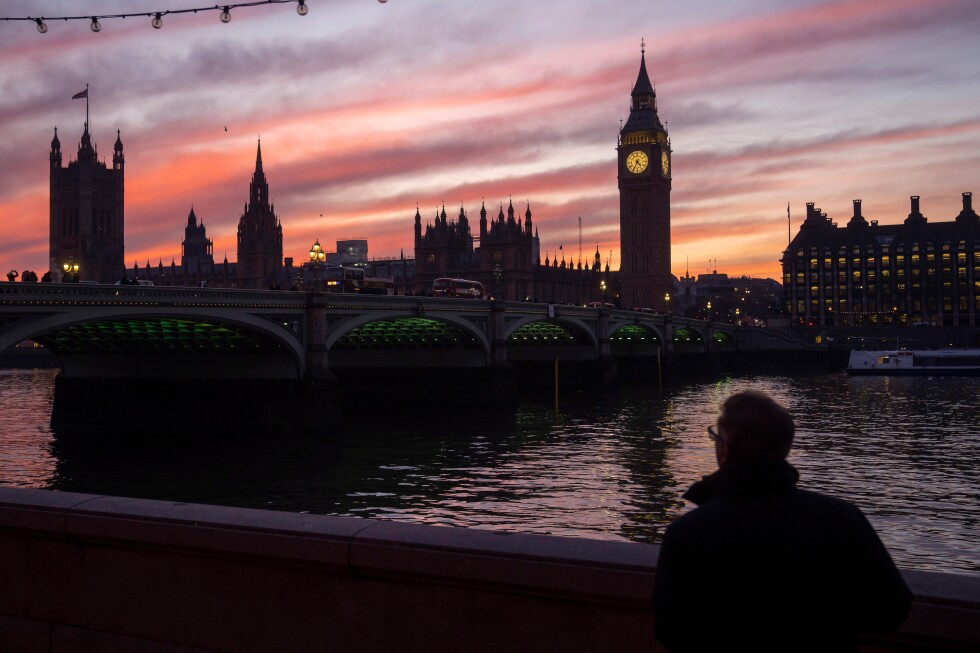
Eddie Boyle, a resident of Falkirk, Scotland, speaking while crossing London’s Westminster Bridge, summed up a common sentiment: “My own opinion of America is now dictated by the president and he’s not covering himself in glory as far as I’m concerned. It’s a shame that such a long arrangement between the two countries has been tarnished.”
Disappointment among Britons with the direction of the American experiment is not a new trend. As far back as 1842, famed British author Charles Dickens left his widely celebrated U.S. lecture tour — where he earned a substantial fortune from public readings — frustrated and disappointed by the young nation. Outraged by the continuation of chattel slavery, which Britain had abolished a decade earlier in 1833, Dickens also condemned what he saw as a debased American press, calling it more “mean, and paltry, and silly, and disgraceful than any country I ever knew.” He famously wrote to a friend, “This is not the Republic I came to see. This is not the Republic of my imagination. In every respect but that of National Education, the Country disappoints me.”
Over two and a half centuries, the U.S.-U.K. relationship has evolved through multiple defining turning points that cemented America’s status as a global power. The War of 1812, a rematch of the Revolutionary War, ended in a stalemate but proved the young nation could hold its own against British military and economic power, establishing it as a permanent global actor. The U.S. survival through its Civil War, followed by its critical role in helping Britain defeat Nazi Germany in World War II, solidified the alliance. Decades later, the close partnership between U.S. President Ronald Reagan and British Prime Minister Margaret Thatcher helped bring about the 1991 collapse of the Soviet Union, a joint achievement still recognized by many Brits today. “They did something great there,” said Maria Miston of Suffolk, speaking near London’s Big Ben. “They actually managed to bring the Cold War to an end.” Still, Miston argued that America’s global standing has declined steadily since the 2003 U.S.-led invasion of Iraq: “We’ve just gone backwards since then.”
In Trump’s second term, the decades-old “special relationship” has undergone a fundamental reorientation. Trump has had a tense relationship with British Prime Minister Keir Starmer, dismissing him publicly as “not Winston Churchill” after Starmer refused to commit British forces to a U.S. conflict with Iran. The president has repeatedly suggested he views King Charles III, not the elected prime minister, as his equal peer. Last year, Trump accepted an unprecedented second state visit invitation from the king, which included a state dinner at Windsor Castle, and he welcomed Charles for a return visit to Washington earlier this year. During his U.S. trip, Charles emphasized that the 250-year bilateral relationship “is more important today than it has ever been,” while also making a public case for the importance of democratic checks and balances — widely interpreted as an implicit rebuke of Trump. The White House drew international attention when it posted on social media describing the pair as “TWO KINGS,” a jab likely aimed at the anti-monarchy “No Kings” rallies that drew large crowds across the U.S. during Charles’ visit. The irony was not lost on Britons: the U.S. was founded on the rejection of monarchy, specifically rule by King George III, Charles’ five-times great-grandfather. Back in the U.K., pre-visit polling showed majority public opposition to Charles’ U.S. trip, but the king’s performance won broad praise as a deft display of soft power, even amid well-documented tensions over climate policy and Trump’s repeated playful (yet provocative) threat to annex Canada — a Commonwealth realm where Charles is head of state. Rock star Rod Stewart summed up a common British view when he told Charles at a May gala, within earshot of reporters: “May I say, well done in the Americas. You were superb, absolutely superb, put that little rat bag in his place.”
National polling confirms that British views of the U.S. have soured sharply during Trump’s second term. A Gallup poll conducted in late 2025 found just 28% of British adults approve of U.S. global leadership, with 68% holding a negative view. That number is roughly on par with approval during Trump’s first term, and far lower than the 45% approval recorded during Democratic President Joe Biden’s tenure. Pew Research Center’s 2025 Spring Global Attitudes Survey echoes this shift: while two-thirds of British adults held a favorable view of the U.S. in the first two years of Biden’s presidency, that number fell to 54% by spring 2024, and sits at just 50% in 2025. This is not the first period of strain between the two nations: the 1956 Suez Crisis marked a defining shift, when British power declined and American global dominance became the new global order, and a decade later London rejected U.S. pressure to join the Vietnam War.
For decades, following American politics has functioned as a national spectator sport in Britain, a way to watch the world’s oldest modern democracy evolve from across the Atlantic. Today, Britons still acknowledge a long list of American qualities they admire: national ambition, unprecedented economic wealth, unmatched military power, the sheer scale of the country, its global cultural output from television to music to film, and its political resilience even after crises like the January 6, 2021 Capitol insurrection. But alongside those positive perceptions are longstanding points of confusion and criticism. Topping the list for many is America’s persistent gun violence, which is nearly incomprehensible to Brits: the country banned private handgun ownership in 1997, after a mass shooting at a Scottish school that killed 16 children. Many Britons also express confusion at hardline U.S. immigration crackdowns, given the United States was founded by immigrants — even as the U.K. grapples with its own domestic debates over unauthorized migration.
On the 250th anniversary of American independence, Trump remains the central point of fascination and confusion for most British respondents. Discussing Trump is also a socially sensitive topic in the U.K., where Brexit has left deep political divisions and populist reform movements aligned with Trump’s agenda have gained ground in recent local elections. At The Cross Keys pub in Washington, England — a small town located just downhill from George Washington’s ancestral family home — local resident Mark Gibson sipped a pint and summed up the widespread confusion: “How can someone like that become president?” Gibson said he could rationalize the election of other American leaders, even when he disagreed with them, but Trump’s history of business bankruptcies and repeated legal scandals leave him bewildered. “I don’t understand it. He’s had bankruptcies and legal troubles,” Gibson said. “But, I guess that’s what people wanted. They elected him twice.”