A bitter political battle is unfolding in Zimbabwe over a sweeping set of proposed constitutional changes that have reignited fears of authoritarian backsliding, just decades after the end of Robert Mugabe’s decades-long authoritarian rule. At the heart of the conflict is a draft bill championed by the long-ruling Zanu-PF party, which has held uninterrupted power since Zimbabwe gained independence in 1980. If passed, the legislation would upend the country’s electoral system, stripping ordinary voters of their three-decade-old right to directly elect the president and shifting that power exclusively to parliament. It would also extend both presidential and parliamentary terms from five years to seven, delay the 2028 general election to 2030, and allow sitting President Emmerson Mnangagwa—whose second and constitutionally mandated final term was set to end in 2028—to remain in office for an extra two years.
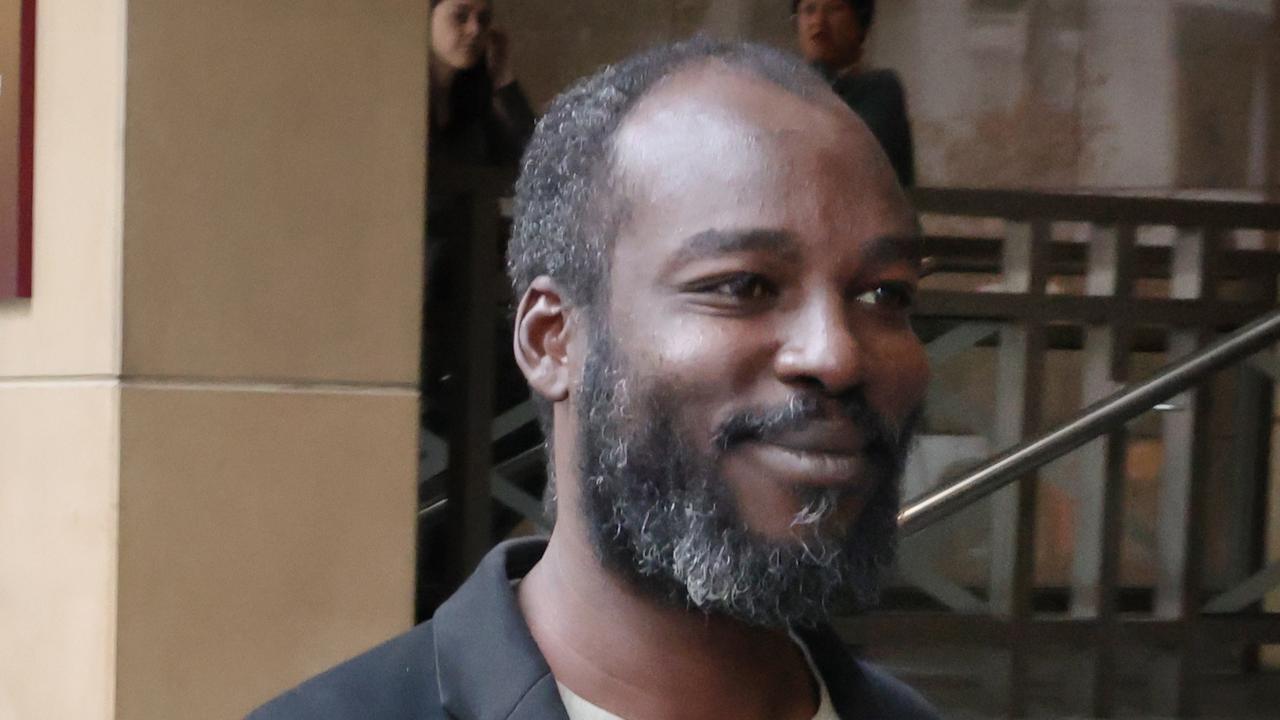
Mnangagwa first rose to power in 2017, when a military-backed coup ousted Mugabe, who had ruled the country for 37 years. Mnangagwa went on to win disputed presidential elections in 2018 and 2023, and the proposed changes now have opposition leaders sounding the alarm over what they call a calculated power grab. “This is a coup, a slow coup that is unfolding in Zimbabwe,” Tendai Biti, a veteran opposition figure and former finance minister who now leads the Constitution Defenders Forum, told the BBC.
Biti’s warning comes amid a growing crackdown on opposition voices ahead of parliamentary consideration of the bill, which is expected to pass in the coming weeks. The campaign to advance the changes first launched in 2024, with supporters rallying behind the slogan “2030 – he will still be the leader.” In the lead-up to recent public hearings held to gather public input on the draft legislation, Zimbabwean police banned more than a dozen opposition events aimed at organizing against the bill. Biti himself has been released on bail after being charged with holding an unauthorized public meeting. Last month, Lovemore Madhuku, leader of the opposition National Constitutional Assembly, said he was beaten by masked attackers while police stood by and did not intervene.
Tensions boiled over during the public hearings, which drew thousands of attendees to a Harare sports arena. While speaker after speaker voiced support for the bill and called for Mnangagwa to stay in office beyond 2028, chaos erupted when critics attempted to speak. Opposition lawmaker and lawyer Fadzayi Mahere told the BBC that Zanu-PF supporters instigated commotion, including pushing, shoving, physical fighting, theft of mobile phones, and forced deletion of footage of the unrest to silence opposing views. Zanu-PF spokesperson Patrick Chinamasa rejected the accusations, arguing that the ruling party has no need for violence because it holds majority public support, and instead blamed the opposition for the unrest, saying opponents refuse to accept that their views are not widely shared.
Zanu-PF officials have forcefully defended the proposed overhaul, framing it as a pragmatic, cost-saving reform that will reduce the political violence that has plagued popular presidential elections for decades. “There’s nothing that stops us to change, to go to another system that’s less costly, less controversial,” Chinamasa said, noting that electoral violence linked to direct presidential votes is not unique to Zimbabwe. He added that the changes are intended to preserve the political stability and ongoing economic development that the country has seen since Mnangagwa took office in 2018, and dismissed claims that the bill marks a permanent power grab, saying “When his time is up we will choose other leaders.” Zanu-PF also argues that the changes comply with the country’s 2013 constitution, claiming the two-term limit for presidents remains intact, and that only the length of each term is being adjusted, eliminating the need for a public referendum as required for term extensions.
But critics counter that the bill directly violates the 2013 constitution, a document that was the product of years of activism to curb executive power after Mugabe’s rule. The 2013 charter restricts presidents to two terms and explicitly requires any extension of term limits to be approved by voters in a public referendum, with a second separate referendum required if a sitting president wants to benefit from an extended term. Opposition leaders say the proposed changes roll back hard-won democratic gains and open the door to a complete elimination of term limits down the line. “If they can get away with two years what stops them from getting away with 20 years?” Biti said. Critics add that the changes would recreate the over-powerful “imperial presidency” that activists fought to end during Mugabe’s tenure, and that the shift to parliamentary presidential elections will entrench Zanu-PF’s permanent hold on power, as the party already controls a parliamentary majority.
Even within Zanu-PF, the proposal faced initial internal opposition, but the most prominent internal critic, Blessed Geza—commonly known by his nickname “Bombshell”—died earlier this year, clearing a path for the bill to move forward. The deep divide over the proposed amendments has laid bare the persistent polarization that defines Zimbabwe’s modern political landscape, pitting a ruling party that has held power for 44 years against an opposition that says the country is sliding back into the authoritarian patterns of the Mugabe era. “They are making the mistake that Mugabe made. That of closing [the democratic] space absolutely,” Biti said.
作者: admin
-

Plan to scrap presidential elections puts Zimbabweans at loggerheads
-

White House denies it is considering using nuclear weapons in Iran
Tensions around US-Iran relations have spiked dramatically in recent days after a series of escalating, incendiary statements from senior US leadership, capped by a chaotic back-and-forth over whether the Trump administration is open to deploying nuclear weapons against the Islamic Republic.
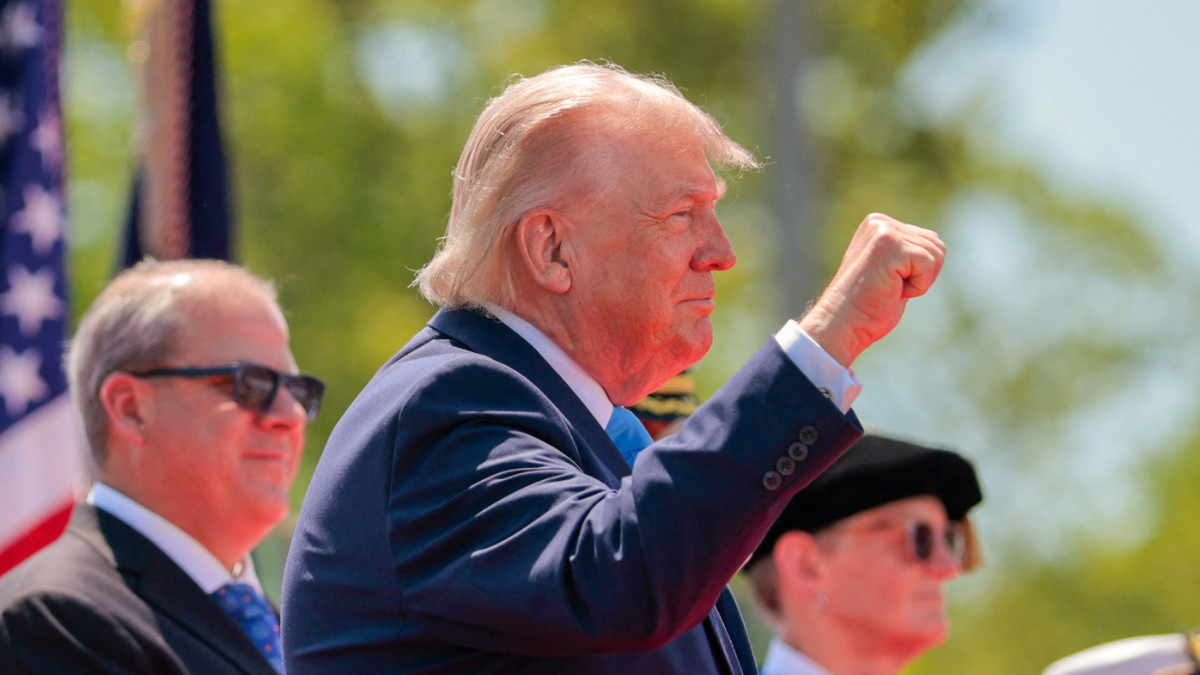
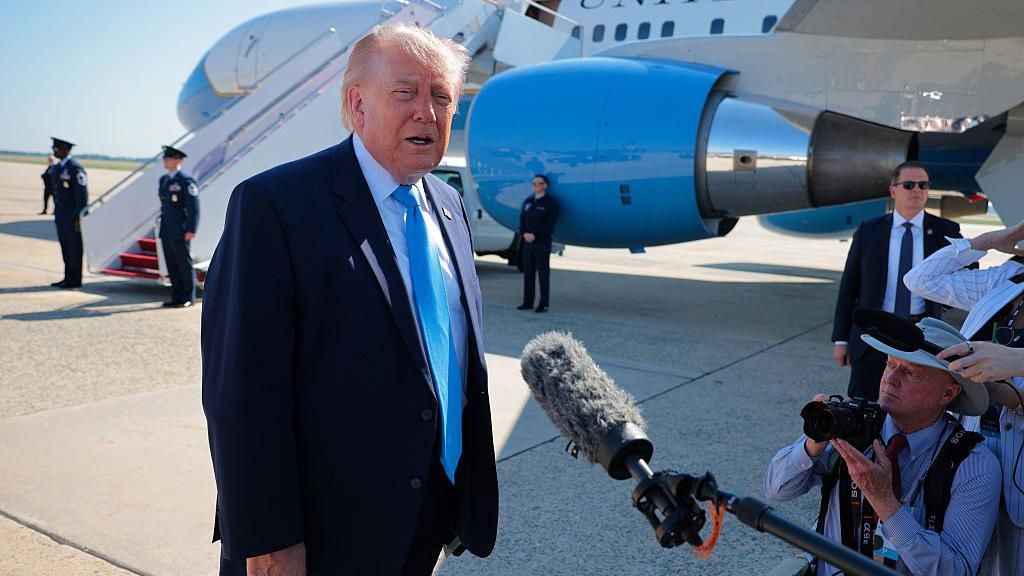
The controversy began unfolding last week, as US President Donald Trump adopted a sharply erratic policy tone toward Iran, swinging unexpectedly between public expressions of optimism that a new bilateral deal could be reached and harsh, violent threats targeting the country. On Sunday, the president took to his Truth Social platform for an expletive-filled post, ordering Iranian officials to immediately reopen the Strait of Hormuz — a critical global maritime chokepoint — and warning that Tehran would face “hell” if it refused to comply.
As the Tuesday deadline Trump imposed for the strait’s reopening approached, the president doubled down on his rhetoric with an unprecedented apocalyptic warning. In a Truth Social post Tuesday evening, he declared that if Iran failed to meet his demand, “A whole civilization will die tonight, never to be brought back again.” Adding to the gravity of the threat, he framed the moment as a historic turning point, writing, “We will find out tonight, one of the most important moments in the long and complex history of the World.”
Shortly after the president’s statement, Vice President JD Vance, during an official visit to Hungary, added fuel to the speculation around potential extreme military action. Vance argued that Tehran must recognize that the US maintains powerful, unused military capabilities in its arsenal, saying “The president of the United States can decide to use them, and he will decide to use them if the Iranians don’t change their course of conduct.”
Vance’s comment, paired with Trump’s earlier warning that an entire civilization faced annihilation, led widespread international analysis to interpret the vice president’s remarks as a veiled reference to the possible use of nuclear weapons against Iran. Any deployment of nuclear weapons against human targets would mark a historic breaking point: it would be the first use of the technology by any state since the US dropped atomic bombs on the Japanese cities of Hiroshima and Nagasaki at the close of World War II. The catastrophic humanitarian and environmental impact of nuclear weapons, paired with the risk of uncontrollable regional and global escalation, has meant no nuclear-armed state — of which there are nine globally — has chosen to deploy these arms in conflict over the nearly 80 years since 1945.
Within hours of the speculation emerging, the White House issued a blunt and public denial on its X (formerly Twitter) account pushing back against the inference. In an unusually profane rebuke to those reporting the connection, the administration wrote: “Literally nothing @VP said here ‘implies’ this, you absolute buffoons.”
The rapid sequence of conflicting statements has deepened international concern over the Trump administration’s approach to the already volatile Persian Gulf region, with observers warning that unguarded, apocalyptic rhetoric risks raising the risk of miscalculation on both sides that could spiral into unintended conflict.
-

The US refinery now processing Venezuelan oil
Nestled in the Mississippi Sound, within sight of the Gulf of Mexico’s sprawling U.S. oil reserves, the 250-meter navy-and-burgundy tanker Minerva Gloria sits docked at a coastal wharf. Its cargo would have been unthinkable just six months ago: 400,000 barrels of heavy Venezuelan crude, marking the resumption of full-scale oil shipments between the OPEC nation and the United States after years of disrupted trade.
Venezuela holds the world’s largest proven conventional oil reserves, but decades of underinvestment and a sweeping U.S. import ban had crippled its export sector for years. That changed abruptly after a January U.S. military raid captured former Venezuelan leader Nicolas Maduro, opening the door for Washington to roll back sanctions and access the untapped reserves. President Donald Trump made tapping Venezuela’s oil supplies a core priority, a pledge that is now translating to tangible shipments.
By March 2026, Venezuelan monthly crude exports crossed the one million barrels per day threshold for the first time since September 2025, a rapid rebound for the country’s energy sector. The timing could not be more consequential: as global energy markets roil from Iran’s blockade of the Strait of Hormuz, major U.S. energy firms including Chevron — the only large American oil producer still holding operational assets in Venezuela — have ramped up imports of Venezuelan crude to full capacity.
For Chevron’s largest U.S. refinery in Pascagoula, Mississippi, the return of Venezuelan oil is far more than a symbolic shift. “It’s a big deal not only for Chevron but the entire Gulf region,” noted Tim Potter, the facility’s director. The refinery was purpose-built and upgraded over decades to process heavy, high-sulfur crude — the exact type of oil that Venezuela produces in abundance. “It’s a pretty big incentive for us to run it at full capacity,” Potter added. Now, the firm can extract crude from its own Venezuelan fields, process it domestically, and deliver it directly to U.S. consumers, cutting out middlemen and logistical delays.
Venezuelan crude carries a lower upfront price tag than many other grades, despite its more complex refining requirements. Currently, Chevron imports an average of 250,000 barrels of Venezuelan crude per day, and Andy Walz, president of Chevron’s downstream, midstream and chemicals division, says the company is positioned to boost that volume by 50% in coming months, hitting between 350,000 and 400,000 barrels daily for the firm alone. While Chevron is the only U.S. company with direct extraction rights in Venezuela, other domestic refiners are also purchasing crude from Venezuelan producers, expanding the overall supply hitting U.S. markets.
Nearly 70% of U.S. refining capacity is optimized to run most efficiently on heavy crude grades, and the U.S. already draws less than 8% of its total oil imports from the Middle East as of 2025. Increased Venezuelan imports expand overall domestic supply, which industry leaders argue should eventually translate to lower pump prices for U.S. drivers. President Trump emphasized this dynamic in a recent primetime address, stating: “The United States imports almost no oil through the Hormuz Strait, and won’t be taking any in the future, we don’t need it.”
Yet for American consumers filling their tanks right now, relief has not yet arrived. Just miles from Chevron’s Pascagoula refinery, at a local company-branded fuel station, retail gas prices continue to climb. David McQueen, a retired Vietnam veteran who relies on Social Security for income, called the ongoing price hikes unsustainable. “The price has got to go down because I’m going down with it,” he said, echoing widespread frustration that abundant domestic and Venezuelan reserves have not translated to lower costs. Another local resident, Donna, told reporters she has cut back on driving and reduced other spending to afford fuel, cutting back on visits to her grandchildren who live several hours away. “You gotta do what you gotta do,” she said.
Data from the American Automobile Association confirms that even in this oil-rich region of Mississippi, where prices are still below the national average, gasoline costs roughly $1 more per gallon than they did before the escalation of conflict around the Strait of Hormuz. Why has increased supply not yet lowered prices? Industry leaders explain that the U.S. remains fully integrated into global oil markets, so even domestic crude is priced according to international benchmarks. “While we’re able to still get crude available here to this refinery because of our relatively local supply, the overall pricing of that crude has gone up because it’s based off of world markets,” Potter explained.
Chevron officials maintain that the long-term benefits of increased Venezuelan oil supplies will eventually reach consumers, with the current price volatility driven by the Iran crisis temporarily masking the impact. “When things do get back to normal, that additional supply out of Venezuela will actually translate to lower prices for Americans. So it will in the future, but it isn’t having an impact now,” Walz said. For now, though, U.S. drivers are still waiting for the promised relief from resumed Venezuelan oil trade.
-

Kharg struck as Trump threatens to wipe out Iranian civilization
On Tuesday, mere hours before his self-declared deadline for a negotiated agreement to reopen the strategic Strait of Hormuz, former and current U.S. President Donald Trump delivered an extraordinary public threat to permanently erase Iran’s entire national civilization — remarks that legal and policy experts have universally characterized as a clear admission of genocidal intent. The threat was posted directly to Trump’s personal Truth Social platform, as U.S. military forces escalated a widening air campaign targeting Kharg Island, Iran’s central oil export terminal that underpins the country’s energy economy. Multiple regional defense reports add that U.S. and Israeli forces also carried out overnight airstrikes against key bridge infrastructure across Iran, as part of a broader offensive launched in late February that has already killed thousands of Iranian civilians and combatants.
In his social media post, Trump declared: “A whole civilization will die tonight, never to be brought back again. I don’t want that to happen, but it probably will. However, now that we have Complete and Total Regime Change, where different, smarter, and less radicalized minds prevail, maybe something revolutionarily wonderful can happen, WHO KNOWS? We will find out tonight, one of the most important moments in the long and complex history of the World.”
Leading global policy and legal experts were quick to condemn the remark, framing it as a violation of both U.S. domestic law and international humanitarian norms. Brian Finucane, senior advisor for the U.S. Program at the International Crisis Group, drew public attention to 18 U.S. Code § 1091, the federal statute that bars U.S. nationals from committing acts of genocide both within the United States and on foreign soil. Dylan Williams, vice president for government affairs at the Washington D.C.-based Center for International Policy, confirmed that the public threat meets the legal threshold for genocidal intent as defined by the same U.S. genocide statute, which prohibits actions intended to destroy a national group in whole or in part. Williams added that if any Iranian civilians are killed as a result of military action carried out following this threat, both Trump and any officials aiding him would be legally culpable for genocide. Former Human Rights Watch executive director Kenneth Roth echoed this assessment, noting that the threat itself constitutes an unlawful act under international law.
Speaking to NBC News, Roth emphasized that Trump’s threat amounts to a public call for collective punishment that targets the Iranian people, not just Iranian military forces — a violation of the Fourth Geneva Convention. “Attacking civilians is a war crime. So is making threats with the aim of terrorizing the civilian population,” Roth said. He called on U.S. military personnel to refuse unlawful orders and for members of the U.S. Congress to immediately begin impeachment proceedings against Trump to remove him from office.
Adil Haque, a professor of international law at Rutgers University, echoed these calls on Tuesday, urging the global community to intervene immediately to stop Trump from launching what he described as a catastrophic, criminal assault on a nation of more than 90 million people. “Soldiers must refuse unlawful orders. Members of Congress must call for impeachment and removal. Every American who loves their country must speak out. Enough is enough,” Haque stated.
Trump’s arbitrary 8 p.m. Eastern Time deadline centers on his demand that the Iranian government fully reopen the Strait of Hormuz, the critical maritime chokepoint through which roughly 20 million barrels of crude oil and a large share of the world’s liquefied natural gas flowed daily before the outbreak of the current conflict. The U.S. president has already threatened massive airstrikes on Iranian power plants, energy infrastructure and national bridge networks if no agreement meets his deadline by the specified time. This threat marks an escalation of rhetoric Trump has deployed over recent days: on Sunday, he publicly demanded Iran “open the Fuckin’ Strait, you crazy bastards, or you’ll be living in Hell,” and has previously bragged he would bomb Iran “back to the Stone Ages.” When asked about potential war crimes committed during U.S. operations in Iran, Trump told reporters Sunday he was unconcerned, stating that “the time the Iranian people are most unhappy … is when those bombs stop.”
In response to the escalating threats, Iranian officials have rejected international calls for a temporary 45-day ceasefire proposed by regional mediators led by Pakistan, with participation from Egypt and Turkey, and have insisted on ironclad guarantees that both the U.S. and Israel will end all current attacks and commit to no future aggression against Iran. “We only accept an end of the war with guarantees that we won’t be attacked again,” Mojtaba Ferdousi Pour, head of Iran’s diplomatic mission to Cairo, told The Associated Press, confirming the government’s rejection of the temporary truce proposal. Pour added that Tehran cannot trust Trump, who Iranian officials have repeatedly accused of using nuclear negotiations as a cover to extract political concessions and buy time to prepare for expanded military operations.
That pattern of behavior was borne out most recently in February, when Omani Foreign Minister Badr bin Hamad Al Busaidi, the lead mediator for U.S.-Iran peace talks, confirmed that a comprehensive peace deal was within reach just hours before Trump ordered the launch of large-scale airstrikes on Iran. Prior to the February 28 outbreak of the current U.S.-Israeli offensive against Iran, Iranian negotiators had been willing to make unprecedented concessions on the country’s civilian nuclear program. Multiple U.S. presidential administrations dating back to George W. Bush, including Trump’s first term in office, have formally concluded that Iran is not actively pursuing development of nuclear weapons. Notably, the U.S. and Israel first launched large-scale airstrikes against Iran during ongoing negotiations in summer 2025, mirroring the 2026 pattern of breaking off talks for military action.
A senior anonymous Iranian official speaking to Drop Site News on Monday offered insight into the government’s rejection of a temporary ceasefire, noting that the Trump administration is facing mounting domestic U.S. legal and political constraints over its prosecution of the war, as well as pressure to stabilize volatile global financial markets, creating a need for a short-term pause in hostilities. “Our assessment indicates that this proposal has been drafted solely on the basis of the mediators’ perception of the minimum demands of the parties for halting the war,” the official said. “Tehran does not consider a temporary ceasefire to be a logical course of action, inasmuch as the window for the United States’ exit from the conflict has already been delineated. Should the requisite political will exist, the parties are in a position to establish a permanent ceasefire and thereafter concentrate their efforts on diplomacy.”
-

China’s Long March-8 rocket launches new internet satellites
In a successful commercial space mission carried out on Tuesday, China launched its Long March-8 carrier rocket from the Hainan commercial spacecraft launch site located on the country’s southern Hainan Island, placing 18 new internet satellites into their pre-planned orbital positions.
The liftoff of the rocket occurred at 9:32 pm Beijing Time, marking another milestone in the expansion of China’s domestic satellite internet infrastructure. The 18 satellites delivered to orbit constitute the seventh batch of networking satellites developed for the Qianfan Constellation, a planned large-scale low-Earth orbit satellite network designed to deliver global internet connectivity services.
The launch, conducted from China’s purpose-built commercial space launch facility in Hainan, demonstrates the continued reliability of the Long March rocket family and advances the country’s progress in building out its commercial space sector. This mission adds additional nodes to the growing Qianfan network, bringing the constellation closer to its operational goal of providing comprehensive, uninterrupted internet coverage across the globe.
As demand for global satellite internet connectivity continues to rise driven by increasing remote work, IoT deployment, and connectivity needs in underserved regions, progress in the Qianfan Constellation project represents a key step forward in China’s commercial space development ambitions.
-

Beijing warns against Japan’s plan to ease restrictions on arms exports
In a stark official rebuke, Beijing has issued a serious warning over Tokyo’s incoming plan to roll back long-standing restrictions on Japanese arms exports, a shift that China says signals the country’s growing drift toward an offensive, expansionist national security posture that demands sharp vigilance from the global community. The statement comes amid widespread opposition, both within Japan and across the international community, to the policy change that would upend 70 years of post-World War II constraints on Japanese military activity.
Foreign Ministry spokesperson Mao Ning outlined China’s position during a routine Tuesday press briefing, confirming that the warning follows confirmed reports that Japanese officials are set to revise the nation’s Three Principles on Transfer of Defense Equipment and Technology as early as this month. The current framework, first introduced in 2014, strictly limits Japanese defense exports to five non-lethal categories centered on logistical support, including search-and-rescue gear and transportation equipment.
The proposed revision would fundamentally rewrite these rules: it would open the door for exports of fully lethal weapons as a general rule, create carve-outs that allow arms shipments to nations actively involved in armed conflict, and replace the requirement for advance parliamentary approval with a far weaker after-the-fact notification system.
Mao emphasized that concern over the shift is not limited to China. Leading international academics and prominent, forward-thinking figures within Japan have already raised urgent alarms, noting that the revision marks a paradigm shift in Japan’s post-war arms policy that would dismantle key guardrails built after 1945 specifically to block a return of Japanese militarism. The move, she added, directly violates the core spirit of binding international legal agreements forged in the aftermath of World War II, including the Cairo Declaration, the Potsdam Proclamation, and Japan’s own formal Instrument of Surrender. It also runs counter to the letter and spirit of Japan’s own pacifist post-war constitution, Mao said.
Compounding the controversy, official polling previously conducted by the Japanese government itself confirms that a majority of Japanese citizens oppose rolling back arms export restrictions. Mao noted that this mounting shift is no accident: it is the deliberate product of campaigning by Japan’s right-wing political forces, which have openly pushed to rewrite the nation’s defense posture into one defined by offensive power and territorial expansion. Accelerated remilitarization in Japan is no longer a distant risk, she stressed—it is an established reality, backed by formal policy changes and concrete actions already put in place.
This growing trend represents a direct threat to peace and stability across the East Asian region, Mao argued. She called on Japanese leaders to undertake sincere reflection on their nation’s history of militarist aggression, uphold the peaceful commitments the country made in the post-war era, act with far greater caution in military and security policy, and reverse course before traveling further down a dangerous, wrong path.
Xiang Haoyu, a senior research fellow at the China Institute of International Studies, expanded on the regional and global risks of the policy shift. He explained that Japanese right-wing forces have long used the rhetoric of “national normalization” and “independent self-defense” as a cover to gradually chip away at the constraints imposed by Japan’s pacifist constitution and the post-WWII international order designed to prevent another catastrophic conflict.
The push to ease arms export rules, framed by Tokyo as a response to external security threats, actually reflects an outdated Cold War-era zero-sum ideology and advances Japanese strategic goals of geopolitical containment and confrontation, Xiang said. If Japan moves forward with full liberalization of lethal arms exports, the ripple effects will be felt across the globe for decades to come.
Most immediately, the change will dramatically raise the risk of a new regional arms race across the Asia-Pacific, Xiang warned. Increased flows of Japanese weaponry into already tense, sensitive geopolitical hotspots will likely inflame existing territorial and political disputes, create new conflict flashpoints, and cause irreversible damage to hard-won regional peace and stability.
Beyond the Asia-Pacific, the wider proliferation of Japanese arms will also weaken the global international arms control framework that has limited the spread of deadly weaponry since the end of the Cold War, Xiang added. No matter what justifications Japanese politicians offer for their policy shift, they cannot obscure the hidden strategic motives and severe risks that come with rolling back arms export rules and pursuing full remilitarization, he said.
The warning from China coincides with widespread public pushback within Japan itself: on Sunday, more than 6,000 Japanese citizens gathered in central Tokyo to protest the government’s push to ease arms export rules and advance sweeping military expansion, voicing deep anxiety over the dangerous direction the nation is taking.
-

Newlywed wife of US soldier freed by ICE after detention at military base
Just days after tying the knot, a United States Army service member’s newlywed wife, detained by federal immigration agents at her husband’s Louisiana military base, has been freed from custody, closing a tense five-day saga that ignited fierce debate over the Trump administration’s hardline immigration crackdown and its treatment of military families.
Twenty-two-year-old Annie Ramos, an undocumented immigrant who arrived in the U.S. from Honduras when she was just 22 months old, was taken into custody by Immigration and Customs Enforcement (ICE) agents on April 2 during a routine visit to the base. The couple had traveled from Houston to the facility to complete paperwork for a military spouse ID and activate Ramos’ benefits, with plans to welcome her onto the base ahead of the Easter holiday. After the pair presented all required documentation—including their marriage license, Blank’s military ID, Ramos’ Honduran passport and birth certificate—agents moved to place Ramos in handcuffs, before transporting her off-base in a military vehicle.
For Staff Sgt. Matthew Blank, a five-year Army veteran with deployments already under his belt in the Middle East and Europe who is set to begin pre-deployment training later this month, the arrest turned the happiest week of his life into a nightmare. Ramos spent her five days in detention held alongside hundreds of other immigrants facing deportation under the administration’s aggressive immigration enforcement policies.
Following her release on Tuesday, Blank expressed overwhelming relief at reuniting with his wife. “I feel awesome. Relieved, so relieved. These have been the worst days of my life,” he told *The New York Times*, which first broke the story. “I can’t wait to carry my wife into our home and start our lives together. I’m complete and ready to serve our country. And it’s her country, too.”
Ramos, a biochemistry undergraduate student, has framed her long-held goal as building a life of dignity in the only country she has ever known as home. “All I have ever wanted is to live with dignity in the country I have called home since I was a baby,” she said in a statement to the BBC. “I want to finish my degree, continue my education, and serve my community – just as my husband serves our country with honor.” Moving forward, she said her focus will be on resolving her immigration status, completing her degree, and building a future with Blank.
The Department of Homeland Security (DHS) has confirmed Ramos has no legal immigration status in the U.S., and did not respond to repeated requests for comment on her current status from the BBC Tuesday. In a statement following the arrest, ICE defended its actions, saying “Being in detention is a choice. We encourage all illegal aliens to take control of their departure with the CBP Home App,” noting that the government offers financial support and free one-way travel for immigrants who agree to self-deport.
A last-minute push from political advocacy and congressional intervention secured Ramos’ release. Sen. Mark Kelly, whose Arizona constituency includes Blank’s family members, personally reached out to the sergeant to pledge his support, and subsequently spoke to DHS Secretary Markwayne Mullin about the high-stakes case. Following Ramos’ release, Kelly criticized the administration’s policies that led to the ordeal. “I’m happy Annie is back with her husband and family where she belongs. They never should have gone through this painful process, but far too many families like theirs are because of this administration,” Kelly told the BBC.
Public records show Ramos entered the U.S. illegally in 2005, and a final removal order was issued after she failed to appear at an immigration hearing decades ago—an event that occurred when she was still an infant. Legal experts, speaking to CBS News, the BBC’s U.S. media partner, note that the current administration has broken with longstanding precedent that prioritized leniency for immediate family members of active-duty service members in immigration enforcement cases.
Immigration and military family advocates have condemned Ramos’ detention, warning that targeting military spouses for deportation risks eroding troop morale and betrays core U.S. values. Gaby Pacheco, president of TheDream.US, a leading scholarship provider for undocumented immigrant youth, called the case a stark wake-up call for policymakers and the American public. “Detaining a 22-year-old biochemistry student who has lived here for two decades and is married to a U.S. Army staff sergeant preparing for deployment doesn’t make us safer – it weakens a military family, undermines our basic values, and exposes how far we’ve fallen as a nation,” Pacheco said.
-

‘Searching for perfection’: Terrifying Panthers stat that has rival players thinking they can go undefeated
The Penrith Panthers have kicked off the 2025 NRL season in historic fashion, putting together a five-game run so dominant that even rival players are openly speculating the club could pull off the unprecedented feat of finishing the entire regular season undefeated.
No other side in the league’s modern history has opened a campaign with such a devastating combination of offensive firepower and defensive discipline. Through the opening five rounds, the Panthers have outscored every other club, while conceding fewer points than all 16 competing rivals. They have piled up 190 total points for an average of 38 per game, and held opponents to just eight points per match — a mark that stands out starkly across the league, where nine squads have already given up at least 40 points in a single outing this season, with multiple clubs hitting that mark twice.
Even with this historically strong start, Panthers players insist the version of the team taking the field right now is far from the finished product, warning competing sides that Penrith will only continue to improve as the season progresses.
“I’ve always said that the sky’s the limit,” centre Paul Alamoti told reporters. “We’re searching for perfection, but it’s an illusion because you’ll never get there. If we continue to try to get better each day, that’s all we can be in control of and focus on at this stage. Things are obviously heading in the right direction with the way that we’re playing and how things are looking on the field, but we know internally that there’s still a long way to go. There are still 20 rounds to go and there’s still stuff in our game that we need to work on. We’re heading in the right direction, but we’re not getting too ahead of ourselves. Every team is still trying to get better, and we’re in the same position.”
Much of the Panthers’ current success has been anchored by a dynamic, high-scoring left edge attack that has left opposition defenses scrambling to keep up. Young backline talent Casey McLean has skyrocketed into State of Origin contention after a standout performance against the Melbourne Storm, while winger Tom Jackson has already notched a league-record 12 tries through just five rounds. Five-eighth Blaize Talagi, who joined the club last year when the Panthers sat at the bottom of the ladder after 12 rounds, has emerged as a key playmaker for this dangerous attacking unit, crediting head coach Ivan Cleary for giving young players the space to grow into their roles.
“I feel like we’re seeing opportunities and we’re not afraid to take them. I think our fundamentals are showing out there,” Talagi said. “Everyone is always alive and ready to take whatever comes on. We’re seeing things and we’re ready to take it and it’s coming off. It’s still not perfect. I’m still growing as a player, but I feel like we’ve come a long way and that’s thanks to Ivan for trusting us.”
Newly appointed attack coach Ben Harden has also been singled out as a major driving force behind the team’s record-breaking offensive output, as the squad adapts to his refreshed strategic framework. For Alamoti, the room for improvement extends to both sides of the ball — a prospect he says the club is eager to pursue, even as it leaves rivals shaken.
“We’ve got a new attack coach so that’s a bit different and we’re trying to adapt to his style of game play and what we’re trying to achieve out of that,” Alamoti explained. “We’ve obviously scored a few points over the first couple of weeks, but there are still little pockets of our game that we think we’re going to get better in. Defensively, we leaked 20 points two weeks ago and another 10 points last week. Everyone wants to keep the other team to zero, so that’s the goal.”
That relentless pursuit of improvement has already convinced even top rival players that the Panthers are on track for history. Melbourne Storm star Cameron Munster is among those who have publicly said he sees no reason Penrith cannot finish the entire season undefeated, even as club leaders acknowledge the squad will likely rest its key starters at multiple points later in the 25-round campaign — the only factor analysts see as a potential roadblock to the historic run.
-

Detained aid worker Joseph Figueira Martin freed in Central African Republic
After 22 months of detention on controversial national security charges, a foreign aid worker has been freed from custody in the Central African Republic (CAR), his family has confirmed to the Associated Press. Joseph Figueira Martin, a dual Belgian-Portuguese national working as a consultant for U.S.-based development organization FHI 360, was released from detention on Tuesday, according to his immediate family. His brother told reporters that early confirmation of the release is solid, and the freed aid worker was expected to touch down in Lisbon, Portugal’s capital, within hours of the announcement.
Figueira Martin was first taken into custody in May 2023, not 2024 as initially cited in some early official statements, during a security sweep in Zemio, a remote southeastern CAR town that has been trapped in chronic interethnic and anti-government violence for more than a decade. The CAR prosecutor’s office leveled serious allegations against the aid worker, including claims of espionage, unlawful collaboration with armed rebel factions, plotting to overthrow the sitting government, and endangering the country’s national sovereignty. Held in a maximum-security military prison, Figueira Martin previously launched a hunger strike to draw attention to poor and abusive conditions during his detention.
As of Tuesday evening, CAR’s presidential administration and national law enforcement bodies had not issued an official confirmation of the aid worker’s release, nor had they offered any public comment on the future of his outstanding legal case.
While cases of foreign aid workers being detained on national security charges remain uncommon in the country, the CAR government has ramped up regulatory and security scrutiny of international non-governmental organizations operating in conflict zones where state military forces are battling insurgent groups. In the wake of Figueira Martin’s arrest, national authorities issued a public warning that all foreign NGO personnel must avoid any activities deemed to threaten national security, or they would face formal legal prosecution.
The release comes amid more than a decade of ongoing instability in CAR, a resource-rich central African nation that plunged into full-scale civil conflict in 2013, when a coalition of mostly Muslim rebel groups seized the capital and ousted sitting president François Bozizé. The subsequent counteroffensive by mostly Christian anti-rebel militias spiraled into widespread ethnic violence that has killed thousands and displaced millions. A 2019 nationwide peace agreement between the government and major armed factions reduced large-scale clashes, but six of the 14 original signatory armed groups have since withdrawn from the deal, restarting insurgent activity across large swathes of the countryside.
Currently, CAR’s President Faustin-Archange Touadéra, who has held office since 2016, relies on military support from the Russian private mercenary group Wagner to hold off insurgent offensives and maintain government control over key national territory.
-

US says military goals against Iran largely achieved, sets talks deadline
In a joint press appearance held in Budapest alongside Hungarian Prime Minister Viktor Orban on Tuesday, United States Vice President JD Vance laid out a critical update on Washington’s military campaign against Iran, announcing that core American military objectives against Tehran have been almost fully completed. During the address, Vance issued a stark warning to the Iranian government: the window to enter into negotiations with the US is rapidly closing, and failure to engage will bring even deeper economic hardship for the country.
Vance emphasized that the US will maintain ongoing pressure to roll back Iran’s ability to produce advanced weapons. He officially confirmed that US military forces carried out targeted strikes against military infrastructure on Iran’s strategic Kharg Island, but was quick to clarify that the strikes intentionally avoided hitting energy facilities, aligning with operational parameters the US had established ahead of the action.
Outlining the two possible paths forward for Iran, Vance said that the White House believes the ongoing conflict could be brought to a swift conclusion if Tehran makes the right choice. The first option, he outlined, sees Iran abandon its support for what the US labels terrorist activity across the Middle East and re integrate into the global economic system. The alternative, Vance noted, is long-term, crippling economic isolation for the country.
The US has set a firm deadline for Iran to respond to the negotiation offer: 8:00 pm US Eastern Time, giving Iranian authorities roughly 12 hours from the announcement to deliver a formal response. Vance added that the US holds out hope for a positive response that would clear the way for the resumption of unimpeded global oil shipments through the vital Strait of Hormuz, a chokepoint that carries nearly a fifth of the world’s daily oil supply.
“While military force remains a valid option on the table if Iran refuses to adjust its behavior, it is by no means the outcome we prefer,” Vance added.
Beyond the discussion of US-Iran tensions, Vance also touched on bilateral relations between the US and Hungary, noting that Washington is eager to build a robust cooperative partnership with Budapest, particularly on issues of cross-continental energy security and energy independence. He pushed back against what he described as heavy-handed pressure from Brussels-based European Union bureaucrats, or “Eurocrats,” on Hungary over its independent policy choices, and confirmed that the US maintains multiple active channels of collaboration with the Hungarian government despite EU objections.
Vance also questioned the energy policy approaches adopted by many Western European nations, pointing out that many regional leaders warn of a widespread energy crisis while refusing to back Hungary’s independent energy strategy. He highlighted that Hungary’s approach has succeeded in keeping domestic energy prices lower than the levels seen in much of Western Europe.
Hungary has long held the position that it must retain access to relatively low-cost Russian fossil fuels to sustain its economy, a stance that puts it at odds with broader European Union efforts to cut nearly all energy dependence on Russia following the 2022 invasion of Ukraine. Vance concluded by reaffirming that the US supports Europe’s long-term prosperity and collective energy independence, noting that Hungary’s chosen policy path can actually help strengthen energy security across the entire European continent.