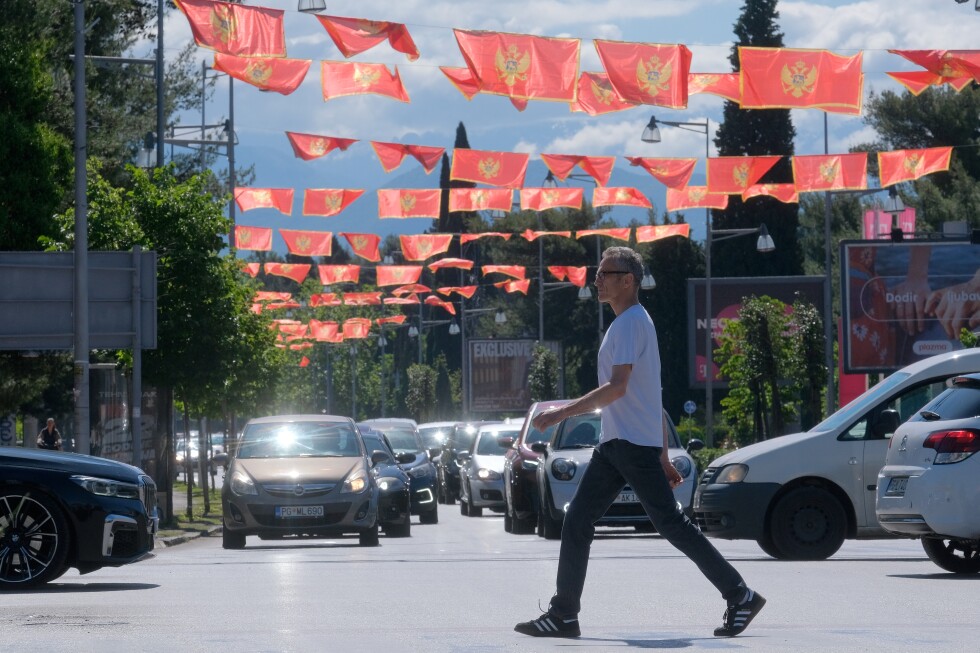
This week, the small Balkan nation of Montenegro is holding nationwide celebrations to commemorate two decades of full independence following its split from the state union with Serbia. Over the past 20 years, the country has already achieved one major strategic milestone by joining the North Atlantic Treaty Organization, and now it is laser-focused on its next ambitious goal: full integration into the European Union.
In an interview with the Associated Press on the sidelines of national independence festivities, Montenegrin President Jakov Milatovic framed NATO membership as a defining achievement for the young nation. He expressed unwavering confidence that Montenegro, a country with a total population of just 623,000, will meet its target of becoming the 28th member of the 27-nation EU by 2028. This goal has become so central to the country’s national agenda that the motto “28 by 28” has even been painted on the fuselage of one of Montenegrin national airline’s aircraft. “We can achieve it,” Milatovic stated from his office in the capital Podgorica. “I am optimistic about it.”
Known for its dramatic, turquoise Adriatic coastline and rugged, towering mountain ranges, Montenegro is hosting concerts, community events and formal celebrations across Podgorica and smaller towns throughout the country this week to mark the historic anniversary of the 2006 independence referendum.
The path to independence was far from unified two decades ago. After a decade of regional conflict that accompanied the dissolution of Yugoslavia, capped by the 1999 NATO bombing campaign to end the Kosovo War, Montenegro held its independence referendum on May 21, 2006. The final result was narrow: 55.5% of voters backed splitting from the State Union of Serbia and Montenegro to form an independent Montenegrin state.
The split exposed deep divisions across the country, given Montenegro’s centuries-long cultural, political and social ties to Serbia. Roughly one-third of the population identifies as ethnically Serb, the two nations share the Eastern Orthodox Christian faith, their languages are mutually intelligible, and they have a long history of political alliance. The independence movement was led by longtime Montenegrin leader Milo Djukanovic, who guided the country into NATO and shifted its geopolitical alignment away from Russia, another historic Slavic ally.
Milatovic emphasized that the 2006 referendum put Montenegrins in control of their own future, laying the groundwork for all progress that has followed. “The major progress probably happened when the country became a part of NATO in 2017,” he added. “Being a part of NATO for a small country like Montenegro is very important because NATO is indeed a security guarantee for our independence and statehood.”
Today, Montenegro stands as the leading candidate for EU accession among the six Western Balkan nations that are at varying stages of the membership process. The EU has already established a specialized working group to draft Montenegro’s accession treaty, a clear signal that membership is within tangible reach. EU leaders are expected to reaffirm their support for Western Balkan integration at a summit of candidate country leaders to be held in the coastal Montenegrin town of Tivat in early June, where delegates from Albania, Bosnia-Herzegovina, North Macedonia, Serbia and Kosovo will also gather. Multiple other countries, including Ukraine, also hold candidate status and aim to join the bloc in the coming years.
Milatovic noted that public support for EU membership in Montenegro remains very high, hovering around 80%. However, he acknowledged that the country still needs to complete a series of key democratic and economic reforms, and the speed of progress moving forward “is now entirely up to Montenegro.”
Challenges remain substantial on the road to accession, according to Jovana Marovic, Montenegro’s former European integration minister. The country has been an official EU candidate since 2010, and a top unmet priority is strengthening democratic state institutions to meet EU standards. “What was missing in the last 14 years, we have to provide now just in six months,” she said. “So it’s really demanding, but the process is going on.”
For ordinary Montenegrin citizens, improving economic conditions and raising living standards are the most pressing priorities. While Montenegro has already adopted the euro as its national currency and made significant democratic strides, its economy remains small and disproportionately reliant on the seasonal tourism industry. Zorana Popivoda, a 28-year-old Montenegrin, praised the restoration of independence but echoed widespread economic frustration: “then you go into a store and you see that you can buy absolutely nothing.”
Milatovic, a 39-year-old economist who took office in 2023, criticized previous administrations for failing to move faster on democratic reforms and crack down on endemic organized crime and corruption in the early years of independence. “I think that over the last 20 years, we can objectively say that the country experienced progress,” he said, “but also that Montenegro had a number of missed opportunities.” Moving forward, the president’s administration is committed to meeting the 2028 accession target and delivering tangible improvements to the lives of all Montenegrin citizens.