作者: admin

  • Australians stranded in Fiji as Cyclone Vaianu sparks flight chaos and flooding fears

    Australians stranded in Fiji as Cyclone Vaianu sparks flight chaos and flooding fears

    As Severe Tropical Cyclone Vaianu pummels large swathes of Fiji, hundreds of Australian holidaymakers are trapped on the island nation, enduring rolling blackouts, violent wind gusts and widespread travel disruptions that have thrown their plans to return home into chaos. With a second severe tropical storm already forming in the broader South Pacific, stranded travellers are facing a tense and uncertain wait for rescheduled flights.

    One of those caught in the extreme weather is Australian tourist Melanie Harris, who travelled to Fiji for a dream vacation with her young son. What was supposed to be a relaxing getaway has quickly morphed into a frightening ordeal, as the category cyclone unleashes its power across the island chain.

    “The wind is loud, relentless, and completely unpredictable,” Harris told 9News in an interview from her resort, located roughly an hour’s drive south of Fiji’s main tourist hub Nadi. “You can hear it constantly, even through the thick walls of our accommodation. It just puts you on edge the entire time.”

    Harris described a harrowing scene during dinner on Wednesday, when she and her son heard debris flying through the air outside, hurled by wind gusts that have hit speeds of over 100 kilometres per hour. Repeated, unannounced blackouts have made overnight stays particularly unsettling, she said. “Everything suddenly goes dark and the wind is still howling outside,” she explained. “It just didn’t feel safe at all.”

    The danger has already led to one scare for the pair: Harris’ son slipped on rain-soaked tiles amid the wild conditions and hit his head, a moment that left the already stressed mother panicking. “You’re already on edge from the storm, and then something like that happens,” Harris said. “It just takes everything to another level.”

    Nearly all scheduled day trips and tourist activities across Fiji have been cancelled as resort management prioritize guest safety, leaving many visitors waiting for refunds while they shelter in place. Harris said that while resort staff have attempted to assist trapped guests, they are stretched thin by the scale of the emergency and have little updated information to share. “They have almost been downplaying the cyclone and don’t have much information to give,” she said. Harris is now making plans to relocate to a more structurally secure hotel, as she anxiously waits to see if her scheduled flight back to Australia on Sunday will still depart.

    Travel disruptions are already being felt across regional air routes. One commercial flight from Sydney to Fiji was forced to divert to Nuku’alofa in Tonga earlier this week after encountering severe turbulence and dangerous weather conditions linked to Cyclone Vaianu.

    Australia’s Department of Foreign Affairs and Trade (DFAT) has issued an official advisory for travellers in Fiji, urging people to stay alert and follow guidance from local emergency authorities. “Flights may be delayed or cancelled, and essential services may be disrupted,” the DFAT statement read. “Know your accommodation’s evacuation plan. If a cyclone is approaching your area, find your nearest shelter and follow the advice of local authorities.” Travellers have been advised to reach out directly to their airlines and accommodation providers to get the latest updates on changes to their travel plans.

    Forecasters warn the regional weather situation could grow even more unstable in the coming days. Australia’s Bureau of Meteorology is currently monitoring a second severe system, Severe Tropical Cyclone Maila, which is currently tracking across the Solomon Sea near the Solomon Islands. The system is expected to track towards Papua New Guinea in the next 48 hours, before potentially moving closer to Australia’s far northern coast.

    As for Vaianu, current forecasting models show the cyclone will track south towards New Zealand, where it is expected to bring heavy rain, strong winds and potential flooding to parts of the North Island, including Auckland, later this week.

  • Hong Kong firm files arbitration against Maersk, saying it schemed with Panama over port takeover

    Hong Kong firm files arbitration against Maersk, saying it schemed with Panama over port takeover

    In a fresh escalation of the high-stakes conflict over control of strategically critical ports along the Panama Canal, a subsidiary of Hong Kong conglomerate CK Hutchison Holdings has initiated international arbitration proceedings against Danish logistics giant Maersk, accusing the shipping group of colluding with Panama’s government to seize control of its terminal operations.

    Panama Ports Company, the CK Hutchison unit that held long-term concessions for the Balboa and Cristobal ports at the Atlantic and Pacific entrances of the canal, laid out the new legal claim in an official statement released Tuesday. The company alleges that Maersk deliberately undermined its existing operating contract to clear the way for a Maersk-affiliated entity to take over operations of the high-traffic Balboa terminal. The arbitration will be conducted in London, though the firm has not publicly disclosed what financial or legal remedies it is pursuing through the process.

    This latest legal action builds on a series of disputes that stretch back to early 2025. Back in February, Panama’s national government seized full control of both the Balboa and Cristobal ports, shortly after the country’s Supreme Court ruled that CK Hutchison’s original operating concession was unconstitutional. That court ruling and subsequent seizure triggered immediate diplomatic pushback from the Chinese government. Shortly after the takeover, Panama’s administration handed operational control of the two ports to subsidiaries of Maersk and Mediterranean Shipping Company, the two largest container shipping firms in the world.

    Panama Ports Company first launched arbitration proceedings against the Panamanian government itself in February. By late March, the firm expanded its damages claim, stating that total losses related to the seizure now exceed $2 billion. The company emphasized in Tuesday’s statement that the new claim against Maersk is entirely separate from its ongoing legal efforts to hold Panama liable for what it describes as “anti-contract and anti-investor conduct.”

    As of Wednesday, neither Maersk’s corporate leadership nor Panama’s government has issued an immediate public response to the new arbitration filing.

    The unfolding legal conflict has further complicated a major pre-existing deal that has drawn global geopolitical and business attention. CK Hutchison first announced plans in March 2025 to sell the majority of its 40+ global port assets—including the two Panama Canal ports—to a consortium led by U.S. investment firm BlackRock, in a deal valued at $23 billion. The proposed transaction was welcomed by former U.S. President Donald Trump, who had repeatedly made unsubstantiated claims of Chinese interference in the operations of the vital global shipping lane. However, the deal sparked pushback from Beijing, and China’s antitrust regulator launched a formal review of the transaction last year. Since then, the parties to the sale have explored multiple adjustments to keep the deal on track, including the possibility of adding a Chinese investor to the buying consortium to resolve regulatory concerns.

  • How Pakistan helped secure a fragile ceasefire between the US and Iran

    How Pakistan helped secure a fragile ceasefire between the US and Iran

    Weeks of quiet behind-the-scenes diplomacy led by Pakistan has culminated in a breakthrough agreement for a two-week ceasefire between long-standing adversaries Iran and the United States, a deal that narrowly came together after last-minute escalations nearly derailed the entire process.

    In the hours leading up to the official ceasefire announcement, confidential insights shared with the BBC by an anonymous Pakistani source close to the negotiations highlighted the high-stakes, fast-moving nature of the talks. The source, who was not part of the core negotiating team, confirmed that Pakistan had maintained its role as the primary intermediary between Tehran and Washington, with discussions advancing “at pace” through a tightly controlled, very small circle of Pakistani negotiators. The mood throughout the final stretch, the source added, remained “sombre and serious but still hopeful” that a halt to hostilities could be reached, with only hours left to lock in the framework.

    Pakistan’s long-standing ties to both sides made it a natural broker for the talks: it shares a lengthy border and decades of what it describes as a “brotherly” relationship with Iran, while it maintains close security cooperation with the United States. Former U.S. President Donald Trump has publicly praised Pakistan’s top military commander, Field Marshall Asim Munir, calling him his “favorite” Field Marshall and noting that Munir has unique insight into Iranian politics.

    The path to the ceasefire was far from smooth, however. Just two days before the agreement, unplanned escalations – an Israeli strike on Iranian targets followed by an Iranian attack on Saudi Arabia – threw months of diplomatic work into doubt. Speaking to Pakistan’s parliament on Tuesday, Foreign Minister Ishaq Dar acknowledged that until the attacks, negotiators had been cautiously optimistic about progress. “Until yesterday we were very optimistic that things are moving in a positive direction,” Dar said, adding that Pakistan “was still trying to manage things as much as possible” to salvage the deal.

    Munir, Pakistan’s top military leader, issued unusually blunt criticism of Iran’s move, calling the attack on Saudi Arabia a deliberate setback that “spoils sincere efforts to resolve the conflict through peaceful means.” The rebuke marked one of the strongest public statements Pakistan has made against Iran since the broader conflict began. International analysts noted that the criticism was likely intentional, designed to ramp up external pressure on Tehran to compromise, particularly given Pakistan’s existing mutual defense pact with Saudi Arabia – a pact that has not yet been activated despite repeated attacks on Saudi territory throughout the conflict.

    In the hours after midnight Pakistan local time, Prime Minister Shehbaz Sharif took to social media platform X to outline the emerging framework, writing that “diplomatic efforts… are progressing steadily, strongly and powerfully with the potential to lead to substantive results in near future.” Sharif called on Trump to extend the existing U.S. deadline for a negotiated outcome by two weeks, and requested that Iran keep the critical Strait of Hormuz open to commercial shipping for the duration of the ceasefire.

    Shortly after Sharif’s post, Iran’s ambassador to Pakistan Reza Amiri Moghadam confirmed the diplomatic progress in his own X post, writing at around 3 a.m. local time that negotiations had moved “a step forward from critical, sensitive stage.” Just two hours later, Sharif made the official announcement: a two-week ceasefire had been formally agreed by both sides. As part of the next step, he invited representatives from Iran and the U.S. to travel to Islamabad on April 10 for direct talks aimed at reaching a permanent, conclusive peace agreement.

    Even with the ceasefire in place, however, observers and insiders remain cautious about long-term prospects. The anonymous Pakistani source emphasized to the BBC that negotiators are “still being very circumspect” given the “continued fragility” of the situation. Decades of mutual hostility have left deep-rooted distrust between Iran and the U.S., with both sides holding strongly entrenched positions on core issues. While Pakistan has succeeded in bringing the two adversaries to the negotiating table in Islamabad, the question of what substantive agreements they can reach to lock in long-term peace remains far from answered.

  • Nurse describes horror of 11yo’s fatal scooter crash

    Nurse describes horror of 11yo’s fatal scooter crash

    On a routine Monday evening in the coastal Western Australian city of Mandurah, an ordinary drive turned into a desperate fight for a child’s life when off-duty nurse Nicole Jones witnessed a devastating traffic collision unfold right in front of her. At approximately 5:10 p.m. along Mandurah Terrace, 11-year-old boy on a scooter lost control and veered directly into the path of an oncoming moving car.

    Jones, who was passing the scene moments after the crash, did not hesitate to act. She immediately pulled her vehicle over, rushed to the boy’s side, and took command of the chaotic situation. Speaking to local outlet 7News later, Jones recalled the panic and uncertainty that gripped the gathering crowd of bystanders when she arrived. “There was a lot of blood and a lot of people around kind of not sure what to do,” she described. Stepping into her professional role even off duty, Jones cleared onlookers from the road, positioned the unconscious child, and immediately started cardiopulmonary resuscitation (CPR) after confirming he had no pulse and had stopped breathing. She continued life-saving efforts until emergency paramedics arrived to take over care.

    Despite the rapid response from Jones and first responders, the boy’s injuries were too severe. He was rushed to Peel Health Campus for emergency treatment, but medical teams were unable to save his life. Initial investigations into the crash have confirmed that the child was not wearing a safety helmet at the time of the incident, a detail that adds another layer of tragedy to the outcome.

    For Jones, the traumatic experience has left a lasting mark. She shared that the sounds of the boy’s grieving parents will stay with her for a long time, adding that her deepest sympathies remain with the family in their devastating loss. “My thoughts go out to his mum and dad mostly. I don’t think I’ll forget their cries for a good while now,” she said.

    This fatal crash marks the fifth road fatality recorded in Western Australia over the 2024 Easter holiday break, a statistic that has prompted state Premier Roger Cook to issue a urgent, stark reminder to all road users about the critical importance of road safety. Cook outlined the Western Australian government’s ongoing commitment to reducing road deaths across the state, noting that efforts would continue across multiple fronts. “We will continue to make sure we do what we can as a government and that goes to making sure our roads are safer, making sure we’ve got targeted messaging to change driver behaviour, and continue to educate the community about the importance of road safety,” he stated. The tragedy has reignited public conversation about road user awareness, safety gear requirements for micro-mobility users, and ongoing efforts to cut preventable deaths on Australian roads.

  • Middle East war: ceasefire reactions

    Middle East war: ceasefire reactions

    In a development that has shifted the trajectory of the recent Middle East conflict, the United States and Iran have reached an agreement on a 14-day ceasefire, with both countries putting forward claims of victory following weeks of heightened tensions. As news of the truce spread, leaders and diplomatic bodies across the world have shared varied yet broadly welcoming responses to the breakthrough.

    The United Nations, one of the first global bodies to weigh in, issued a cautiously optimistic statement through Secretary-General António Guterres. While Guterres welcomed the announcement of the temporary ceasefire, his spokesperson emphasized that the truce is only a first step. The statement called on all conflict parties to strictly adhere to the ceasefire terms and uphold their obligations under international humanitarian law, framing the truce as a critical foundation to build toward a lasting, comprehensive peace across the entire Middle East region.

    Australian Prime Minister Anthony Albanese’s office echoed the UN’s cautious tone, highlighting the steep costs of a prolonged conflict. The statement warned that the longer hostilities continue, the more severe the damage to the global economy will be, paired with mounting, irreversible human suffering. Australia reaffirmed its commitment to seeing the ceasefire fully enforced, joined other nations in calling for full compliance with international humanitarian law, and prioritized the protection of innocent civilian lives caught in the crossfire.

    New Zealand’s foreign ministry also struck a balance between encouragement and realism. A spokesperson for Foreign Minister Winston Peters noted that the ceasefire announcement itself is an encouraging development, but stressed that substantial work lies ahead to lock in long-term stability. The spokesperson confirmed that New Zealand will continue to stand behind all diplomatic and peacebuilding efforts aimed at securing a permanent, durable end to the ongoing conflict in the coming weeks and months.

    For Japan, a nation heavily dependent on the Strait of Hormuz for its energy supplies, the key priority is tangible action to de-escalate tensions. As the world’s fourth-largest economy and fifth-largest crude oil importer, Japan relied on the strategic waterway for roughly 70% of its oil imports before the outbreak of the current conflict. Government spokesperson Minoru Kihara emphasized that the most critical next step is the implementation of concrete measures to ease tensions, specifically including guarantees for safe, unimpeded navigation through the Strait of Hormuz. Japan expressed hope that permanent peace agreements would be finalized through diplomatic channels in the near term.

    Iraq’s foreign ministry, which has a direct stake in regional stability, welcomed the ceasefire in an official post on X. The ministry called on Washington and Tehran to leverage this positive opening as a jumping-off point for sustained, serious dialogue that addresses the core roots of their ongoing disputes, rather than treating the truce as a final resolution. By focusing on root-cause issues, the ministry argued, the two sides can gradually rebuild mutual trust and lay the groundwork for long-term stability.

    Pakistani Prime Minister Shehbaz Sharif offered an unexpectedly broad framing of the ceasefire in his own X post, claiming the truce between the US, Iran and their respective allies covers all conflict zones, including neighboring Lebanon, and went into effect immediately. However, Israel quickly issued a correction to Sharif’s announcement, confirming that the two-week temporary ceasefire does not extend to hostilities in Lebanese territory. Even as leaders gather to welcome the ceasefire, this last-minute discrepancy underscores the lingering uncertainty and complexity of forging a unified peace deal across the region’s multiple interconnected conflicts.

  • ‘Hard to unseat the king’: Iran’s control of Hormuz may not be end of petrodollar

    ‘Hard to unseat the king’: Iran’s control of Hormuz may not be end of petrodollar

    As tensions escalate around the strategic Strait of Hormuz, energy and currency experts agree that while Iran can easily maintain operational control over this critical global waterway, dislodging the U.S. dollar from its decades-long dominance of the global oil trade will prove far out of Tehran’s reach. The standoff over the strait, through which roughly 20% of the world’s energy supplies flow annually, has become the central flashpoint of ongoing regional conflict, with former U.S. President Donald Trump issuing extreme threats against Iran over its claims to influence over the waterway. Tehran has already implemented a structured toll system for vessels seeking passage, allowing entry to ships from allied nations including Pakistan and China, and its decision to denominate these tolls in Chinese yuan has sparked widespread speculation that the petrodollar system – the longstanding arrangement under which global oil is priced and traded exclusively in U.S. dollars – could be facing a fatal collapse.

    Iran has strong strategic and economic incentives to challenge dollar hegemony, notes Djavad Salehi-Isfahani, an Iranian economy specialist at Virginia Tech. Decades of sweeping U.S. sanctions have left Tehran locked out of the global dollar-denominated financial system, giving Washington effective veto power over nearly all of Iran’s cross-border financial transactions. But even if Iran solidifies its control over Hormuz, leading currency experts argue that key Gulf oil-producing states – including Saudi Arabia, Kuwait, Iraq, Bahrain, Qatar, and the United Arab Emirates – show no willingness to abandon the petrodollar framework.

    “The Strait of Hormuz was a freeway, and it’s going to become a toll road. The Iranians will control it, but king dollar is still king dollar,” explained Steve Hanke, a currency expert and professor at Johns Hopkins University.

    To understand the dollar’s enduring hold on global oil markets, it is necessary to trace the origins of the petrodollar system back to 1974, when U.S. Secretary of State Henry Kissinger negotiated a landmark agreement with Saudi Arabia. Under the deal, Riyadh agreed to price all of its oil exports in dollars and reinforces its export surpluses into U.S. Treasury assets, a arrangement that rescued the dollar’s status as the world’s primary reserve currency just three years after President Richard Nixon ended the dollar’s gold convertibility, upending the post-WWII Bretton Woods system.

    The 1974 deal produced two transformative outcomes: it sparked the eurodollar boom of the late 1970s, when dollar deposits held in foreign (mostly European) banks became the foundation of global cross-border lending, and cemented the dollar’s global dominance after the 1971 “gold shock” that threatened its status. Following Saudi Arabia’s lead, all other Gulf producers adopted the petrodollar framework, and by the mid-1970s, the region had become the largest single source of new capital for U.S. government borrowing via Treasury bond purchases.

    David M Wight, author of *Oil Money: Middle East Petrodollars and the Transformation of US Empire*, notes that the petrodollar system has proven “remarkably resilient” across five decades of geopolitical upheaval. Contrary to popular narratives that frame the system as U.S. coercion of Gulf states, Wight emphasizes that the arrangement was mutually beneficial, built through negotiation rather than strong-arming. In the wake of the 1973 Arab-Israeli War and the Arab oil embargo that worsened U.S. inflation, Gulf leaders sought U.S. security guarantees in exchange for their commitment to the petrodollar, creating a longstanding geopolitical bargain that endures today.

    That bargain is why many analysts have argued that Iran’s control of Hormuz could upend the entire system, especially amid shifting U.S. policy: Trump has alternated between threatening to destroy Iran’s civilization and suggesting he would withdraw U.S. forces and allow Iran to take full control of the strait, even telling U.S. allies to “go get your own oil” last week. Today, all Gulf states continue to peg their national currencies to the U.S. dollar, unlike the freely floating euro, and collectively held $315 billion in U.S. Treasuries by the end of 2025, with Saudi Arabia alone holding $134 billion in January 2026.

    The geopolitical and economic landscape has shifted substantially since the 1970s, however. The U.S. has grown far more reliant on deficit spending, reducing the relative importance of Gulf investments, while Gulf states have evolved into more mature, diversified investors. In the 1980s, Gulf purchases of Treasuries covered roughly 10% of annual U.S. deficit spending; today, that figure stands at just 2%, according to analysis by former CIA economist Jess Hoversen of Column Bank. U.S. government spending has exploded in recent decades, but a bigger shift comes from Gulf states themselves: many now run domestic budget deficits as they invest heavily in local economic diversification projects, particularly Saudi Arabia’s push to reduce its reliance on oil exports, which led Riyadh to issue $82 billion in sovereign debt in 2025. Gulf states are now net borrowers rather than large net buyers of U.S. government debt, reorienting their surplus capital toward U.S. equities, global alternative assets like European football clubs, and domestic infrastructure.

    “Defining the petrodollar today has changed from decades ago,” noted Brad Setser, a former U.S. Treasury economist now at the Council on Foreign Relations. “The Gulf states are borrowers now and not as big buyers of treasuries.”

    Still, the system’s underlying vulnerabilities have been laid bare by the recent regional conflict. The Financial Time reported that multiple central banks have sold off large holdings of U.S. Treasuries in response to the U.S.-Israeli war on Iran, driving a sharp surge in 10-year Treasury yields from 3.9% pre-war to roughly 4.4% today. Higher yields raise borrowing costs for U.S. consumers and the federal government alike, and mark an unusual break from historic norms: during periods of global crisis, investors typically flock to U.S. Treasuries as a safe-haven asset, pushing yields down rather than up.

    Despite these growing pressures, experts say the deep liquidity of U.S. capital markets – the ability to buy and sell dollar-denominated assets quickly and at scale – remains the core reason Gulf states will not abandon dollar pricing. While Hanke acknowledges that U.S. geopolitical moves including sweeping sanctions, regional wars, and tariffs have eroded the dollar’s standing over the long term and opened space for competing currencies, the unmatched size and liquidity of the U.S. capital market will keep oil priced in dollars for the foreseeable future.

    The dollar’s dominance has already faced incremental challenges at the margins. After Western sanctions imposed following its 2022 invasion of Ukraine, Russia now sells most of its oil and gas to China in yuan, and sanctioned Iran also conducts its oil sales to Beijing in the Chinese currency. This bifurcation of the global oil market means that the dollar and U.S. debt markets are not receiving the typical boost they would see during a period of high oil prices and regional conflict: blocked from exporting through Hormuz, Gulf states are not reaping the windfall from elevated energy prices that would normally flow into dollar assets, while major non-Gulf producers like Russia are not reinvesting their profits in dollars.

    “We have a meaningful rise in the price of oil, but Gulf countries are not benefiting from it. So who are the big beneficiaries? One is Russia, which won’t save in dollars,” Setser said.

    Even as the role of petrodollar surpluses has evolved, Wight argues that the system remains politically and economically critical enough that the U.S. would bring significant pressure to bear on any Gulf state that moved to price oil in an alternative currency like the euro or yuan. “I think there is pressure from the US to keep these transactions in dollars and thus far, the Gulf states have been happy to go along with it,” he said.

    As the global reserve currency for the world’s most traded commodity, the dollar is deeply embedded in global trade networks, creating sustained global demand that keeps its value high relative to other currencies. This dynamic actually benefits major export economies like China and the Eurozone, which gain a competitive trade advantage from a weaker domestic currency, meaning even major potential rivals to the dollar have little incentive to push for an end to the petrodollar system.

    “There are some advantages to being a reserve currency, but also drawbacks, one of which is that it makes it harder for you to promote your own exports,” Wight explained.

    This combination of deep structural inertia, competing geopolitical and economic interests, and the unique liquidity of U.S. dollar markets means that the petrodollar system will remain largely intact despite Iran’s control of the Strait of Hormuz and incremental challenges to dollar hegemony. “There are these challenges at the margins, but it’s hard to unseat the king,” Hanke said.

  • Adelaide great Taylor Walker says he is tired of apologies from the AFL for unpaid errors

    Adelaide great Taylor Walker says he is tired of apologies from the AFL for unpaid errors

    One of the Adelaide Football Club’s most legendary goal-kickers has grown frustrated with repeated apologies from the Australian Football League (AFL) over officiating missteps, and is now calling for tangible changes to fix a pattern of costly mistakes that have negatively impacted his team.

    Taylor Walker, the Crows’ veteran forward, made his stance clear in the lead-up to Adelaide’s opening match of the annual AFL Gather Round, hosted in South Australia, against the under-pressure Carlton Blues this Thursday night.

    The latest controversy surrounding AFL officiating erupted earlier this week, when the league issued a formal apology to Adelaide for a critical unpenalized violation of the six-six-six rule by the Fremantle Dockers late in their recent close encounter. Adelaide ultimately dropped the match by a margin smaller than a single goal, a result directly shaped by the missed call. This error is not an isolated incident: it marks the latest in a long string of officiating mistakes that have gone against the Crows in recent fixtures.

    Walker acknowledged that human error is an unavoidable part of any sport, saying that no person is immune to making mistakes in any walk of life. But he stressed that repeated apologies mean nothing without corrective action to prevent similar errors from harming other teams in future matches.

    “I don’t get sick of mistakes because I reckon everyone in this vicinity has made a mistake in their life,” Walker told reporters. “I would just like to know what we’re doing about it. Don’t continue to make apologies – tell us what you’re going to do about it. It’s not really about the Adelaide footy club at all. Let’s gather around, find a solution for it and not be a part of the mistake. It was pretty obvious, the six-six-six, wasn’t it?”

    Off the officiating discussion, Walker also used his pre-match press conference to push for locking in Gather Round as a permanent long-term fixture in South Australia, after the state secured hosting rights for four years of the event. He noted that the annual round has been a runaway success in SA, with the vast majority of visiting clubs enjoying the experience of playing in the state.

    “We’re very grateful as a footy club that we can open up Gather Round on a Thursday night,” he said. “As [South Australian Premier Peter] Malinauskas said, we’re pretty chuffed that SA have been able to have it for four years and hopefully we can get a deal done for a long period of time. Because when something’s not broken you don’t need to fix it and we’re doing a great job here in South Australia … most of the teams enjoy coming over here playing in Gather Round. Let’s lock it away for a long period of time.”

  • Indonesia extradites Scottish man sought by Spain as crime boss

    Indonesia extradites Scottish man sought by Spain as crime boss

    In a landmark cross-border law enforcement operation, Indonesian authorities have completed the long-awaited extradition of 45-year-old Steven Lyons, an alleged high-ranking Scottish organized crime leader, to Spain on Wednesday. The handover had been pushed back multiple times amid ongoing investigative work by local and international agencies, according to Indonesian official statements.

    Husnan Handano, a spokesperson for Bali’s regional immigration office, confirmed that Lyons was flown out of Indonesia to Amsterdam in the early hours of Wednesday. From the Dutch transit point, he will be transferred onward to Madrid to face a series of serious criminal charges, including drug trafficking and money laundering. Lyons was first taken into custody back in March at Bali’s Ngurah Rai International Airport, moments after he landed on the island from Singapore. Indonesia’s border security system flagged his identity via an Interpol Red Notice – a global arrest alert for extradition purposes – that had been filed at the request of Spanish authorities.

    Law enforcement agencies across three continents have long identified Lyons as the top leader of the so-called Lyons crime family, a transnational syndicate that has been targeted by investigators in both Spain and the United Kingdom for years. He has appeared on Spain’s most-wanted roster for roughly two years, linked to a 2024 homicide on Spanish soil. Bali Police Chief Daniel Adityajaya noted that Lyons’ March arrest was the culmination of a months-long joint probe coordinated by Indonesian, Spanish, and Scottish law enforcement groups.

    Indonesian investigators allege that Lyons’ network, which is based primarily in Scotland, controlled key drug trafficking routes connecting Spain and the United Kingdom. The syndicate is also suspected of laundering billions of dollars in illegal proceeds through a web of dummy companies spread across Europe and the Middle East, with registered entities in Spain, Scotland, England, Dubai, Qatar, Bahrain and Turkey, according to local police allegations.

    Months before Lyons’ arrest in Bali, law enforcement teams in Scotland and Spain launched coordinated raids targeting the network’s infrastructure, which led to multiple arrests of suspected syndicate members. Additional co-conspirators were taken into custody in Turkey, the Netherlands and the United Arab Emirates as the investigation expanded across borders.

    Bali immigration head Bugie Kurniawan revealed a key detail that emerged after Lyons’ arrest: the alleged crime boss arrived in Bali accompanied by two other people, despite telling Indonesian officials he was traveling alone. Spanish Interpol has formally identified both companions as members of Lyons’ criminal cartel, though no active arrest warrants or Red Notices have been issued for them, so they remain at large on the island as of Wednesday. Bali Police spokesperson Ari Sandy declined to offer additional comment on the ongoing investigation when contacted by reporters.

    Scottish media outlets have pieced together a long public history of Lyons’ alleged ties to organized crime. Reports show he survived a 2006 shooting in Glasgow that killed his cousin, and he later relocated to Spain before eventually moving to Dubai. Just last year, Lyons’ brother and a close associate were gunned down in a suspected gangland slaying at a beachfront bar in Fuengirola, a coastal town in southern Spain.

  • Decorated Australian veteran remains behind bars on Afghan war crime charges

    Decorated Australian veteran remains behind bars on Afghan war crime charges

    In a landmark development that has rocked Australia’s military and legal communities, Australia’s most highly decorated living veteran Ben Roberts-Smith has declined to apply for bail after being formally charged with war-related homicide during a Sydney court hearing Wednesday.

    Roberts-Smith, 47, earned Australia’s two highest military honors — the Victoria Cross and Medal of Gallantry — for his combat service in Afghanistan, making his prosecution one of the most high-profile war crime cases in the nation’s modern history. He is only the second Afghanistan veteran from Australia to face war crime charges, following former SAS soldier Oliver Schulz, who has maintained a not guilty plea to a 2012 war crime murder charge, with his trial not expected to begin before 2027.

    The charges against Roberts-Smith stem from the alleged unlawful deaths of five Afghan civilians between 2009 and 2012, when he served as an elite corporal in Australia’s Special Air Service (SAS). Australian law defines war crime murder as the intentional killing of non-active combatants — including civilians, prisoners of war, and wounded service members — during armed conflict. Authorities allege Roberts-Smith either personally shot the five victims or directly ordered a subordinate to carry out the killings. He was arrested Tuesday morning at Sydney Airport, charged with five counts initially, and appeared on the court docket Wednesday with two formal charges of war crime murder and three additional counts of aiding and abetting war crime murder; every charge carries a maximum sentence of life imprisonment if convicted.

    The veteran spent Tuesday night in custody after his arrest, and did not appear for Wednesday’s hearing in either person or via video link. His legal team did not enter a plea on his behalf, nor did they file a request for bail. The case has been adjourned for preliminary proceedings until June 4.

    This criminal prosecution follows years of investigations and prior civil legal action. The charges originate from a 2020 independent Australian military report which uncovered conclusive evidence that elite SAS and commando troops unlawfully killed 39 unarmed Afghan people, including prisoners and local farmers, between 2001 and 2021 — the 20-year period when Australia deployed roughly 40,000 military personnel to Afghanistan, with 41 Australian service members killed in the campaign.

    In 2018, major Australian newspapers published public allegations of widespread war crimes committed by Roberts-Smith. He responded by filing a civil defamation lawsuit against the publications. In 2023, a federal judge ruled against Roberts-Smith, finding that the core of the allegations — that he unlawfully killed four unarmed Afghan noncombatants in 2009 and 2012 — were proven on the civil standard of a balance of probabilities. Unlike civil court, criminal charges require a higher burden of proof: prosecutors must prove guilt beyond a reasonable doubt to secure a conviction.

  • Trump to AFP: Iran deal ‘total and complete victory’ for US

    Trump to AFP: Iran deal ‘total and complete victory’ for US

    Just hours after a last-minute ceasefire agreement between the United States and Iran was announced, U.S. President Donald Trump sat down for an exclusive brief telephone interview with Agence France-Presse (AFP), where he framed the two-week truce as an unqualified win for Washington. The deal came together barely 60 minutes before Trump’s self-imposed deadline for devastating military strikes against Iran was set to expire, pulling the two nations back from the brink of full-scale conflict after more than a month of joint destructive attacks by the U.S. and Israel.

    When asked directly whether he could claim victory following the truce, Trump responded firmly to AFP: “Total and complete victory. 100 percent. No question about it.” The upbeat assessment from the Republican leader comes even as Iranian officials have publicly framed the ceasefire as a victory for their own side, and lingering public uncertainty remains over the exact terms both nations have committed to. One major point of ambiguity centers on the future of the Strait of Hormuz, a critical global chokepoint for oil shipments that has seen major disruption during the conflict. Despite the open questions, Trump asserted that the agreement lays solid groundwork for a more durable long-term settlement.

    “We have a 15 point transaction, of which most of those things have been agreed on. We’ll see what happens. We’ll see if it gets there,” Trump told reporters. He had previously outlined on his Truth Social platform that Iran had submitted a 10-point proposal that he deemed “workable.” When pressed on whether he would revive his earlier threats to destroy Iran’s civilian infrastructure — including power plants and critical bridges — if the ceasefire collapses, Trump declined to confirm or deny the position, saying only “You’re going to have to see.”

    Another core unresolved issue is the fate of Iran’s existing stockpile of enriched uranium, a key flashpoint that Trump has previously cited as a central motivation for the conflict, with the White House aiming to ensure Iran can never develop a nuclear weapon. While the president offered no concrete details on how the material will be handled under the new deal, he insisted the issue would be resolved appropriately. “That will be perfectly taken care of, or I wouldn’t have settled,” Trump said.

    The ceasefire, brokered in part through diplomatic mediation by Pakistan, caps weeks of escalating tensions that drew global concern over regional stability. Trump credited Chinese diplomatic pressure for helping convince Tehran to come to the negotiating table, telling AFP “I hear yes” when asked if Beijing had played a role in pushing its long-time ally Iran to pursue talks.

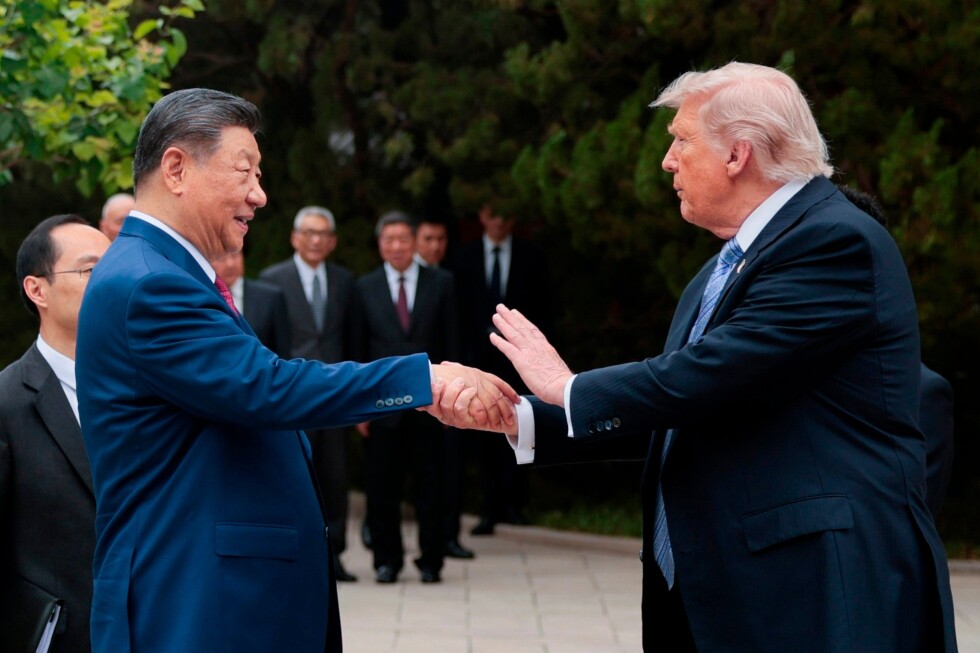
    The confirmation of Chinese involvement sets the stage for a highly anticipated bilateral summit between Trump and Chinese President Xi Jinping, scheduled for mid-May in Beijing. The meeting was originally planned for early April, but Trump postponed it, citing a need to remain in Washington to oversee U.S. military operations related to the Iran conflict. China maintains complex regional ties: it is one of Iran’s closest international partners, the largest buyer of Iranian crude oil (most of which transits the Strait of Hormuz), while also holding deep economic connections to Gulf Arab states and repeatedly condemning Iranian attacks on those nations in recent months.