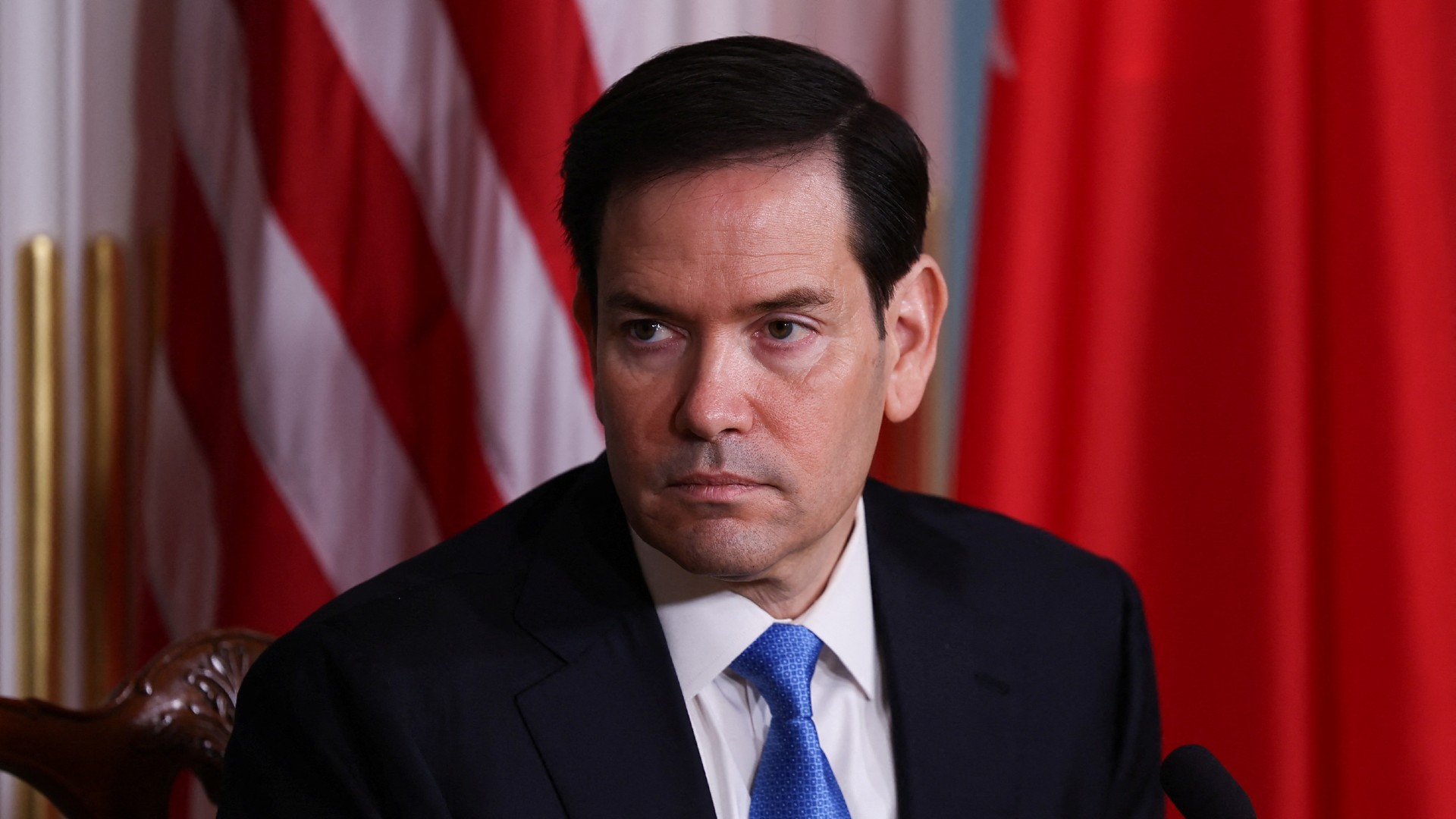
In the wake of escalating conflict between the United States, Israel and Iran that has roiled the Gulf region, US Secretary of State Marco Rubio is preparing for a high-stakes visit to Bahrain in the coming weeks, multiple senior Arab, Western and US officials with direct knowledge of the plan confirmed to Middle East Eye. All sources spoke on condition of anonymity, as they were not cleared to discuss the trip publicly ahead of an official announcement.
This upcoming trip will carry profound symbolic and strategic weight: it marks the first visit by a top-tier US official to the Gulf Cooperation Council region since the joint US-Israel military strike on Iran on February 28, a confrontation that upended global energy markets and triggered unprecedented security risks across the Gulf. According to Arab and US officials familiar with the planning, the visit is explicitly crafted to serve as a public vote of confidence in Bahrain’s ruling Al Khalifa monarchy, and a clear signal that Washington remains committed to its long-standing security and diplomatic partnerships in the Gulf amid rising regional instability.
“Rubio’s trip will be a tangible demonstration of Washington’s recognition of Bahrain’s importance as a core US ally against Iran,” one senior US official explained to MEE.
The timing of the visit is particularly significant, coming after months of Iranian retaliatory strikes that have hit Bahrain disproportionately hard. Bahrain, which hosts the headquarters of the US Fifth Fleet in its capital Manama, saw the critical military facility targeted in the early waves of Iranian attacks following the February 28 strike. The spillover from the conflict has extended far beyond military infrastructure, causing severe damage to the kingdom’s already fragile economy.
The confrontation between Washington and Tehran has triggered the largest disruption to global oil supplies in modern history. Iran responded to the US-Israel strike by restricting shipping traffic through the Strait of Hormuz — the vital chokepoint through which roughly one-fifth of the world’s daily oil supplies pass — and launching targeted strikes on energy and industrial facilities across the Gulf. Global oil prices have already surged 40 percent as a result of the disruption.
In Bahrain, key industrial and energy operations have been forced to halt production or suspend output contracts. The Financial Times confirmed that Amazon’s regional cloud computing infrastructure based in the kingdom was hit in an attack. Aluminium Bahrain, one of the world’s largest single-site aluminum smelters and a cornerstone of the kingdom’s export economy, was forced to declare force majeure after sustaining physical damage to its facilities. Bahrain’s national energy firm Bapco also followed suit, declaring force majeure at its main refinery after strikes disrupted operations.
While a fragile US-Iran ceasefire agreed in April has largely reduced the intensity of conflict across the region, Bahrain faced fresh Iranian targeting just last week, after the US launched new strikes on Iranian ports and military installations along the Strait of Hormuz.
Bahrain’s economic vulnerability long predates the current conflict. Compared to its wealthier Gulf Cooperation Council neighbors such as Saudi Arabia and the United Arab Emirates, Bahrain’s economy has struggled for years with high levels of sovereign debt, which currently stands at roughly 140 percent of gross domestic product. The kingdom has relied heavily on emergency financial support from larger regional allies for decades: in 2018, Saudi Arabia led a $10 billion international economic rescue package to stabilize Bahrain’s finances. The kingdom’s only land border and connection to global overland trade runs through the King Fahd Causeway linking it to Saudi Arabia, while ongoing shipping disruptions through the Strait of Hormuz have compounded the damage to its import and export sectors.
Western and US intelligence officials have assessed that Iran has deliberately focused its retaliatory strikes on Bahrain in an attempt to exacerbate long-standing domestic sectarian divides between the Sunni-led Al Khalifa monarchy and the kingdom’s majority Shia population. Early in the conflict, Bahrain saw large-scale public demonstrations that echoed the anti-government protests of the 2011 Arab Spring, which were violently suppressed by ruling security forces. The recent demonstrations were also put down quickly by authorities.
Diplomats told MEE that this combination of security threats and domestic pressure has led Bahrain’s ruling family to become one of the most vocal advocates inside the Gulf for a broad, expanded US-led military offensive against Iran.
The conflict has also shifted Bahrain’s long-standing regional alignment. While the kingdom has traditionally maintained close ties to Saudi Arabia, diplomats and regional analysts note that Bahrain has moved closer to the United Arab Emirates’ policy camp since the outbreak of the war. Bahrain became one of the first Arab states to normalize diplomatic relations with Israel under the US-brokered Abraham Accords in 2020, and in March of this year, joined the UAE in supporting a draft UN Security Council resolution that would have authorized international military intervention against Iran to reopen the Strait of Hormuz. The draft resolution never advanced to a vote.
Despite the United States maintaining a continuous military presence in Bahrain since the 1940s, the Iranian strikes on US and Bahraini infrastructure have sparked internal debate among US officials and military leaders about the future of American force posture in the Gulf. Former CIA director and top US Middle East military commander David Petraeus acknowledged this shifting perspective in comments to Bloomberg in May, noting that “The truth is that we are not as inclined to occupy these bases now that we have seen what the Iranians can throw at them.”
To contextualize the long-running territorial dynamic between Iran and Bahrain: the territory that makes up modern Bahrain was part of the Persian Safavid Empire until the 18th century. The Al Khalifa family, which has ruled Bahrain for more than 200 years, invited British colonial protection in the 19th century, and Bahrain became a British Trucial state before gaining full independence in 1971. That same year, Iran under the Western-backed Shah formally renounced all territorial claims to Bahrain.