In a landmark shift for the global wealth management industry, new data has confirmed Hong Kong has edged past Switzerland to claim the number one ranking in cross-border assets under management – a development that has sparked little panic among Swiss banking leaders, who are instead leveraging the milestone to argue against looming domestic regulatory tightening.
The 2026 Global Wealth Report published last week by the Boston Consulting Group (BCG) lays out the new market dynamic: by the end of 2025, Hong Kong held $2.95 trillion in cross-border assets under management, compared to Switzerland’s $2.946 trillion. BCG analysts attribute Hong Kong’s ascent to three core drivers: massive capital inflows from mainland China, robust initial public offering activity, and strong gains across local equity markets.
Paul Chan, Financial Secretary of the Hong Kong Special Administrative Region, framed the milestone as a sign of the sector’s ongoing momentum. He noted that rapid innovation in technology and artificial intelligence is expected to unlock even greater growth opportunities for Hong Kong’s asset and wealth management industry. BCG’s report adds that more than 60% of Hong Kong’s cross-border capital originates from mainland China, cementing the city’s long-held role as a strategic gateway connecting China to global financial markets.
Gary Ng, senior economist at Natixis Corporate and Investment Banking, told AFP that shifting geopolitical realities have also fueled capital flows into Hong Kong. Uncertainties surrounding US-China tensions are a primary factor driving investors to park and manage their capital in the city, he explained. However, the region’s cross-border landscape faces growing regulatory uncertainty: in May, Chinese market regulators launched a sweeping two-year crackdown on unauthorized outbound investment targeting cross-border trading brokers. Earlier this week, China’s State Council unveiled new rules set to take effect in July that restrict unapproved outbound investments and deals that could transfer restricted technology, services, or data outside of mainland China. “Investors engaging in foreign investment and related activities… shall not endanger China’s national security or harm national interests,” official statements read. Ng added that if Beijing seeks to accelerate the internationalization of the yuan, it will ultimately need to accept more flexible cross-border capital movement to support that goal.
Across the industry in Switzerland, the new ranking has not triggered alarm – instead, it has become a talking point in ongoing debates over proposed regulatory reforms. The Swiss Bankers Association acknowledged that Hong Kong has directly benefited from the extraordinary pace of asset growth across China, but emphasized that Swiss banks already hold a strong, successful footprint in Asia’s high-growth markets. The association argued that competitive regulatory frameworks are critical to Switzerland’s future success, noting that rules must remain targeted and internationally coordinated to boost both financial stability and industry competitiveness.
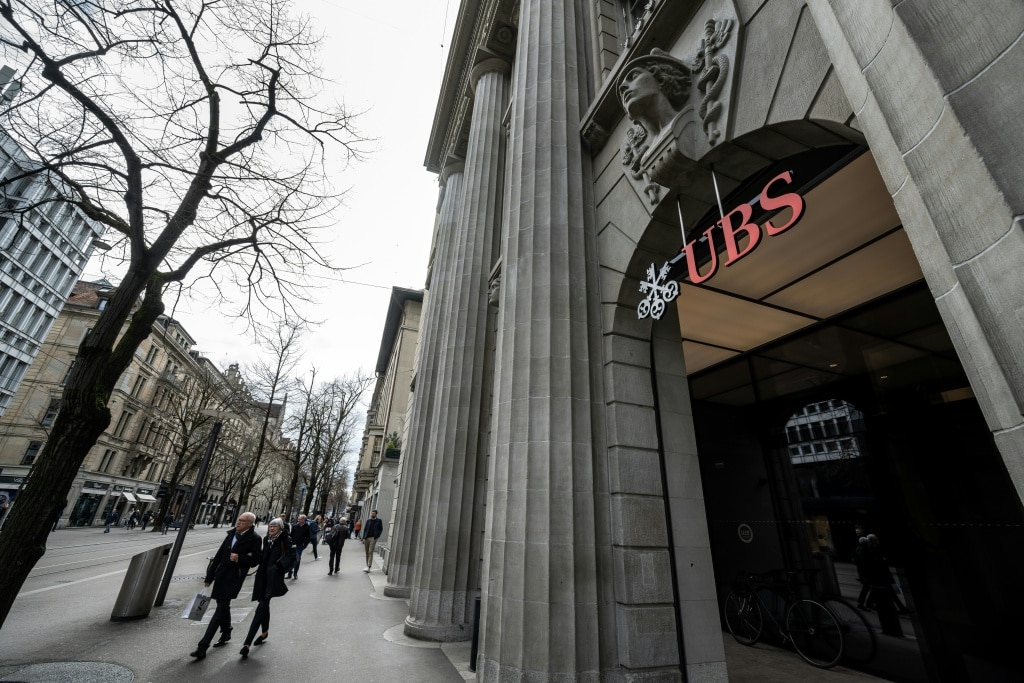
The debate over regulation comes amid ongoing fallout from the 2023 collapse of Credit Suisse, when the Swiss government pressured UBS, the country’s largest bank, to complete an emergency takeover of its long-time domestic rival to prevent catastrophic damage to Switzerland’s financial reputation. Today, the merged megabank holds a size that vastly outpaces the overall size of the Swiss domestic economy, prompting the federal government in Bern to push for stricter regulatory safeguards to mitigate future systemic risk. UBS has been openly at odds with the government over the proposed changes.
The Association of Swiss Private Banks, which represents the country’s core wealth management sector, told AFP that Hong Kong’s rise to the top makes clear that international competitiveness must remain a central priority in regulatory negotiations. “During debates on the government’s proposals, parliament will have to keep this in mind,” the group added.
Industry analysts broadly agree that Hong Kong’s ascent was predictable, driven by broader macroeconomic trends across Asia. Andreas Venditti, an analyst with Swiss investment management firm Vontobel, noted that Asian economies have posted far stronger growth rates than European markets for years, setting the stage for this shift. He added that far from being harmed by the change, Swiss banks stand to gain from Asian growth: UBS alone held $781 billion in assets under management across the Asia-Pacific region as of the end of March 2026, making it the largest wealth manager in the region by a significant margin. BCG data backs this up, showing cross-border wealth grew 10.7% in Hong Kong in 2025, compared to 7.6% growth in Switzerland over the same period.
Dean Frankle, BCG managing director and global financial institutions specialist, summed up the shift as a natural outcome of “the rise of Asia.” For high-net-worth Asian clients, he argued, there is little incentive to travel to Europe for wealth management services when a leading global hub is located in their own region. That reality makes it essential for Swiss banks to maintain a strong competitive presence in Asia to succeed long-term. “If you’re not serving both markets, you’re only playing half the game,” Frankle said.