作者: admin

  • AFL 2026: Port Adelaide star Zak Butters finds an ally in Essendon coach Brad Scott

    AFL 2026: Port Adelaide star Zak Butters finds an ally in Essendon coach Brad Scott

    A controversial disciplinary ruling against Port Adelaide star midfielder Zak Butters has sparked public pushback, with one high-profile rival coach and the AFL Players’ Association (AFLPA) questioning the fundamental logic of the tribunal’s finding, delivered Tuesday afternoon.

    Butters was handed a AU$1,500 fine after the tribunal found him guilty of making a suspicious comment to field umpire Nick Foot following a contentious in-match call. According to the umpire’s account, Butters asked, “How much are they paying you?” — a line that implies accusations of bias or match-fixing. Butters has pushed back on this characterization, arguing his comment was actually a misheard phrase along the lines of “How are you paying that?”

    The case has thrown a spotlight on a glaring evidential gap: Foot’s on-field microphone failed to clearly capture the full exchange, leaving no concrete audio evidence to corroborate either version of events. Despite this absence of clear proof, the tribunal ultimately sided with the umpire’s testimony, even rejecting additional consistent testimony from Butters’ teammate Ollie Wines that aligned with the player’s account. After the match, Butters attempted to clarify the misunderstanding with Foot directly, but the veteran umpire refused to engage in further discussion.

    Essendon head coach Brad Scott, a former AFL staff member who now leads the Bombers, has become one of the most prominent voices questioning the ruling, saying he shares the widespread confusion shared by most Australian Rules football fans and observers. While Scott made clear he supports the league’s rule barring general post-match dialogue between players and umpires, arguing that opening that door would create far more problems for the sport at all competition levels, he says the tribunal’s conclusion defies basic evidentiary logic.

    “Like every other footy follower out there, I’m waiting for a clear explanation of how one person’s testimony can be prioritized over another when there is no other supporting evidence,” Scott told reporters. “There’s nothing to back up either side beyond conflicting accounts, so how you reach a firm conclusion on that basis is totally beyond me. Hopefully we’ll get a clearer explanation down the line.”

    Scott’s public criticism comes shortly after AFLPA chief executive James Gallagher issued a formal statement expressing disappointment with the ruling and confirming the union’s full backing for Butters as he explores an appeal. Gallagher noted that the incident, rooted in a simple miscommunication over what was said on the field, should have been resolved immediately after the match rather than being escalated to a full tribunal hearing.

    The union head added that the tribunal’s choice to uphold the charge without sufficient reasonable doubt, while rejecting evidence consistent with Butters’ account, is deeply concerning for player stakeholders. Ahead of the 2026 season, the AFLPA had already pledged to closely monitor tribunal rulings after a string of player complaints about disciplinary processes in recent seasons. Gallagher stressed that maintaining player confidence in the league’s disciplinary system is a core priority for the union, and it will continue to support both Butters and Port Adelaide through every step of the appeal process.

  • Australia ‘better placed’ for energy crisis triggered by Iran war due to renewable uptake: Bowen

    Australia ‘better placed’ for energy crisis triggered by Iran war due to renewable uptake: Bowen

    As the Israel-US conflict with Iran sends global energy markets into chaos, Australia is far better positioned to weather resulting price volatility and supply disruptions than it was during the 2022 Russian invasion of Ukraine crisis – and progress in renewable energy adoption deserves much of the credit, Australia’s Energy Minister Chris Bowen has said.

    Following Tehran’s closure of the Strait of Hormuz, a critical maritime chokepoint through which roughly one-fifth of the world’s total oil supply passes, global energy markets have been roiled by extreme volatility. International benchmark Brent crude has seesawed wildly around the $100 per barrel mark in recent trading sessions, while damage to liquefied natural gas (LNG) infrastructure in the Persian Gulf – most notably in major exporter Qatar – has tightened global gas supplies and pushed prices sharply upward.

    Bowen pushed back Wednesday against claims made by Amos Hochstein, a former energy security official in the Biden administration, who argued that renewable energy sources are incapable of resolving ongoing global energy crises. When pressed by Australian journalists on whether he shared Hochstein’s view, Bowen made clear he holds a sharply different perspective, pointing to tangible progress in Australia’s energy transition that has reduced national exposure to global fossil fuel price shocks.

    “One of the reasons we are better placed in this international energy crisis than we were even in 2022, for the last one, was that we are using a lot less gas,” Bowen explained, noting that Australian gas generation fell to 1.5 terawatt-hours last summer, down from 2.7 terawatt-hours in the summer of 2022. “That means that if the gas price goes up, we are less vulnerable to that – it will still have impact, but less vulnerable than we were because we’re using less gas. And one of the big reasons we’re using less gas, is we’re using more batteries to get through the night. So I think renewables are part of a common sense, careful, calibrated approach to a more reliable energy system.”

    As of Saturday, Bowen confirmed Australia’s national fuel stockpiles have remained stable amid the crisis, though localized supply shortages persist across the country. Approximately 2% of Australian service stations – equaling 156 locations – still report being out of diesel, with every state recording at least a small number of dry petrol outlets.

    Alongside his assessment of national preparedness for global energy shocks, Bowen also announced new emissions data this week showing that on-site carbon pollution from Australia’s largest industrial facilities has fallen by 12%, or 5.8 million metric tons, under the federal government’s signature safeguard mechanism policy. That reduction is equal to removing 2 million passenger vehicles from Australian roads, or roughly 60% of the nation’s total annual domestic aviation emissions, Bowen noted.

    “This is good policy working well, providing that investment certainty for industry to make the investments they need to make sure that their operations are viable on an ongoing basis, but also reducing emissions as they go,” he said.

    The safeguard mechanism requires large industrial emitters to cap and gradually cut their greenhouse gas output, a policy that the opposition Liberal-National Coalition has repeatedly promised to abolish, framing it as an unfair, punitive regulation on Australian business. Critics have also argued that the policy’s allowance for carbon offsets creates a loophole that lets major polluters continue emitting at unchanged levels while purchasing offsets to comply with rules.

    Bowen pushed back against that critique, clarifying that the 12% reduction reported this week counts only direct on-site emissions cuts from facility operations, not emissions reductions achieved through offset purchases. “We’re not talking about offsets. We’re talking about firms making investments and new solutions,” he said.

  • Pope to urge peace in Cameroon’s conflict zone

    Pope to urge peace in Cameroon’s conflict zone

    Pope Leo XIV is set to land in Cameroon Wednesday, kicking off the second leg of his landmark African tour that has already been marked by unexpected tensions: verbal attacks from former U.S. President Donald Trump and twin suicide bombings during his opening stop in Algeria.

    The 70-year-old pontiff’s four-day schedule in the majority French-speaking central African nation opens with a private audience with 92-year-old Cameroonian President Paul Biya, the world’s oldest sitting head of state who has held uninterrupted power since 1982 and is currently serving his eighth consecutive term. The 3:20 pm (1420 GMT) closed-door meeting has already split the country’s Catholic community, which makes up roughly one-third of Cameroon’s population.

    Local clergy have raised urgent concerns that the meeting will provide a public relations boost to Biya’s administration, just six months after security forces violently cracked down on mass protests sparked by disputed results of the country’s presidential election.

    On Thursday, following his meeting with Biya, the Pope will travel under heavy security to Bamenda, the heart of Cameroon’s long-running Anglophone separatist insurgency. There, he will lead a prayer service for peace before a gathering of 20,000 worshippers, fulfilling the core mission of his Cameroon visit: calling for an end to nearly a decade of armed conflict.

    The roots of what is known as the Anglophone Crisis stretch back to the 1970s, when the former French and British-administered regions of Cameroon formally unified. The country’s English-speaking minority, concentrated in the northwest and southwest regions, quickly raised alarms about the erosion of their unique legal institutions and cultural identity. A deadly government crackdown on peaceful Anglophone protests in 2016 escalated into full-scale armed conflict between separatist fighters and Cameroonian government forces, a dispute that remains unresolved to this day. By 2024, human rights non-governmental organizations estimate the violence has killed more than 6,000 people and displaced hundreds of thousands.

    Leo launched his first ever international papal tour in Algeria on Monday, where he paid homage to Saint Augustine, one of Christianity’s most influential theologians, at his birthplace and celebrated mass at a historic basilica that draws 18,000 interfaith pilgrims annually, including Muslim and Jewish worshippers. During the service, he urged Algeria’s small Christian community to “bear witness to the Gospel through simple gestures, genuine relationships and a dialogue lived out day by day.”

    His trip to Algeria was overshadowed by twin suicide bombings in the city of Blida. While Algerian authorities have not yet issued an official statement, a well-placed government source confirmed the attacks, noting investigators do not currently believe the bombings were connected to the Pope’s visit to the majority-Muslim country. No fatalities have been reported beyond the two bombers themselves.

    Even before the tour began, the pontiff’s trip faced unplanned controversy after Donald Trump launched a verbal attack against him, saying he was “not a big fan” of the pope after Leo called for renewed peace efforts in the Middle East. U.S. Vice President JD Vance doubled down on the criticism during an appearance at a Turning Point USA event in Georgia on Tuesday, arguing the Vatican should “stick to matters of morality… and let the president of the United States stick to dictating American public policy.” Vance added: “It’s important, in the same way that it’s important for the vice president of the United States to be careful when I talk about matters of public policy, I think it’s very, very important for the pope to be careful when he talks about matters of theology.”

    Leo dismissed the criticisms outright while speaking to reporters aboard the papal plane en route to Cameroon. Citing the biblical verse “Blessed are the peacemakers,” the pontiff said: “I have no fear, neither of the Trump administration, nor speaking out loudly about the message of the Gospel.”

    This visit marks the fourth papal trip to Cameroon, a diverse multi-religious nation often called “Africa in miniature” for its wide range of ethnic and linguistic groups. Streets in the capital Yaoundé have already been lined with welcoming banners and Vatican flags in anticipation of the Pope’s arrival. On Friday, Leo will celebrate open-air mass for hundreds of thousands of worshippers at a stadium in Cameroon’s economic hub Douala, before departing for Angola on Saturday to conclude the third leg of his African tour.

  • Hopes rise for renewed talks as US military says Iran blockade is in force

    Hopes rise for renewed talks as US military says Iran blockade is in force

    On Wednesday, diplomatic optimism emerged for a resumption of negotiations between the United States and Iran, even as military escalation and retaliatory threats kept the seven-week-old regional conflict on a knife’s edge. Against a backdrop of a fully implemented U.S. naval blockade of Iranian ports and Tehran’s vow to strike targets across the conflict-battered Middle East, global markets reacted positively to signals that a new round of talks could soon get underway.

    Former U.S. President Donald Trump told the New York Post Tuesday that a second negotiating round could convene within 48 hours, with Islamabad, Pakistan tapped again as the host venue. Diplomatic efforts to finalize arrangements are currently moving forward through unofficial backchannel channels, Trump added. United Nations Secretary-General António Guterres echoed the positive signal, noting that following a meeting with Pakistan’s Foreign Minister Ishaq Dar, he assesses a restart of talks as “highly probable”.

    This upcoming round of talks follows a failed inaugural negotiating session hosted by Pakistan last weekend, which ended without any breakthrough to end the direct U.S.-Iran conflict. Senior White House officials previously identified Iran’s long-debated nuclear program as the core sticking point blocking a lasting agreement. Trump, speaking in pre-released excerpts of a Fox Business Network interview set to air Wednesday, argued that Iranian leadership is eager to reach a negotiated settlement. “I think they want to make a deal very badly,” Trump said, adding “I view it as very close to over.” A senior anonymous U.S. official, however, cautioned Tuesday that new discussions remain only in the planning phase, with no official schedule finalized yet.

    Pakistan, which has taken on the role of neutral mediator for the talks, remains committed to pushing for a peaceful resolution. Pakistani Finance Minister Muhammad Aurangzeb confirmed to the Associated Press that the country’s leadership “is not giving up” on its efforts to broker an end to hostilities between the two powers.

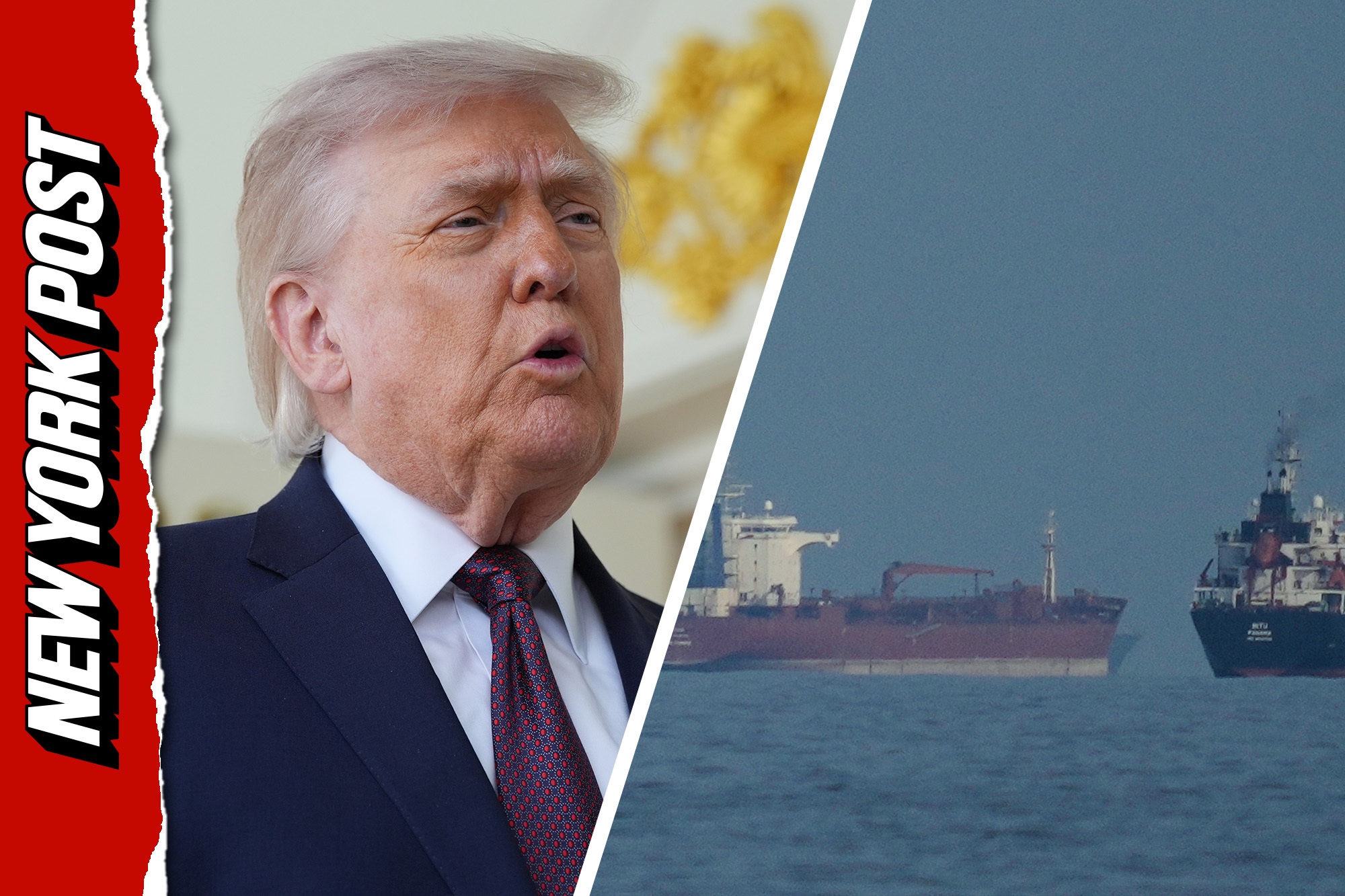
    Despite a fragile ceasefire that has largely held across front lines, tensions remain elevated around the strategically critical Strait of Hormuz, where the U.S. blockade is now fully operational. U.S. Central Command reported that in the first 24 hours of the blockade going into effect, no commercial ships successfully broke through the cordon. Six merchant tankers complied with U.S. military instructions to turn around and return to Iranian territorial waters, though one vessel briefly reversed course and transited the waterway before turning back.

    The blockade is designed to cut off a key source of revenue for Iran’s war effort: since the conflict began on February 28, Iran has exported millions of barrels of crude oil, mostly to Asian markets, much of it through unregulated “dark transits” that evade international sanctions and oversight. This illicit oil trade has generated critical cash flow to sustain Iran’s military and economic operations during the conflict.

    Even before the U.S. blockade, Iran’s effective closure of the Strait of Hormuz — which normally carries roughly 20% of all global oil shipments in peacetime — disrupted global energy markets, sending crude prices skyrocketing and driving up costs for gasoline, food, and essential goods across every continent. On Wednesday, news of potential new talks pushed oil prices downward, while U.S. equities rallied to near the record highs set in January, a signal that investors are betting on an end to the conflict that has upended global commerce and shaken the world economy. The fighting has already inflicted massive human and infrastructural damage across the region, with more than 5,000 fatalities recorded across Iran, Lebanon, Israel, and Gulf Arab states, including 13 killed U.S. service members.

    In a separate, landmark development out of Washington Tuesday, the first direct diplomatic meeting between Israeli and Lebanese ambassadors to the United States in decades concluded with productive outcomes, according to U.S. State Department officials. The rare talks came as the low-intensity conflict between Israel and Iran-backed Hezbollah militants along the Israel-Lebanon border enters its third month, with more than one million Lebanese civilians displaced from their homes since March.

    Israeli Ambassador Yechiel Leiter framed the discussion as a step toward shared goals, saying both nations are “on the same side of the equation” in “librating Lebanon” from Hezbollah’s militant influence. Lebanese Ambassador Nada Hamadeh Moawad described the meeting as “constructive” but stressed that the top priority remains an immediate end to the ongoing border conflict. Israel and Lebanon have maintained a formal state of war since Israel’s founding in 1948, and Lebanese public and political leadership remains deeply divided over any official diplomatic engagement with the Israeli government.

    As regional actors and global powers work to push for de-escalation, the showdown over the Strait of Hormuz remains the single biggest risk for a rapid reignition of hostilities that would deepen the conflict’s already devastating human toll and widespread economic damage across the globe.

  • Xi calls China-Russia ties ‘precious’ in current international context

    Xi calls China-Russia ties ‘precious’ in current international context

    Against a global backdrop marked by overlapping shifts and widespread instability, Chinese President Xi Jinping emphasized Wednesday that the steady, predictable nature of China-Russia relations stands out as uniquely valuable. Speaking during a bilateral meeting with Russian Foreign Minister Sergey Lavrov in Beijing, Xi noted that the enduring vitality and landmark importance of the two nations’ friendship treaty have grown even more prominent amid today’s turbulent international conditions.

    Xi called on the foreign ministries of both countries to fully carry out the agreements already reached between himself and Russian President Vladimir Putin, pushing for deeper strategic communication and tighter diplomatic coordination between the two sides. He also urged continued efforts to advance the comprehensive strategic partnership between Beijing and Moscow, expressing hope that the relationship will “gain greater elevation, move forward more steadily, and reach new milestones.”

    While Xi underscored the strategic importance of the bilateral partnership, he did not explicitly name the specific changes and chaotic developments he referenced. Global observers have noted growing uncertainty around the duration of ongoing conflict in Iran, with no clear timeline for a ceasefire or resolution in sight.

    Separately, in previously unreleased clips from an interview with Fox Business Network, former U.S. President Donald Trump claimed Tuesday that the Iran conflict was “close to over.” This is not the first time Trump has prematurely announced a U.S. victory in the conflict, even as on-the-ground conditions have remained far more complex and unsettled than his public statements suggest.

    In the years since Russia’s full-scale invasion of Ukraine in early 2022, the strategic partnership between China and Russia has deepened considerably. Trump’s unconventional approach to the ongoing war in Ukraine has introduced a new variable to great power dynamics, but analysts say it has not produced any fundamental shift in the core of the Beijing-Moscow relationship. When Putin traveled to China for an official visit in September, Xi greeted the Russian leader as an “old friend,” and Putin reciprocated by addressing Xi as “dear friend,” signaling the warm personal and diplomatic ties between the two heads of state.

    Lavrov arrived in Beijing on Tuesday for a two-day working visit, at the official invitation of Chinese Foreign Minister Wang Yi, setting the stage for further diplomatic coordination between the two countries’ top diplomatic bodies.

  • At least 250 people missing, including Rohingya and Bangladeshis, after boat sinks in Andaman Sea

    At least 250 people missing, including Rohingya and Bangladeshis, after boat sinks in Andaman Sea

    A devastating maritime disaster has left at least 250 people — a group including both Rohingya refugees and Bangladeshi nationals — unaccounted for after their overcrowded migrant vessel capsized in the Andaman Sea while attempting to reach Malaysia, United Nations refugee and migration agencies confirmed.

    Details of the incident remain fragmented in its immediate aftermath, but Bangladesh Coast Guard spokesperson Lieutenant Commander Sabbir Alam Suzan shared preliminary information with the Associated Press on Wednesday, confirming that nine passengers have been pulled from the water alive. The rescue, which took place April 9, was carried out by the crew of the M.T. Meghna Pride, a Bangladesh-flagged cargo ship that spotted the survivors adrift after the shipwreck. Among those rescued are three Rohingya refugees and six Bangladeshi citizens, eight men and one woman, all reported to be in stable condition after being transferred to local police in Teknaf, the departure point for the ill-fated voyage.

    Unlike coordinated official search efforts, this rescue was an unscheduled act of goodwill by the merchant vessel’s crew, a senior Bangladesh Coast Guard media official told the AP Wednesday on condition of anonymity per government protocol. The capsizing occurred outside Bangladesh’s territorial waters, so the Coast Guard had not launched an official search operation at the time of the rescue. As of Wednesday, the exact timeline of the sinking and the status of any expanded search operations for the hundreds of missing passengers remains unconfirmed.

    In their joint statement released Tuesday, the Office of the United Nations High Commissioner for Refugees (UNHCR) and the International Organization for Migration (IOM) outlined the known context of the disaster: the wooden trawler departed from Teknaf, located in Bangladesh’s southern Cox’s Bazar district, where the world’s largest refugee camp is based, carrying a large contingent of passengers bound for Malaysia. The vessel sank after extreme sea conditions — combined with dangerous overcrowding — left it unable to navigate, with strong winds and rough seas causing the boat to lose control and capsize.

    Shari Nijman, a UNHCR communications officer based in Cox’s Bazar, confirmed Wednesday that the agency had no additional updates to share beyond the initial joint statement.

    The two UN agencies emphasized that the tragedy is not an isolated incident, but a direct consequence of the years-long protracted displacement of the Rohingya people, for whom durable, long-term solutions remain out of reach. Decades of systemic persecution and ongoing violence in Myanmar’s Rakhine State have made safe, voluntary repatriation impossible for most of the more than 1 million Rohingya now sheltering in Bangladesh. Within Bangladesh’s overcrowded refugee camps, limited access to humanitarian aid, formal education, and legal employment leaves thousands of vulnerable people in desperate conditions, pushing many to accept dangerous offers from people smugglers who falsely promise steady work and improved living standards in Malaysia or other Southeast Asian nations.

    In the wake of the disaster, UNHCR and IOM issued an urgent call for the international community to increase financial support and show greater solidarity with Rohingya refugees and the government of Bangladesh, which has hosted the displaced population for more than six years.

  • South Korea jails American YouTuber for public nuisance

    South Korea jails American YouTuber for public nuisance

    A Seoul court has handed down a six-month prison sentence to 25-year-old American live-streamer Johnny Somali, legally named Ismael Ramsey Khalid, after he was convicted of multiple offenses including desecrating a memorial to World War Two comfort women and violating South Korean public order laws. The controversial content creator sparked widespread national outrage in late 2024 when he uploaded a viral clip showing himself kissing the iconic bronze statue and performing inappropriate lap dance movements on the monument during a visit to South Korea.

    Following the release of the clip, Seoul prosecutors formally charged Khalid with public nuisance in November 2024, and immediately imposed a travel ban barring him from leaving South Korea while the investigation proceeded. The conviction handed down on Wednesday adds additional counts of distribution of non-consensual sexual deepfake content, a charge that further amplified public anger over the streamer’s conduct.

    In its official ruling, the court emphasized that Khalid had repeatedly committed offenses targeting random members of the South Korean public, all as a deliberate strategy to generate views and profit from his YouTube channel, in open disregard of South Korean legal and social norms. Prosecutors had initially pushed for a harsher three-year prison term, but judges opted for the reduced six-month sentence after noting that no severe physical harm was inflicted on individual victims in this case. As an additional restriction, Khalid will be barred from working with any organizations serving minors or people with disabilities after his eventual release from custody.

    The monument targeted by Khalid is one of dozens of similar memorials erected across South Korea honoring the estimated 200,000 mostly Asian women forced into sexual slavery by the Imperial Japanese Army during World War Two. Roughly half of these women, widely referred to as “comfort women” in historical discourse, were from Korea, which was under Japanese colonial rule at the time. The seated young woman statue that has become the symbol of the comfort women movement has long been a flashpoint in diplomatic relations between Seoul and Tokyo, as South Korean activists and officials continue to push for full reparations and formal acknowledgement of Japan’s wartime atrocities.

    Khalid, a provocateur who has built a small following of around 5,000 subscribers on YouTube through controversial, boundary-pushing content, issued a public apology back in November 2024 claiming he “didn’t understand the significance of the statue.” That apology was widely met with skepticism from South Korean social media users, who pointed to his long pattern of provocative behavior as evidence the incident was a deliberate stunt for attention.

    Throughout the course of the legal proceedings, Khalid escalated tensions by openly challenging local South Koreans to physical confrontations, multiple clips shared on South Korean social media showed the streamer being punched and chased through public streets by angry locals. This incident was far from Khalid’s first run-in with law and public order across East Asia and the Middle East. Prior to his 2024 trip to South Korea, he was detained in 2024 at a Tel Aviv protest for making inappropriate sexual comments to a female police officer, before being released after questioning. In 2023, during a trip to Japan, he sparked public anger by making provocative comments about the 1945 atomic bombings of Hiroshima and Nagasaki, and was later fined 200,000 yen (equivalent to roughly $1,400) for disrupting business at a Tokyo restaurant by blaring loud music. His history of provocative content has also led to permanent bans from multiple major streaming platforms over the years.

  • Maika Hamano scores to give Japan 1-0 win over USWNT

    Maika Hamano scores to give Japan 1-0 win over USWNT

    SEATTLE – In an upsetting international friendly match that closed out the first leg of their three-game series in the Pacific Northwest, Japan’s women’s national team delivered a 1-0 defeat to the reigning power U.S. Women’s National Team (USWNT) on Tuesday, snapping the Americans’ 10-match undefeated winning run.

    The result marked the USWNT’s first loss since a 2-1 away defeat to Portugal back in October 23, 2025, and ended a 41-game streak of matches where the American side had avoided being held scoreless. The Tuesday defeat comes just three days after the USWNT claimed a tight 2-1 win over Japan in a Saturday meeting in San Jose, ending a prior losing run to the Japanese side that dated back to Japan’s 2-1 victory over the USWNT in the 2025 SheBelieves Cup final.

    The game’s only goal came in the 27th minute, when 21-year-old forward Maika Hamano outmaneuvered American defender Lilly Reale with a clever feint, then unleashed a curling left-footed strike that sailed over the outstretched glove of U.S. goalkeeper Phallon Tullis-Joyce to find the top right corner of the net.

    USWNT head coach Emma Hayes made the controversial call to drastically reshuffle her starting lineup from Saturday’s victory, opting to rest star starters Sophia Wilson and Trinity Rodman among other key players. All four rested players — Wilson, Rodman, center back Tierna Davidson, and defender Gisele Thompson — entered the match as second-half substitutes in the 65th minute as Hayes looked to spark an equalizing comeback.

    The substitution carried extra storylines for two veterans: Davidson made her first appearance for the national team since February 2025, after suffering a torn ACL during a club match with Gotham FC in March of that year that sidelined her for more than a year. For Wilson, the appearance marked her second consecutive cap for the USWNT following the birth of her daughter last fall, after she had been out of international action since October 2024.

    Tuesday’s historic match also carried off-pitch significance for Seattle sports: it was the first time the USWNT had played at Lumen Field since 2017, when the team declined to return due to longstanding concerns over the stadium’s old artificial turf. The venue recently installed a new natural grass surface in preparation for this summer’s FIFA Women’s World Cup, making the friendly the first USWNT match on the new playing surface.

    A total of 36,128 fans packed Lumen Field for the match, breaking the all-time attendance record for a standalone women’s soccer match in Seattle. The previous record of 34,130 was set in 2023 during Megan Rapinoe’s retirement match with the NWSL’s Seattle Reign.

    The two sides will now travel to Commerce City, Colorado, to play the third and final match of their friendly series this coming Friday, where the USWNT will look to rebound from Tuesday’s upset defeat.

  • Australia’s richest person must share part of her mining fortunes, court rules

    Australia’s richest person must share part of her mining fortunes, court rules

    After more than a decade of bitter legal wrangling over one of Australia’s most profitable iron ore projects, the Supreme Court of Western Australia has delivered a split decision in the high-profile lawsuit against Gina Rinehart, the country’s wealthiest individual, granting partial wins to both sides of the dispute. Rinehart, who holds an estimated personal net worth of A$38 billion, inherited her father Lang Hancock’s iron ore holdings in 1992 and grew the portfolio into a dominant mining force across Western Australia’s resource-rich Pilbara region, anchored in part by the massive Hope Downs iron ore development. At the heart of the legal conflict is a decades-old joint venture agreement forged between Hancock and his close business partner Peter Wright, founders of the iron ore pioneering Hanwright partnership that first laid claim to the Pilbara’s mineral reserves decades ago. The heirs to Wright’s stake, organized under Wright Prospecting, launched the legal challenge alongside two of Rinehart’s own children – Bianca Rinehart and John Hancock – arguing that Rinehart had breached the original partnership agreement and wrongfully withheld rightful shares of profits and control from the claimants. The 51-day 2023 trial centered on competing claims to royalties and mining rights for the Hope Downs project, which is currently jointly operated by global mining giant Rio Tinto and Rinehart’s flagship company Hancock Prospecting. In 2023 alone, the site generated A$832 million in revenue for Hancock Prospecting, with Rio Tinto paying a 2.5% royalty on production to Rinehart’s firm. Justice Jennifer Smith, presiding over the case, ruled that half of all past and future royalties from the project must be awarded to the Wright family, upholding their core claim that they were entitled to a share of the project’s ongoing profits. However, the judge rejected the Wright family’s demand for a split of formal mining rights, leaving full ownership of those critical assets with Rinehart. The court also dismissed claims from Rinehart’s two children, who had argued that their mother moved lucrative Hope Downs mining rights out of a family trust to intentionally cut them off from an inheritance their grandfather intended for them. Rinehart’s defense had argued the transfer was made over legitimate concerns about irregularities in her father’s business dealings, while her children countered the move was designed to exclude Rinehart’s stepmother, Rose Porteous, from accessing the family fortune. A separate claim for royalties brought by the family of late engineer Don Rhodes was partially granted by the court. In responses to the ruling, representatives from both sides characterized the outcome as a victory. Jay Newby, executive director of Hancock Prospecting, noted that the judgment confirmed the company’s full ownership of the Hope Downs mining rights and firmly rejected the broader ownership claims brought by the Wright family and Rinehart’s children. Meanwhile, a spokesperson for Wright Prospecting said the organization was “pleased to finally receive a result in our favour” after 13 years of litigation. Beyond her control of Australia’s largest private mining empire, Rinehart is known as one of the country’s most influential private donors, contributing heavily to conservative political parties, national sports programs, and charitable causes across Australia.

  • Harry says children should be an ‘upgrade’ of their parents

    Harry says children should be an ‘upgrade’ of their parents

    On the second day of his private working visit to Australia, Prince Harry, the Duke of Sussex, merged his longstanding advocacy for mental health and love of sport to launch a landmark new report on paternal well-being, opening up about his own journey as a father and the intergenerational shift shaping modern parenting.

    Greeting the Melbourne crowd with a casual “G’day everyone” and a lighthearted nod to the Western Bulldogs AFL team’s strong start to the 2026 season, the Duke centered his remarks on evolving approaches to parenting, drawing a direct connection to his own experience growing up in the British royal family and raising his own children today. He noted that global social shifts have rendered outdated parenting models obsolete, arguing that each new generation of parents has the opportunity to build on the lessons of the past.

    “The world around us has changed massively, so there is no version of where parenting is going to be the same as we experienced,” he told attendees. “From my perspective, our kids are our upgrades. That’s not how I was taught, but that was my take on it… Even if you had the best upbringing in the world, the best parenting in the world, there’s still room for improvement.” A longstanding public advocate for open discussion of mental health struggles, the Duke also pushed back against the persistent stigma that discourages fathers from seeking support when they are struggling, framing openness as a sign of strength rather than weakness.

    “For so many years it has been seen as a weakness to stick your hands up. I find it’s the opposite,” he said. “The more grief I get for talking about it, the more I want to stand up and talk about it. I know if I go quiet about it – what does that say to everyone else?”

    The event, hosted by men’s health charity Movember, marked the launch of new research that lays bare the unaddressed mental health challenges facing new fathers. The study’s findings are stark: one in five fathers report extreme feelings of isolation in the period after welcoming a child, while just under 60% of new dads were never asked how they were coping in their baby’s first 12 months. The report also found that more than 70% of surveyed fathers are actively committed to parenting differently than their own fathers did, a trend Movember leaders say aligns directly with Harry’s public messaging.

    Dr. Zac Seidler, Movember’s Global Director of Research, praised the Duke for bringing authentic, personal experience to the advocacy effort. “He’s really passionate about this, it matters to him, and he told us real stories that he had experienced, stuff that he’d spoken about with his wife, with his therapist,” Seidler said. “He really just wanted to get to the heart of it and talk about advocating for change. I think Harry was just talking about this seismic intergenerational shift that we’re all experiencing. We want to do things differently; we want to learn from our fathers, whether it’s mistakes or otherwise and really lean into what it means to be a dad today.”

    Nathan Appo, the first Indigenous Australian to sit on Movember’s global board and a Mamu man from Far North Queensland, acknowledged the complicated context of Harry’s visit, noting that many of the systemic health barriers facing First Nations Australians trace back to British colonialism carried out by the Duke’s ancestors more than 250 years ago. Even so, Appo praised Harry for centering Indigenous voices and engaging meaningfully with the community’s challenges.

    “As you travel around the world, connecting with Indigenous people to understand their history and what our people face regularly, the barriers that we face… and how that impacts on health is really important,” Appo told the BBC. “Building your knowledge to give you a good understanding of how you can change policy for the better is really important, and I think Harry is someone who does that. He’s using his platform to promote and empower people around the world and do the right things. It’s hard not to be drawn to people like that.”

    After the report launch, Harry leaned into the second half of his day’s agenda: trying his hand at Australian Rules Football, the dominant sport of Melbourne, with players from the Western Bulldogs. Under the guidance of Bulldogs midfielder Adam Treloar, the Duke, a former keen rugby player in his youth, learned the basics of holding the oval-shaped AFL ball and navigating the field. Treloar described Harry as enthusiastic and genuinely curious about the sport, noting that the interaction felt far from the stiff, scripted meetings common for high-profile visitors.

    “He went alright, he was very keen on learning,” Treloar told reporters. “I don’t think we had enough time to really teach him, but he was super keen, asking how we hold the footy and where the laces go. It was pretty normal. We had a great conversation. One of the teammates that was with me has four pubs and was talking about his pubs and maybe coming down for a beer if he has some spare time, which obviously he doesn’t, but it just seemed really genuine and authentic.”

    Harry’s wife, Meghan, Duchess of Sussex, did not attend Wednesday’s public event, and no public appearances have been scheduled for her on this day. A spokesperson for the couple did not respond to BBC requests for comment on Meghan’s plans during the trip. The couple, who stepped down as working British royals in 2020, are traveling to Australia in a private capacity, combining charitable engagements like Harry’s mental health launch with private commercial work. It is understood that Meghan is using the trip to explore plans for expanding her As Ever lifestyle brand into the Australian market. Following his Melbourne commitments, Harry is set to travel to Canberra for engagements later on Wednesday.