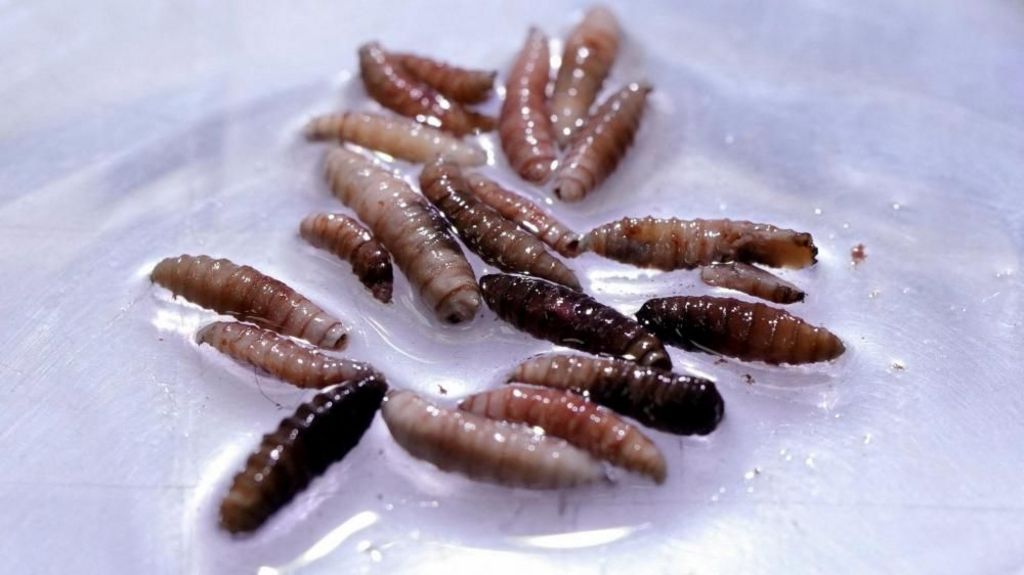
After a 60-year absence of the parasitic New World Screwworm (NWS) from United States territory, federal agricultural officials have confirmed that the flesh-eating parasite has been detected in a Texas calf, marking the first confirmed U.S. case since 1966. The U.S. Department of Agriculture (USDA) announced the confirmation in an official briefing Wednesday evening, noting that the parasite has been steadily spreading northward across Mexico over the past 12 months before crossing the southern border.
Preventive work to slow the parasite’s advance into the U.S. has been ongoing for years, as public and agricultural health officials monitored rising case counts across Central America and Mexico. The infected calf, a three-week-old animal, was found in La Pryor, Texas, a small community located roughly 30 miles (48 kilometers) from the U.S.-Mexico border. The parasitic larvae were discovered in the calf’s umbilical region, where an open wound provided a prime egg-laying site for adult female screwworm flies.
New World Screwworm is a dangerous parasitic species that preys exclusively on warm-blooded hosts. Adult females lay their clutches of eggs in open wounds or moist mucous membranes of living animals. Once the eggs hatch, hundreds of voracious larvae use their sharp mouthparts to burrow deep into the host’s living flesh to feed. If the infestation is left untreated, it almost always results in the death of the host. While NWS can also infest humans and domestic pets, public health officials emphasize that the risk of human infection remains very low, and confirmed human cases are extremely rare. The parasite also does not pose any threat to beef or livestock food safety, authorities confirmed.
For U.S. cattle ranchers, a widespread outbreak of NWS carries significant economic risk: an uncontrolled spread would likely reduce national cattle herds, cut overall beef production, and push retail beef prices higher for American consumers. In response to the first confirmed case, state and federal agricultural authorities have moved quickly to contain the parasite. A 12.4-mile (20-kilometer) detection and quarantine zone has been established around the site of the infection, aimed at stopping the movement of infested animals — the most common vector for NWS spread.
Officials are also moving forward with a longstanding planned intervention: releasing millions of sterile male screwworm flies into the affected zone. Because female screwworm flies only mate once during their lifespan, any mating with a sterile male will result in unfertilized eggs that never hatch, gradually reducing the local population over time.
USDA officials noted that years of preventive preparation have already delayed the parasite’s arrival in the U.S. by a full year. Agriculture Secretary Brooke Rollins moved quickly to reassure livestock producers, confirming that USDA response teams have already deployed to South Texas to support containment and monitoring operations, and urging all livestock owners across the region to remain vigilant for signs of infection.
Despite the federal government’s response, Texas Agriculture Commissioner Sid Miller has publicly criticized the federal approach, arguing that authorities have moved too slowly to address the threat. Miller told Reuters that the USDA has relied exclusively on the sterile fly release strategy, a partial solution that takes years to reach full effectiveness, rather than deploying every available prevention and containment tool immediately. The dispute highlights the high stakes of containing what is widely considered one of the most dangerous livestock parasites in the Western Hemisphere.