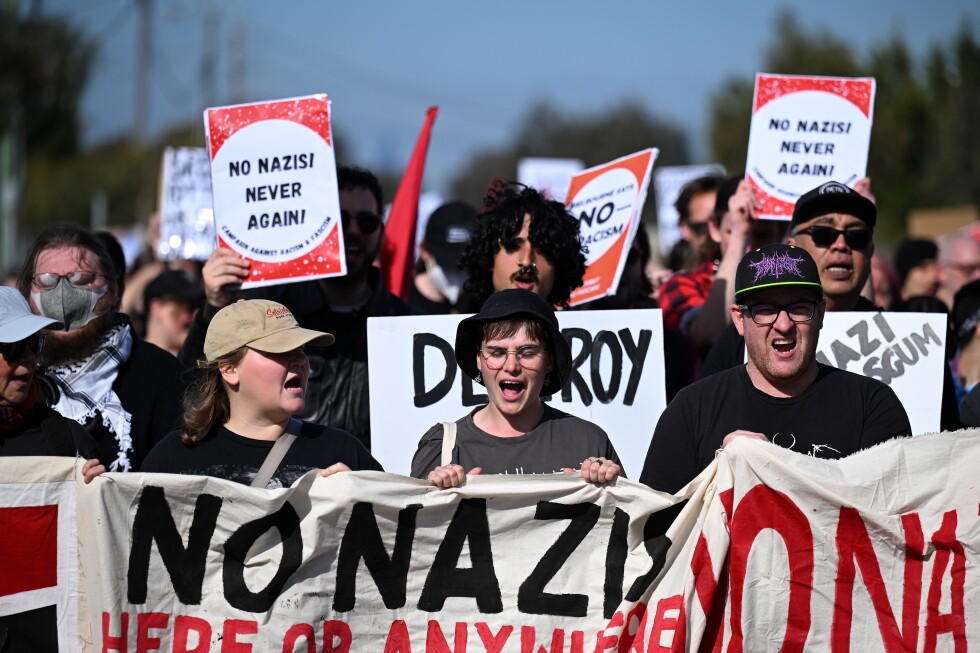
CANBERRA, Australia — Australian authorities have formally designated the notorious neo-Nazi network once known as the National Socialist Network, sometimes operating under the alias White Australia, as the second hate group outlawed under the nation’s landmark new legislation targeting extremist organizations that promote racial and religious hatred.
The designation, announced Friday by Home Affairs Minister Tony Burke, brings the long-targeted white supremacist network into legal prohibition, with the ban set to enter into force by the end of the same day. The new law, passed by parliament in January 2024, was a direct policy response to a deadly antisemitic attack that left 15 people dead at a Hanukkah gathering on Sydney’s Bondi Beach in December 2023, an act of violence that shocked the nation and spurred urgent legislative action to curtail rising extremism.
Burke emphasized that the group’s attempt to rebrand itself after announcing a voluntary disbandment in January did not erase its extremist character. Even after changing its name, the organization retained its structure and continued to engage in radical, hateful activity that meets the legal threshold for a ban under the new legislation, Burke told reporters in Canberra. “None of this will stop bigoted people from holding horrific ideologies,” Burke noted. “But it does prevent this group from organizing, from meeting, and prevents some of the sorts of horrific bigoted rallies that we’ve seen around our country.”
Under the terms of the ban, any act of supporting, funding, training for, recruiting to, joining or leading the group — even if it reorganizes under a new name — carries a maximum penalty of 15 years imprisonment. This landmark legislation fills a critical gap in Australian national security law, allowing authorities to ban hate groups that do not meet the existing legal definition of a terrorist organization, a change widely called for after the Bondi massacre.
The Islamist group Hibzt ut-Tahrir became the first organization banned under the law back in March, and both that group and the National Socialist Network were openly named by policymakers as the primary targets of the legislation from its early drafting stages.
The process for designating a banned hate group follows a clear two-step framework: Australia’s national security intelligence agency ASIO first assesses whether an organization meets the statutory criteria, which include a pattern of violence incitement, engagement in hate crime, and elevated risk of public harm. The final ban is then approved by a federal government minister.
The announcement comes as the group’s former leader, Thomas Sewell, awaits trial on multiple charges stemming from an alleged attack on an Indigenous protest camp in Melbourne last August. During an anti-immigration rally, a group of black-clad men affiliated with the network stormed the camp, leaving three people injured. Sewell has pleaded not guilty to all five counts against him.
Longstanding connections to transnational white supremacist violence have previously linked Sewell to one of the deadliest far-right attacks in modern history: an independent inquiry into the 2019 Christchurch mosque massacre that killed 51 Muslims in New Zealand found that Sewell attempted to recruit the attack’s perpetrator, Brenton Tarrant, to another Australian white nationalist group two years before the massacre.
Burke rejected the group’s January claim that it would voluntarily disband to avoid member arrests, a announcement first reported by local Australian news outlets via a post on the network’s Telegram channel. He confirmed the federal government is already prepared to face any potential legal challenges from the newly outlawed organization.
The ban on the National Socialist Network is the latest in a series of escalating government actions against far-right extremism and rising antisemitism in Australia. Earlier in 2024, before the Bondi Beach attack, Canberra enacted a nationwide ban on Nazi salutes and the public display of swastikas and other Nazi symbols. That policy was itself a response to a months-long surge in antisemitic criminal activity targeting synagogues, Jewish-owned businesses and Jewish schools in Sydney and Melbourne.