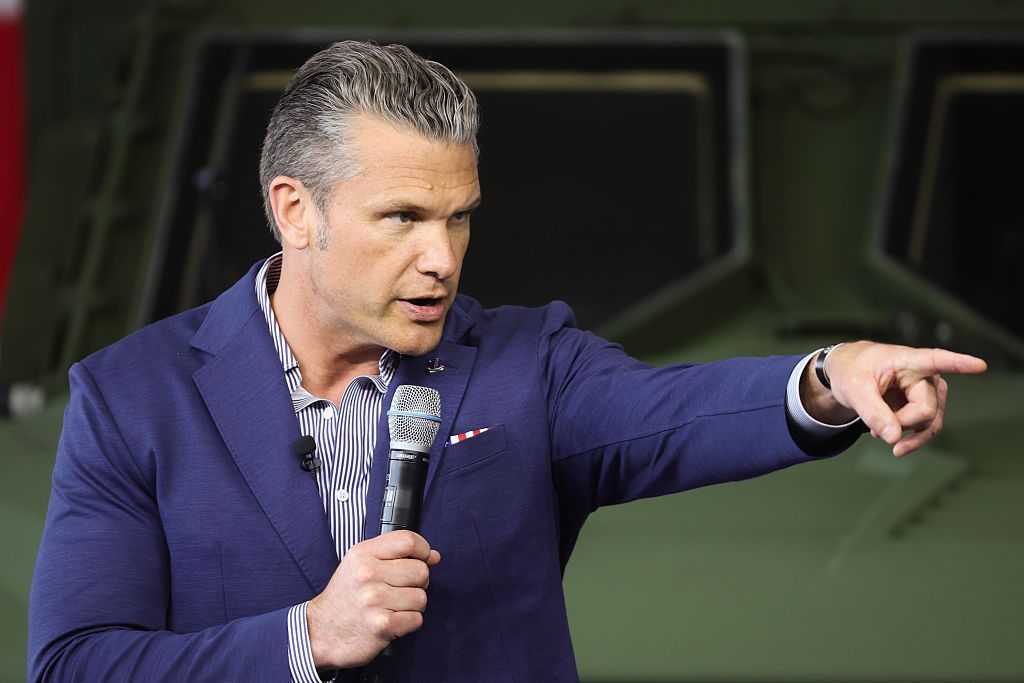
A sweeping personnel shakeup at the highest levels of the U.S. Armed Forces is poised to move forward this week, with Defense Secretary Pete Hegseth reportedly set to announce the removal of roughly 20 percent of all active-duty admirals and generals across the nation’s military branches. Multiple U.S. media outlets confirm the announcement is scheduled to take place Wednesday at Marine Corps Base Quantico, Virginia, marking the second major round of senior leadership cuts in less than a year, following an initial round of reductions in 2025.
Latest official data from the U.S. Defense Department puts the total number of active-duty general and flag officers across the Army, Navy, Marine Corps, Air Force and Space Force at more than 800. A 20 percent cut would remove more than 160 senior officers from their posts, making it one of the largest drawdowns of top military leadership in modern U.S. history.
This planned purge is not an unexpected move from Hegseth. During a previous gathering of military leaders at Quantico in September 2025, he delivered a scathing rebuke of the Defense Department’s current culture, calling the institution overly “woke” and attacking senior leaders for poor physical fitness, infamously claiming that “fat generals and admirals” were “a bad look” for the U.S. military.
The upcoming firings are the centerpiece of a broader top-to-bottom overhaul of the U.S. defense establishment that Hegseth has spearheaded since taking office. His agenda centers on instilling what he terms a “war fighter ethos” throughout the department, even going so far as to propose a formal rebrand that would rename the Defense Department to the Department of War.
According to CBS News, a partner of the BBC, at least 20 senior officers and civilian defense leaders have already been removed from their posts or stepped down voluntarily since Hegseth assumed the role of Defense Secretary. That earlier shakeup already included the high-profile firing of the Chairman of the Joint Chiefs of Staff, as well as top uniformed leaders from the Army, Navy and Air Force.
Current U.S. federal law already sets a statutory cap on the total number of general and flag officers, and there is no legal requirement that any positions left vacant by the planned firings be filled by replacement officers. That structure allows Hegseth to permanently shrink the size of the military’s senior leadership corps as he has proposed.
The controversial drawdown has already sparked fierce pushback from across the political spectrum and civil society. Multiple prominent civil rights organizations, including the NAACP and the National Women’s Law Center, have accused Hegseth of systematically blocking promotions for Black service members and women, raising allegations of systemic discrimination in his personnel decisions.
Democratic Senator Mark Kelly of Arizona echoed that criticism during press remarks on Tuesday, calling the move a deliberate purge of the military’s most capable and experienced leaders. “Hegseth is in the process of purging the upper echelon of the military from its best leaders,” Kelly told reporters. “We need strong leaders. These folks have decades of experience, some of the best leadership our military has ever had. He’s getting rid of them.”
Notably, the push for reducing the number of senior military leaders does have some backing from nonpartisan policy analysts. A May report from the nonpartisan Congressional Research Service outlined several well-documented downsides to an oversize senior officer corps, including significantly higher personnel costs associated with employing top-ranked service members compared to junior officers, and the risk that excessive layers of senior leadership can slow down critical military decision-making processes.
The overhaul of the U.S. military’s top ranks comes at a moment of heightened global strain, as the U.S.-led military campaign against Iran in the Israel theater has stretched into its seventh consecutive month. That ongoing conflict has drawn heavily on U.S. ammunition stockpiles, leaving many defense analysts questioning whether the mass leadership shakeup comes at a precarious moment for U.S. military readiness.