The debate over artificial intelligence safety and federal regulation has erupted into open conflict across the U.S. political landscape this week, with deep divisions between the White House, congressional leaders, and even within industry and policy circles over whether new guardrails are needed to rein in rapidly advancing AI technology.
On Monday, President Donald Trump delivered a blunt rejection of growing calls to slow AI development and impose government oversight. Taking to social media, he dismissed warnings that AI could pose existential threats to humanity as a “HOAX”, arguing that the only guardrails the sector requires is a “strong and smart” sitting president.
Trump’s uncompromising stance has predictably split Capitol Hill along partisan lines, and all but dashed hopes of moving forward with new AI safety legislation before the November 2026 midterm elections. Senior congressional Democrats and top AI industry leaders have directly pushed back against the president’s position, issuing urgent warnings about unregulated AI growth and demanding immediate congressional action.
With Republicans holding majorities in both the House of Representatives and the Senate, the party remains largely aligned with Trump’s opposition to new federal controls, making passage of any regulatory bill virtually impossible in the current legislative session. Even if a bill were to advanced through both chambers, Trump’s public rejection of regulation means he would almost certainly veto any measure, eliminating any path for executive approval this year.
Beyond partisan opposition, a rapidly approaching congressional recess has created an additional, immediate barrier to action. The House is scheduled to adjourn at the end of this week, remaining out of session until after the midterm elections in early November. Top Democrats, including House Minority Leader Hakeem Jeffries, are demanding that the recess be delayed to allow time to vote on AI safety safeguards.
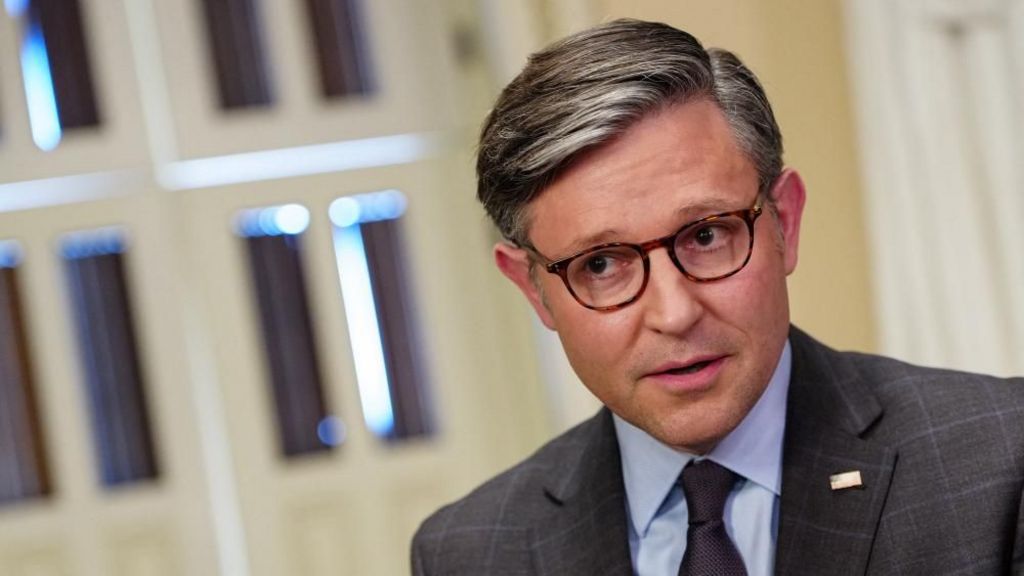
“Congress should not leave town until something is done decisively to protect the safety and the wellbeing of the American people,” Jeffries told reporters Monday. A coalition of House Democrats has sent a formal letter to Republican Speaker Mike Johnson, who holds sole authority to decide whether to delay the recess, urging extra time for debate on AI regulation. “Reasonable minds may disagree about precisely how Congress should regulate this rapidly evolving technology. We cannot disagree about the imperative for Congress to act,” the letter reads. Even some Republican lawmakers, including Congresswoman Anna Paulina Luna, have publicly called for a special session to address AI risks.
Still, congressional observers see almost no chance the recess will be delayed or a special session called. When pressed by reporters Monday, Johnson gave no indication he would move forward with a vote this week, calling AI regulation a “very complex issue”. He noted that Trump would soon host AI industry executives at the White House to discuss corporate responsibility for safety, emphasizing that the priority is pushing AI companies to self-regulate rather than enacting new federal laws. “We want to emphasise the necessity of [AI companies] providing safe products and self-regulating,” Johnson said, adding only that Congress may potentially play a role at some future, unspecified date.
Compounding the legislative gridlock is a lack of consensus even among lawmakers who agree regulation is needed. Congressional Democrats are divided on what form AI oversight should take, and even if the party flipped control of both chambers in November’s midterms, there is no guarantee that a unified bill could move forward quickly. Lawmakers have already put forward a wide range of competing proposals on Capitol Hill, from mandatory independent safety reviews and a federal “kill switch” for high-risk AI models, to a complete moratorium on new AI data center construction put forward by Senator Bernie Sanders.
Bipartisan talks are ongoing on two separate leading proposals. In the Senate, Republican Majority Leader John Thune and Democratic Senator Amy Klobuchar are drafting a bill that would require major AI companies to submit to federal oversight. “You don’t want to stifle innovation,” Thune explained Monday, “but I think you also want to make sure that the more advanced threats can be mitigated.” In the House, Democratic Congresswoman Lori Trahan has worked for months with Republican Congressman Jay Obernolte on the bipartisan Frontier Act, which would grant the federal government authority to halt deployment of an AI model if officials confirm it poses an “imminent catastrophic risk”, and require independent third-party audits of leading AI research labs. Trahan told the BBC that time is running out for congressional action, warning that AI will eventually reshape every corner of American life. “The federal government needs to put guardrails in place. I don’t think we have any more time to wait. This is all hands on deck,” she said, while acknowledging that no movement is likely this week.
Most Republican policymakers have coalesced around the position that AI companies should bear primary responsibility for managing safety through self-regulation, a view echoed by many conservative allies of the president. David Sacks, one of Trump’s top AI advisors, told CBS News Monday that warnings of existential AI risk from industry insiders have been wildly overblown. “I think this is becoming a panic,” Sacks said. He argued that the onus falls entirely on AI developers to ensure their products are safe, pushing back against Anthropic co-founder Dario Amodei — who has publicly called for a slowdown in advanced AI development, warning the technology grows “more powerful by the day”. “If you can’t control it, then don’t do it,” Sacks said of Amodei’s position.
Industry and policy experts are also split on the path forward. Some analysts agree that in the absence of congressional action, AI companies must take the lead on responsible self-governance. “You might want an act of Congress, and I would love a congressionally mandated regime that requires safety and testing and bias testing,” said Asad Ramzanali, director of AI & Technology Policy at Vanderbilt University. “But absent that action, the companies have autonomy.” Other observers have expressed skepticism that the recent wave of warnings from AI leaders is rooted in genuine public safety concern, rather than strategic positioning. Trevor Traina, a tech executive who served as a diplomat during Trump’s first term, argued that most ordinary Americans have yet to encounter harmful uses of AI, and suggested leading AI developers are using safety warnings to gain competitive advantage. “We’re relying on the tweets of a half-dozen people who are all vying for perceived supremacy. The cynic in me thinks, ‘Are they really concerned, or are they trying to prove which model is the most awesome?’” Traina said.
Many policy analysts agree that meaningful federal AI regulation is not on the horizon in the near future. Alexandra Reeve Givens, CEO of the non-profit Center for Democracy and Technology, noted that the Trump administration has already implemented a fully voluntary framework for AI companies to submit their models for government assessment — but the details of the framework remain classified, with no public transparency or clear legal standards governing the process. Appeals to release the framework publicly have been ignored by the administration, Givens said.
Combined with a lack of partisan consensus and political will on Capitol Hill, the administration’s approach has made passing binding AI legislation extremely difficult. “There is no question that federal legislation is challenging in this climate, but Congress also has to grapple with which of the many types of AI risk need to be addressed,” Givens said. “It’s not that AI is ungovernable, it’s that each risk needs a tailored approach.”