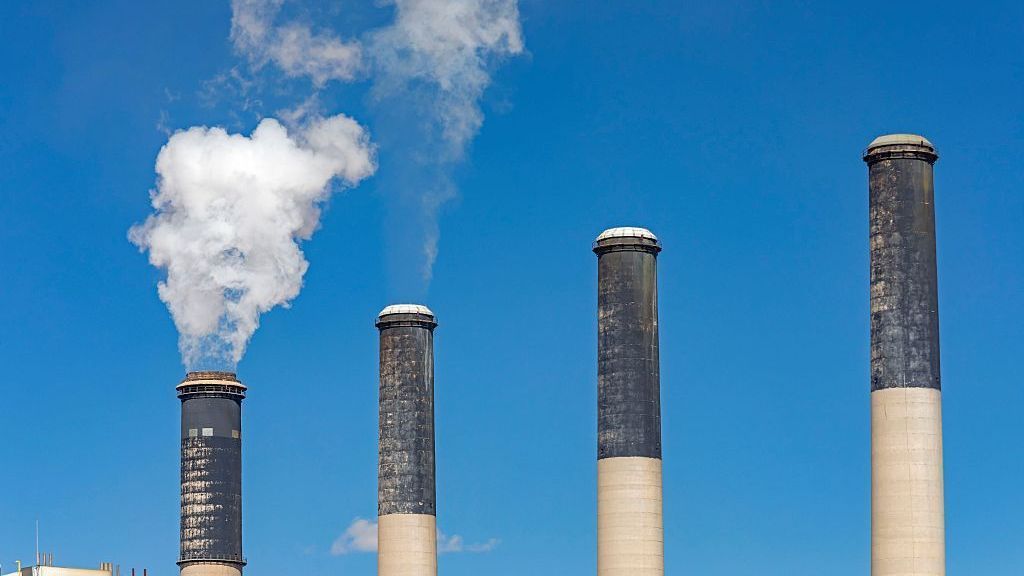
In a high-stakes move that upends years of U.S. climate policy progress, U.S. Environmental Protection Agency administrator Lee Zeldin has formally announced the elimination of key pollution regulations targeting coal and natural gas power plants, rolling back signature climate and public health measures put in place during the Biden administration.
Zeldin defended the decision, arguing that the existing rules unfairly targeted American power generation facilities, even as he claimed U.S. energy production is already cleaner than that of any other nation. The EPA claims that repealing the bulk of the Biden-era regulations will unlock $310 billion in economic savings and push down consumer energy costs across the board. In its official statement, the agency contends that the Biden-era rules overstepped its regulatory authority by mandating unproven emissions control technologies that effectively forced premature plant retirements, rather than setting achievable performance standards.
Beyond the core power plant emission rules, the EPA is also moving to eliminate all remaining greenhouse gas regulatory frameworks governing the U.S. power sector. Zeldin first proposed the changes last year, framing them as a measure to protect affordable, reliable energy access for households and industries alike, reducing costs for everything from home heating and transportation to agricultural production and manufacturing, while strengthening U.S. national energy security.
Critics have soundly rejected the EPA’s justification, warning that the rollback carries severe risks for public health and will derail progress toward U.S. carbon emission reduction targets. The Biden-era rules were designed to cut carbon pollution across power plants, vehicles, and industrial facilities, and independent projections estimated the regulations would prevent 4,500 premature deaths annually from pollution-related illness. The EPA dismissed these concerns Monday, arguing that potential public health harms are too uncertain and disconnected to be specifically linked to the U.S. power sector.
Nathaniel Keohane, president of the independent non-profit Center for Climate and Energy Solutions, called the rollback “a giant step backward” for U.S. climate action. “In repealing carbon pollution standards for power plants, EPA has ignored sound science and economics and abdicated its responsibility to protect public health and welfare,” Keohane said in a statement responding to the announcement.
Scientific data and global climate bodies back up critics’ core concerns: the United Nations confirms that fossil fuels including coal and gas are the single largest driver of human-caused global climate change. As the world’s second-largest emitter of planet-warming greenhouse gases, trailing only China, the U.S. sees roughly 25% of its total annual emissions come from the power sector – around 1.5 billion metric tons of carbon dioxide equivalent per year, a total that exceeds the entire national emissions of all but a handful of countries worldwide.
U.S. power sector emissions have trended downward for two decades amid declining coal use, with only a small uptick recorded last year. But the rollback aligns with long-standing policy goals of the Trump administration, which has consistently pushed for a revival of the U.S. coal industry and repeatedly criticized renewable energy sources including wind and solar.
The full long-term impact of the decision on U.S. emissions and global climate action remains uncertain. Many energy researchers cast doubt on the prospect of a large-scale coal resurgence, pointing to the dramatic cost declines for clean energy technologies such as solar power over the past decade that have made renewables far more economically competitive than fossil fuels. Previous independent analysis from the Rhodium Group found that rolling back U.S. climate regulations would slow national emissions cuts, but would not reverse the overall downward trend entirely.
Monday’s announcement is not the first time the current Trump administration has rolled back climate action. In February, the EPA reversed a landmark scientific finding from the Obama era that formally classified greenhouse gases as a threat to public health – a decision that is currently being challenged in court by multiple U.S. states and local governments. The rollback also follows a 2022 Supreme Court ruling that stripped the EPA of much of its authority to regulate cross-state greenhouse gas emissions, after the court sided with 19 states and major coal industry groups that argued the agency had overstepped its regulatory mandate.