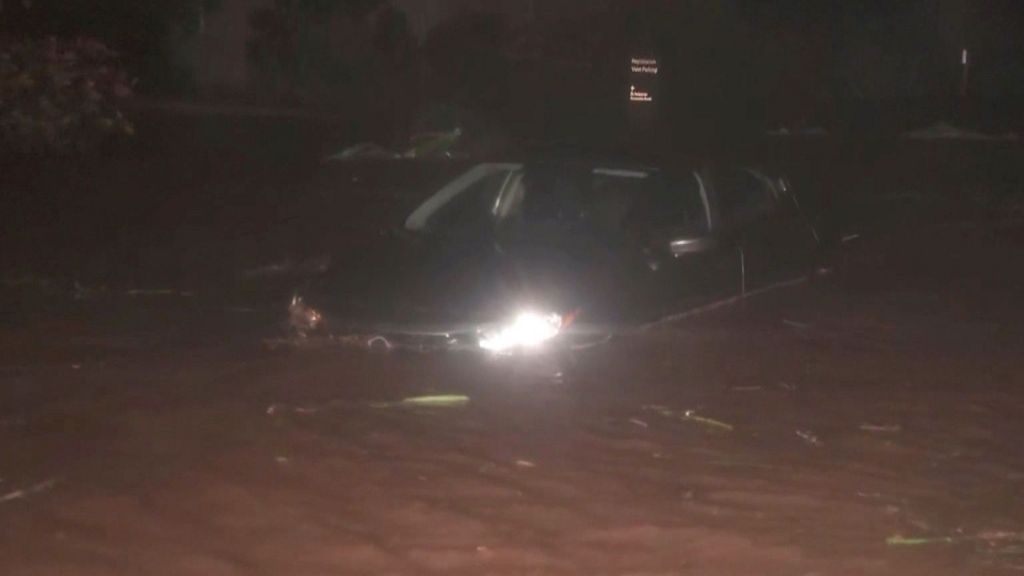
Over the course of Monday and Tuesday, powerful Hurricane Lowell made its damaging approach to western Hawaii, leaving a trail of disrupted infrastructure and environmental chaos in its wake. The powerful storm system unleashed two full days of severe weather across multiple parts of the Hawaiian island, combining destructive, high-velocity winds with torrential downpours that overwhelmed local drainage systems.
Emergency management officials have issued repeated urgent warnings in the wake of the storm’s impact, highlighting two major ongoing risks that continue to threaten local communities. First, persistent saturated ground has raised the acute possibility of sudden flash flooding across low-lying and river-adjacent areas, where rising water can quickly cut off access and destroy property. Second, the heavy rainfall has loosened soil on hillsides and steep terrain, triggering widespread fears of dangerous mudslides that can swallow roads and damage residential areas.
Local footage captured in the aftermath of the storm’s peak shows large trees uprooted by strong winds, blocking major thoroughfares and crushing small outbuildings in residential neighborhoods. Drainage systems have been overwhelmed in many coastal and low-lying communities, leaving streets submerged under several feet of muddy flood water. As of the latest update, emergency response teams are working around the clock to clear blocked routes, evacuate at-risk residents, and assess the full scope of damage caused by the storm.