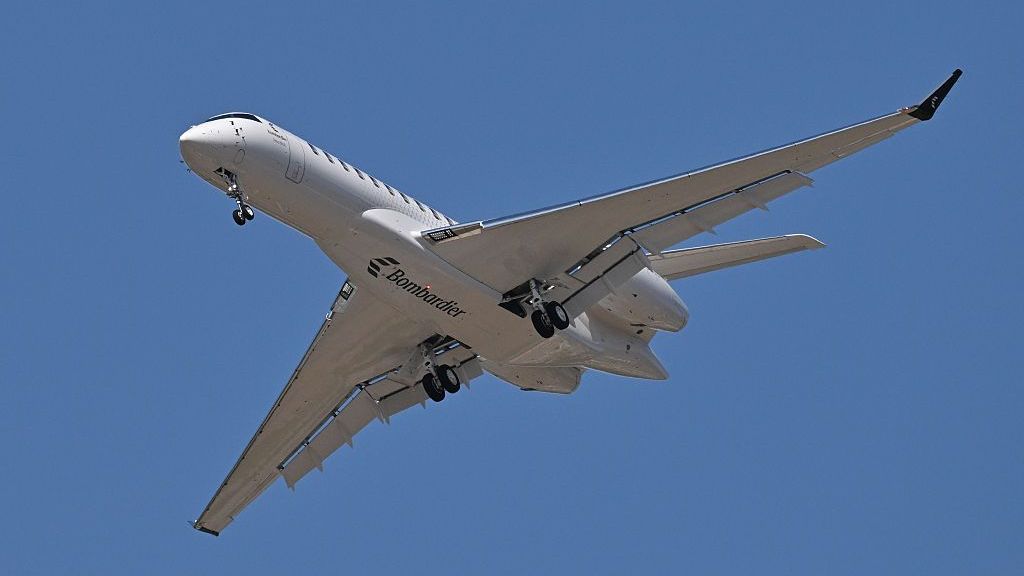
A dramatic new escalation in the already tense trade dispute between the United States and Canada has emerged, as former president and current 2024 candidate Donald Trump has issued an abrupt public threat targeting one of Canada’s largest and most economically vital industrial firms: Montreal-based aerospace manufacturer Bombardier.
In a post shared to his Truth Social platform on Monday, Trump delivered an uncompromising ultimatum: Bombardier will be barred entirely from selling its aircraft in the huge U.S. market unless the company shifts all of its manufacturing operations to American soil. “NO MORE SELLING BOMBARDIER IN THE UNITED STATES!” Trump’s post read. “If they want our Market, they must build here, and stop treating America like a ‘piggybank.’”
The provocative warning comes at a moment when cross-border trade tensions are already at a fever pitch, and was released mere hours before Canada was set to implement retaliatory tariffs on $20 billion worth of U.S.-origin goods. These countermeasures are a direct response to new 50% tariffs imposed by the Trump administration on a wide range of Canadian exports after trade negotiations between the two neighboring nations collapsed late last month.
The breakdown in talks followed Canada’s decision to walk away from the negotiating table. Canadian Prime Minister Mark Carney has slammed the Trump administration for introducing last-minute draft terms that he describes as both unfair and economically unworkable. For their part, U.S. officials have claimed Carney walked away from the deal for domestic political gain, pointing to Trump’s deep unpopularity among Canadian voters — an accusation Carney has flatly denied.
As of Tuesday, neither Prime Minister Carney’s office nor Bombardier’s corporate leadership has issued an official public response to Trump’s latest threat, after the BBC reached out to both parties for comment. It also remains unclear what legal or regulatory mechanism Trump could use to enforce a total ban on Bombardier’s U.S. sales, should he win a second term in office.
Contrary to Trump’s framing of Bombardier as a foreign firm siphoning U.S. economic benefits, the aerospace giant already has significant existing manufacturing and employment footprints on American soil. The company operates a production facility in Wichita, Kansas, where it builds special-mission military aircraft and employs more than 3,500 American workers. Roughly half of all Bombardier aircraft currently in operation — around 5,100 jets in total — are owned and operated by U.S.-based customers.
Per Bombardier’s official corporate website, the company’s jet manufacturing operations are spread across facilities in Canada, the United States and Mexico, and all production meets the Rules of Origin requirements laid out in the United States-Mexico-Canada Agreement (known as CUSMA in Canada) — the updated North American trade deal that Trump negotiated during his first term in office.
For Canada, Bombardier is far more than a major industrial player: an independent economic report commissioned by the company in 2024 found it contributed C$7.4 billion (approximately $5.4 billion USD) to Canada’s total gross domestic product that year. It is also one of the largest private manufacturing employers in the province of Quebec, where its global headquarters are based.
Quebec Premier Christine Fréchette quickly moved to back the company following Trump’s threat, publishing a post to X on Monday labeling Bombardier a core source of provincial pride and a “flagship of our economy.” Fréchette confirmed she had already contacted Bombardier CEO Éric Martel to pledge the full support of the Quebec provincial government to the firm.
When addressing Trump’s ultimatum directly, the premier struck a measured but firm tone, rejecting calls for a reciprocal provocative response. “I will not respond to provocation with provocation,” Fréchette wrote. She added: “Quebec will not allow anyone to dictate where our companies must produce in order to access a market.”