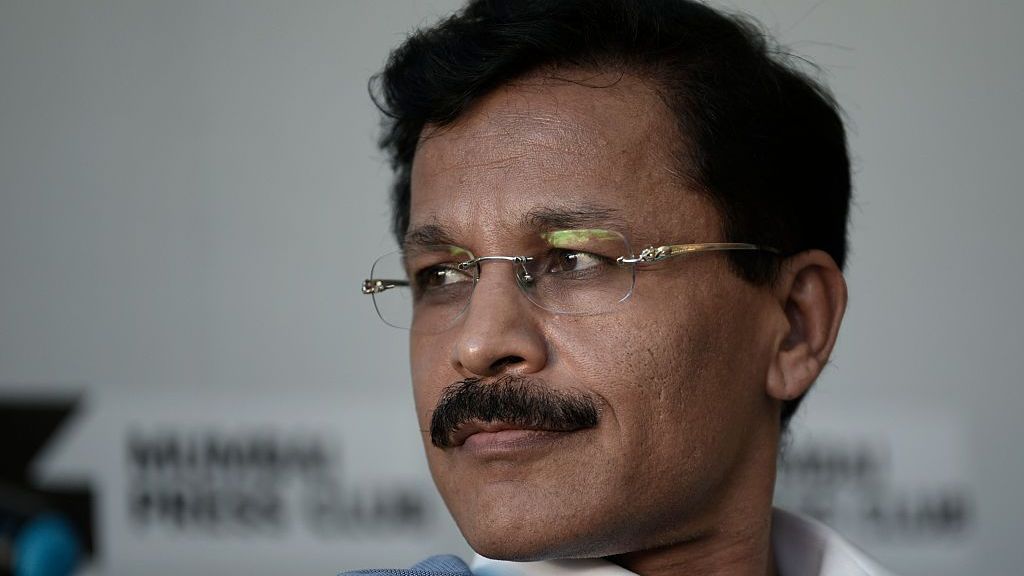
When veteran Indian Administrative Service officer Tukaram Mundhe stepped into the role of Maharashtra’s food commissioner in May this year, few anticipated that his regulatory work would ignite a nationwide debate and turn a low-profile civil servant into an unexpected social media sensation. What began as a routine series of compliance checks has grown into one of the most high-profile public health campaigns in modern India, exposing deep-rooted gaps in the country’s food safety infrastructure while drawing sharp criticism over its unorthodox enforcement tactics.
The spark for the campaign came when graphic photos and videos from inspection raids began circulating online. Shocking imagery captured cockroaches scurrying across commercial kitchen floors, thick spider webs clinging to food preparation walls, spoiled produce rotting in storage corners, and clear signs of pest infestation at counters where customers order meals. To many people’s surprise, some of the most unhygienic conditions were documented not at low-budget street stalls, but at an exclusive members-only club in Mumbai — India’s financial hub and the capital of its wealthiest state, Maharashtra.
Since taking office, Mundhe has personally overseen more than 4,000 inspections of food businesses across Maharashtra, ranging from small street stalls to high-end restaurants, quick-commerce warehouses, and celebrity-backed food brands. A career bureaucrat with more than 25 years of public service, the 51-year-old commissioner has stressed that food safety regulations apply equally to all establishments, regardless of their size, social influence, or brand reputation. His department has already suspended nearly 300 business licenses, issued more than 1,000 mandatory improvement notices, and publicly challenged Bollywood celebrities over advertisements that allegedly promoted restricted food products indirectly.
“These actions are taken in public health interest. We will continue to take them against violations,” Mundhe told the BBC in an interview, rejecting claims that the campaign is designed to target businesses unnecessarily.
For Mundhe, this level of public attention and accompanying controversy is nothing new. A reputation for uncompromising enforcement has followed him throughout his career, leading to a repeated pattern of transfers between posts — so frequent, in fact, that local reports claim the number of transfers exceeds his total years in service. Mundhe dismisses the speculation, saying simply, “I have stopped counting my transfers.” Admirers frame the frequent moves as proof that his unyielding approach to rooting out corruption and non-compliance has repeatedly angered powerful political and business interests, while critics argue his confrontational style creates unnecessary friction with colleagues and elected officials.
This is not the first time Mundhe has won public acclaim for his work. As municipal commissioner of Nagpur at the height of the COVID-19 pandemic, his proactive public health measures earned widespread praise, and when he was transferred out of the city mid-crisis, thousands of local residents gathered outside his residence to bid him farewell, in an outpouring of public affection rarely seen for a sitting civil servant. Earlier in his career, he also earned recognition for innovative water conservation work in Maharashtra’s drought-stricken rural regions. But his current food safety campaign has catapulted him to a level of national fame that outstrips any of his previous work, with inspection clips and press briefing videos racking up millions of views across Instagram, TikTok, and other social platforms, and even dedicated podcasts and viral reels cementing his status as an unlikely public celebrity. He currently boasts more than 3.8 million Instagram followers, a following most politicians and entertainment personalities would envy.
Mundhe’s crackdown comes amid growing evidence of a systemic national food safety crisis. Data presented to India’s parliament in July laid bare the scale of the problem: of more than 223,000 food samples tested across the country between 2025 and 2026, nearly one in five failed to meet regulatory standards, meaning they were unsafe for consumption, substandard, or mislabeled. Former chief of India’s national food regulator Pawan Agarwal notes that poor hygiene in Indian food operations has been an open secret for decades, but Mundhe has broken with convention by making the problem public.
“What Mundhe has done differently is make it visible,” Agarwal explained. Unlike India’s traditional regulatory system, where food safety cases and consumer complaints can languish in backlogged courts and bureaucratic pipelines for years, Mundhe’s enforcement actions are playing out in real time in front of the public, a transparency that has resonated strongly with consumers.
Yet the high-visibility approach has drawn fierce pushback from India’s $60 billion hospitality industry. Restaurant and hotel associations argue that Mundhe has bypassed statutory due process required under national food safety law, which mandates that businesses be given a reasonable window to correct violations before regulators suspend or revoke operating licenses. Immediate license suspension is only permitted in extreme cases that pose an urgent threat to public health, and regulators are required to formally document their justification for emergency action.
“While compliance is non-negotiable, high-handed approaches – like public naming-and-shaming, instant suspensions over minor procedural or rectifiable issues and treating administrative oversights with harsh penal measures – create panic rather than reform,” said Niranjan Laxman Shetty, legal chairman of the Indian Hotel and Restaurant Association, the country’s leading hospitality industry body. Multiple food business owners have come forward publicly to claim they were shut down over minor, easily corrected violations without receiving prior warning or an opportunity to fix the issues before their licenses were suspended.
The campaign has also faced repeated legal challenges, with courts overturning a number of license suspensions, ordering compensation for affected businesses, and criticizing the aggressive tactics. In one high-profile case in August, the Bombay High Court ordered Mundhe’s department to pay 500,000 rupees (approximately $5,291) in compensation to a Mumbai sweets shop, after the shop’s license remained suspended even after a follow-up inspection found it 98% compliant with regulatory standards. The court acknowledged that Mundhe’s intentions were “laudable” but ruled that the department had “gone overboard” in its enforcement. Judges also raised a key question: was the department applying the same strict scrutiny to government-run food establishments that it applied to private businesses?
Mundhe moved quickly to address that criticism: within 24 hours of the high court’s observation, his team launched inspections of all canteens operating within the high court complex itself, and flagged multiple violations. For Mundhe, the action was proof that the rules apply equally to every establishment, no matter its connection to government.
“Had the food business operators or establishment complied with existing regulations, I would not be needed to take those actions,” he said, adding that the campaign’s goal is not to shut down legitimate businesses, but to ensure all food sold to the public is safe. “We are not here to close down or suspend every licensee. We are here to ensure food is safe, food is not substandard, it is not misbranded and it is good for consumption.”
Beyond headline-grabbing restaurant raids, Mundhe’s department has rolled out a series of broader regulatory reforms: it has banned the longstanding practice of wrapping food in printed newspaper, cracked down on unapproved synthetic food dyes, and removed banned non-dairy “analogue paneer” from market shelves. More recently, the department has shifted its focus to school food environments, ordering all school canteens, hostel kitchens, and government midday meal suppliers to obtain valid operating licenses, and banning the sale of food high in fat, sugar, and salt within 50 meters of any school campus. It also launched a public consumer complaints portal that has already received more than 16,000 reports of unsafe food in its first three months of operation.
Despite the immediate changes, many public health experts question whether the impact of Mundhe’s campaign will outlast his tenure as food commissioner. Agarwal, the former food regulator chief, notes that while the campaign has successfully generated nationwide awareness of food safety among both businesses and consumers, this progress relies entirely on the effort of one individual, making it inherently unsustainable. “The challenge is to build systems that outlast an individual officer,” Agarwal argues.
Still, even in the short term, the campaign has already changed day-to-day practices for many food vendors across the state. Yuvraj Yadav, a small-scale sandwich seller in a Mumbai suburb, says he long used discarded newspaper to wrap his products despite knowing that printing ink chemicals can leach into food, a common practice among low-cost street vendors. After learning of Mundhe’s ban on the practice, he switched to food-safe greaseproof paper. “We started this a few months ago after newspapers were not allowed for packing as it’s bad for health,” Yavid explained. For millions of Indian consumers, that small shift is a tangible sign of the change Mundhe’s campaign has already brought, even as the debate over his methods continues to divide the nation.