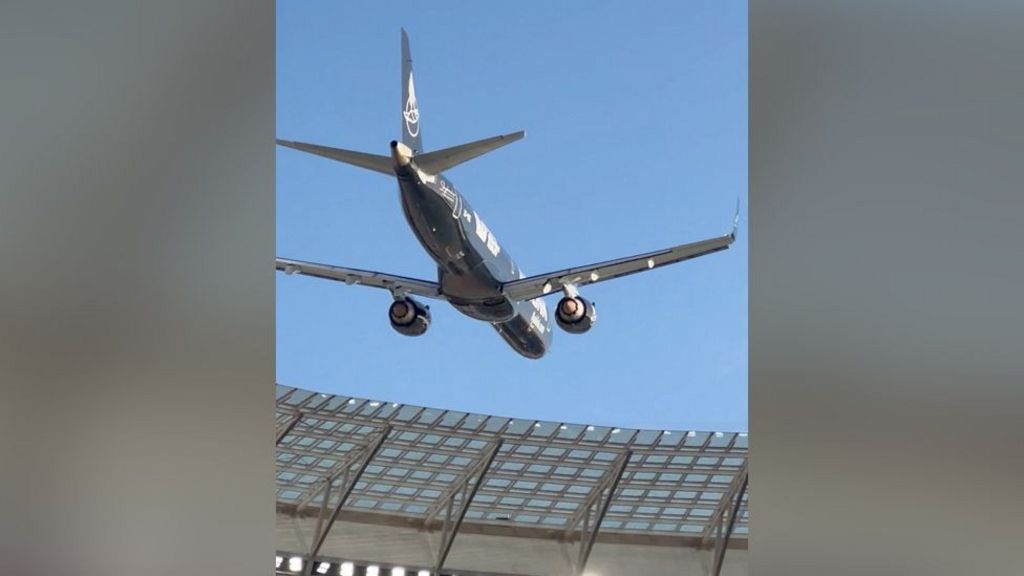
A controversial low-altitude aerial stunt performed by regional South African carrier Airlink has triggered regulatory scrutiny and forced the cancellation of a planned repeat performance at a major national sporting event, South Africa’s civil aviation authority (SACAA) confirmed this week.
Last Saturday, two Airlink jets completed a close-formation flyover of Cape Town’s packed DHL Stadium, just moments before kickoff of a highly anticipated rugby test match between South Africa’s Springboks and New Zealand’s All Blacks. Video footage of the stunt, which quickly spread across global social media platforms, captured the twin jets roaring past the stadium amid coloured smoke, with onlookers capturing dramatic angles that showed the aircraft mere feet from the stadium’s roof structure.
Independent analysis from flight tracking service Flightradar24 has verified that the lead jet passed less than 50 feet (15 meters) above the stadium’s upper roof line. The stunt immediately split public opinion: aviation enthusiasts and spectators praised the extraordinary precision and skill of the flight crews, while critics slammed the manoeuvre as a reckless, unnecessary risk taken with thousands of spectators packed inside the venue below.
In an official statement released after the stunt, Airlink defended the operation, noting that the flypast was planned and executed within pre-approved, thoroughly rehearsed limits for altitude and speed. The airline added that the manoeuvre was carried out by a team of highly experienced veteran pilots with specialized training in aerial display operations.
Originally, Airlink had been scheduled to repeat the close-formation flypast this coming Saturday at Soweto’s FNB Stadium, which will host the decisive third test of the current series between the Springboks and All Blacks. However, SACAA confirmed Wednesday that Airlink has withdrawn its plan for the second stunt, following widespread public debate and media scrutiny over the safety of the original Cape Town flyover.
The South African aviation regulator noted that it had granted formal approval for the initial stunt, after reviewing Airlink’s submitted safety plans and procedural documentation. It confirmed that the airline had followed all required regulatory protocols to secure permission for the event. SACAA has now launched a deeper post-stunt investigation, having obtained full flight data recordings from the two aircraft and completed reviews of all additional operational documentation related to the event.
“As the independent safety oversight body for South African skies, SACAA gives the public its full assurance that aviation safety and security compliance will always remain our top priority, and this mandate is not negotiable,” the regulator said in its statement. SACAA also highlighted that South Africa maintains a strong global reputation for excellent air safety standards, a track record it is committed to upholding through rigorous regulatory oversight.
Low-altitude flypasts have long been a popular ceremonial addition to major national events in South Africa, ranging from high-profile international sporting fixtures to presidential inauguration ceremonies, with past events featuring both military aircraft and commercial passenger jets. As of Wednesday evening, Airlink has not issued any public comment on the cancellation of the planned Soweto flyover or the ongoing regulatory investigation.