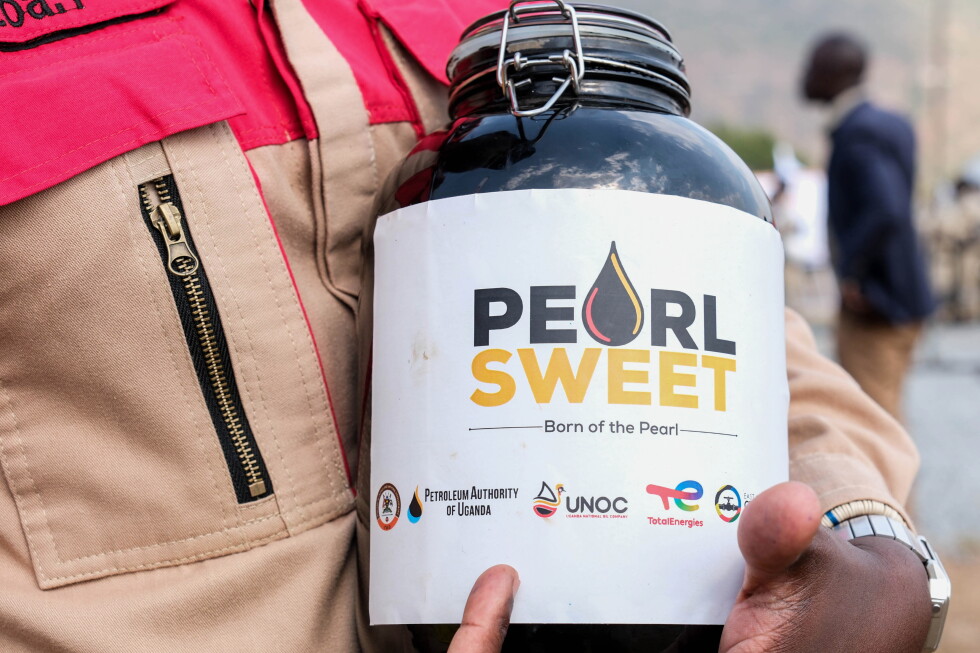
KIKUUBE, UGANDA – In a landmark step toward launching full commercial oil production by the end of 2024, Ugandan energy officials announced Wednesday that the East African nation’s first prospective crude oil blend will be branded “Pearl Sweet.” The official naming ceremony was held at the Kingfisher oil infrastructure site, operated by China National Offshore Oil Corporation (CNOOC), drawing government leaders and project stakeholders to mark the country’s imminent transition to an official oil-producing state.
The carefully selected name carries dual meaning that blends national heritage and commercial practicality, Uganda’s Ministry of Energy explained in an official statement following the event. The “Pearl” moniker references former British Prime Minister Winston Churchill’s iconic 20th-century description of Uganda as “the pearl of Africa,” while the “Sweet” designation highlights the blend’s key commercial advantage: a naturally low sulfur content that makes it more desirable for refiners. Ministry representatives added that formal branding is a critical precondition for advancing marketing outreach and building partnerships with prospective global crude buyers.
Geological surveys confirm Uganda holds approximately 1.6 billion barrels of recoverable crude oil reserves, split between two major development projects led by international energy firms. French energy giant TotalEnergies holds the largest stake in the upstream operations, while CNOOC leads the separate Kingfisher project. The Uganda National Oil Company retains a 15% equity share in the developments on behalf of the Ugandan public.
Ugandan President Yoweri Museveni framed the milestone as a turning point for national economic transformation. “This marks an important milestone in our journey to develop Uganda’s oil and gas resources for value addition and economic transformation,” Museveni said, emphasizing plans to capture maximum domestic value from the reserves through onshore refining, domestic petrochemical manufacturing, and electricity generation from associated natural gas. He added that developing the country’s oil sector will cut Uganda’s heavy dependence on imported petroleum products, strengthening national energy security.
At full buildout, production is projected to plateau at roughly 230,000 barrels of crude per day, with blended crude set for export through a major new export network. Despite Wednesday’s celebration of progress, the two-decade journey from initial crude discovery to commercial production has been marked by repeated legal, regulatory, and environmental setbacks.
The center of global controversy is the planned East African Crude Oil Pipeline, a 1,443-kilometer heated pipeline that will connect the Lake Albert oil fields in western Uganda to the export terminal at Tanga, Tanzania. Environmental campaigners and climate activists have fiercely opposed the project, arguing that developing new fossil fuel reserves directly contradicts global emissions reduction commitments laid out in the Paris Climate Agreement.
Much of the activist pressure has focused on TotalEnergies, which has been named as a defendant in at least two separate lawsuits filed in French courts by advocacy groups and local communities. The suits allege that the pipeline and associated oil development have violated local communities’ land rights and access to food, forcing thousands of people from their homes to make way for infrastructure.
Additional ecological risks stem from the location of oil drilling and pipeline routing. Oil wells are being drilled within the boundaries of Murchison Falls National Park, a biodiverse wilderness on the Nile River home to hippopotamuses, giraffes, rare antelope species, and hundreds of native bird species. The pipeline itself will cut through protected forest reserves and game management areas, running along the shoreline of Lake Victoria, the continent’s largest freshwater body that supplies drinking water to more than 40 million people across the region.
TotalEnergies has pushed back against criticism, stating that the pipeline uses cutting-edge construction and monitoring design that will guarantee safe operation for decades, with minimal risk of leaks or ecological harm. But the combination of climate risks and sensitive ecological positioning has kept opposition to the projects strong globally.
Ugandan government officials have rejected external criticism, framing climate-focused opposition to the oil projects as an overreach that infringes on the country’s sovereign right to develop its natural resources to lift its population out of poverty. Officials note that an estimated 20 million Ugandans live on less than $2 a day, and oil sector revenues are projected to drive widespread investments in healthcare, education, and infrastructure that would deliver long-term benefits to millions of citizens.