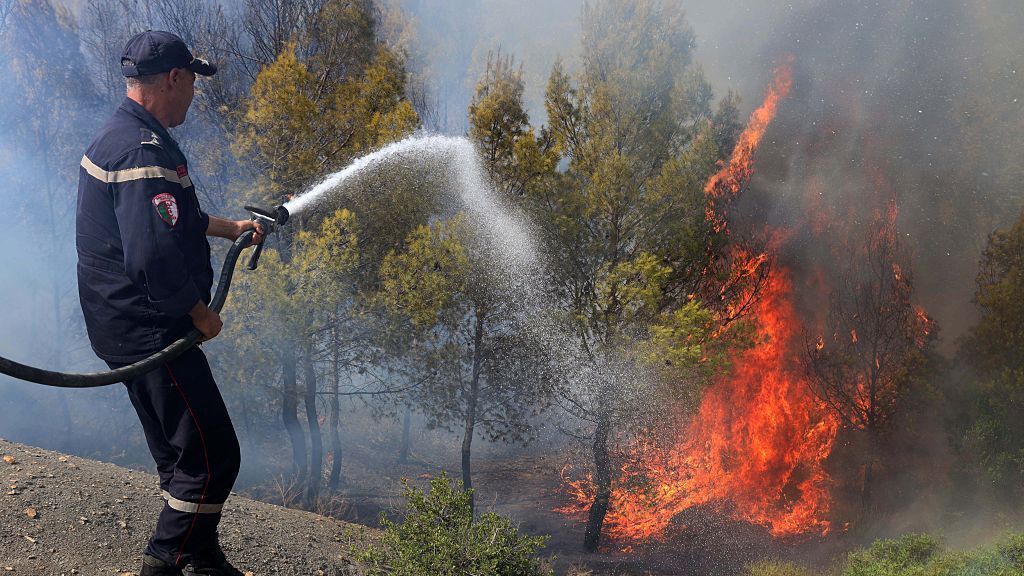
A devastating outbreak of wildfires tearing across vast stretches of northern Algeria has claimed the lives of at least 12 people and left dozens more injured, as climate change-fueled extreme heat amplifies the risk of catastrophic fire events across North Africa.
The fast-spreading blazes have ignited across multiple provinces lining Algeria’s northern Mediterranean coastline, with the death toll broken down by region: five fatalities reported in Jijel province, four in Bejaia, and three in Tizi Ouzou, according to Interior Minister Said Sayoud. As of Wednesday evening, 54 people have been treated for burn injuries, with at least six patients remaining in intensive care for severe wounds.
By early Wednesday, Algerian civil protection teams were already working around the clock to contain 97 active blazes scattered across the country, the agency confirmed. Thousands of residents have been forced to evacuate their homes in high-risk zones in Bejaia and Jijel, with local footage captured by broadcaster Jijel News showing displaced residents sheltering inside a local post office, thick gray smoke billowing across the surrounding landscape.
To coordinate the emergency response, Sayoud traveled to the hard-hit Bejaia region on Wednesday alongside Algerian Health Minister Mohamed Seddik Ait Messaoudene to conduct an on-the-ground assessment of ongoing firefighting operations and civilian evacuation efforts. Bejaia is no stranger to catastrophic wildfire events: just three years ago, a similar outbreak of blazes that swept through the region’s forests and agricultural land killed 30 people.
This most recent disaster comes as a record-shattering severe heatwave bakes the entire North African region, with both Tunisia and Algeria facing some of the most extreme conditions. Algeria has long faced seasonal wildfire risk during the warm summer months, but scientific data and climate experts confirm that human-caused climate change has drastically increased the intensity, frequency, and severity of these fire events in recent years.
Data from the World Meteorological Organization (WMO) shows that extreme heat events have become the new norm across North Africa, which is the fastest-warming subregion on the African continent. Between 1991 and 2025, average temperatures in the region rose at a rate of 0.43°C per decade, outpacing warming across every other part of the continent.
The impacts of rising temperatures stretch far beyond deadly wildfires. A recent academic study has also linked prolonged summer heatwaves and widespread water shortages to a sharp increase in camel deaths across Algeria, threatening the livelihoods of rural communities that rely on the animals for transport, food, and income. Just one month prior, in July 2025, Algerian fire crews battled more than 2,000 separate blazes across the country, which claimed six additional lives.