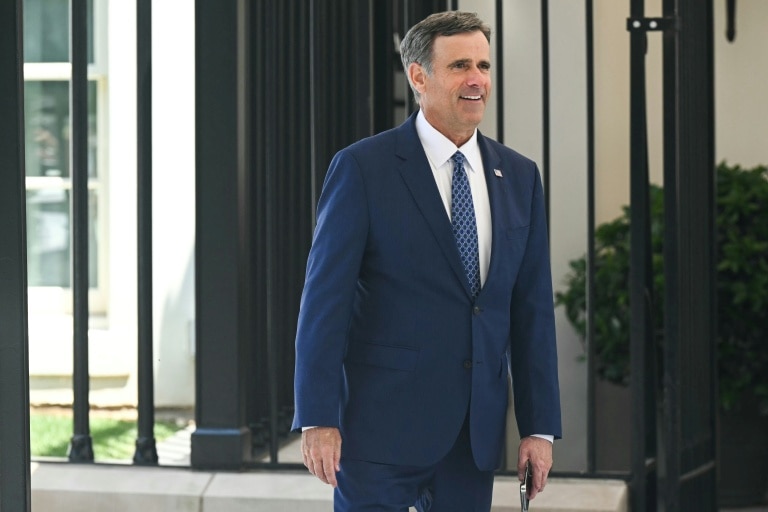
In one of the highest-level American visits to Russia since Moscow launched its full-scale invasion of Ukraine in 2022, CIA Director John Ratcliffe traveled to Moscow this week with a core mission: delivering a blunt warning to Russian authorities against any military provocation targeting NATO member countries, multiple major U.S. media outlets reported Wednesday. The revelation came shortly after U.S. President Donald Trump sought to frame the high-stakes meeting as a low-key, semi-routine engagement.
Both The Wall Street Journal and CBS News confirmed that Ratcliffe’s warning was rooted in U.S. intelligence assessments indicating that the Kremlin could move to test the transatlantic alliance’s collective defense commitment with a limited offensive strike against a NATO member within the next several years. The top U.S. intelligence chief’s visit unfolded against a deeply tense backdrop: Russian forces have ramped up their offensive operations across eastern and southern Ukraine this summer, driving a sharp rise in civilian casualties, while U.S.-brokered efforts to jumpstart peace negotiations between Kyiv and Moscow have completely stalled.
Beyond the core message on NATO, CBS News, citing multiple anonymous sources familiar with the closed-door discussions, reported that Ratcliffe also raised tensions around the Persian Gulf during his talks. He issued a clear warning that Russia would face additional U.S. sanctions if it did not allow the Strait of Hormuz — one of the world’s most critical global shipping chokepoints — to reopen to unimpeded commercial maritime traffic, amid ongoing Iranian actions that have disrupted navigation in the waterway.
Kremlin officials confirmed the visit on Wednesday, acknowledging that Ratcliffe held formal contacts with Russian intelligence agencies but confirming that he did not meet with Russian President Vladimir Putin. Kremlin spokesman Dmitry Peskov told reporters that Putin received a full briefing on the outcomes of the talks, but declined to confirm whether the ongoing war in Ukraine was among the topics discussed during the meetings. Peskov framed the intelligence-to-intelligence contacts as a modest positive step in bilateral relations, noting that it was still too early to predict whether the engagement would lead to any broader de-escalation of long-running tensions between Washington and Moscow.
This week’s trip marked a historic milestone: the first time a sitting CIA director has visited Moscow since former director William Burns traveled to the capital in November 2021, where he issued a direct warning to the Kremlin against invading Ukraine. Just weeks after that 2021 meeting, the Kremlin launched its full-scale invasion, sparking the largest continental conflict in Europe since the end of World War II. In recent years, the CIA has also been the lead U.S. agency coordinating high-profile prisoner swap deals with Moscow, including a major multi-person exchange completed in mid-2024.
Trump pushed back against media reporting of the trip’s core priorities during an interview with conservative radio host Glenn Beck, framing the engagement as semi-routine and emphasizing that the primary goal was to advance discussions on ending the war in Ukraine. “He’s there, very sort of semi-routine. I hate to disappoint people. We would like to see the war with Ukraine end,” Trump told Beck. The U.S. president dismissed widespread speculation that the trip covered threats to NATO or escalating pressure on Iran, saying, “He is not in there for any of the things that you said, now something may come out, you know, out of it.” He added, “We’re working very hard to get that war ended, and frankly, they both want to see it ended at this point.”
The White House declined multiple requests for comment from Agence France-Presse on the details of the visit and the reporting of Ratcliffe’s warnings. The ongoing war in Ukraine has now killed hundreds of thousands of people, and the Kremlin has so far refused to back away from its maximalist territorial demands, which include full control over all of Ukraine’s eastern Donbas region and permanent retention of the Crimean Peninsula, which Russia illegally annexed in 2014.