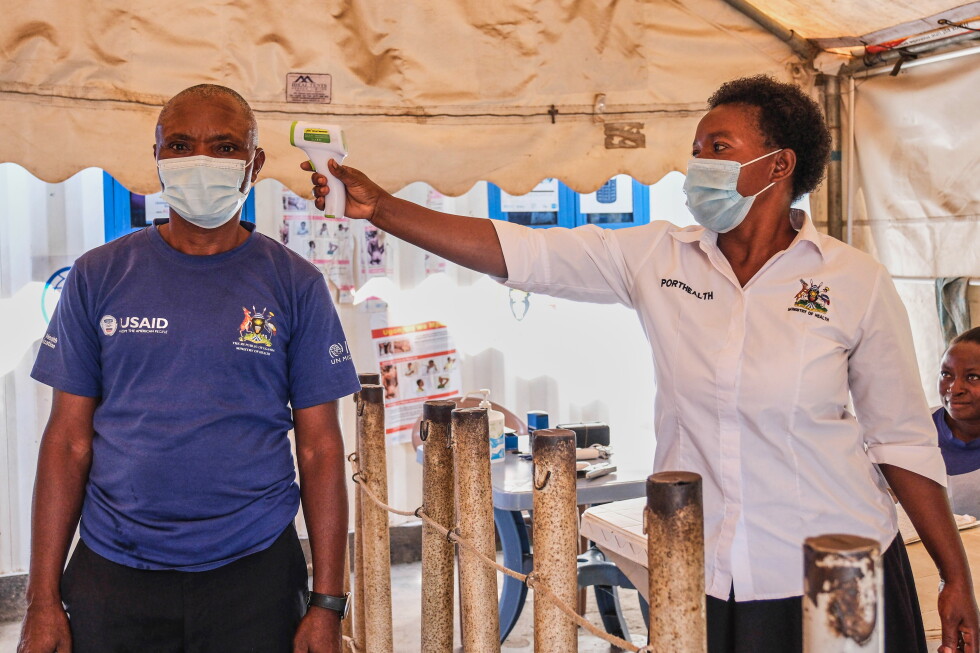
KAMPALA, UGANDA – In a long-awaited public health milestone, Ugandan health authorities announced Tuesday that the East African nation is officially free of Ebola, more than six weeks after its last confirmed patient recovered and was discharged from treatment. The declaration marks a successful containment of an outbreak that originated from a cross-border importation from neighboring Democratic Republic of the Congo, where a rapidly expanding Ebola epidemic continues to outpace response efforts and claim hundreds of lives.
Uganda’s outbreak was directly linked to the larger crisis unfolding in Ituri, a remote eastern province of the DRC that shares a porous border with Uganda. Health officials confirmed the first Ebola cases in Uganda on May 15 — the exact same day the DRC declared its own outbreak — when two Congolese citizens crossed the border seeking care for an unexplained illness, which was later confirmed to be Ebola. One of those patients had already died by the time authorities confirmed the diagnosis.
By the end of the outbreak, Uganda recorded a total of 20 confirmed cases. Unlike previous Ebola events in the country, this 2026 outbreak traces back to a fully documented single importation event, the Ugandan Ministry of Health noted in its official declaration Tuesday.
Ugandan authorities waited the full 42-day period — twice the maximum incubation period for Ebola, as recommended by the World Health Organization — after the last patient was discharged on June 16 to make the official announcement. All known contacts of confirmed cases were placed in institutional quarantine and completed 21 days of mandatory monitoring, with no new infections detected during that period. Enhanced community surveillance across high-risk border areas has also found no evidence of undetected transmission within Uganda’s borders, the ministry added.
The outbreak was caused by the Bundibugyo strain of Ebola, a variant for which no specific approved vaccine or targeted treatment currently exists. The ongoing regional outbreak caused by this strain has already been classified as a Public Health Emergency of International Concern by global health authorities.
Uganda’s successful containment of the virus came from swift, aggressive public health action drawn from years of experience responding to Ebola outbreaks, officials said. Immediately after the first cases were confirmed in May, Ugandan President Yoweri Museveni implemented targeted public safety measures: he urged citizens to abandon the traditional greeting of handshakes to reduce transmission risk, ordered the postponement of a major annual Catholic religious event that draws tens of thousands of pilgrims from the DRC and other countries to a site just outside Kampala, and suspended all cross-border public transportation and commercial flights between Uganda and the DRC to limit new importation risks.
While Uganda has successfully stamped out the virus within its borders, the situation across the border in the DRC continues to deteriorate at an alarming rate. In an overnight update, the DRC Ministry of Health reported that confirmed Ebola cases in the country have reached 3,262, with 1,437 deaths recorded so far. DRC health officials have described this as the fastest-spreading Ebola outbreak on record, and within 10 weeks of being declared, it is on track to surpass the country’s previous deadliest Ebola outbreak in the coming days.
Only the 2014-2016 West African Ebola epidemic, the worst in recorded history, has a higher death toll, with more than 11,000 fatalities and 28,000 confirmed cases across multiple countries.
Public health experts warn the rapid spread of the current DRC outbreak is driven in large part by access challenges. Many remote communities in the affected Ituri and North Kivu provinces are either unreachable to response teams, or responders have been forced to withdraw in recent weeks due to rising safety risks, including attacks from armed rebel groups and violent resistance from local residents angry at the outbreak response. Contact tracing and isolation of exposed individuals, the core intervention to stop Ebola transmission, has been severely hampered by these disruptions.
According to the World Health Organization, fruit bats of the Pteropodidae family are the natural reservoir host for Ebola viruses, which spread to humans through direct contact with the bodily fluids of infected people or animals.