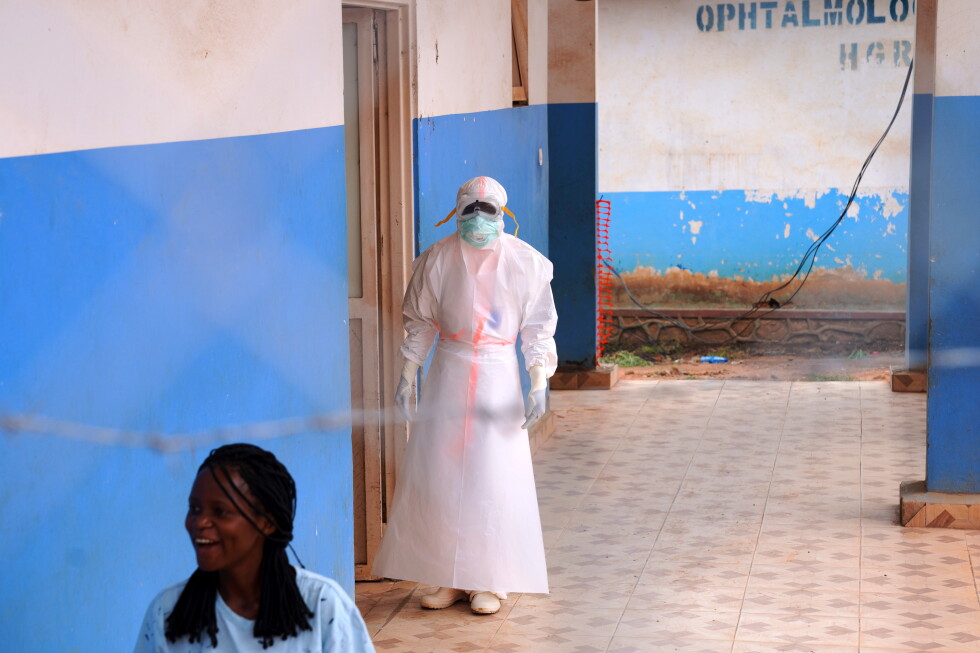
DAKAR, SENEGAL – The fastest-expanding Ebola outbreak ever recorded has claimed more than 1,000 lives in the eastern region of the Democratic Republic of the Congo, as global and local health workers rush to curb a viral strain with no licensed medical countermeasures available. New data released Wednesday by Congo’s National Public Health Institute confirms 2,536 laboratory-confirmed infections and 1,033 fatalities to date, with at least 738 patients currently held in isolation or receiving hospital care. What makes this outbreak, declared in mid-May, unique among modern Ebola events is the pathogen driving it: the Bundibugyo strain, for which no approved vaccines or targeted treatments currently exist. The crisis is heavily concentrated in the hard-to-reach Ituri province, which accounts for nearly 90 percent of all documented cases, but infections have spread to five additional Congolese provinces – including the major eastern city of Kisangani – and have spilled across the border into neighboring Uganda. Though Congolese health authorities note the explosive growth in new cases has begun to moderate, they warn the outbreak has not yet reached its peak. The latest institute report confirms sustained community transmission remains ongoing, with recent swings in case counts largely attributed to lags in reporting and ongoing data consolidation. A persistent gap in contact tracing also undermines containment efforts: only 77 percent of known close contacts of confirmed cases are under active surveillance nationwide, far below the 95 percent threshold public health experts say is required to stop transmission chains. Last month, researchers from the U.S. Centers for Disease Control and Prevention (CDC) used predictive modeling to warn that in the worst-case scenario, the current outbreak could match the deadliest Ebola event in recorded history: the 2014–2016 West African epidemic that killed more than 11,000 people. Notably, that 2014 outbreak took eight months to reach the 1,000-death mark – a threshold the current Congolese outbreak crossed far faster. The World Health Organization (WHO) adds that a large share of new cases are linked to unknown transmission chains, leaving the full scope and trajectory of the outbreak uncertain for responders. Despite the severity of the crisis inside Central Africa, global health authorities agree the overall risk of widespread international spread remains low. The WHO classifies the risk as “very high” within Congo and “high” for neighboring countries such as Uganda, due to frequent cross-border population movement and ongoing local transmission, but rates the global risk as low. Unlike respiratory viruses such as influenza or COVID-19, Ebola only spreads through direct contact with the bodily fluids of an infected person who is already showing symptoms, making sustained global spread far less likely. “You cannot get Ebola from being near someone,” the CDC emphasized in its latest situation update. The agency also noted that since infected people do not become contagious before they develop symptoms, identifying cases and tracking contacts is simpler than for diseases that can spread asymptomatically. To date, the outbreak has produced only a handful of cases outside Congo’s borders. Uganda has recorded 20 confirmed infections linked to cross-border travel from Congo, including two deaths, all concentrated in the capital Kampala. The country has not reported a new case since June 21, and the last confirmed patient has been discharged from care, triggering the 42-day waiting period that precedes an official declaration that the Ugandan outbreak is over. In June, one imported case was detected in France involving a doctor traveling from Congo; the patient has since made a full recovery and been released from hospital. In response to the outbreak, the U.S. has imposed entry restrictions on most recent travelers from Congo, requiring U.S. citizens to complete a 21-day monitoring period outside the country before returning, and routing permitted travelers from Uganda and South Sudan through designated airports for mandatory Ebola screening. A U.S. plan to construct a dedicated Ebola quarantine facility in Kenya for U.S. citizens evacuated from Congo has faced significant pushback, including legal challenges and large protests, some of which have turned violent. Multiple barriers continue to slow the global response effort. According to health authorities and aid groups, low public trust and community resistance are among the biggest obstacles. Misinformation about Ebola treatment centers, fear of isolation protocols, and resistance to culturally sensitive safe burial practices have led many residents to avoid testing and delay seeking care until they are severely ill. Ongoing armed conflict in the region has also complicated response work: fighting between government forces and the Rwanda-backed M23 rebel group, plus attacks by the Islamic State-linked Allied Democratic Forces, have displaced hundreds of thousands of people and made it difficult for responders to access affected communities and conduct surveillance. In addition to the lack of approved medical tools for the Bundibugyo strain, limited testing capacity has slowed detection – even as capacity has expanded since the outbreak began, the virus continues to outpace containment efforts. “There’s never been an Ebola outbreak that started with so many cases because it was so late to be identified,” explained Trish Newport, emergency program manager for Doctors Without Borders (Medicines Sans Frontieres), who has been deployed to the outbreak zone. Earlier this month, researchers launched the first clinical trial for experimental treatments targeting the Bundibugyo strain, enrolling patients at a dedicated Ebola treatment center in Ituri province. The WHO notes it could take several months and up to 1,000 trial participants to determine whether either of the two test treatments is safe and effective. Associated Press writers Mike Stobbe in New York and Prosper Heri Ngorora in Bunia, Congo contributed reporting to this article.
What experts are saying as Ebola outbreak in Congo and Uganda kills more that 1,000 people