The United States saw inflation accelerate sharply in March, reaching its highest pace in almost two years, as rising energy costs spurred by Middle East geopolitical tensions began to ripple through the broader national economy, according to the latest official data.
The U.S. Bureau of Labor Statistics reported Wednesday that the consumer price index (CPI), a key benchmark for inflation, rose 3.3% year-over-year last month, up from a 2.4% annual gain recorded in February. This abrupt jump, which economists had largely anticipated, represents one of the most significant single-month shifts in inflation since 2022, when the global economy grappled with a historic energy shock following Russia’s full-scale invasion of Ukraine.
The report pins March’s unexpected inflation acceleration on a dramatic spike in fuel prices, driven by disruptions to oil shipping through the Strait of Hormuz linked to the ongoing US-Israel conflict with Iran. From February to March, gasoline prices surged by 21.2% — the steepest one-month increase recorded since the federal government began tracking this metric in 1967. Fuel oil prices saw an even more dramatic jump, climbing more than 30% month-over-month to mark the largest surge since February 2000.
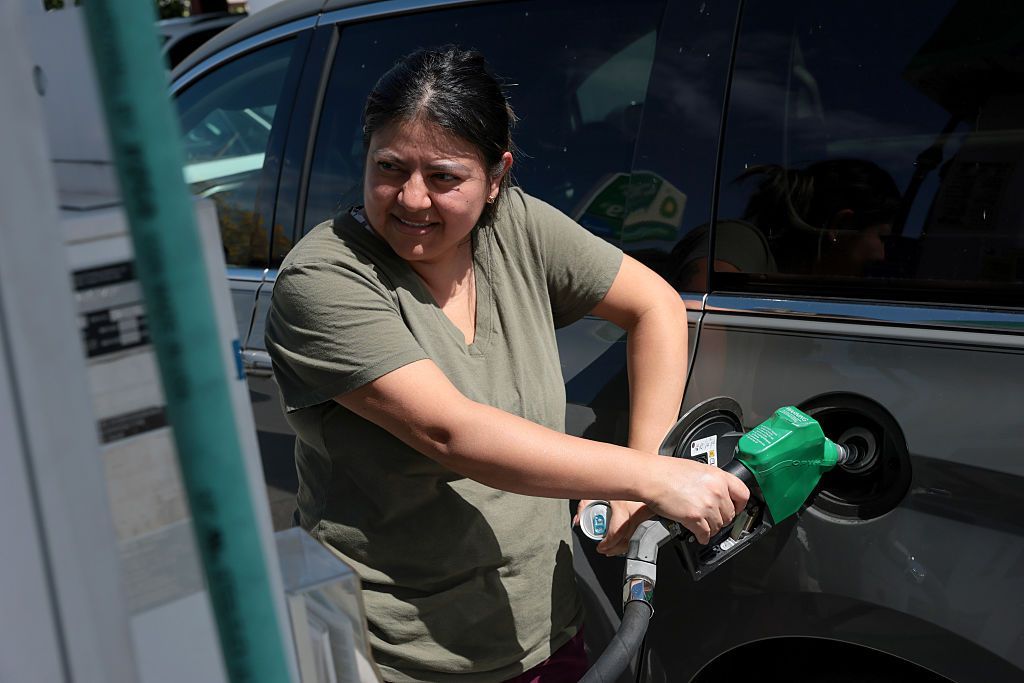
The burden of these soaring energy costs has fallen disproportionately on regions that already faced elevated fuel prices, such as the state of California. Data from the American Automobile Association (AAA) released Thursday puts the average price of a gallon of regular gasoline in California at $5.93, far above the current national average of $4.16.
For everyday commuters and workers who rely on personal vehicles to make a living, the price jump has upended monthly household budgets. Annel Villegas, a 23-year-old truck driver, described the current cost of fuel as “terrible”, emphasizing her frustration with strong language. “I drive a truck, so I fill it up every half tank, and now it’s like, $70 (£52), $80,” Villegas explained. She said she has already cut back on non-essential driving to offset costs, but acknowledged that many trips are unavoidable. “I have to do what I have to do to live …. I’m just dealing with whatever it brings to me – so, paying more,” she added.
This new inflation data complicates the outlook for U.S. monetary policy, which has focused on taming price growth over the past three years. The geopolitical origins of this current inflation surge also signal ongoing global economic uncertainty, as energy market disruptions continue to drive cost-of-living increases for households across the country.