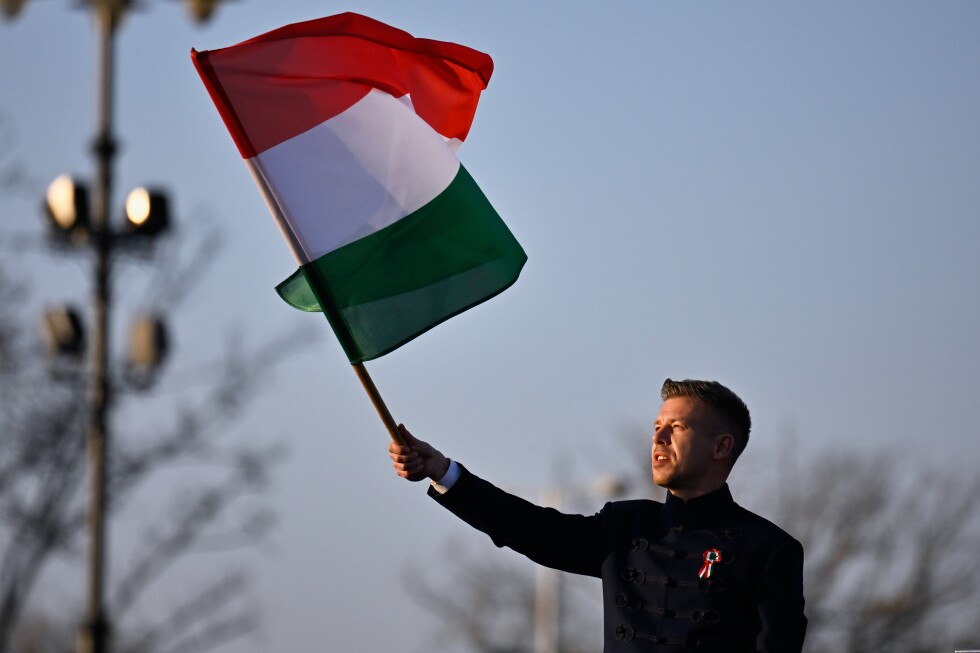
Hungary stands on the cusp of a political earthquake this Sunday, as a one-time insider to Prime Minister Viktor Orbán’s long-ruling political machine has emerged as the most credible threat to the nationalist leader’s 16-year hold on power. For 45-year-old Péter Magyar, leader of the upstart opposition Tisza Party, the path to the precipice of national office has been nothing short of meteoric — a rapid ascent that has redefined the country’s political landscape in less than two years.
Magyar’s political roots stretch deep into Orbán’s orbit. Born in 1981, just a few years before the collapse of Hungary’s communist regime, he developed an early fascination with politics, cutting his teeth watching parliamentary debates as a grade schooler and joining pro-democracy demonstrations alongside his parents. Like many young Hungarian conservatives of his generation, he admired Orbán’s early anti-Soviet liberal firebrand, and joined Orbán’s Fidesz party in 2002 at just 21 years old, quickly building connections with the party’s rising stars — including Gergely Gulyás, who would go on to become Orbán’s chief of staff.
After earning a law degree from a leading Catholic university in 2003, Magyar built his legal career, gaining public profile in 2006 by providing pro bono representation to anti-government protesters arrested during violent unrest against the ruling Socialist government, when Fidesz was still in opposition. That same year, he married Judit Varga, a fellow lawyer who would later rise to become one of Orbán’s most prominent cabinet ministers. The couple relocated to Brussels in 2009, where Varga served as an advisor to a Hungarian Member of the European Parliament; while abroad, Magyar balanced work as a diplomat with Hungary’s permanent EU mission and a stint as a stay-at-home parent to the couple’s three children.
Returning to Hungary permanently in 2018, Magyar stepped into senior leadership roles at multiple state-affiliated institutions, as Varga’s political star ascended within Fidesz: she was appointed justice minister in 2019, and alongside then-president Katalin Novák, was widely tipped as a potential future successor to Orbán. But a 2024 political upheaval would upend Magyar’s life and reshape Hungarian politics forever.
By 2023, Magyar and Varga’s marriage had ended in divorce, and the following year, a sweeping pardon scandal brought down Hungary’s highest office. Novák was revealed to have issued a pardon to a convicted accomplice in a high-profile child sexual abuse case, a decision that sparked national outrage and forced Novák’s resignation. Varga, who had endorsed the pardon, also stepped down from her positions. Within 24 hours, Magyar delivered a viral bombshell: a lengthy public interview with Hungary’s leading independent YouTube channel Partizán, where he formally cut ties with Fidesz and accused Orbán’s government of systemic corruption and rule by and for a tiny clique of political and economic insiders.
In a country of fewer than 10 million people, the interview racked up more than 2 million views, catapulting Magyar from a little-known political insider to a household name overnight. In the weeks that followed, he ramped up his criticism of the Orbán administration and organized mass public gatherings; on March 15, Hungary’s national independence holiday, he addressed thousands of cheering supporters in central Budapest and announced the launch of a new political movement that would soon become the Tisza Party. Just three months later, Tisza captured 30% of the national vote in the 2024 European Parliament elections, earning Magyar a seat as an EU lawmaker and cementing Tisza’s status as a major national political force. In the wake of the split, Varga has accused Magyar of abusive conduct during their marriage, claims Magyar has vehemently denied, framing them as a coordinated smear campaign by Fidesz to discredit him.
With just 48 hours remaining before Sunday’s national election, nearly all public opinion polls show Tisza holding a double-digit lead over Fidesz — a milestone no opposition party has achieved since Orbán returned to power in 2010. For many of Magyar’s supporters, his decades inside the Fidesz system are his greatest strength: only someone who has seen Orbán’s governing model from the inside, they argue, can dismantle it. Others remain wary of his past ties to the ruling elite, a divide that underscores the unusual nature of his challenge.
Magyar has framed his political career as a story of internal dissent, arguing that he pushed for reform and critical debate within Fidesz for years before his public split. His rise has energized a broad cross-section of Hungarian society, which has grown disenchanted with decades of fragmented, ineffectual opposition parties that failed to mount a credible challenge to Orbán. While Orbán has centered his re-election campaign on warning of external threats — chief among them the ongoing war in neighboring Ukraine — Magyar has deliberately pivoted to domestic pocketbook issues that resonate with everyday Hungarians: sky-high inflation, stagnant low wages, crumbling public healthcare and transportation infrastructure, and widespread systemic corruption.
Though he has united Orbán critics from across the ideological spectrum, support for Magyar is not always rooted in strict ideological alignment. Many liberal voters remain cautious of his combative political style and socially conservative background. To avoid the missteps that allowed Fidesz to discredit previous opposition challengers, Magyar has intentionally declined to take firm public stances on some of Hungary’s most divisive policy issues, including Orbán’s harsh anti-LGBTQ+ legislation and the question of whether Hungary should increase military and humanitarian support for Ukraine.
Beyond policy, Magyar has cultivated a level of mainstream political celebrity unmatched by any Hungarian figure outside of Orbán. After his campaign rallies, crowds regularly surge toward the stage to snap selfies with the candidate, who waits for hours to pose with every supporter who wants a photo. His unprecedented political journey has even become a box office hit: a domestic documentary titled *Spring Wind — The Awakening*, which chronicles his rise from obscure insider to opposition leader, has topped Hungarian cinema box offices in 2025.