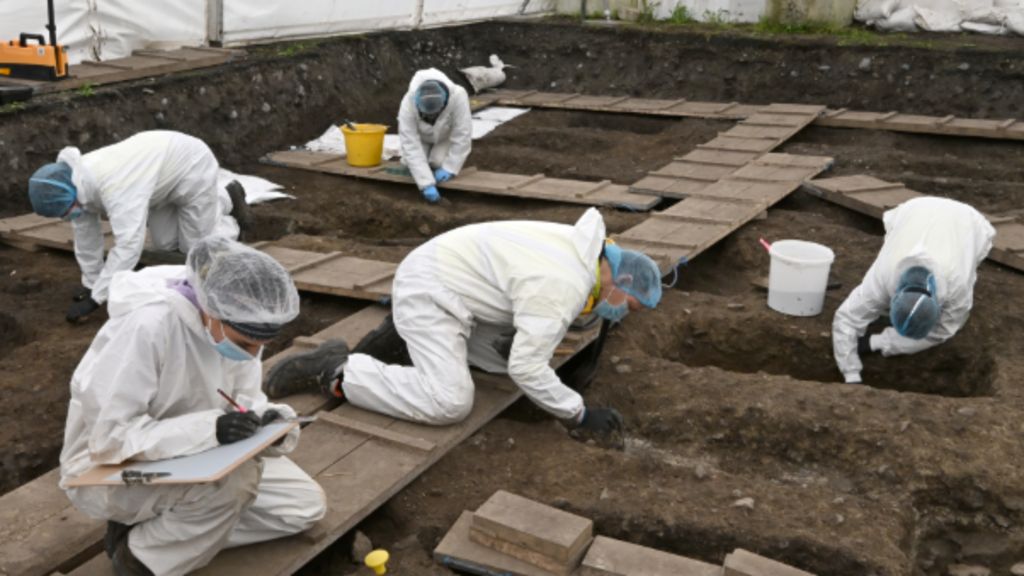
An ongoing forensic excavation at the site of a defunct mother and baby home in Tuam, western County Galway, Ireland, has unearthed the remains of 36 additional infants, bringing the total number of recovered infant remains to 69, excavation officials confirmed in their latest project update.
The full excavation, launched by the Irish government last summer, follows years of investigation and public outcry over one of Ireland’s most harrowing historical scandals. The crisis first emerged in 2014, when amateur historian Catherine Corless published groundbreaking research showing that 796 children who died while residents at the Tuam home between 1925 and 1961 had no official death or burial records. The institution, which operated for 36 years to house unmarried mothers and their children, was run by the Bon Secours Sisters, a Catholic religious order. During the home’s operation, widespread malnutrition and inadequate healthcare led to hundreds of childhood deaths, with remains later found disposed of in an unmarked mass grave.
After an initial test excavation in 2017 confirmed the existence of the unmarked mass burial site, Irish authorities authorized a full forensic dig to recover remains, identify them through DNA matching, and return them to living relatives for formal, dignified burial. The excavation team, which releases progress updates every one to two months, published its sixth update this week, covering work conducted between January 29 and March 31, 2026.
In the new report, archaeologists detailed new findings about the burials: most of the recovered infants were interred in single white-painted coffins that have since decomposed over decades, while a small number of burials held two or three infants in a single coffin. Since the start of the excavation, 33 DNA samples have been collected from people who suspect they have relatives buried at the site, with five new samples added in the most recent reporting period. The excavation leadership has renewed its public appeal for any member of the public who may have family connections to the Tuam home to come forward and submit DNA samples to support identification efforts.
The Bon Secours Sisters issued a formal apology years ago, admitting that the children buried at the site were interred in a “disrespectful and unacceptable” manner, in keeping with the cruel systemic policies that stigmatized unmarried mothers and their children across mid-20th century Ireland. The full excavation is expected to continue for months as researchers work carefully to recover all remains and connect them to surviving family members.