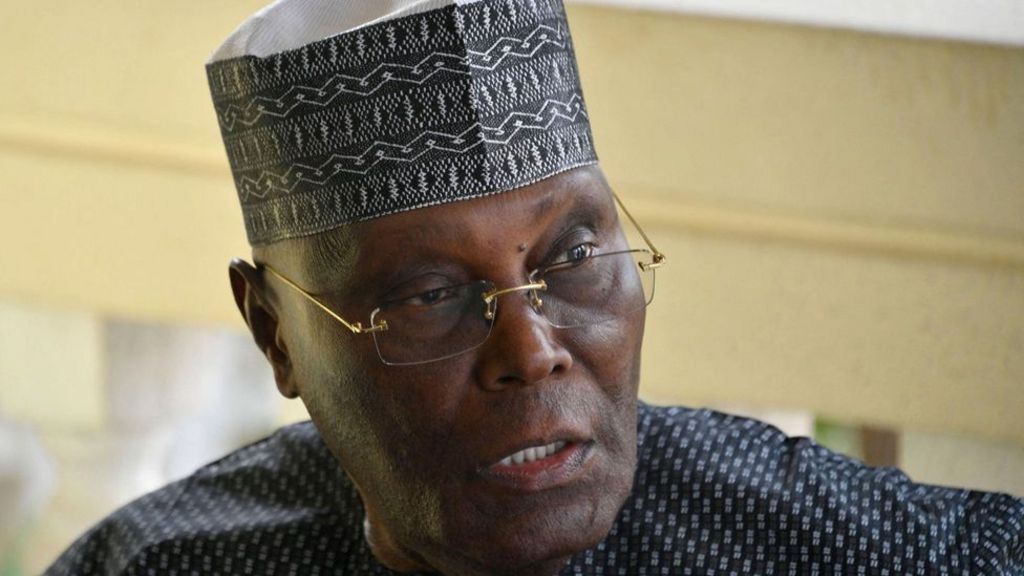
In a landmark and controversial ruling delivered by Justice Peter Lifu of Nigeria’s Federal High Court in Abuja, the entire leadership of the main opposition African Democratic Congress (ADC) has been sacked, alongside a formal declaration that the party’s nomination of veteran politician and former Vice-President Atiku Abubakar as its 2025 presidential flag-bearer is legally invalid. This development lands barely three months before the country’s scheduled 16 January general election, where incumbent President Bola Tinubu of the ruling All Progressives Congress (APC) was widely expected to face a stiff three-way challenge from Abubakar and Labour Party (later Nigeria Democratic Congress) standard-bearer Peter Obi.
The roots of the legal dispute stretch back to 2025, when a wave of high-profile political heavyweights abandoned the long-dominant Peoples Democratic Party (PDP) amid widespread frustration over crippling internal factional infighting. Among the defectors were Abubakar, who served as Nigeria’s vice-president during the PDP’s 1999 to 2007 tenure, and former Senate President David Mark, who was installed as the ADC’s interim chairman to accommodate the influx of prominent new members. The suit that triggered Thursday’s ruling was filed by Nafiu Bala Gombe, a former national deputy chairman of the ADC, who argued that Mark’s interim leadership and the subsequent nomination of Abubakar violated the party’s constitution and national electoral law, as neither had been formally elected at a duly convened national party convention. Gombe claimed he was the legitimate successor to the ADC’s national chairmanship following the previous officeholder’s 2025 resignation.
The ruling has drawn immediate outrage from the ADC, which framed the judgment as a deliberate, politically motivated attack designed to cripple the opposition’s growing momentum ahead of polls. The party noted that the same Abuja Federal High Court had reached an opposing ruling as recently as July of the same year, when Judge Musa Liman validated Mark’s interim chairmanship as fully compliant with both Nigerian national law and the ADC’s internal governing statutes. Abubakar, who is making his seventh bid for the Nigerian presidency, echoed these concerns in a public post on X, arguing the timing of the latest ruling was deeply suspicious: it was issued barely 24 hours after he drew a record-breaking, mammoth crowd at his official campaign launch in Sokoto, a major northern Nigerian stronghold. The 79-year-old described the ruling as proof that the incumbent administration was panicking in the face of surging popular support for his pledge to alleviate Nigeria’s devastating ongoing cost-of-living crisis, and urged his hundreds of thousands of grassroots supporters to remain peaceful, resolute, and focused on door-to-door campaigning to deliver his pro-reform message to voters.
The ADC has formally announced it will file an immediate appeal against the ruling at the Court of Appeal, and Abubakar has expressed full confidence that the higher judiciary will overturn the lower court’s decision to restore his candidacy. Crucially, Nigeria’s Independent National Electoral Commission (INEC) has already published its final official list of presidential candidates, which includes Abubakar as the ADC’s nominee alongside running mate Rotimi Amaechi, a former governor of Rivers State. The legal uncertainty now threatens to upend the electoral process, casting doubt over the legitimacy of hundreds of ADC candidates running for national and state legislative offices, and creating confusion over who holds the legal authority to represent the party in official campaign and electoral proceedings.
Fellow leading opposition presidential candidate Peter Obi, who briefly joined the ADC earlier in 2025 before departing for the newly formed Nigeria Democratic Congress (NDC) to avoid the party’s mounting internal legal wrangles, released a strongly worded statement on X condemning the ruling under the headline “Do not undermine democracy”. The 65-year-old politician warned that the ruling risked eroding Nigeria’s fragile democratic gains at a moment when a wave of military takeovers has swept across parts of West Africa, arguing that democratic stability depends on protecting, not suppressing, legitimate opposition political parties. Obi pledged that if elected president, his administration would enact formal safeguards to guarantee the legal existence and operational autonomy of opposition parties across the country.